
The answer you need first
Sleeping on a couch with a baby is not safe
If your baby is asleep on a couch, sofa, recliner, or upholstered chair—alone or with you—move them now to a separate, firm, flat, non-inclined sleep surface made for infant sleep. Put your baby on their back in a bare crib, bassinet, portable crib, or play yard that meets current safety standards.
If your baby is unresponsive, blue or gray, breathing abnormally, not breathing, or may have been trapped or injured, call emergency services immediately and begin CPR if you are trained or the dispatcher instructs you.
I want to say that clearly without turning your exhaustion into a character judgment. Parents do not land on this question because they are casual about safety. They land here because it is 2:17 a.m., the baby finally settled against a warm chest, and the couch feels like the only object in the house holding the adult upright. Sometimes the search happens after a frightening jolt awake. Sometimes it happens before a feed because you can already feel sleep coming.
The safety answer is firm because the couch itself creates hazards: soft cushions can cover a baby’s face, the baby can become wedged between an adult and the back or arm of the couch, and an adult can unintentionally roll or slump over the baby. The American Academy of Pediatrics is unusually direct about this surface. A couch or soft armchair should never be used for infant sleep.

If you already fell asleep with your baby on the couch
Start with the next useful action, not a courtroom in your head. Move your baby to their own safe sleep surface. Look for normal breathing, normal color, and a normal response to your touch and voice. Check for an obvious sign that the baby was caught between cushions or pressed against something. If anything about breathing, color, responsiveness, or a possible injury concerns you, use the emergency boundary above or contact your child’s clinician for non-emergency guidance.
If your baby looks and acts normal, you do not need to keep them awake as a punishment for the accident. Put them on their back in the empty sleep space and let the safe setup do its job. The lesson is not “I must become a person who never gets tired.” The lesson is “this room needs a transfer place and a handoff plan before the next feed.”
The couch decision in three states
- Awake and alert: cuddling or feeding is an awake activity. Keep checking your alertness and keep the approved sleep surface ready.
- Drowsy or fighting sleep: do not test whether you can “make it five more minutes.” Transfer the baby or hand them to another awake caregiver.
- Just woke after dozing: move the baby, check breathing/color/responsiveness, and use the escalation boundary if anything is wrong.
SleepBaby.org teaching tool: the state changes the next action, but no state turns the couch into a sleep surface.

Why a couch is more dangerous than it looks
A couch looks broad to an adult, but an infant experiences it as a landscape of slopes, seams, pockets, and soft walls. The back cushion can create a narrowing channel. The crack between the seat and arm can become a wedge. A parent’s sleeping body can close the remaining space. A baby does not need to fall to the floor for a serious problem to occur.
In an AAP study of sleep-related infant deaths, 1,024 deaths occurred on sofas—12.9% of the deaths analyzed. Sofa deaths frequently involved surface sharing, a baby found on their side, and sleep in a location that was not the baby’s usual sleep place. The AAP’s broader evidence review reports markedly elevated risk on couches and armchairs and highlights overlay, wedging, and entrapment.
Softness
A yielding cushion can form around the face instead of staying flat beneath the baby.
Seams
The gap beside a cushion, arm, or adult body can trap the head or chest.
Adult movement
A sleeping adult can slump, roll, or lose the arm position that felt secure while awake.
The risk is especially high when a caregiver is severely tired, has used alcohol or another substance, or takes a medicine that causes drowsiness. Young infants—especially those under four months—and babies born prematurely or at low birth weight have additional vulnerability. Smoke exposure adds risk too. Those modifiers matter, but they are not a checklist that can make couch sleep acceptable when absent.

The exhausted-feeding problem deserves a real plan
“Do not fall asleep” sounds tidy in daylight. At night, feeding hormones, warmth, darkness, repetition, and accumulated sleep loss can overpower intention. I would rather help you redesign the next twenty minutes than hand you a slogan and hope adrenaline keeps working.
The first choice is to feed where a separate approved sleep space is already within reach and to return the baby to it when the feed ends. If another adult is available, decide before the feed who is responsible for staying awake and who makes the transfer. Say the handoff out loud. A vague plan—“wake me if I start drifting”—often asks the equally exhausted person to notice too late.
The AAP does not recommend bed-sharing. It also recognizes that unplanned sleep during feeding happens. If you think you might fall asleep, a couch or soft chair is particularly dangerous. As a harm-reduction step for an accidental doze in an adult bed, remove pillows, loose sheets, blankets, pets, and other soft items from the feeding area before you begin, and move the baby back to their separate sleep space immediately when you wake. That is not a recommendation to share the bed; it is preparation for a foreseeable accident while you keep the separate surface as the destination.
The feed-before-sleep handoff
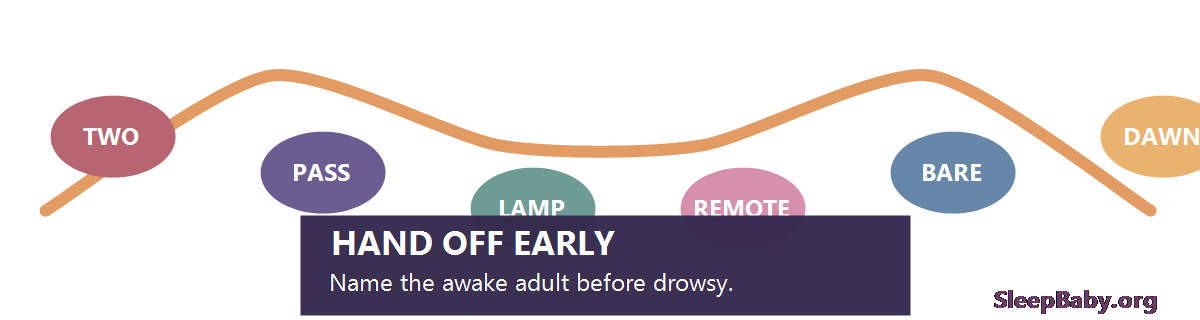
- Safe surface assembled, bare, and within reach.
- Phone charged and emergency contact access available—but no alarm is treated as a safety device.
- One adult named as the awake person when two caregivers are present.
- Transfer begins at the first drowsy signal, not after sleep wins.
- Baby returns on their back; no pillows, positioners, or extra padding are added.
If the wider problem is that your newborn will not sleep at night, treat that as a separate planning problem instead of letting the couch become the emergency solution. If your baby settles only against your body, the guide to when a baby only sleeps on your chest can help you work on transfers while keeping the safe-sleep boundary intact.
A five-minute living-room safe-sleep reset
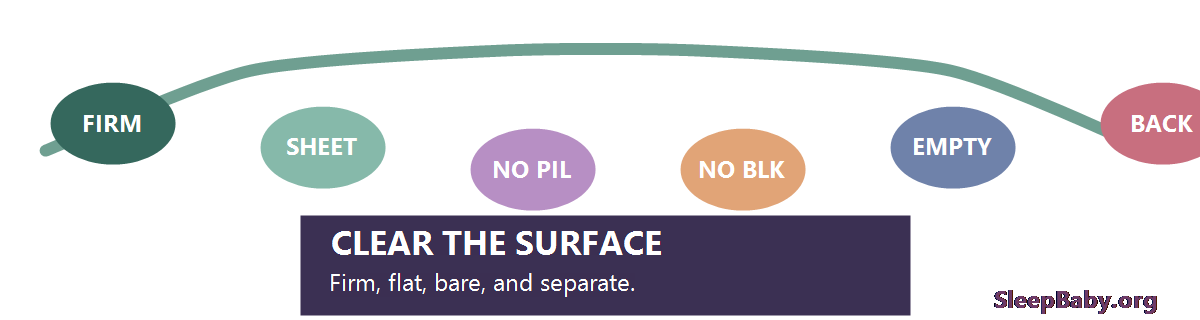
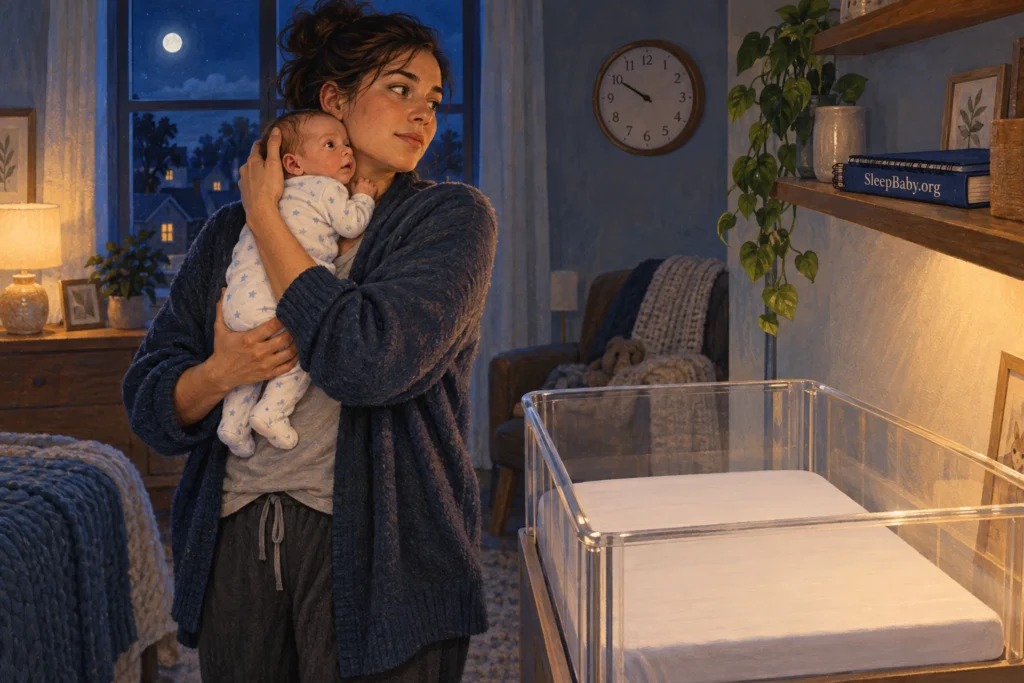
The strongest fix is often architectural rather than motivational. Put a standards-compliant bassinet, portable crib, or play yard close enough that transferring the baby is easier than negotiating with yourself on the couch. The unit belongs on a stable floor, assembled exactly as its instructions require. Use only its supplied or approved sleep pad and fitted sheet. Do not add a topper to make it “cozier.” Infant sleep surfaces are intentionally firmer than adult comfort instincts expect.
- 1. Choose the destination. Identify the approved surface the baby will use after every living-room feed or cuddle.
- 2. Strip it back. Remove blankets, toys, bumpers, pillows, wedges, loungers, and positioners.
- 3. Clear the route. Move cords, baskets, and clutter so you can stand and transfer without stepping around hazards.
- 4. Stage the adult items. Put water, burp cloth, and feeding supplies where reaching for them will not require balancing the baby on a cushion.
- 5. Name the drowsy cue. Heavy blinking, rereading the same sentence, dropping the remote, or losing track of the feed means transfer now.
A room-sharing layout can reduce friction when space is tight. These baby and toddler room-sharing ideas show the same principle: the safer sleep space must fit real family movement, not only a nursery photo.
What does not become safe just because it is nearby
A baby lounger, nursing pillow, nest, wedge, swing, bouncer, car seat, or adult mattress placed beside the couch does not replace a crib, bassinet, portable crib, or play yard. Products designed for soothing, feeding support, containment while awake, or transportation can look sleep-adjacent without being safe sleep surfaces.
Do not use a monitor, timer, vibrating alarm, bright television, or “I am a light sleeper” as the missing safety layer. Those tools cannot prevent a sleeping body from slumping or a baby from becoming wedged. The surface is the safety decision.

A clearly labeled composite Kacey-and-Benjamin moment
The remote slipping was the decision
Picture me on the couch during a late feed with Benjamin, watching the same menu screen cycle because I have stopped following it. The remote slides against my palm. My eyes close for one beat too long. In the old version of the night, I might have treated that as a challenge: sit straighter, turn up the volume, prove I am still awake.
In the useful version, the slipping remote is the answer. I do not wait to discover whether I can out-negotiate sleep. I stand while I am still coordinated, turn toward the nearby bare sleep space, and make the transfer. Benjamin may protest the temperature change. I may need to settle him again. Annoying is allowed. The couch becoming the sleep plan is not.
This is a composite scene created to teach the decision point; it is not presented as documentary family history or medical evidence.
That distinction is the one I want beside you tonight: drowsiness is not a moral failure and it is not a dare. It is information. When the body starts dropping objects, losing the thread, blinking heavily, or jerking awake, the decision has already arrived.
Some circumstances make an already unsafe couch even riskier
The safest message is not a personalized odds calculation. There is no combination of an older baby, a firm-looking cushion, a short nap, or a light-sleeping adult that turns a couch into an approved sleep surface. Still, understanding the risk modifiers can help you recognize nights when the prevention plan needs more support before the feed begins.
Very young age matters. Babies under four months have less head and trunk control and may be less able to move away from an obstructed position. Prematurity and low birth weight add vulnerability. A parent of a bigger, stronger baby should not read that as an all-clear; it explains why the smallest babies need especially conservative planning.
Adult alertness matters. Alcohol, cannabis, opioids, sleep medicines, some antihistamines, and other sedating substances or medicines can make arousal slower and movement less controlled. If either caregiver has used something that causes drowsiness, that person should not be the plan for holding a baby on a couch through a feed or settling session. Check medicine warnings and ask a pharmacist or clinician when you are unsure whether a prescribed or over-the-counter medicine can impair alertness.
Exhaustion matters even without a substance. A person who has been awake repeatedly for nights can move from “fine” to asleep without experiencing a long, obvious warning. The quiet microsigns—losing a sentence, missing part of a show, dropping the phone, startling awake—are enough to change course.
Smoke exposure matters. Keep the baby’s environment smoke- and vape-free. This is part of the broader safe-sleep picture, not a reason to focus blame on one household. The practical decision remains the same: separate approved surface, baby on the back, no soft items.
When the baby wakes every time you transfer
This is where the safety advice can feel emotionally impossible. You finally have a sleeping baby, and placing them down produces an instant protest. The couch offers the seductive shortcut: stay exactly where you are, keep one arm around the baby, and hope your own sleep remains shallow. I understand why that bargain appears. It is still the wrong bargain.
First, separate the goal of “baby stays asleep” from the goal of “baby is in a safe place.” The first may take several attempts. The second is the boundary. If the baby wakes in the bassinet, you can soothe, feed, burp, or try the transfer again while awake. A disrupted stretch of sleep is frustrating; it does not make the hazardous surface safer.
Try reducing the sensory jump without changing the sleep surface. Keep the room dim enough for winding down but bright enough for you to move safely. Complete the diaper change before the final settling when practical. Lower the baby slowly while supporting the head and torso, then pause with your hands resting gently on the baby for a moment before withdrawing them. The baby still goes on their back, and the sleep space stays bare.
If repeated transfers are making you less alert, change adults rather than repeating indefinitely. A fresh caregiver can take the next settling attempt while the exhausted adult lies down somewhere separate from the baby. If no second adult is available, place the baby safely in the crib or bassinet and step away briefly to reset if you are becoming overwhelmed. A crying baby in a safe sleep space is safer than a quiet baby held by a sleeping adult on a couch.
The transfer priority ladder
- Safe surface: non-negotiable destination.
- Calm transfer: slow movement, supported body, brief settling touch.
- Sleep continuity: valuable, but it comes after surface safety.
- Perfect schedule: tonight can be imperfect without becoming unsafe.
SleepBaby.org teaching tool: when two goals conflict, keep the higher rung and revisit the lower one later.
What to change tomorrow so tonight does not repeat
Morning is when you can investigate the system without the fog of a live feed. Walk through the previous night as a sequence, not an accusation. Where did the baby feed? Where was the approved sleep space? What made standing difficult? At what point did you first notice drowsiness? Was another adult technically home but never assigned a shift?
Then make one environmental change and one human change. The environmental change might be moving the portable sleep space closer, clearing a path, relocating feeding supplies, or replacing a broken fitted sheet. The human change might be an earlier handoff, a protected block of adult sleep, a text or spoken cue between caregivers, or asking a trusted person for a specific two-hour window of help.
Be precise when asking for help. “Can you help more?” is difficult to act on at 3 a.m. “Can you stay awake for the 1 a.m. feed and make the bassinet transfer?” creates a role. If you are parenting alone, identify who could be called before exhaustion becomes dangerous: a family member, friend, postpartum support person, or clinician who can help you plan around feeding and sleep needs.
Persistent, extreme sleepiness deserves attention too. If you are falling asleep unexpectedly during the day, cannot stay awake for essential care, feel confused, or worry that a medicine or health condition is affecting alertness, contact your own clinician. If despair, panic, frightening thoughts, or a sense that you or the baby may not be safe enters the picture, seek urgent help. Safe-sleep planning cannot carry a caregiver health crisis by itself.
I would write the new plan where the tired version of you can see it: feed here, transfer there, wake this person at this cue. The useful plan is not elegant. It is visible, specific, and close enough to use with one eye open.
The questions parents usually ask next
Is it safe if I am sitting upright?
Sitting upright while fully awake does not make the couch an infant sleep surface. The problem begins when the adult sleeps or the baby is left sleeping on the couch. An upright posture can change quickly after sleep begins; the head drops, arms loosen, and the body shifts toward cushions or an armrest.
What if the couch is firm?
A firm-feeling adult couch still has seams, angles, back cushions, arm gaps, and an adult body. It has not been designed and regulated as an infant sleep surface. Do not use cushion firmness as a home test.
What if it is only a short nap?
There is no safe couch-sleep duration. Accidental sleep is not reliably timed, and an airway or entrapment event does not need a long window. Move the baby even if you expect them to wake during the transfer.
Can the baby sleep alone on the couch if I stay nearby?
No. Watching does not remove the soft surface, seams, or fall and entrapment possibilities. Move the baby to the approved sleep space rather than supervising an unsafe one.
Should I call the pediatrician because I nodded off once?
If your baby has normal breathing, color, responsiveness, movement, and behavior and you see no sign of injury, the immediate work is the safe transfer and prevention plan. Call the child’s clinician when there may have been an injury or anything seems abnormal. Use emergency services for the urgent signs listed at the top.

AAP safe-sleep refresher
Five essentials to check after you move off the couch
This short American Academy of Pediatrics video reinforces the safe surface, back-sleep, and bare-space basics. The article’s couch-specific plan remains in the written guidance above.
Takeaway: once the baby leaves the couch, finish the reset—back, bare, flat, firm, and separate.
Your plan for tonight, in the order that matters
- Move the sleeping baby off the couch.
- Check breathing, color, responsiveness, and possible injury if you woke after an accidental doze.
- Use the separate bare sleep surface with baby on their back.
- Prepare the next feed before it begins: clear route, named handoff, safe surface ready.
- Treat drowsiness as the transfer cue. Do not wait for the head nod.
I would rather you make one clumsy but safe transfer than sit frozen by the fear that waking the baby will ruin the night. A transfer can be repeated. A couch cannot be made safe by good intentions.
A practical living-room transfer destination
Graco Pack ’n Play On the Go Playard
If the couch keeps winning because the crib is down the hall, a portable playard with its removable full-size bassinet can put an actual separate sleep surface within reach of the feeding area. That makes it a stronger fit for this exact problem than a lounger, nest, nursing pillow, or soft travel pad, which should not be treated as infant sleep surfaces.
Use the playard and bassinet only as the current manual directs, on a stable floor, with the included/approved pad and configuration. Follow every weight, age, and developmental limit. Never place it on the couch, add padding, or treat any product as protection against SIDS.
See the Graco Pack ’n Play On the Go Playard on Amazon
As an Amazon Associate, SleepBaby may earn from qualifying purchases.
Sources
- American Academy of Pediatrics: Safe Sleep—9 Ways to Protect Your Baby
- American Academy of Pediatrics: Back Is Best; Avoid Soft Bedding, Inclined Surfaces and Bed Sharing
- Pediatrics: Sofas and Infant Mortality
- Pediatrics: Evidence Base for 2022 Updated Safe Sleep Recommendations
- American Academy of Pediatrics: A Parent’s Guide to Safe Sleep
- American Academy of Pediatrics: Establishing a Breastfeeding Routine
- U.S. Consumer Product Safety Commission: Safe Sleep Tip Card
Turn tonight’s close call into a calmer setup
Build a bedtime plan that does not depend on staying awake by force
SleepBaby can help you think through the routines, transfers, and night-waking patterns around the safe surface—so the couch stops being the place where exhaustion makes the decision.





What viewers said10 comments · 4 replies+
Archived comments from the original Baby Sleep Miracle presentation. Not independently verified by SleepBaby.org; individual experiences vary.
Thank you so much for this video! I had no idea about the dangers of baby swings :O
Hi Mary-Ann. I have a question: Is method in any way similar to the ones recommended by Dr Bucknam, Dr. Weissbluth or Dr. Karp? We tried those but none of them help.
Hi Regina, thank you for your question. The short answer is no. The techniques I share in my guide are based on newest scientific research and this is why I have never seen any approach similar to the one I recommend.
This method really works! I tried it on my son Jesus and after just one week he went from waking up more than 5 times a night to waking up just once or twice. You are a lifesaver, Mary-Ann!
I'm truly impressed with how much information you share in your video. And all for free! I can feel that you truly care about mothers like myself, and that's hard to find these days. I have recommended your site to several of my friends already.
Mary-Ann, our child suffers from autism. Is your approach still suited?
Chloe, I made sure my method can be used with any child, even babies who are special like yours. Please note that I'm not a doctor and that I always advice to consult with your physician because nothing is more important than the safety and well-being of your love.
Hallo Mary-Ann, I'm from Germany. Do you have your guide in German?
Hello Heide, we do! Normally you should already see our video in German. If not, please contact our support so they can guide you
Thenk you for your answer, Mary-Ann!
I just completed your approach and I have to say, it worked almost too well. Yes, it took a bit of getting used to with your bedtime routine but the difference is huge. My son George used to take 1 hours to go down and now he's firmly asleep in no more than 10 minutes! You're the best!
It seems I'm the only man watching this video, lol! What you shared about the 'emotional backpack' made immediate sense to me and I can't wait to help my little girl Mila to unpack it!
Hey there, just discovered your site and this really sounds different. Just wanted to say thanks for sharing :)
For everyone who's still thinking about getting Mary-Ann's guide I want to advise you to go ahead. I wasn't sure myself but now I'm so thankful I invested in this program. It made a huge difference in our life as a family and yes, my baby girl does sleep through the night now.