
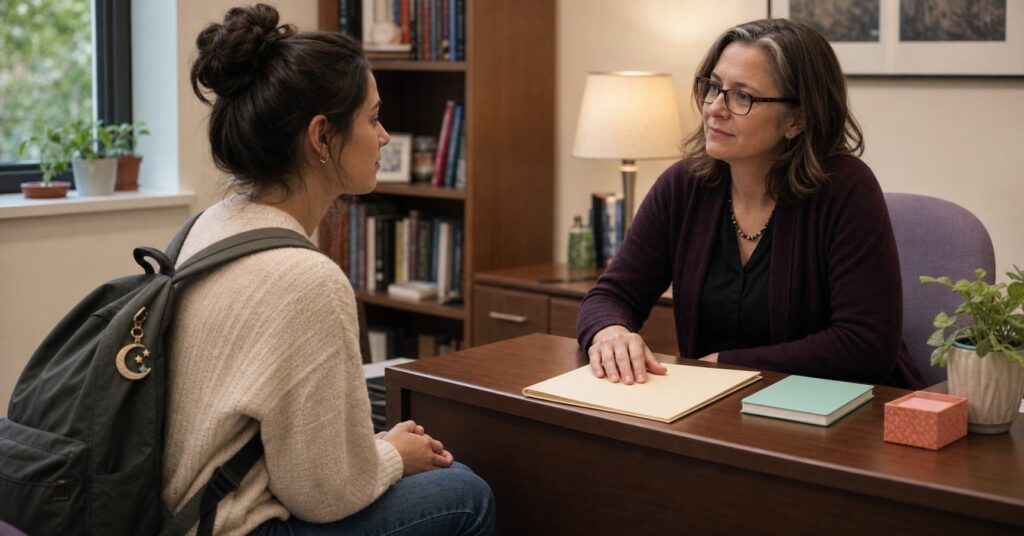
Being accused of academic dishonesty is an upsetting and serious situation, and it can cause quite a bit of stress, especially when the accusation is false. If you find yourself saying, “my professor accused me of cheating,” here’s how to handle it.
Understanding the Accusation
First and foremost, it’s important to clearly understand what you’re being accused of. Did your professor say that you copied from another student’s work, used unauthorized resources, or plagiarized? Understanding the specifics of the claim can help you formulate a response and defend yourself.
Know Your Rights
Most educational institutions have a set protocol for handling accusations of academic misconduct. It’s crucial to familiarize yourself with these procedures. Knowing your rights can help ensure that the process is fair and unbiased.
Collect Your Evidence
Remember that it’s not only about saying, “I didn’t cheat.” It’s also about proving it. Gather any evidence that can help substantiate your innocence. This might include study notes, drafts, emails, or anything else related to the work in question.
Talk to Your Professor
Communicating with your professor can be a challenging step, but it’s a necessary one. It’s often best to approach them calmly and respectfully, requesting a meeting to discuss the accusation. Keep your emotions in check, and clearly express your side of the story.
Seek Guidance and Support
It can be a good idea to seek support from a trusted mentor, advisor, or legal representative, especially if your case is brought before a disciplinary board. They can provide valuable advice on how to navigate the process.
Preventing Misunderstandings in the Future
Lastly, it’s vital to understand how to avoid such accusations in the future. This might mean becoming more familiar with your institution’s academic integrity policy, citing sources more effectively, or communicating more clearly with professors about assignment expectations.
Understanding Accusations and Academic Dishonesty
What Does it Mean When a Professor Accuses You of Cheating?
When a professor accuses you of cheating, it means they believe you’ve committed an act of academic dishonesty, such as plagiarism, collusion, or using unauthorized aids during an exam. The specific accusation should be made clear to you.
Recognizing Academic Dishonesty: Examples to Be Aware Of
Academic dishonesty can take many forms. Some of the most common types include plagiarism, cheating on exams, falsifying data, and unauthorized collaboration, often termed “collusion”. Understanding these forms can help you avoid them in your academic work.
Navigating False Accusations
What Steps Should I Take If I’m Falsely Accused of Cheating?
If you’ve been falsely accused, it’s crucial to remain calm and gather any evidence that can substantiate your innocence. Schedule a meeting with your professor to discuss the situation and consider seeking advice from a trusted advisor or legal representative.
Can a Professor Accuse Me of Cheating Without Any Evidence?
Professors generally need some form of evidence to accuse a student of cheating. If you believe you’ve been accused without evidence, request information about the specific reasons for the accusation and consult your institution’s policy on academic dishonesty.
The Impact of Academic Dishonesty
What Are the Potential Consequences of Academic Dishonesty?
Academic dishonesty can have serious consequences, including failure in the course, suspension, or even expulsion from the institution. It may also negatively impact your academic record, affecting future educational and career opportunities.
Does Cheating Go on Your Academic Record?
Depending on the severity of the offense and the policies of your institution, an instance of academic dishonesty could be recorded on your academic transcript. It’s crucial to familiarize yourself with your institution’s policy on academic integrity.
Dealing with Allegations Post-Graduation
Can You Get in Trouble for Cheating After You Graduate High School?
Yes, post-graduation accusations of academic dishonesty can occur. If substantial evidence of cheating is discovered, your high school or college could potentially revoke your degree, though such situations are relatively rare.
Parental Experiences Navigating Academic Dishonesty Accusations
“When our eldest son was accused of cheating on a calculus final at his university, it was a real shocker. We’d always prided ourselves on fostering academic integrity. He swore he hadn’t cheated, and we believed him. Despite our support, he felt ostracized and embarrassed. The situation got even worse when some of his classmates started treating him differently. We worked through it as a family, but it’s an experience none of us will forget.”
“As a single parent, I was stunned when my daughter was accused of plagiarism in her senior year at high school. She was always the responsible one, juggling school, work, and helping with her younger siblings. The accusation crushed her. We found that the online tutoring program she used had recycled an essay, and she was unaware. She received a failing grade and had to redo the course in summer school, causing her college plans to be delayed. It was a tough lesson in vigilance.”
“My son, studying computer science, was wrongly accused of academic collusion during his second year at university. Apparently, his coding assignment was ‘too similar’ to another student’s. My boy was distraught, couldn’t sleep. We spent countless hours researching how to prove his innocence. He ended up providing all his notes, rough drafts, and time-stamped work files to prove his process. It was a huge wake-up call to him about the realities of academic politics.”
“I’ll never forget that phone call from my daughter, sobbing, saying she’d been accused of cheating on her online final exam. She’d been studying tirelessly for weeks while also caring for her baby boy. We were so devastated. Despite all our attempts to fight the accusation, her professor wouldn’t budge. She ended up receiving a zero for the exam. We were deeply disappointed, but she picked herself up and soldiered on, completing her degree the following year.”
How SleepBaby.org Can Help During Stressful Times
While dealing with a situation like being accused of cheating can be stressful, it’s important to manage stress levels, especially for parents. A lack of sleep can amplify feelings of stress and anxiety, which is where SleepBaby.org comes in.
SleepBaby.org provides advice, tips, and techniques to help your baby sleep better. With a well-rested baby, you’re more likely to get the sleep you need to handle the stressful situation more effectively. A good night’s sleep can help you think more clearly, respond more calmly, and ultimately navigate through the challenging situation with more resilience.
Remember, a problem like “my professor accused me of cheating” can seem overwhelming at first, but with the right approach, you can resolve the issue and move forward.







I found the “My Professor Accused Me of Cheating” page on SleepBaby.org while trying to understand what my next practical step was. For my Professor Accused Me of Cheating, the article helped me make a question list, but the answer depended on the policy, location, dates, and documents in my own situation. I saw the same thing with my Professor Accused Me of Cheating: i saved the written record and asked the appropriate office or professional directly.
The practical next step for that day was the missing piece. Once it was documented, I could ask a narrow question rather than retell the whole situation, and when the next step for my Professor Accused Me of Cheating was written down was the context I had left out. For “My Professor Accused Me of Cheating”, I saved the policy, dates, emails, names, deadlines, and the exact remedy I was asking for.
Did you ask for the policy, an appeal route, or both? I want to use the correct word in writing. Local rules mattered too much in “My Professor Accused Me of Cheating” for an anonymous comment to replace qualified advice.
What I noticed around my Professor Accused Me of Cheating was that the written policy mattered more than what a supervisor “usually does.”. I saw the same thing with my Professor Accused Me of Cheating: i quoted the relevant section and asked how it applied to the facts. The office handling my Professor Accused Me of Cheating gave a better answer once I asked for the rule in writing instead of arguing about fairness in general.
I saw the same thing with my Professor Accused Me of Cheating: watching what changed after the apology gave me a clearer answer than another long talk. I saw the same thing with my Professor Accused Me of Cheating: the office handling my Professor Accused Me of Cheating gave a better answer once I asked for the rule in writing instead of arguing about fairness in general.
For us, the ombuds or support office explained the process without pretending to be my lawyer, and after the last conversation about my Professor Accused Me of Cheating was the context I had left out. That was still incredibly useful, and that became obvious when the next step for my Professor Accused Me of Cheating was written down. The useful question for my Professor Accused Me of Cheating was who had authority, what the deadline was, and how an appeal or complaint had to be filed.
For real, an informal workaround solved the immediate problem, but I still got the agreement in writing so it did not vanish with a staffing change. For our family, local rules mattered too much in “My Professor Accused Me of Cheating” for an anonymous comment to replace qualified advice when my Professor Accused Me of Cheating was happening.
Looking back at my Professor Accused Me of Cheating, my email used three paragraphs: the facts, the request, and the date I needed a response. In our house, everything else went in an attachment during my Professor Accused Me of Cheating. I kept the child’s needs factual in “My Professor Accused Me of Cheating”: dates, care arrangements, costs, and what had already been tried.
During my Professor Accused Me of Cheating, the thing that held true was that we found a workable accommodation after the original request was denied. I saw the same thing with my Professor Accused Me of Cheating: specific functional needs opened more options than arguing about fairness in general. I kept the child’s needs factual in “My Professor Accused Me of Cheating”: dates, care arrangements, costs, and what had already been tried, and I noticed it first after the boundary around my Professor Accused Me of Cheating was tested.
The part I would add for my Professor Accused Me of Cheating is that childcare made every appointment and deadline harder. For our family, i asked whether meetings could be remote and whether forms could be submitted electronically when my Professor Accused Me of Cheating was happening. What changed my mind about my Professor Accused Me of Cheating was simple: local rules mattered too much in “My Professor Accused Me of Cheating” for an anonymous comment to replace qualified advice.
The internet helped me form questions, and after the last conversation about my Professor Accused Me of Cheating was the context I had left out. I learned during my Professor Accused Me of Cheating that the actual policy, local law, and qualified people had to provide the answer. The office handling my Professor Accused Me of Cheating gave a better answer once I asked for the rule in writing instead of arguing about fairness in general, which finally clicked after the boundary around my Professor Accused Me of Cheating was tested.