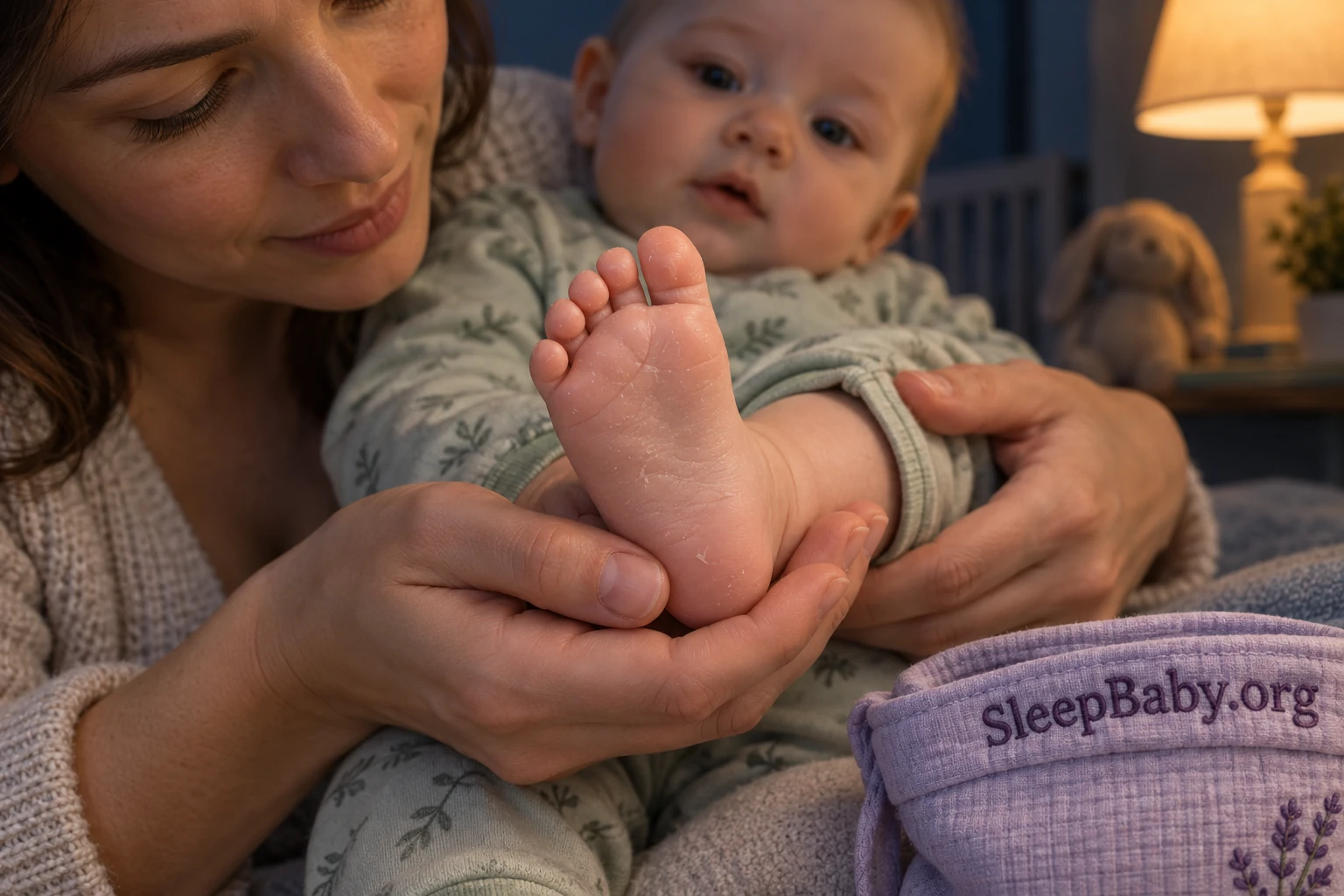
A little dry flaking on a newborn’s toes can be part of the skin adjusting after birth. Peeling that is sore, wet between the toes, swollen, or happening with illness needs a different response. I’d start by taking off the socks and looking at both feet in good light. Don’t pull the loose skin. Notice whether the skin underneath looks comfortable or raw, and whether your baby is feeding and behaving normally.
If your baby is 3 months old or younger and has a rectal temperature of 100.4°F (38°C) or higher, call the pediatrician immediately. Fever with spreading redness, a very painful or swollen toe, or a baby who seems unwell also needs prompt medical advice. A little peeling is one observation; the rest of your baby tells you how urgently to act. [1] [2]
When the peeling should not wait
Get emergency help if your baby is struggling to breathe, is hard to wake, or appears seriously ill. Don’t keep inspecting the foot while those symptoms are happening.
Call now for urgent assessment for fever in a baby 3 months or younger, fever with spreading skin redness, or a suddenly swollen, discolored, painful toe. A tight hair or thread can wrap around a toe and may be difficult to see; a groove plus swelling needs urgent attention. Don’t dig into the skin or try scissors against a swollen toe. [1] [2] [3]
Arrange a same-day call for pus, increasing warmth or tenderness, an open crack, worsening redness, new blisters, poor feeding, or fewer wet diapers. If your baby is otherwise well but the peeling keeps returning or its cause is unclear, contact the pediatrician during office hours. [2] [4] [5]
Color changes can be harder to judge on some skin tones. Compare with your baby’s usual skin and the other foot, and pay attention to warmth, swelling, tenderness, and behavior too. I would not make “it doesn’t look very red” the deciding reason to wait when a toe clearly hurts. Photos can help show a change, but they cannot tell you whether skin feels hot or whether touching it is painful.
Look at the whole foot before choosing a cream
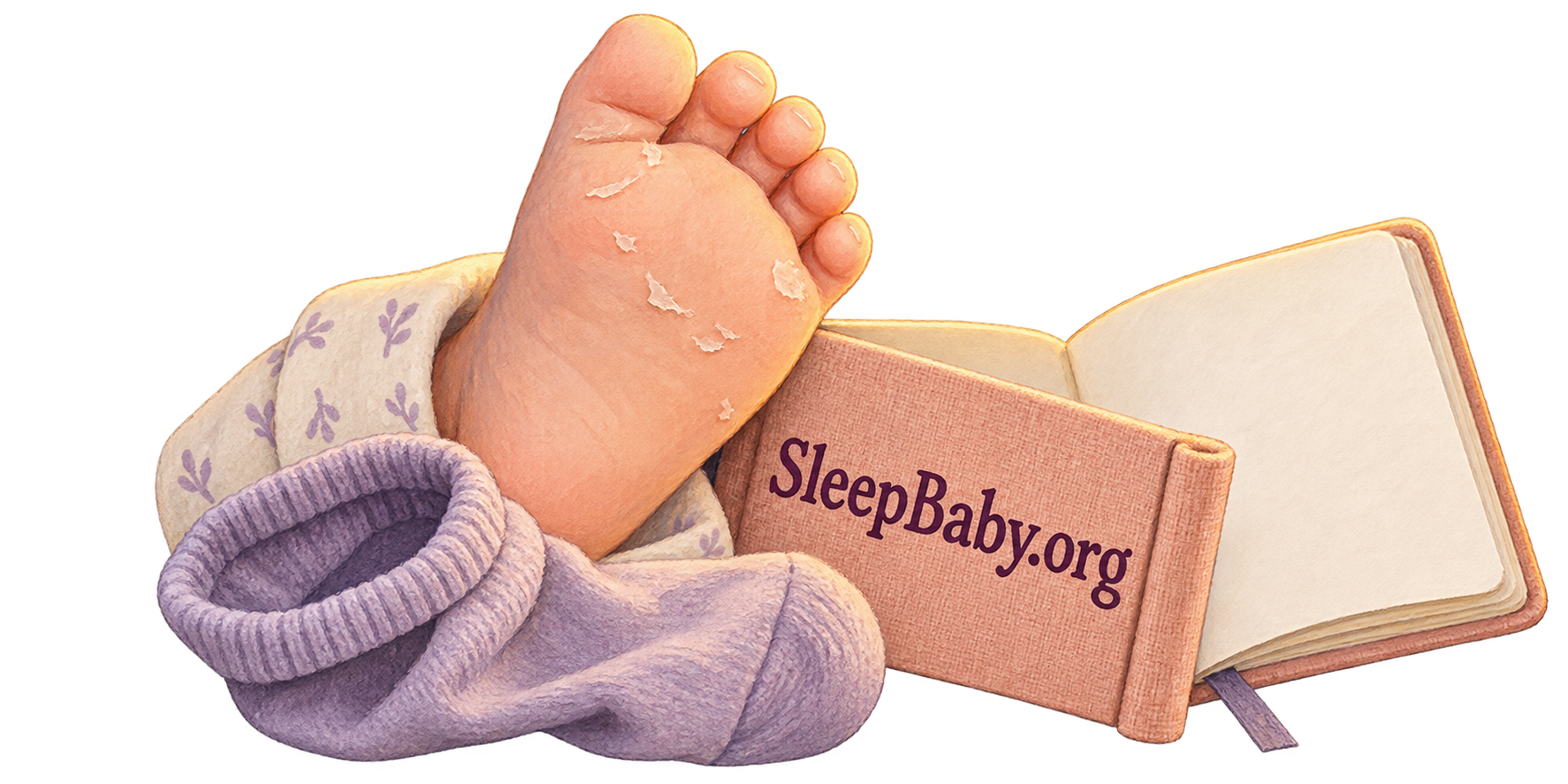
“Peeling” can mean a powdery edge of dry skin, a sheet of loose skin after an illness, or a damp split between two toes. Those are different descriptions. If you can explain which one you see, you are already giving the clinician more useful information than a list of possible diagnoses from an image search.
During one ordinary clothing change, look at the tops and bottoms of both feet and gently check between the toes. There’s no need to stretch them widely or scrape away skin for a better view. Note whether one small area is involved or both feet look similar. Check the hands and the rest of the skin for a rash, and think back to any recent fever or mouth sores.
Three places to look, three useful descriptions
- The dry surface
- Fine flakes, intact skin underneath, no tenderness: record your baby’s age and when it started. This can fit ordinary newborn shedding or dryness; the pattern alone doesn’t prove a cause.
- The toe crease
- Damp, whitish, sore, or split skin between toes: mention moisture and discomfort specifically. Pat dry gently and ask before treating it as simple dry skin.
- The whole baby
- Fever, reduced feeding, unusual sleepiness, swelling, or another rash changes the next step. Use the care guidance above, even if the peeling itself looks small.
SleepBaby.org observation guide, not a diagnostic test. Before bedtime, write down the finding that would help the next caregiver.
I’d also look at the clothing you just removed. Were the socks damp? Was a seam pressing against the same spot? Have you changed laundry products, bath products, or footwear? These are clues to share, not proof that you caused the problem. Keep the product name or take a picture of its ingredient label if you plan to ask about it.
If your baby is new, ordinary shedding may be enough to explain it
A newborn’s skin is still developing its protective barrier. Babies born after their due date may have particularly dry-looking skin because more of the protective vernix has already been absorbed. Some surface shedding in the early weeks can look surprisingly noticeable on tiny feet. The important distinction is uncomplicated flaking versus skin that is inflamed, painful, open, or accompanied by illness. [6] [7]
You do not have to remove the old layer to help the new skin. Leave an attached edge alone. A sock may pick up a loose flake naturally; that does not mean you should rub the rest off to make the foot match. I’d resist treating smooth-looking skin as the goal. Comfortable, intact skin is the more useful goal.
For a newborn, ask your maternity team or pediatrician before adding products just because the toes are peeling. NHS newborn guidance recommends plain water and avoiding routine lotions in the first month; care can differ when a clinician has identified eczema or another skin problem. Premature babies need their own team’s advice because their skin is especially delicate. [6]
If your baby is several months old and the peeling has only just begun, “newborn shedding” is not an explanation I’d carry forward automatically. Give the clinician the actual age and start date. Likewise, a new painful split deserves attention even if harmless flaking was present earlier. Two things that happen on the same toe do not necessarily have the same cause.
In an older baby, the pattern matters more than the word “peeling”
Dryness or irritation
Frequent washing and soap can remove the oils that help skin retain moisture. A new cleanser, fragranced product, or clothing exposure may also be worth discussing when the timing fits. Keep your account simple: what changed, where the skin changed, and whether it improved when you stopped the new nonessential product. An irritated patch is not automatically an allergy. [2] [4]
Changing three creams, the detergent, and the bath routine at once makes the next few days harder to interpret. I would pause a suspected new nonessential product and ask about the remaining care plan. If a product was prescribed, contact the prescriber about a reaction rather than substituting someone else’s treatment.
Itchy or recurring eczema
Eczema can make skin dry, itchy, and inflamed, and it may occur elsewhere as well as on the feet. Peeling alone does not establish that diagnosis. If your baby repeatedly rubs the feet together, seems uncomfortable in clothing, or has other itchy patches, tell the pediatrician. A treatment plan may involve specific moisturizers and prescribed medicines, with directions suited to your baby’s age and the affected area. [4]
For a baby who already has eczema, use the established plan and flag a new location or changed appearance. “We have an eczema cream” is not enough information to decide whether it belongs between sore toes. Know the medicine’s name, the strength, where it was prescribed for, and how long the clinician intended you to use it.
Damp skin between the toes
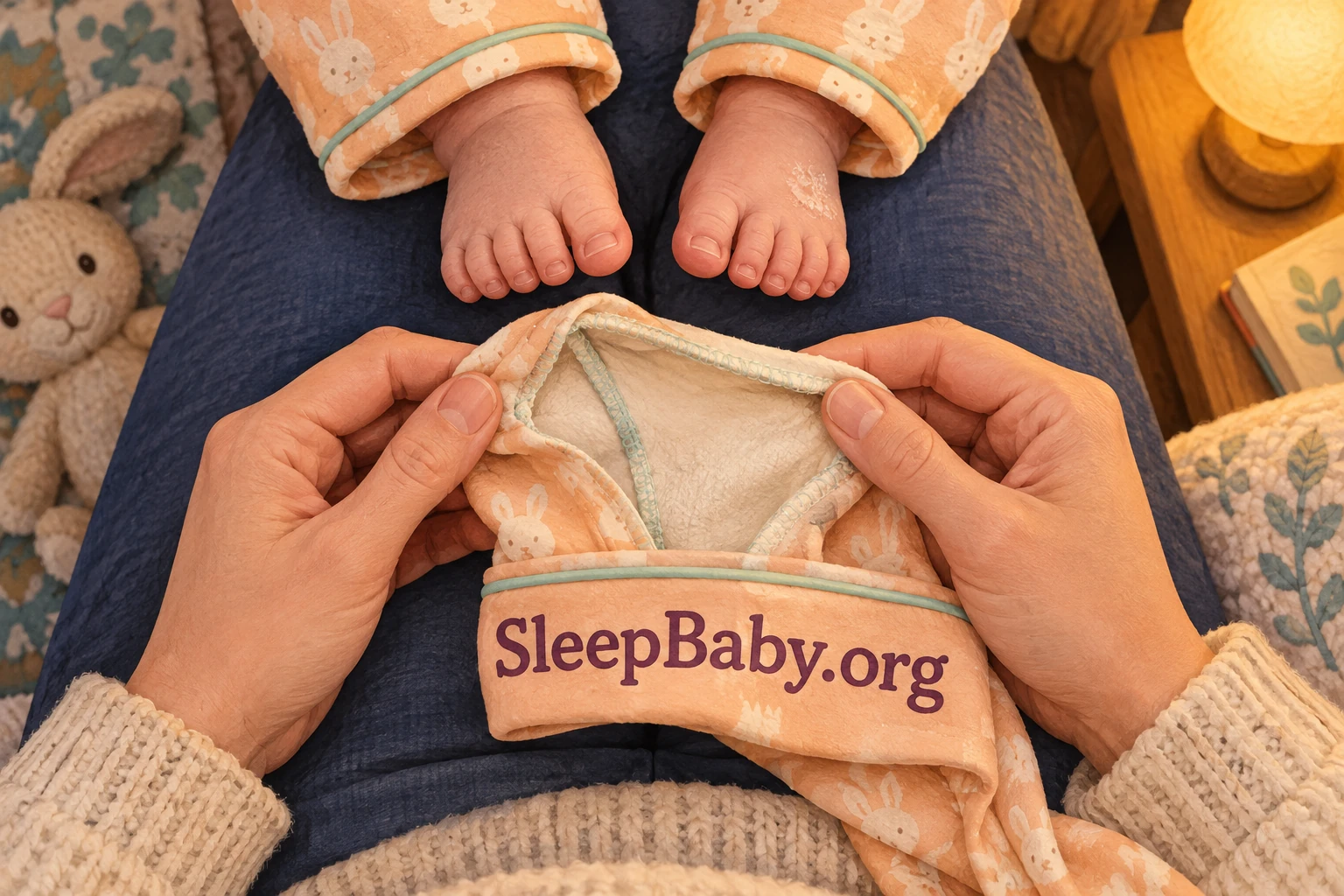
Moisture held against skin by wet or sweaty socks can contribute to foot problems. A crease that stays damp needs different attention from a dry patch on the outer foot. After washing, gently pat the spaces dry and change damp clothing. Don’t pack an unidentified wet, sore crease with a thick layer of cream and then tightly cover it. Ask what the area needs. [2] [8]
What I would do at the next wash and clothing change
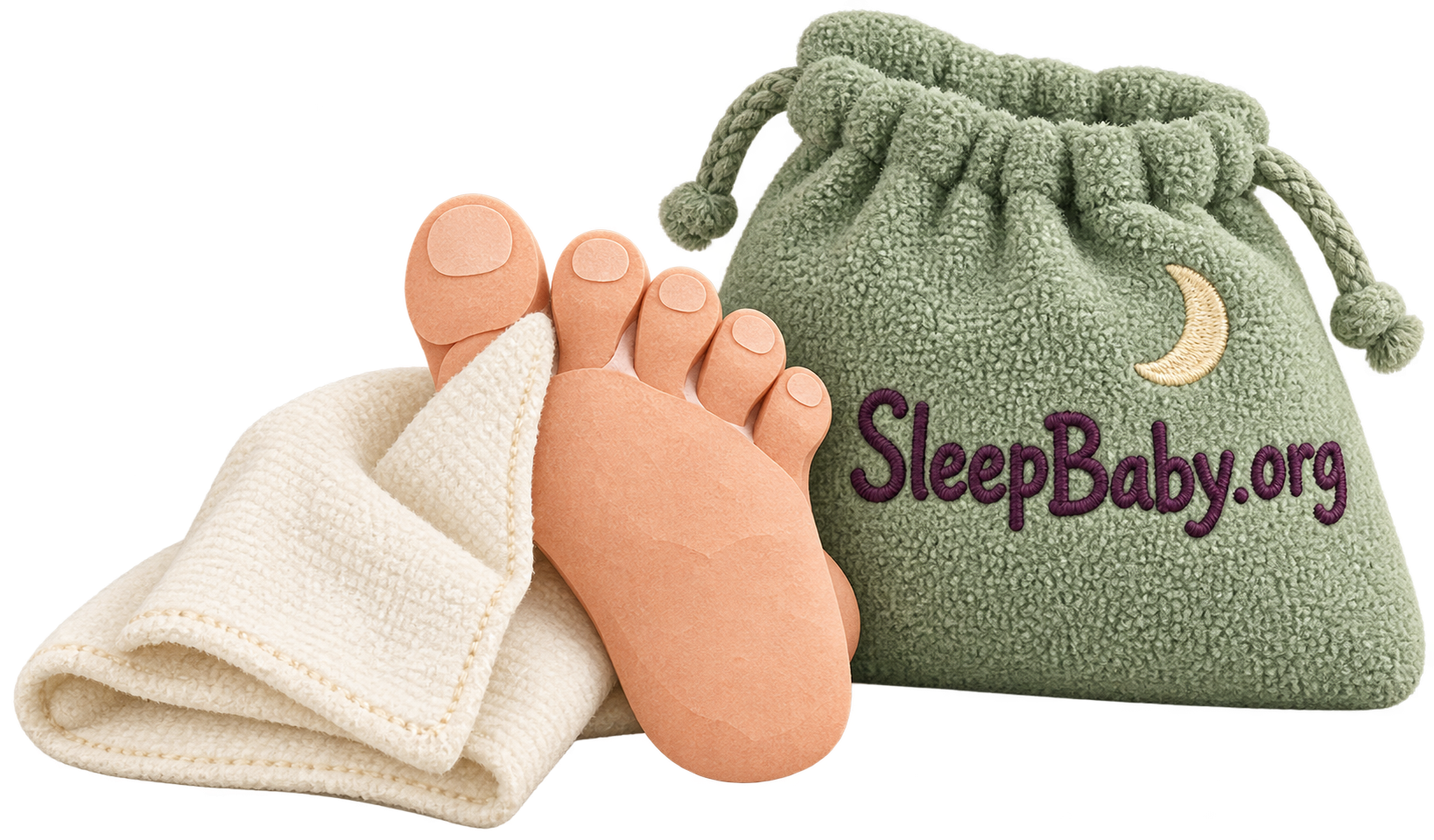
If your baby is well and the skin is only mildly flaky, gentle handling is a reasonable place to start while you decide whether to call. Take the socks off without dragging a rough seam across the area. Wash only as needed, with lukewarm water and no scrubbing. Gather supplies first and keep your baby supported and supervised throughout; skin care is not a reason to leave a baby alone in water. [9]
Pat with a soft cloth instead of rubbing. Give the toe creases a gentle final dry before dressing. Don’t peel, file, brush, or use an exfoliating foot product on a baby. If an attached flap catches repeatedly or a crack opens, describe that to the pediatrician rather than trimming close to the skin yourself.
Keep this clothing change simple
-
Look once. Note the location, soreness, and whether the area is dry or damp.
-
Handle gently. Clean as needed, pat dry, and leave attached skin alone.
-
Follow the right plan. Use only the skin product or medicine recommended for this baby and this area.
-
Dress comfortably. Choose clean, dry clothing that fits without pulling across the toes.
If the foot hurts, is swelling, or is getting worse, move to a call instead of another home-care experiment.
For an older infant with uncomplicated dry skin, a clinician may recommend a fragrance-free moisturizer. For eczema, the American Academy of Dermatology generally favors creams or ointments over thinner lotions and emphasizes following a clinician’s medication directions. That is not a blanket instruction to treat every kind of peeling with the same jar. Newborn skin, a moist crease, and an infected-looking patch each need their own judgment. [4]
I would skip the adult athlete’s-foot spray, essential-oil blend, foot powder, and leftover prescription while the cause is unknown. Ask before using an antifungal or steroid on your baby. If you have already applied something, there is no need to hide it or apologize. Give the clinician the name, amount, location, and time so their advice accounts for it.
Support for the ordinary bedtime around the care
A skin question does not have to become a whole new sleep plan
Follow your baby’s medical advice first. When the question is everyday settling, naps, or sharing the night shift, the SleepBaby.org Workshop gives you practical sleep guides to work through at your own pace.
Explore the Baby Sleep Miracle presentation at SleepBaby.org before deciding. The paid Workshop includes 15 guides, five audio tracks, and the original Workshop PDF for $9 USD once, with no subscription. It does not diagnose or treat peeling skin.
Digital access. Nothing ships. Final total is shown at checkout.
Could it be athlete’s foot?
A fungal infection can cause peeling, cracking, itching, or discomfort on the soles or between toes. But those features overlap with other skin problems. Adult foot-care search results are especially easy to misapply to a baby. A clinician can examine the pattern and, when necessary, take a small skin sample to check for fungus. [8]
I would not decide that the cause is fungal because the crease looks white, or rule it out because your baby does not walk. Tell the clinician about damp socks, other household members with a foot infection, shared towels, and any treatments already used. That history helps them decide what to examine. It does not mean the answer is poor hygiene.
If treatment is prescribed, ask exactly where it goes and when to stop. Keep the instructions with the product so another caregiver does not mistake a medicine for an everyday moisturizer. Do not borrow an adult’s schedule or assume that a cream suitable elsewhere on the body is suitable for this area.
Did the peeling follow a rash or fever?
After hand, foot, and mouth disease, some children develop peeling on their fingers or toes, particularly after a more extensive rash. Seattle Children’s describes peeling beginning around one to two weeks into that pattern. Mouth sores, spots or blisters on the hands and feet, and a recent illness give the peeling useful context. Peeling by itself does not prove that your baby had the infection. [5]
If your baby was diagnosed, follow the care advice you were given and mention new soreness, spreading redness, fever, or difficulty drinking. Keep track of wet diapers when feeding is reduced. Tell the clinician whether the original illness improved before the peeling appeared, or whether your baby has remained unwell throughout. Those are different stories.
A fever lasting five days or longer needs medical assessment, especially with red eyes, cracked lips, a rash, or changes to the hands and feet. Kawasaki disease is one uncommon reason clinicians consider that combination. I would not jump from one peeling toe to that diagnosis, and I would not wait for five days if your baby meets an earlier urgent-care threshold. [10]
Write down the first day of fever if you know it. “Sick sometime last week” is understandable when nights blur together, but a calendar note makes the timeline easier to communicate. Include any recent medicine and whether the peeling began before or after it. Let the clinician decide which details are connected.
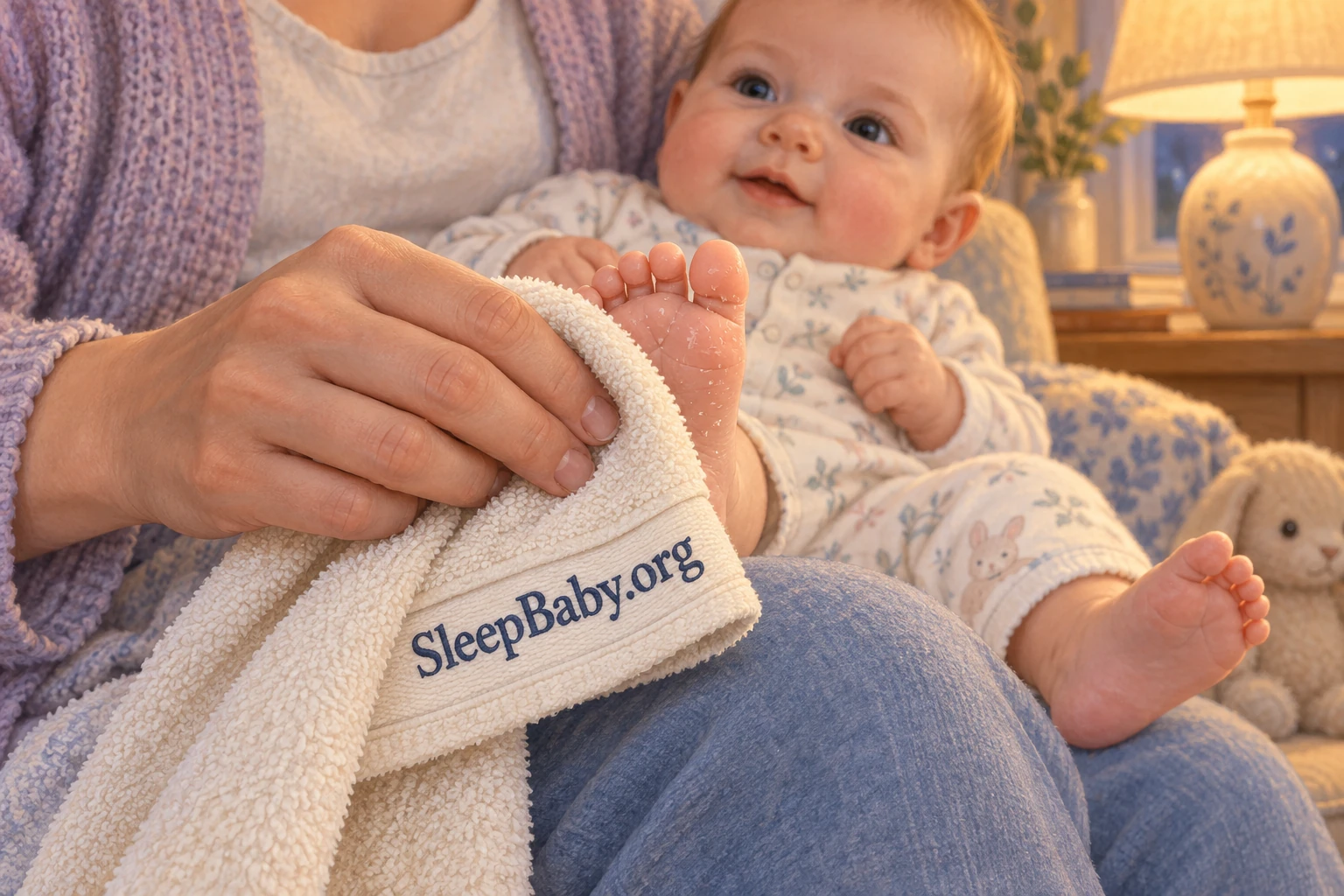
If eczema is part of the picture
The American Academy of Dermatology’s How to treat eczema in babies explains gentle bathing, moisturizing, and the role of a dermatologist’s treatment plan. It is useful background if eczema is suspected or diagnosed, rather than a way to identify the cause of toe peeling.
Keep this distinction: medication and special bath treatments in the video require individual medical guidance. Don’t begin them for unexplained peeling. Your baby’s written plan comes first.
Watch the AAD video on YouTube · Read the accompanying guidance
What if this is a toddler, or it keeps happening?
A walking child adds shoes, friction, sweat, and repeated pressure to the picture. Look for a pattern at the ball of the foot, under the big toe, or where a shoe rubs. Juvenile plantar dermatosis, for example, is a dry, sometimes cracked sole condition usually seen in older children, commonly ages three to fourteen. It is not an explanation to casually transfer to a newborn. [11]
If your toddler avoids putting weight on the foot, limps, or has a painful crack, arrange medical advice instead of simply buying softer shoes. For a child who walks comfortably but develops recurring dry patches, bring the usual shoes and socks to the conversation, or photograph their fit and wear. Note whether both feet are affected and whether the spaces between toes are involved.
There isn’t one honest deadline for all peeling toes. Newborn shedding, irritation, eczema, and peeling after an illness do not run on the same timetable. I would look for comfortable skin, no spread, and an improving overall pattern rather than require every flake to disappear by tomorrow. If the cause is unclear, ask during office hours instead of setting a long waiting period yourself. [2]
Once a clinician has recommended a plan, ask when improvement should begin and when to check back. A photo taken in similar light can show change without repeatedly handling the skin. Worsening pain, new swelling, or an unwell baby overrides the planned follow-up date.
Make the next comparison useful
At the next usual clothing change, compare the same part of the foot. Has the flaky edge stayed in one place? Is the skin underneath still intact? Does your baby tolerate the same gentle touch? Write down an actual change, such as “the split between the fourth and fifth toes looks wider,” rather than “the foot is worse.” You do not need to score the skin or keep a detailed chart.
For a photo, use ordinary, even light and keep the camera far enough away to focus. A very close, blurry image can make a small patch look dramatic while hiding where it is. Include a wider view of the foot, then the clearer close view. If the clinic cannot assess it from the pictures, an examination may be the next step. Sending a portal message is not a substitute for calling when urgent symptoms are present.
If the skin looks better but your baby seems less well, describe both. Likewise, a baby who is cheerful does not make a newly swollen toe unimportant. Keep the local skin change and your baby’s overall condition as two separate observations, then let the clinical team put them together.
If the plan is unclear between caregivers
Before daycare or another caregiver takes over, check whether anyone has used a different wash, cream, or sock. Ask neutrally: “What went on the feet today?” The aim is to get an accurate account. Photograph the front and directions of any product involved, and keep the actual container available if you call. A description like “the white cream” will not tell the clinician what it contains.
If one adult remembers “keep it dry” and another remembers “use the ointment,” clarify which area each instruction refers to. A dry outer patch and a sore crease may not have the same directions. Ask the clinic to put the plan in writing, including the exact product, location, frequency, and follow-up. Do not split the difference by mixing products or alternating someone else’s medicine.
Keep medicines in their original labeled containers and out of children’s reach, rather than leaving an unmarked scoop beside the pajamas. If a dose or application was missed, use the prescriber’s or pharmacist’s advice about what to do next. Doubling up to compensate is not a decision to make from a general article.
Give the pediatrician a description they can use
You don’t need the right medical term before calling. Age, location, timing, discomfort, and your baby’s general condition are more useful than choosing between eczema and fungus yourself. Mention a recent fever even if it has stopped. If you send a photo through the clinic’s approved system, include one view of the whole foot and one clear close view, without filters.
A useful way to start the call
“My baby is ___ old. The skin is peeling on ___, and I first noticed it ___. It looks dry/damp/open, and touching it seems comfortable/painful. Feeding and wet diapers are ___. There has/hasn’t been a fever or another rash. We’ve used ___.”
Then ask: “Does this need to be seen today? What should we use or avoid until then, and what change means we should call sooner?”
If another caregiver will handle bedtime, share the actual instructions, including whether to apply anything and where. “Keep an eye on the feet” leaves too much guessing. A short note about one toe, one product, and one reason to call is easier to follow at the next clothing change.
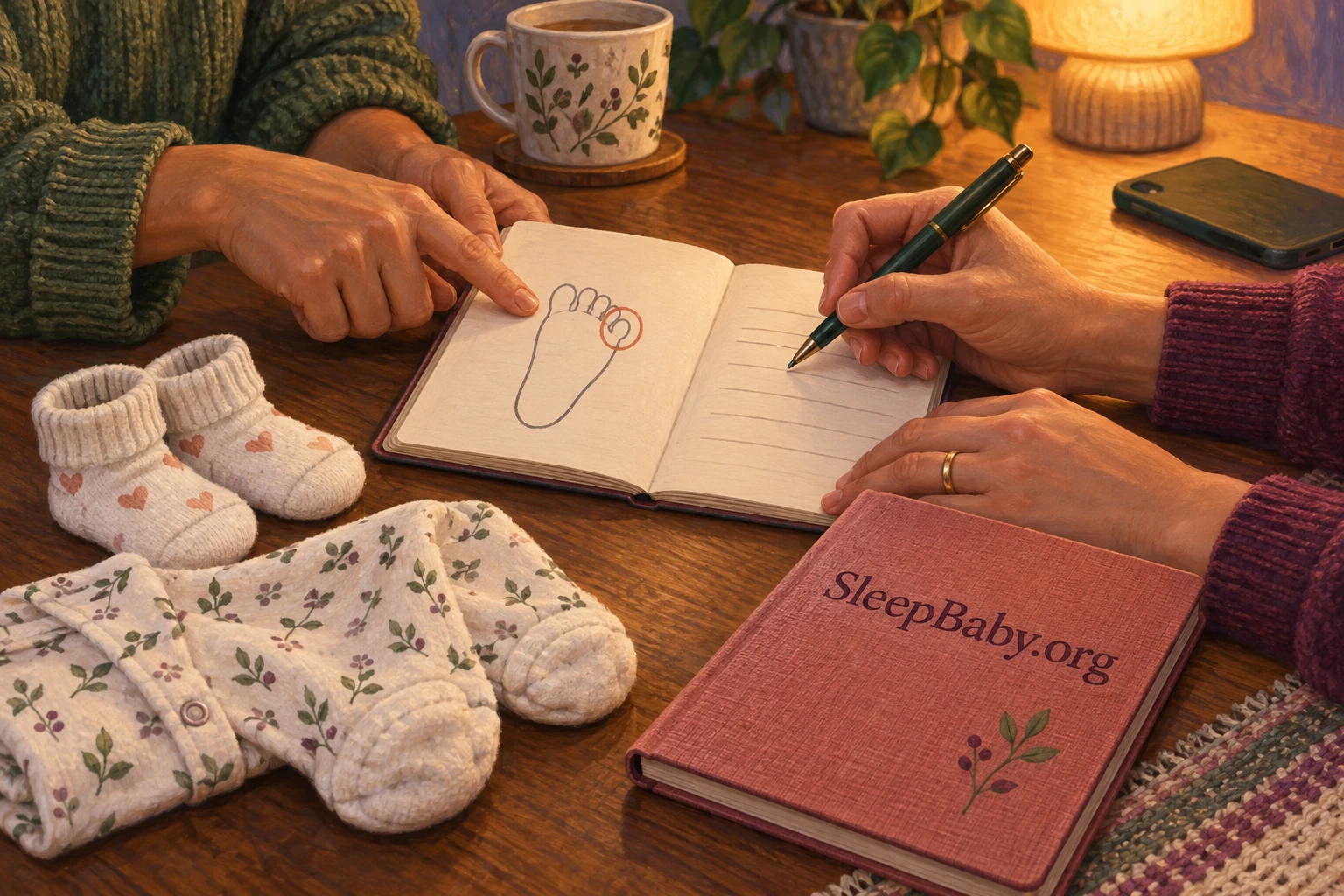
Keep bedtime comfortable without covering up the question
Peeling that does not bother your baby may need very little adjustment to the evening. Pain or itch deserves attention on its own; don’t assume a baby who cries during dressing simply dislikes bedtime. Check whether the footed pajamas pull against the toes when the legs straighten, whether socks are damp, and whether a seam sits on the sore area.
Choose appropriate, well-fitting sleepwear without overheating your baby. A sock is not a treatment, and extra layers are not a way to make a sore foot safe. Continue placing your baby on their back on a firm, flat approved sleep surface with a fitted sheet and no loose bedding or objects. Don’t add a towel, cushion, or blanket under the feet. [12]
Our guide to checking sleepwear fit and comfort can help if dressing is the difficult part. If the skin concern has been addressed but the evening timing still feels unsettled, use the practical guide to finding your baby’s bedtime. Neither replaces the skin-care advice your baby needs.
I would make the care check part of a normal change, then return to feeding, comfort, and the routine your baby knows. You don’t have to keep taking off the pajamas to see whether a flake has moved. Follow any monitoring instructions you were given, share them with the other caregiver, and make room for your own rest too. Our guide to both parents resting while a newborn sleeps covers that separate nighttime question.
The decision tonight is not whether you can name the condition from a picture. It’s whether your baby needs care now, which gentle steps fit the skin you are seeing, and what change would make you call. That is a much more useful job than making every toe look perfectly smooth.
For your household reference shelf
An optional Amazon reference for the next baby-care question
Caring for Your Baby and Young Child, 8th Edition, by the American Academy of Pediatrics, is a broad birth-to-age-five reference. If you prefer an organized book for everyday care questions, it can sit alongside the advice you get from your pediatrician. It cannot diagnose these toes.
Check before buying: this link is for the eighth-edition paperback. Confirm the edition and format on the listing. I’d choose a general reference over buying a medicated foot product before the cause is known.
Skip the purchase if your clinic’s instructions and free AAP guidance give you what you need. A library copy or an up-to-date reference you already own may serve the same purpose.
As an Amazon Associate, SleepBaby may earn from qualifying purchases.
Sources
- AAP: Fever and Your Baby.
- Seattle Children’s: Dry Skin.
- Cleveland Clinic: Hair Tourniquet.
- AAD: How to Treat Eczema in Babies.
- Seattle Children’s: Hand, Foot, and Mouth Disease.
- NHS: Getting to Know Your Newborn.
- NLG NHS: Skincare for Newborn Babies.
- Nemours KidsHealth: Athlete’s Foot.
- AAP: Bathing Your Baby.
- NHS: Kawasaki Disease.
- DermNet: Juvenile Plantar Dermatosis.
- AAP: A Parent’s Guide to Safe Sleep.
- Publisher: Caring for Your Baby and Young Child, 8th Edition.
After the socks, the notes, and the care plan
Leave a little room for an ordinary bedtime
Once you know what your baby’s skin needs, the next question may simply be how to settle into the evening. Explore SleepBaby.org’s sleep guidance when you are ready, while keeping your baby’s medical instructions first.




What viewers said10 comments · 4 replies+
Archived comments from the original Baby Sleep Miracle presentation. Not independently verified by SleepBaby.org; individual experiences vary.
Thank you so much for this video! I had no idea about the dangers of baby swings :O
Hi Mary-Ann. I have a question: Is method in any way similar to the ones recommended by Dr Bucknam, Dr. Weissbluth or Dr. Karp? We tried those but none of them help.
Hi Regina, thank you for your question. The short answer is no. The techniques I share in my guide are based on newest scientific research and this is why I have never seen any approach similar to the one I recommend.
This method really works! I tried it on my son Jesus and after just one week he went from waking up more than 5 times a night to waking up just once or twice. You are a lifesaver, Mary-Ann!
I'm truly impressed with how much information you share in your video. And all for free! I can feel that you truly care about mothers like myself, and that's hard to find these days. I have recommended your site to several of my friends already.
Mary-Ann, our child suffers from autism. Is your approach still suited?
Chloe, I made sure my method can be used with any child, even babies who are special like yours. Please note that I'm not a doctor and that I always advice to consult with your physician because nothing is more important than the safety and well-being of your love.
Hallo Mary-Ann, I'm from Germany. Do you have your guide in German?
Hello Heide, we do! Normally you should already see our video in German. If not, please contact our support so they can guide you
Thenk you for your answer, Mary-Ann!
I just completed your approach and I have to say, it worked almost too well. Yes, it took a bit of getting used to with your bedtime routine but the difference is huge. My son George used to take 1 hours to go down and now he's firmly asleep in no more than 10 minutes! You're the best!
It seems I'm the only man watching this video, lol! What you shared about the 'emotional backpack' made immediate sense to me and I can't wait to help my little girl Mila to unpack it!
Hey there, just discovered your site and this really sounds different. Just wanted to say thanks for sharing :)
For everyone who's still thinking about getting Mary-Ann's guide I want to advise you to go ahead. I wasn't sure myself but now I'm so thankful I invested in this program. It made a huge difference in our life as a family and yes, my baby girl does sleep through the night now.