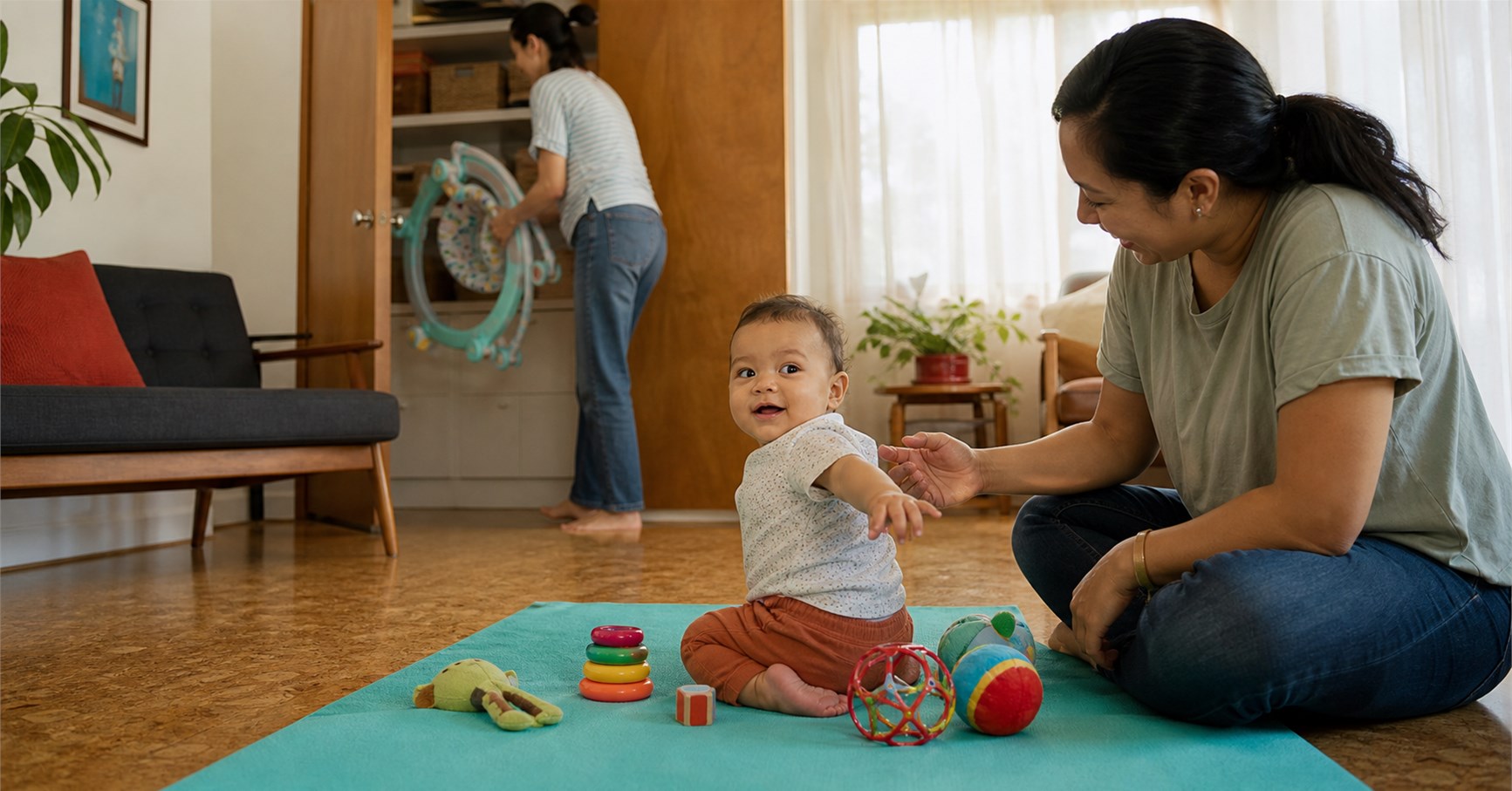
As a parent, you might have gotten a walker for your baby with the expectation that they will be moving forward with ease. However, you find that your baby is only going backward in the walker. This is common, especially if they are still learning how to use the walker. You might wonder why this happens and how you can help your baby move forward. Let’s explore this topic in detail and provide you with some helpful tips.
Why Do Babies Go Backward in a Walker?
Babies often go backward in a walker due to the natural development of their motor skills. Infants tend to develop strength in their upper bodies before their lower bodies. Consequently, pushing backward is easier as they rely more on their arm strength, whereas pulling forward requires stronger leg muscles and coordination.
The tendency for a baby to move backward in a walker is primarily due to their physical development. Babies’ upper body strength often develops faster than their lower body strength. Consequently, it is easier for them to push the walker back with their arms than to pull it forward with their feet. This might seem strange, especially for first-time parents. However, remember that each baby develops at their own pace and the backward movement is a sign of their development.
How Do I Get My Baby to Walk Forward in a Walker?
To encourage your baby to walk forward in a walker, you can:
- Let Them Observe: Babies learn a lot from observing their surroundings. Show them how to move the walker forward using an older sibling or a video demonstration.
- Assist Them: Occasionally, help your baby move the walker forward by guiding their legs or moving the walker for them.
- Encourage and Praise: Whenever your baby makes progress in moving forward, praise them. This positive reinforcement can motivate them to keep trying.
- Use Favorite Toys or Snacks: Place your baby’s favorite toy or snack just out of their reach, in front of the walker. Their desire to get the item can prompt them to move forward.
Why Does My Baby Only Go Backwards?
Similar to the reasons for going backward in a walker, a baby may only crawl or scoot backward because they’ve developed more strength in their upper body. Pushing backward is typically easier for babies than moving forward, and it’s a normal part of their motor skills development.
Is Baby Walking Backwards a Sign of Autism?
While certain behaviors can be associated with autism, it’s essential to know that a baby walking or moving backward is not necessarily a sign of this condition. Autism is typically associated with a range of symptoms that affect social skills, communication, and behavior. If your child is showing other signs of developmental delay alongside moving backwards, it’s a good idea to consult with a healthcare professional. However, moving backwards alone, whether in a walker, crawling, or scooting, is a typical part of physical development.
How to Teach Your Baby to Move Forward in a Walker
Let Them Observe
Babies learn by observing. Let your baby watch others move the walker forward. This could be an older sibling, yourself, or even a baby of similar age from your neighborhood. Alternatively, you can find videos online to help demonstrate the movement.
Encourage and Assist
Motivate your baby to try moving forward. You can do this by pulling the walker for them, or by moving their legs in a forward motion while they’re in the walker. When they make progress, be sure to praise and reward them, which will motivate them to keep practicing.
Use Their Favorite Toys or Snacks
Place your baby’s favorite toys or snacks in front of them while they’re in the walker. The natural desire to reach the item can encourage them to move forward.
Final Thoughts
It might be disconcerting to see your baby only go backward in a walker. However, remember that this is a normal part of their development. With patience and encouragement, your baby will eventually learn to move forward in their walker. In the meantime, celebrate every milestone, no matter the direction!
How SleepBaby.org Can Help
At SleepBaby.org, we understand that your baby’s sleep patterns can be influenced by their daily activities, such as learning how to move in a walker. If your baby is spending a lot of energy moving backwards, it might affect their sleep patterns. Our expert advice can help ensure your baby gets the rest they need while still learning essential skills like walker mobility. With our sleep training methods, you can ensure a better, restful sleep for your baby, contributing to a healthier learning environment.
Tell us what nights look like in your house
No account. No email required. A first name or nickname is enough.
What part of “My Baby Only Goes Backward in Her Walker” feels most painfully specific in your house right now?

What part of “My Baby Only Goes Backward in Her Walker” feels most painfully specific in your house right now?
Sometimes the smallest detail—what time it happens, what changed recently, or what finally helps—reveals the pattern. Share the exact version below, and the SleepBaby Team can help you think through it.