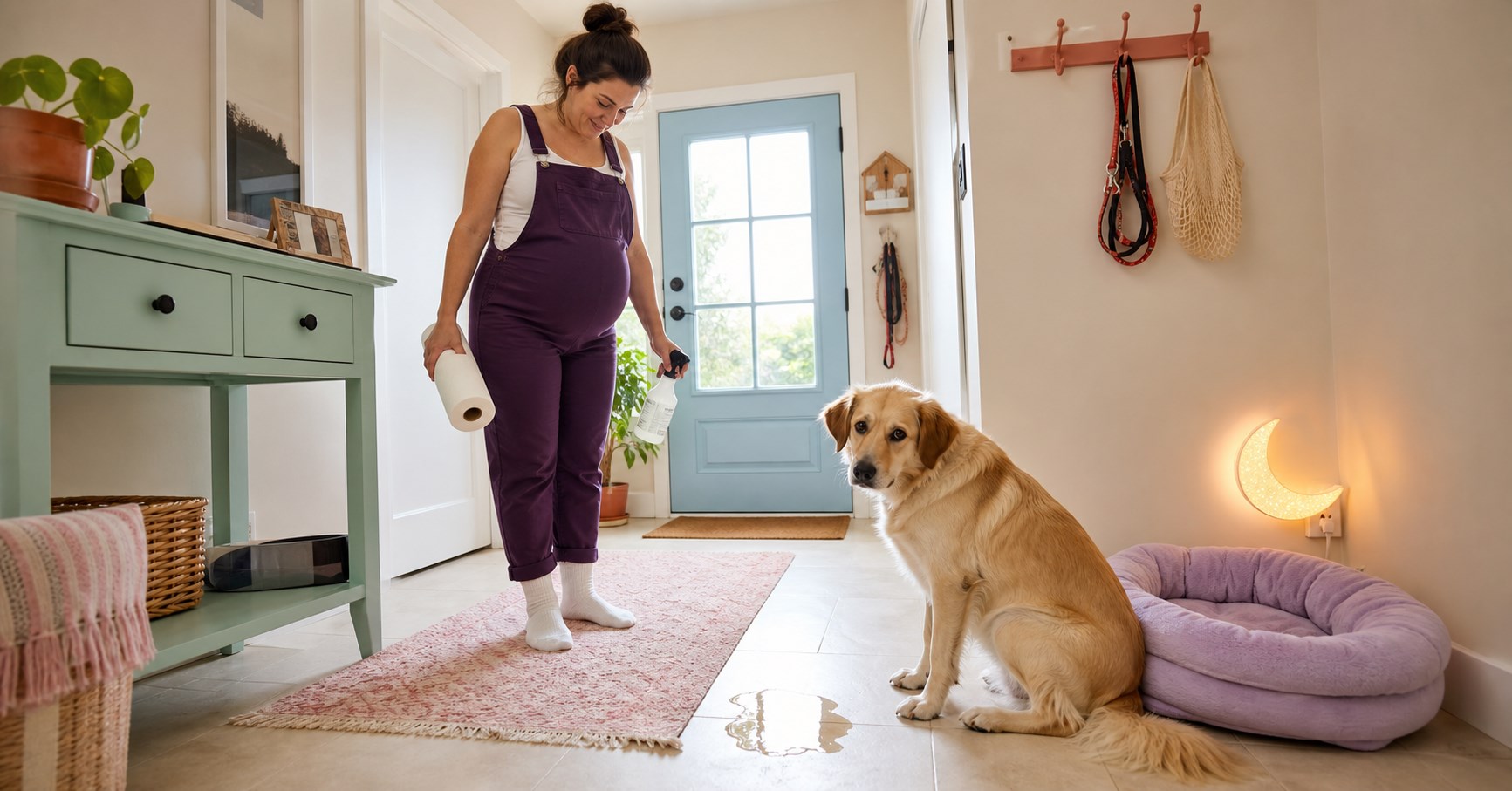
During pregnancy, several changes occur in your body and your lifestyle, which your dog may find unsettling. One of the common problems faced by expectant mothers is their dogs starting to pee in the house. This change in behavior could be due to their perception of your pregnancy and the subsequent changes in your routine. Let’s dive deeper into this issue, providing insights on dogs sensing pregnancy, changes in their behavior, and practical solutions to manage in-house peeing.
Understanding Dogs’ Sense of Pregnancy
Dogs, with their extraordinary olfactory capabilities, can detect subtle changes in their environment, including the hormonal changes occurring in a pregnant woman’s body. The fact that dogs can smell nearly 100,000 times better than humans aids their ability to perceive these changes. This heightened sense of smell, coupled with their keen observational skills, makes them extremely sensitive to even the slightest changes in their owner’s physical and emotional states.
SleepBaby.org · The original video
A little help
for the night ahead.
Take a moment to watch the original Baby Sleep Miracle presentation. Your article will be right here when you’re ready to keep reading.
Ready to get started?Take the next step with SleepBaby.
Help my baby sleepHow Dogs Behave Around Pregnant Women
As your pregnancy progresses, your dog may start to exhibit behavioral changes. While some dogs maintain their regular behavior, others may become more protective or overly possessive. They might start following you around more than usual or become more inclined to be near you. The changes in their routine, combined with the anticipation of a new family member, may lead to stress and anxiety, which could manifest as in-house peeing.
Dealing with Dogs’ Behavioral Changes During Pregnancy
The shift in your routine, such as skipping dog walks or devoting less time to your furry friend due to fatigue or morning sickness, could impact your dog’s behavior. The introduction of new baby-related items (like cribs, diapers, or baby room paint) can signal impending changes that may confuse or stress your dog. This stress, coupled with a sense of insecurity, could trigger unusual behaviors such as in-house peeing. Here’s how you can manage this issue:
Rule Out Health Issues
Before you attribute your dog’s in-house peeing to pregnancy-related changes, it’s crucial to rule out health issues. Urinary tract infections (UTIs) or diabetes could cause frequent urination, so it’s best to take your dog to a vet for a thorough check-up.
Maintain Affection and Consistency
Despite the changes in your life, try to keep your pet’s routine as stable as possible. Show them love and affection, reassuring them of their place in your life. If you’re unable to manage, seek assistance from a friend or family member to maintain this consistency.
Reinforce Behavior Training
With a baby on the way, it’s crucial to reinforce obedience and good behavior in your dog. Re-establish your authority and make them understand that while changes are imminent, their place in the household remains secure.
Remember, your dog’s behavior is likely a response to the changes in their environment and routine. A bit of love, care, and patience can help them adjust to the new normal while effectively addressing issues like your dog peeing in the house during your pregnancy.
Will My Dog Stop Peeing in the House After I Have My Baby?
While it’s not guaranteed, many dogs do revert back to their normal behavior after their owner has given birth. This is because the trigger of their anxiety (the changes associated with your pregnancy) is now gone. However, keep in mind that the arrival of a new baby itself can bring a whole new set of changes and stressors for your dog. As always, maintaining consistency and ensuring your dog feels loved and secure can go a long way in managing their behavior.
Can My Dog Peeing in the House Impact My Pregnancy?
In general, a dog peeing in the house should not directly impact your pregnancy. However, it is important to ensure proper hygiene and cleanliness, especially in the areas where your dog has peed. Exposure to dog urine shouldn’t pose a risk to a pregnant woman and her baby, yet if the urine is left uncleaned, it could potentially contribute to an unsanitary environment, which isn’t ideal for anyone in the home.
How to Stop Your Dog from Peeing in the House While You’re Pregnant
Step 1: Visit a Veterinarian
Before attributing your dog’s behavior to your pregnancy, rule out any potential health issues that might be causing in-house peeing. A vet can check for urinary tract infections, diabetes, and other conditions that might be the root cause.
Step 2: Maintain Consistency
Try to keep your dog’s routine as regular as possible. Consistent feeding times, walks, and playtimes can provide a sense of security and stability, reducing anxiety.
Step 3: Show Affection
Ensure your dog feels loved and secure. Spend time cuddling, petting, and talking to your dog. This can reassure them of their place in your life, despite the changes happening around them.
Step 4: Reinforce Potty Training
If necessary, go back to the basics of potty training. Reward your dog for peeing outside and interrupt (without scolding) any attempts to pee inside, directing them outdoors instead.
Step 5: Seek Help
If you’re too tired or busy preparing for the baby, ask a family member or a friend to help keep up with your dog’s routine. This can help maintain consistency and prevent behavior problems from developing.
Step 6: Consult a Professional
If your dog’s behavior continues despite your best efforts, consult a professional dog trainer or a behavioral specialist. They can provide expert guidance tailored to your specific situation.
How SleepBaby.org Can Help
When you’re pregnant and dealing with a dog peeing in the house, it can be challenging to navigate, especially when you’re preparing for the arrival of your baby and focusing on the important aspects of newborn care, such as establishing healthy sleep patterns.
SleepBaby.org is a reliable source that can help reduce your burden by offering expert advice and effective techniques to ensure your new baby sleeps well. By allowing SleepBaby.org to take care of your baby’s sleep education, you can free up more time and energy to address other issues, like your dog’s unusual behavior.
In turn, a well-rested baby leads to a more relaxed household environment, which can positively affect everyone in the home, including your pets. With less stress and more rest, you’ll be better equipped to tackle challenges like your dog’s behavior, resulting in a happier, healthier home for everyone.
SleepBaby.org · The original video
A next step for
the next bedtime.
Still thinking about sleep? Watch the presentation here, then explore the SleepBaby program whenever you’re ready.
Ready to get started?Take the next step with SleepBaby.
Help my baby sleep