The fitted sheet is smooth, the room is cool, and one small hand keeps reaching for another itchy spot. When a baby with chickenpox cannot settle, the private question is rarely just “How do I get more sleep?” It is “Is this ordinary discomfort, or am I missing a sign that my baby needs help?”
The short answer
Chickenpox can break up a baby’s sleep—but age and alertness change what you do next
Itching, feverish discomfort, sore spots, and disrupted feeding can all make a baby wake more often or resist sleep. That is a reasonable symptom-based explanation, not a special “chickenpox sleep regression.” But a baby who is unusually hard to wake, breathing differently, feeding poorly, producing far fewer wet diapers, or getting worse needs medical assessment rather than another settling technique.
If your baby is under 1 year old and may have chickenpox, call your pediatric clinician for individualized advice. If your baby is under 3 months and has a temperature of 100.4°F (38°C) or higher, seek urgent medical care before trying to manage the fever at home. A newborn exposure also deserves prompt professional advice, even before a rash appears.

Why chickenpox nights can feel different from ordinary broken sleep
Chickenpox usually brings an itchy rash, and it may also bring fever, tiredness, appetite changes, and spots in uncomfortable places—including the mouth, eyelids, or genital area. I would not expect a baby to sleep through all of that simply because the bedtime routine is familiar. A warm sleep sack may suddenly feel too warm. A feed may pause because a mouth spot is sore. A nearly settled baby may rub against pajamas and wake again.
The useful distinction is not “sleeping versus not sleeping.” It is uncomfortable but normally responsive versus unusually sleepy or difficult to rouse. A baby who wakes cross, scratches, takes comfort, looks at you, and returns toward their usual level of alertness is showing a different pattern from a baby whose response has become faint, confused, floppy, or markedly unlike them.
I would also separate the rash from the calendar. New chickenpox spots can appear while older blisters are crusting. There is no reliable rule that night two or night four must be the worst, and one longer stretch of sleep does not prove the illness has resolved. What matters is the whole picture at each waking: breathing, color, temperature, feeding, urine, alertness, and what the skin looks like around—not just on—the spots.
Turn worry into usable information
What each waking can tell you
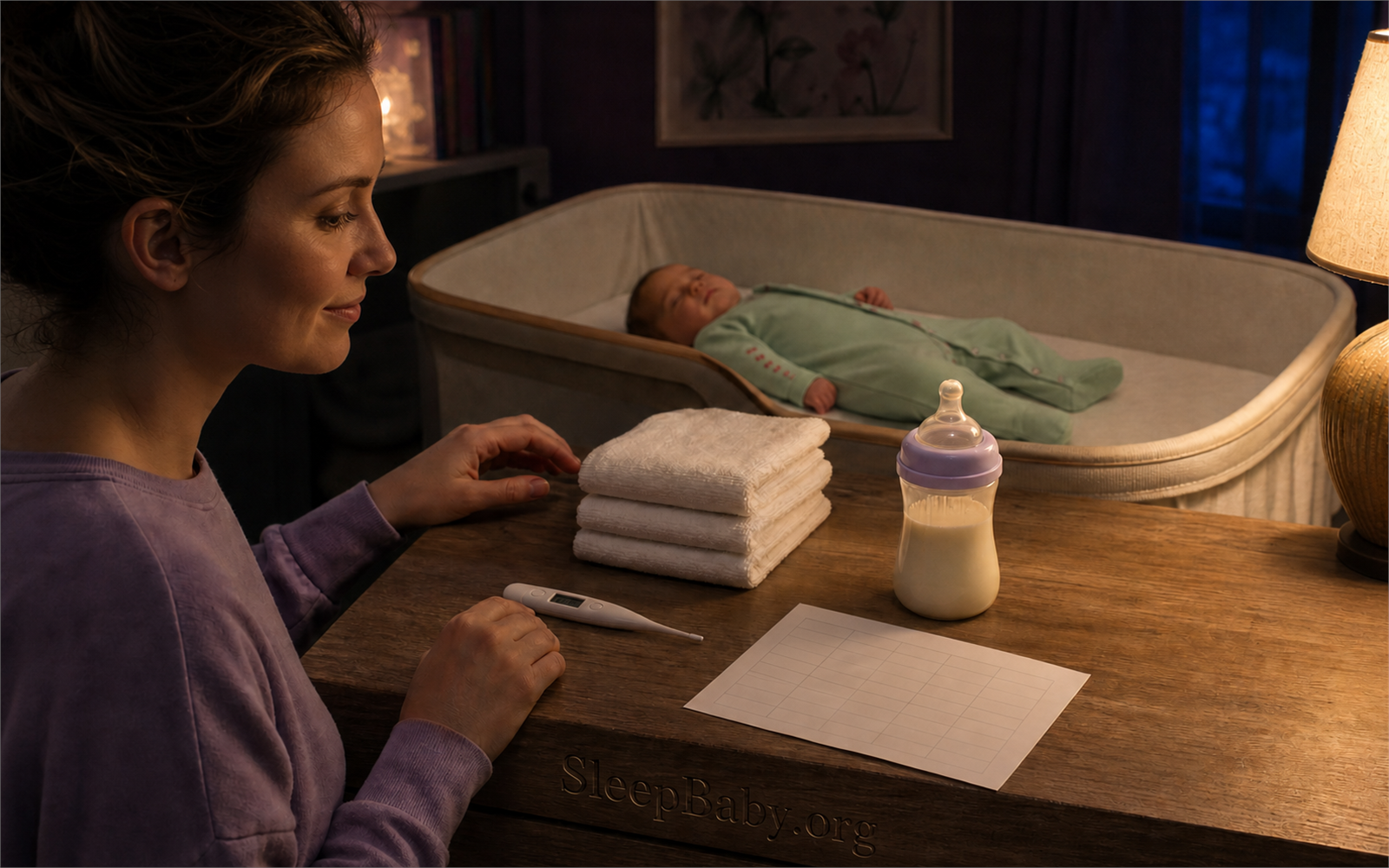
Night makes isolated details feel louder. A short note keeps you from treating every wake as identical, and it gives a clinician something more useful than a recap of how little anyone slept. I would record only what changes the next decision.
| What you notice | The distinction that matters | Your next move |
|---|---|---|
| Scratching, wriggling, or crying when pajamas touch the rash | Discomfort with normal eye contact, movement, breathing, and consolability is different from a baby who is weak, floppy, or difficult to wake. | Use gentle awake comfort, check for heat and friction, then return to safe sleep. Call urgently if responsiveness is not normal. |
| A shorter feed or refusal after a few sucks | One interrupted feed may reflect fatigue or sore mouth spots; repeated poor intake plus fewer wet diapers points toward dehydration risk. | Offer familiar feeds again without force, note wet diapers, and call for same-day advice if intake is repeatedly poor or urine drops below the usual pattern. |
| One spot looks angrier than the rest | The chickenpox blister itself can be red and itchy. Redness that spreads, becomes hot, swollen, very tender, streaked, or drains pus can signal a secondary bacterial infection. | Do not cover it with an improvised remedy. Contact the clinician promptly and describe the change; send a photo only through a route the practice recommends. |
| A longer-than-usual stretch of sleep | Extra tiredness can happen during illness. The key is whether your baby can be roused and returns toward their usual response, color, and breathing. | Check without trying to keep the baby awake unnecessarily. Difficulty waking, confusion, floppiness, or abnormal breathing is emergency territory. |
Keep the note factual: “2:18 a.m.—took half the usual feed, wet diaper, looked at me, one warm red patch near the hip.” That sentence is more useful than “terrible night.” It also helps two caregivers hand over safely without repeating medicine or missing a change that began on the previous shift.
A clearly labeled composite
At 2:18 a.m., Kacey and Benjamin need a smaller question
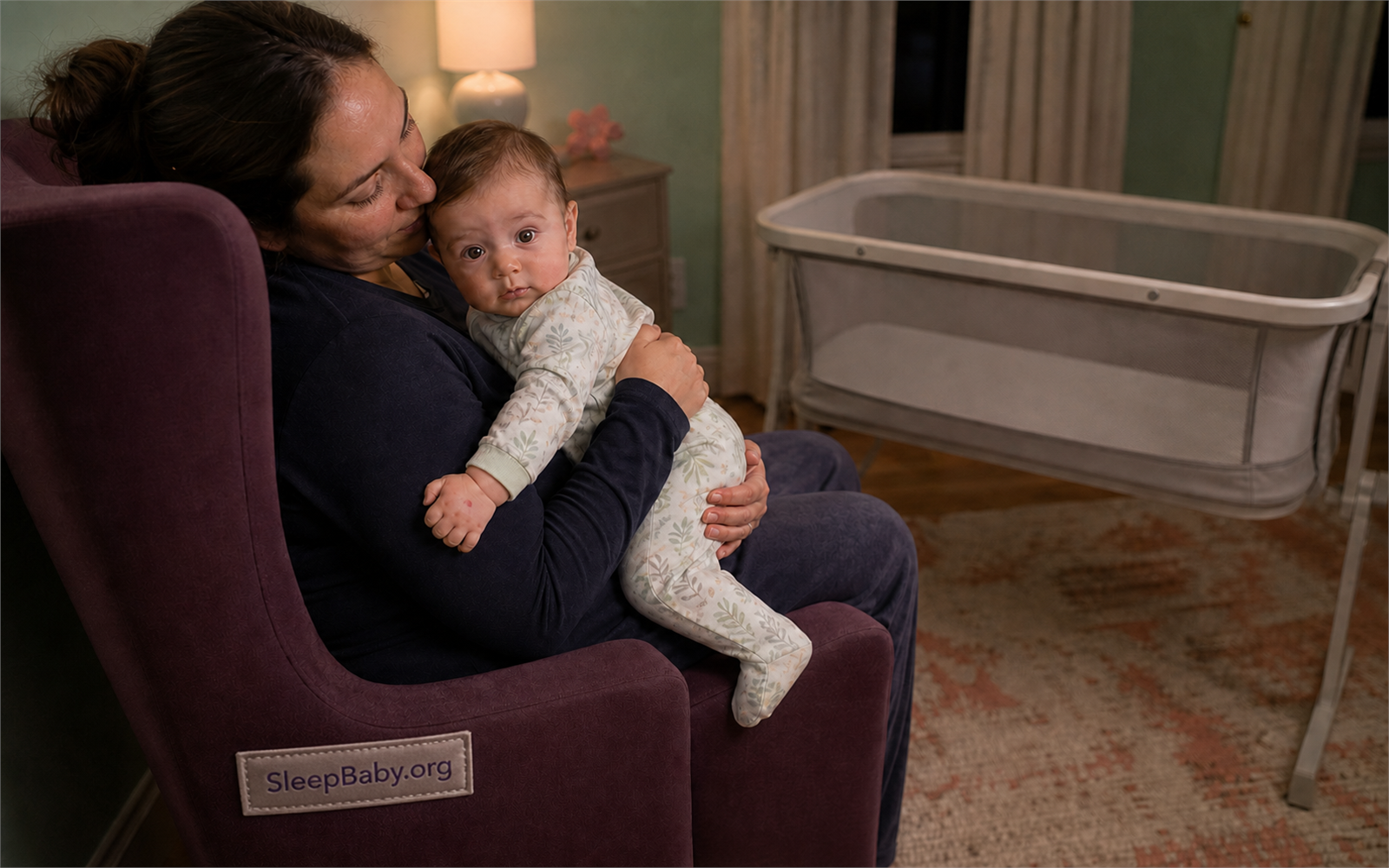
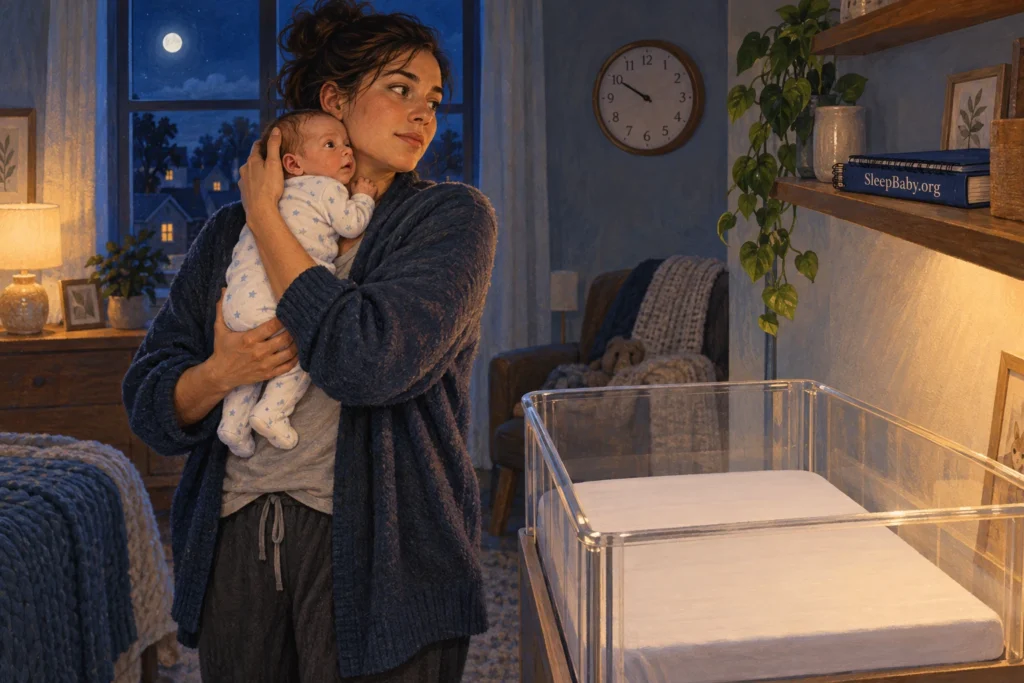
This Kacey-and-Benjamin scene is a composite illustration, not a claim about their medical history. I picture the monitor lighting up at 2:18 a.m. Benjamin is awake again, not fully crying, but rubbing the side of his pajama top against the sheet. The room has that middle-of-the-night stillness that makes every decision feel larger than it did at dinner.
Composite Kacey lifts him, looks at his breathing and color, checks whether he meets her eyes, and offers his usual feed. She is not trying to decide whether he can be persuaded to sleep. She is asking: Is he responding like himself? Is he taking fluid? Is this skin simply itchy, or is one area becoming hot and angry-looking?
That narrower question changes the night. If he is alert, drinking, and comforted, she can do gentle awake care and hand him back to a safe sleep space. If his response is wrong, his breathing is wrong, or the wet diapers are disappearing, she stops troubleshooting sleep and calls for help. The story does not diagnose anything. It shows the handoff between parenting observation and medical care.
The 3 a.m. decision path
Wake, check, comfort, handoff
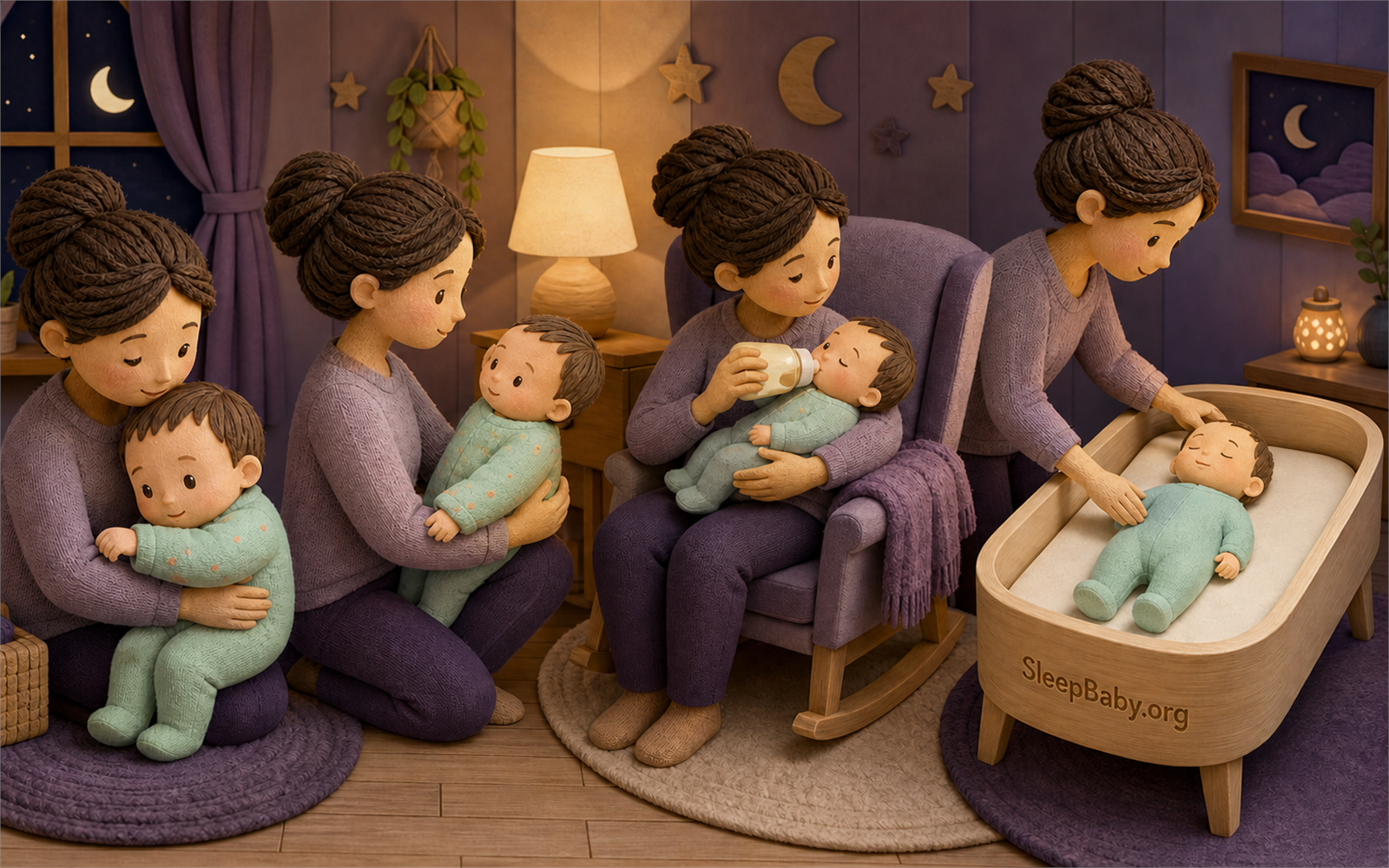
1. Wake: notice the pattern before changing it
Was this a sudden cry, restless scratching, a missed feed, or unusual silence? Note the time and what woke you. A single sentence is enough. You are creating a useful snapshot, not a minute-by-minute surveillance operation.
2. Check: look at the baby, not only the clock
Check breathing, color, temperature if indicated, alertness, feeding, wet diapers, and the skin around the spots. Ask whether your baby wakes and responds in their usual way. Difficulty waking is not “finally sleeping deeply”; it is a red flag.
3. Comfort: do the least irritating useful thing
Offer the usual age-appropriate fluid or feed, hold and soothe while awake, keep clothing light, and use only clinician- or pharmacist-approved itch care. If a short cool bath helps your baby, pat rather than rub the skin dry.
4. Handoff: return sleep to a safe surface—or hand the problem to a clinician
If your baby is comfortably responsive, place them on their back in an empty, firm, flat, non-inclined crib or bassinet. If the check exposes a red flag or age-specific concern, call. The goal is not to win bedtime; it is to make the next safe decision.
How to lower the discomfort without turning bedtime into treatment guesswork
I would build the evening around three physical jobs: reduce heat and friction, protect hydration, and prevent scratching from damaging the skin. None of these cures the virus. They simply make the hours more tolerable while you watch for change.
Cool the situation gently
Use light, loose clothing and keep the room comfortably cool rather than cold. If your baby tolerates it, a short cool-to-lukewarm bath may ease discomfort. The CDC includes cool baths with baking soda or colloidal oatmeal among possible itch-relief measures. Because infant skin and product formulations vary, ask your clinician or pharmacist before adding a new lotion, gel, or medicated product—especially around broken skin, eyes, mouth, or genitals.
Pat; do not scrub
After a bath, use a clean soft cloth or towel to pat the skin dry. Rubbing can irritate fragile spots. Keep the bath directly supervised from first splash to final towel; a sick, slippery baby still needs one adult within arm’s reach the entire time.
Keep nails short and hands clean
Trim and clean nails to reduce skin damage and the chance of secondary infection. Avoid loose socks or cloths in the sleep space. If you use clothing with integrated fold-over cuffs, make sure it fits correctly, does not overheat your baby, and cannot come loose.
Offer familiar fluids often
Continue breastfeeding and offer your baby’s normal age-appropriate feeds. Mouth spots may make sucking uncomfortable, so smaller or more frequent offers may be easier. Hydration does not “bring a fever down”; it helps replace fluid and gives you a concrete thing to monitor. Compare wet diapers and intake with your baby’s usual pattern.
If your baby is refusing feeds, producing far fewer wet diapers, has a dry mouth or no tears, or seems less responsive, call for advice. The related SleepBaby guide on when a sudden sleep change needs medical attention can help you separate a difficult night from a concerning whole-body change—but chickenpox-specific age and red-flag guidance comes first.
Spot location can change the comfort plan. Lesions near an eye, inside the mouth, or around the genitals can interfere with blinking, drinking, or urination and are not good places to experiment with an ordinary skin product. Call if your baby seems to have eye pain or constant blinking, cannot take fluids because the mouth hurts, or cries or cannot pass urine because of genital soreness. Until you have specific advice, keep creams and home mixtures away from the eyes, mouth, and other sensitive tissue. A product being described as “natural” does not make it infant-safe or appropriate for broken skin.
Medicine boundaries matter
Do not use drowsiness as the treatment goal
Never give aspirin or another salicylate-containing product to a child with chickenpox unless a clinician has specifically directed it. Aspirin use during chickenpox is associated with Reye syndrome, a rare but severe illness affecting the liver and brain.
Do not give ibuprofen for suspected or confirmed chickenpox unless your baby’s clinician specifically tells you to. The NHS warns of serious skin-infection risk, and the CDC notes that the American Academy of Pediatrics recommends avoiding it if possible.
Acetaminophen (paracetamol) may be used for fever-related discomfort in some children, but the correct product and amount depend on age, weight, concentration, medical history, and local instructions. The AAP advises clinician guidance for children under 2. A fever in the first 12 weeks needs prompt medical assessment before medicine. I would not publish or improvise an infant dose here: ask your baby’s clinician, follow the exact product label, use the supplied oral syringe, and keep a written dose-and-time log so two tired caregivers do not double-dose.
Antihistamines deserve the same care. Some can cause sleepiness and can be toxic in excess. Do not give diphenhydramine to a child under 6 unless the pediatrician directs it, and do not use any sedating medicine simply to make a baby sleep. If itching remains intense, ask the clinician or pharmacist which product—if any—is suitable for your baby’s exact age and symptoms.
One practical awake-care pick
A small clean-cloth rotation for the bath-to-pajamas handoff
If you want one simple item ready for a chickenpox comfort routine, I prefer a small set of plain cotton infant washcloths over a thick, multi-layer cloth or a mixed exfoliating texture. The Burt’s Bees Baby 3-pack of cotton infant washcloths gives you a clean cloth for a directly supervised cool-to-lukewarm bath and another for gentle pat-drying before light pajamas.
The reason to buy this specific set is narrow and practical: compact cotton cloths are easier to rotate cleanly and use with a light touch than a bulky six-layer option. They do not treat chickenpox, fever, rash, infection, itching, dehydration, or sleep. Never rub fragile spots, never leave a baby unattended in water, and remove every cloth before your baby goes into the crib or bassinet.
As an Amazon Associate, SleepBaby.org earns from qualifying purchases.
A sick baby still needs the same safe sleep space
The old version of this article said it could be acceptable to sleep in the same bed as a baby with chickenpox. That is not advice I would keep. The NHS specifically says never to co-sleep when a baby has a fever or signs of illness, and caregiver exhaustion adds another layer of risk.
- Place your baby on their back for every sleep.
- Use a separate crib, bassinet, portable crib, or play yard with a firm, flat, non-inclined surface and a fitted sheet only.
- Keep pillows, positioners, wedges, rolled towels, loose blankets, cooling cloths, toys, and scratch-prevention socks out of the sleep space.
- Room-share if appropriate so you can observe and feed your baby without bed-sharing.
- If your baby falls asleep in a car seat, swing, carrier, or stroller, move them to the proper flat sleep surface as soon as practical.
- Never fall asleep holding a baby on a sofa or armchair. Plan caregiver shifts before the exhausted moment arrives.
Illness does not make side sleeping, tummy placement, or an incline safer. Comfort your baby in your arms while you are awake, then return them to the bare flat surface. If back placement brings crying during illness, this guide on how to comfort while awake, then return to safe back sleep gives the sleep piece more room without replacing medical care.

Protect the household without isolating your baby from care
Chickenpox generally spreads from one to two days before the rash appears until every blister has crusted over. “Day five” is not a permission slip if fresh or uncrusted lesions remain. Keep your baby away from newborns, susceptible pregnant people, and anyone with a weakened immune system, and call the clinician promptly if one of those exposures has already happened.
This may change who handles nighttime care. A caregiver without evidence of immunity should ask a clinician what the exposure means rather than assuming. Siblings should not share a sleep surface with the baby, and the sick baby still needs responsive adult care; infection control is not a reason to put an infant alone in an unsafe room or device.
Wash hands after touching the rash, keep separate towels and washcloths, and avoid sharing items that may have blister fluid on them. When you need an appointment, phone ahead. A clinic can tell you where to wait so a contagious child is not seated beside a newborn or an immunocompromised patient.
Watch before the next handoff
AAP: safe sleep still applies while your baby is ill
Chickenpox can make the usual sleep setup feel negotiable when everyone is exhausted. This American Academy of Pediatrics refresher brings the decision back to the basics: use a firm, flat, empty sleep surface, place your baby on their back, and keep comfort care in the awake part of the handoff.
Watch “Safe Sleep for Babies” from the AAP on YouTube
Takeaway: chickenpox can change how much awake comfort your baby needs, but it does not make an incline, bed-sharing, loose bedding, or a sitting device safer for sleep.
What to have ready when you call
A tired brain will offer the clinician “They just seem off,” which is valid but hard to act on alone. I would put six facts in one phone note:
- Your baby’s exact age, current weight, prematurity history, and relevant medical conditions.
- When exposure may have happened, when the rash began, and whether new spots are still appearing.
- Temperature readings, how you measured them, and how long fever has lasted.
- Feeds compared with usual and the number or pattern of wet diapers.
- Breathing, alertness, consolability, and whether any skin area is hot, painful, swollen, streaked, or draining.
- Every medicine or skin product already used, including concentration, amount, and time; plus any steroid, salicylate, or immune-suppressing treatment.
Then ask directly: Does this age or exposure require assessment today? Is this fever threshold urgent? Which itch products are safe near these particular spots? Is antiviral treatment relevant, and are we still in the early window when it works best? Which exact change should send us to emergency care?
When the spots crust, let sleep recover before you “fix” it
Chickenpox often improves within about a week, but the course is not identical for every baby. Sleep may remain uneven while itching, appetite, and energy return toward baseline. I would not start a new sleep-training method in the middle of active fever, painful spots, or reduced feeding. Respond to illness first.
As your baby becomes comfortable and normally alert again, restore the familiar anchors rather than demanding the old schedule all at once: usual wake-up light, feeds, calm bedtime sequence, and the same safe sleep space. Extra holding during illness does not permanently erase every sleep skill. A difficult week is not proof that you caused a lasting problem.
If the rash has crusted and the illness seems resolved but sleep remains dramatically changed, look at what travels with the waking. Persistent pain, poor feeding, breathing changes, unusual sleepiness, or a new fever belong back with the clinician. A baby who is otherwise well may simply need several ordinary nights to find the old rhythm again.
Questions that come up after the lights go out
Can chickenpox make a baby sleepy?
Tiredness can accompany chickenpox. The safety question is whether your baby wakes and responds normally. Marked drowsiness, confusion, floppiness, or difficulty waking needs urgent medical help and should not be celebrated as “catch-up sleep.”
Which night of chickenpox is usually the worst?
Authoritative guidance does not identify one universal worst night. Spots can arrive in crops while older ones crust, and fever, itch, feeding, and skin irritation vary. Track the whole pattern instead of waiting for a particular numbered night.
Can I bring my sick baby into my bed so I can watch them?
Use room-sharing, not bed-sharing. The NHS says never to co-sleep when a baby has a fever or signs of illness, and exhausted caregivers have additional risk. Keep the crib or bassinet close enough to observe and feed, then return your baby to the separate firm, flat, empty surface before you sleep.
Can I give an antihistamine at bedtime?
Only if your baby’s clinician or pharmacist says a specific product is appropriate for that exact age and situation. Some antihistamines cause sleepiness and can be toxic in excess. Do not use one to make a baby sleep, and do not give diphenhydramine under age 6 unless the pediatrician directs it.
When can my baby be around other people again?
Chickenpox is generally contagious until every blister has crusted. Do not rely only on a day count while fresh lesions remain. Keep the baby away from newborns, susceptible pregnant people, and immunocompromised people, and ask your clinician about any high-risk exposure.
Sources
- CDC: Chickenpox Symptoms and Complications
- CDC: How to Treat Chickenpox
- NHS: Chickenpox
- American Academy of Pediatrics: Chickenpox in Children
- American Academy of Pediatrics: Safe Sleep
- NHS: Safer Sleep for Babies
- American Academy of Pediatrics: Acetaminophen for Fever and Pain
- American Academy of Pediatrics: OTC Medicine Safety
- NHS: Urgent Medical Help for Babies and Children Under 5
After the illness, rebuild the night gently
If chickenpox has passed but bedtime still feels unfamiliar
During illness, comfort and medical safety come first. Once your baby is well again, SleepBaby’s workshop can help you sort out the sleep pattern that remains—without pretending a sleep method treats a rash, fever, pain, or any medical condition.





What viewers said10 comments · 4 replies+
Archived comments from the original Baby Sleep Miracle presentation. Not independently verified by SleepBaby.org; individual experiences vary.
Thank you so much for this video! I had no idea about the dangers of baby swings :O
Hi Mary-Ann. I have a question: Is method in any way similar to the ones recommended by Dr Bucknam, Dr. Weissbluth or Dr. Karp? We tried those but none of them help.
Hi Regina, thank you for your question. The short answer is no. The techniques I share in my guide are based on newest scientific research and this is why I have never seen any approach similar to the one I recommend.
This method really works! I tried it on my son Jesus and after just one week he went from waking up more than 5 times a night to waking up just once or twice. You are a lifesaver, Mary-Ann!
I'm truly impressed with how much information you share in your video. And all for free! I can feel that you truly care about mothers like myself, and that's hard to find these days. I have recommended your site to several of my friends already.
Mary-Ann, our child suffers from autism. Is your approach still suited?
Chloe, I made sure my method can be used with any child, even babies who are special like yours. Please note that I'm not a doctor and that I always advice to consult with your physician because nothing is more important than the safety and well-being of your love.
Hallo Mary-Ann, I'm from Germany. Do you have your guide in German?
Hello Heide, we do! Normally you should already see our video in German. If not, please contact our support so they can guide you
Thenk you for your answer, Mary-Ann!
I just completed your approach and I have to say, it worked almost too well. Yes, it took a bit of getting used to with your bedtime routine but the difference is huge. My son George used to take 1 hours to go down and now he's firmly asleep in no more than 10 minutes! You're the best!
It seems I'm the only man watching this video, lol! What you shared about the 'emotional backpack' made immediate sense to me and I can't wait to help my little girl Mila to unpack it!
Hey there, just discovered your site and this really sounds different. Just wanted to say thanks for sharing :)
For everyone who's still thinking about getting Mary-Ann's guide I want to advise you to go ahead. I wasn't sure myself but now I'm so thankful I invested in this program. It made a huge difference in our life as a family and yes, my baby girl does sleep through the night now.