
Baby sleep clothing, without the midnight guesswork
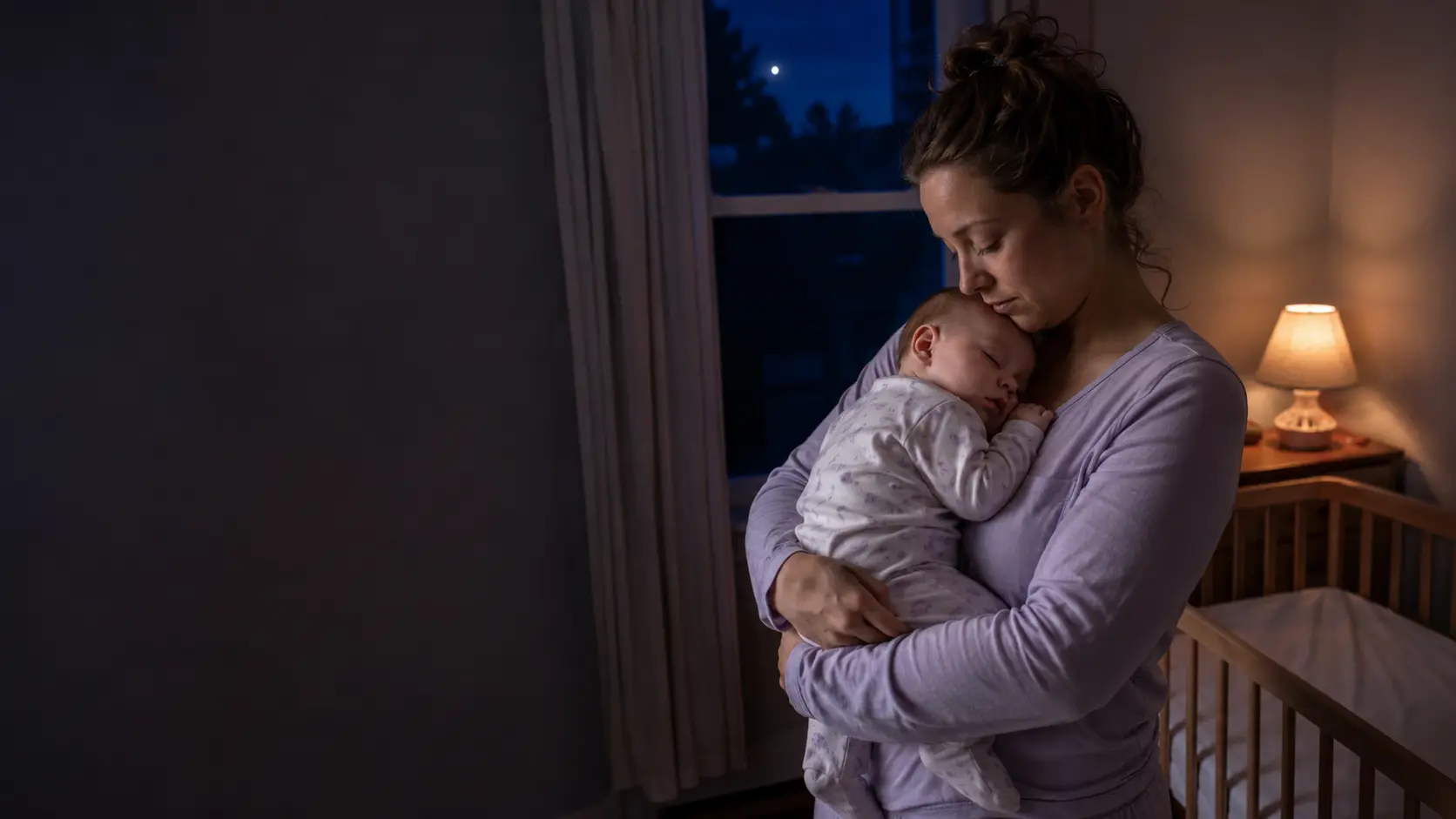
I know the pause: your fingers are on the last onesie snap, your baby’s legs look impossibly bare, and suddenly a simple bedtime outfit feels like a safety exam. Yes, a baby can sleep in just a onesie when that onesie suits the actual room and your baby is comfortably warm. A onesie is not automatically too little, and an extra layer is not automatically safer. Start with the room, then check your baby’s chest or upper back—not cool hands or feet—and adjust one fitted layer at a time. Sweating, flushed or hot skin, damp hair, or a hot chest means your baby may be too warm.
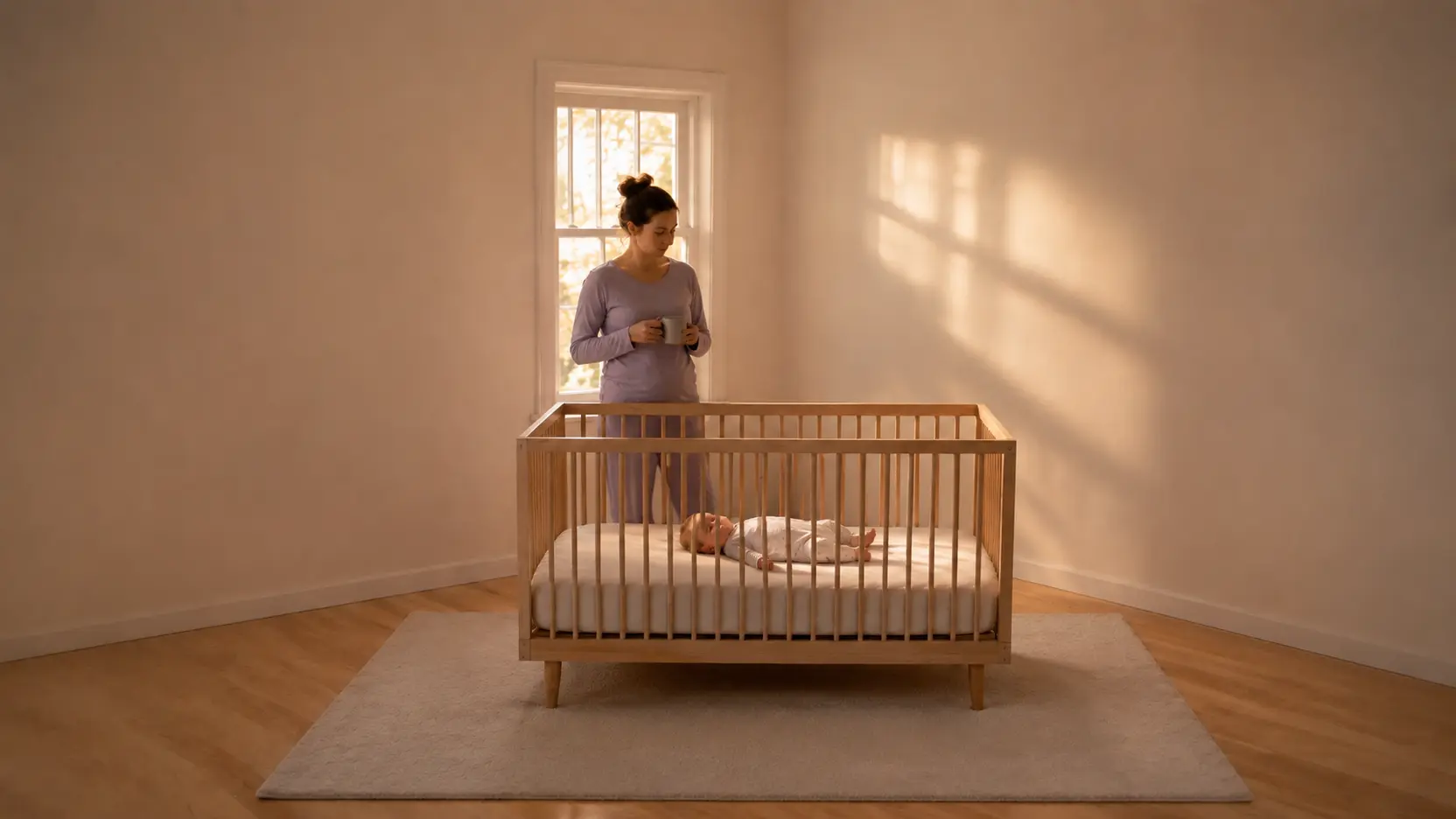
The clothing decision sits inside a bigger rule that never changes: put your baby on their back on a firm, flat, noninclined sleep surface with only a fitted sheet. Keep loose blankets, pillows, toys, positioners, hats, and weighted sleep products out of the sleep space. Clothing can help a baby feel comfortable; it cannot make an unsafe sleep space safe.
The short answer
One room, one baby, one layer decision
A onesie may be enough when…
The room is warm, the fabric and sleeve length fit the conditions, and your baby’s chest or upper back feels comfortably warm and dry after settling.
Add one fitted layer when…
The room is cooler and your baby’s torso—not merely hands or feet—suggests the starting outfit is not enough. Choose fitted sleep clothing or a nonweighted wearable blanket, never loose bedding.
Recheck the baby, not the outfit chart. Fabric, air movement, age, health, and individual comfort all change how a layer feels.

Why this tiny outfit question feels so big
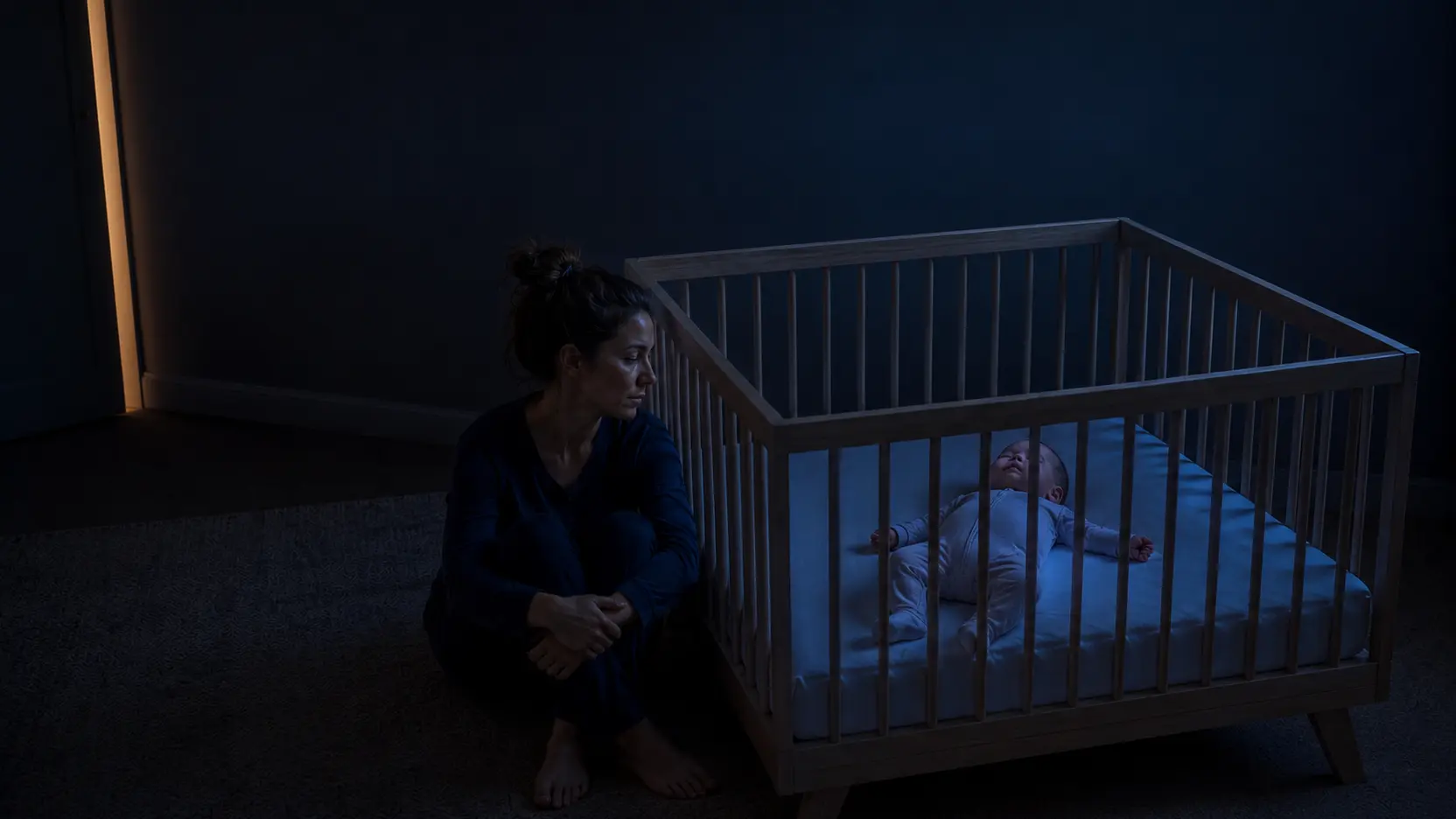
Most parents are not really asking whether a piece of cotton is allowed. They are asking, “What if my baby gets cold while I am asleep?” and, often in the same breath, “What if I overdo it?” Those fears pull in opposite directions. One can lead to piling on layers because cold fingers feel alarming; the other can make any warmth feel dangerous. I want to take you out of that tug-of-war.
A baby does not need to feel warm at every fingertip to be comfortable. Hands and feet can feel cooler than the torso because circulation to the extremities differs. That is why the chest or upper back gives you a more useful clothing clue. I would not add a layer just because toes feel cool. I would look at the whole scene: the actual room, the baby’s torso, the fabric already on the body, and whether there are signs of overheating.
There is no honest answer that turns one thermostat number into one perfect outfit for every baby. A sleeveless cotton bodysuit, a long-sleeve ribbed onesie, and a thick fleece one-piece are all casually called “a onesie,” yet they do not provide the same warmth. A room may also feel different at the crib than it does beside a hallway thermostat. The useful question is not “Are onesies safe?” It is “Is this fitted layer appropriate for this baby in this room tonight?”

The three-clue check I use before changing anything
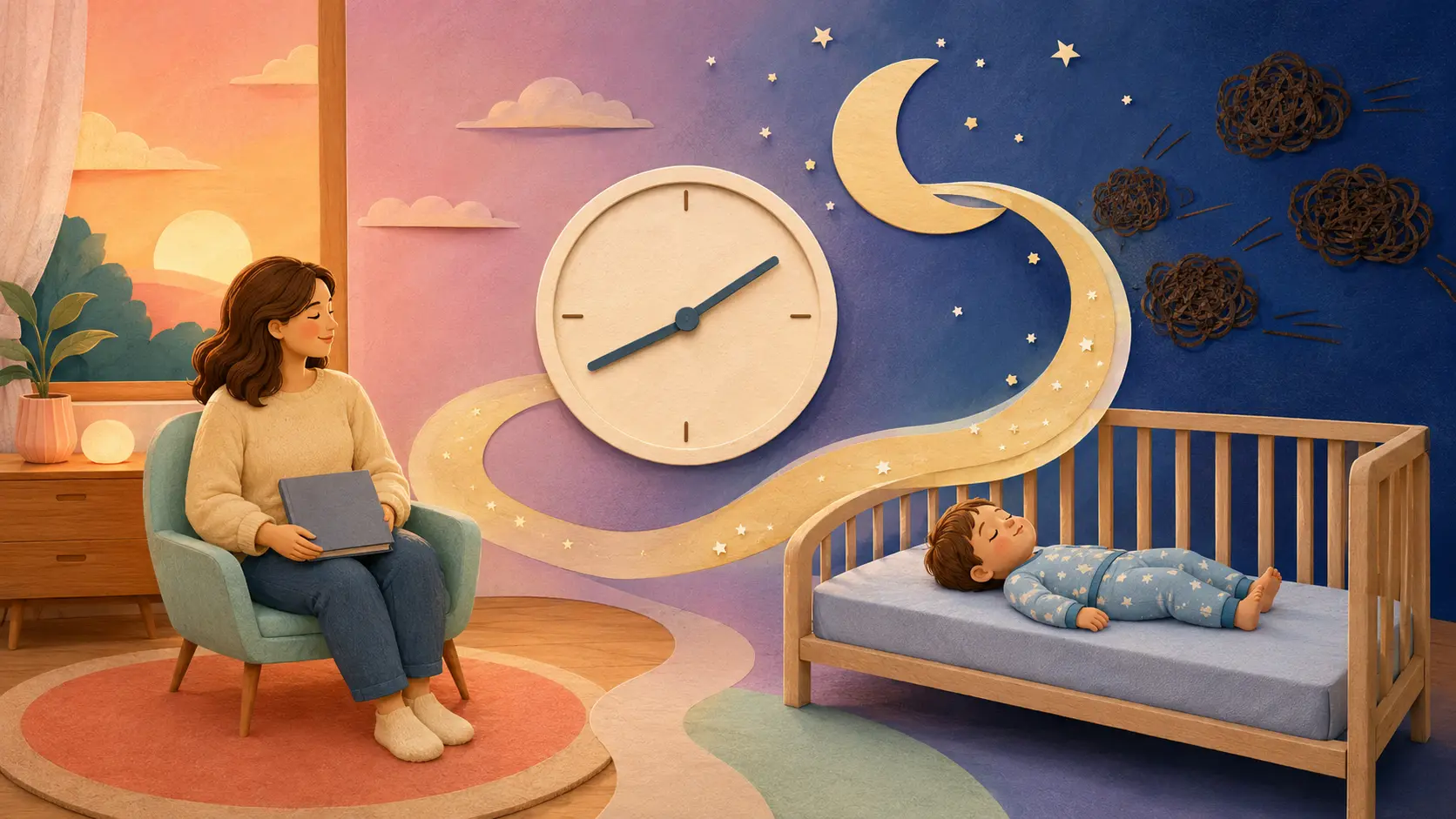
When a parent is tired, more information can become more noise. I use three buckets because they keep the decision small: room, body, space. The first two help you choose clothing. The third protects safe sleep regardless of clothing.
The room-body-space check
- Read the room. Notice the nursery itself, not only the outdoor weather or a thermostat elsewhere. Consider fabric weight, sleeve length, drafts, and whether the room changes overnight.
- Read the body. After your baby settles, feel the chest or upper back. Comfortable and dry supports staying with the outfit. Hot, sweaty, flushed, or damp supports removing a layer and reassessing.
- Protect the space. Back for every sleep; firm, flat, noninclined surface; fitted sheet only; head and face uncovered; no loose or weighted additions.
Room clues: useful context, not a verdict
Start where the baby actually sleeps. Is the room noticeably warm, cool, stuffy, or drafty? Does an air-conditioning vent blow toward the crib? Does afternoon sun heat the nursery and then fade after bedtime? Is the onesie lightweight cotton or a warmer knit? These details help you choose a sensible starting point.
A practical parent guideline from the American Academy of Pediatrics is to dress a baby in no more than one layer more than an adult would wear comfortably in the same environment. I treat that as a starting heuristic, not a guarantee. Adults differ, babies differ, and “one layer” can mean very different fabrics. The body check still gets the final word.
Body clues: chest before hands
Wait until your baby has been in the outfit long enough for the check to mean something, then gently feel the chest or upper back. You are looking for comfortably warm and dry—not chilly, not hot, not clammy. If the chest feels hot, or you notice sweating, flushed skin, or damp hair, remove a layer and reassess the room and baby. Keep the head uncovered indoors.
If the torso feels comfortably warm and your baby otherwise seems well, cool hands or feet alone are not a command to add clothing. I know how persuasive those little feet can be. They can make a perfectly rational adult stand beside a crib holding three sleep sacks like a contestant in a very quiet game show. The chest check is the calmer judge.

Sleep-space clues: the rules clothing never changes
Whether your baby wears a short-sleeve onesie, fitted pajamas, or a nonweighted wearable blanket, place them on their back for every nap and night sleep. Use a firm, flat, noninclined surface designed for infant sleep with only a fitted sheet. Keep blankets, pillows, bumpers, toys, positioners, and other soft objects out. The baby’s head and face stay uncovered.
If the room feels cooler, the answer is not a loose blanket tucked around the baby. Use another fitted clothing layer or an appropriately sized, nonweighted wearable blanket. Weighted blankets, weighted sleepers, weighted swaddles, and weighted sleep sacks are not recommended for infants. No clothing product prevents SIDS, and no monitor or thermometer replaces the safe-sleep foundation.

A calm decision path for tonight
I like decisions that still work when the laundry basket is full and the clock is rude. This pathway asks you to change one thing at a time, so you can tell what helped instead of rebuilding the entire bedtime wardrobe.
Start here
- Make the sleep space safe. Back, firm and flat surface, fitted sheet only, empty space, uncovered head.
- Choose a reasonable starting outfit. In a warm room, a lightweight onesie may be enough. In a cooler room, begin with fitted pajamas or add a nonweighted wearable blanket.
- Let the baby settle, then check the torso. Feel the chest or upper back rather than judging by hands and feet.
- Change one layer only when the clues support it. Hot, flushed, sweaty, or damp means remove warmth. A genuinely cool torso in a cooler room may support adding one fitted layer.
- Reassess. Confirm that the head remains uncovered, the outfit fits properly, and the sleep space is still empty.
This is not a test you pass once for the whole season. A hot afternoon, a stronger air conditioner, a different fabric, or a growth spurt can change the starting choice. The goal is not to discover the one sacred bedtime outfit. The goal is to make a good first choice and know how to read the result.
When a onesie is likely enough—and when to add warmth
A lightweight onesie may be enough
- The actual sleep room is warm.
- The garment’s fabric and sleeve length suit the room.
- The baby’s chest or upper back feels comfortably warm and dry.
- There is no sweating, flushing, damp hair, or hot chest.
- The baby otherwise seems well.
One fitted layer may be useful
- The room is cooler or becomes cooler overnight.
- The baby’s torso—not only hands or feet—feels cooler than comfortable.
- You choose fitted sleep clothing or a nonweighted wearable blanket.
- The layer fits correctly and cannot cover the face.
- You recheck rather than continuing to stack layers.
I deliberately do not give a rigid temperature-to-outfit chart here. Charts can be useful prompts, but they can create false precision because fabrics, humidity, air movement, babies, and measurement locations differ. A chart should never outrank a hot chest or visible sweating. Nor should it persuade you to add loose bedding to meet a pictured outfit.

The age and health details that change the answer
“Baby” covers a lot of development. The safe-sleep foundation stays steady, but the clothing conversation needs a few important branches.
Newborn
A healthy full-term newborn may sleep in a suitable onesie when the room and body checks support it. Make sure the garment fits well and the head stays uncovered indoors. Very young babies still need the same back, firm-flat, empty-space setup for every sleep.
Baby who is starting to roll
If you swaddle, stop as soon as your baby shows signs of trying to roll. Never use a weighted swaddle. After that transition, fitted sleep clothing or a properly sized nonweighted wearable blanket can provide warmth while leaving the arms free. Always place the baby down on their back; if a baby rolls independently, follow your clinician’s guidance and keep the sleep space clear.
Premature, very small, or medically complex baby
Temperature regulation may differ for premature or very small newborns and for babies with certain medical needs. Follow the baby’s clinician or hospital discharge plan rather than a general clothing rule. I would not use a website chart to override individualized medical instructions.
Baby who is ill or feverish
A fever, unusual lethargy, breathing difficulty, poor feeding, or a baby who is difficult to wake is not a wardrobe puzzle. Contact a clinician promptly and seek urgent care when symptoms warrant it. Do not keep adding or removing layers as a substitute for medical assessment.
How to recognize overheating without spiraling
The AAP and NIH Safe to Sleep guidance both emphasize avoiding overheating and overbundling. Practical signs that a baby may be too hot include sweating, flushed or hot skin, damp hair, and a hot-feeling chest. If you see those clues, remove a layer, make sure the head and face are uncovered, and reassess the environment and the baby.
Overheating is associated with increased sleep-related risk, but that does not mean a single warm hand or one imperfect outfit has caused harm. Use the clue to make the next safe decision. I want safety information to create action, not panic.
Change the layer—or change the plan?
Adjust clothing when the baby is otherwise well
Hot chest, sweating, flushing, or damp hair: remove a layer, check the room, keep the head uncovered, and reassess.
Call for medical guidance when this is more than clothing
Breathing trouble, unusual sleepiness, poor feeding, fever concerns, color change, or difficulty waking needs clinical attention. If your instincts say your baby is unwell, treat that concern seriously.
What about hot weather, air conditioning, and overnight changes?
Hot-weather sleep often makes a lightweight onesie a sensible starting layer. But outdoor heat does not tell you the crib’s conditions. Air conditioning can make one room much cooler than another, and a nursery may change after the sun goes down. Read the room where the baby sleeps, then verify with the baby’s torso.
If the nursery varies overnight, resist the urge to build an outfit for every possible hour. Start reasonably, keep the environment as stable as practical, and make one evidence-based change if needed. Avoid hats indoors and do not add a blanket to compensate for uncertainty. A correctly sized, nonweighted wearable blanket is the loose-blanket alternative when more warmth is appropriate.

Fabric, fit, and the word “onesie”
One reason this question produces conflicting answers is that families use “onesie” for several different garments. A thin sleeveless bodysuit is not the same layer as a long-sleeve thermal bodysuit. A footed fleece sleeper is warmer again, even if someone casually gives it the same name. Before you decide whether “just a onesie” is enough, name what is actually on the baby: fabric, thickness, sleeves, legs, and fit.
Lightweight, breathable fabric can be a practical warm-room choice. Heavier knits and fleece hold more warmth and deserve a fresh chest check rather than being treated as equivalent to thin cotton. The label can tell you fiber content and care instructions, but it cannot tell you how the garment feels on your baby in this nursery. I use the label to understand the starting layer and the torso check to understand the result.
Look past the garment name
Fabric changes the warmth
Compare thickness and construction, not only whether both garments are called bodysuits. If you move from thin cotton to a warmer fabric, treat that as a real layer change and reassess.
Fit changes the safety and usefulness
Sleep clothing should fit as intended. Avoid garments that can ride up over the face, restrict breathing or movement, or leave loose pieces in the sleep space. Follow the manufacturer’s sizing and use instructions for any wearable blanket.
Wetness changes the decision
A damp garment from sweat, spit-up, or a diaper leak is no longer the same comfortable starting layer. Change wet clothing, check the baby’s body and condition, and remake the decision rather than adding dry layers over damp fabric.
Laundry can change your familiar favorite
Clothing can shrink, stretch, or feel different after repeated washing. A previously reliable onesie may become snug at the neck or loose at the shoulders. Give the fit a quick look instead of assuming yesterday’s choice is automatically tonight’s.
If you add a wearable blanket, think of it as clothing, not crib bedding. It should be nonweighted, correctly sized, and unable to cover the baby’s face. Do not layer it over a swaddle once a baby is showing signs of trying to roll. More products do not create more certainty; the cleanest plan is still a reasonable fitted outfit, one body check, and one adjustment if the evidence calls for it.
I also would not chase a perfectly warm nose, cheek, hand, and foot. Exposed skin can feel different from the covered torso. Repeatedly waking or handling a settled baby to investigate every cool spot can turn a useful check into a worry ritual. Check when it is sensible—after settling, when conditions change, or when something looks wrong—then trust the full picture.
What to do when caregivers disagree
Sleep clothing disagreements are common because one adult runs cold, another runs warm, and both believe their own comfort is objective reality. Instead of debating whose body is the better thermostat, agree on the same sequence: check the nursery, identify the actual garment, feel the baby’s chest or upper back, look for heat signs, and protect the empty sleep space.
Write the starting outfit down for a babysitter or grandparent if that reduces confusion, but include the decision rule rather than an inflexible command. “Start with this lightweight onesie; if the chest is hot or sweaty, remove warmth; if the torso is genuinely cool and the room has cooled, add this fitted nonweighted wearable layer” is more useful than “Baby always wears two layers.” It gives another caregiver both a plan and a boundary.
This shared language matters because it prevents the quiet escalation that happens when each adult adds “just one more thing.” A hat, blanket, thicker sleeper, and warmer room can accumulate without anyone making one deliberate decision. I would rather have one caregiver say the evidence out loud: room, body, space. That makes the plan visible and easier to correct.
Common mistakes that make this harder
Adding layers because the hands feel cool
Hands and feet are noisy signals. Check the chest or upper back and the baby’s overall condition before changing clothing.
Using a blanket as the flexible extra layer
Loose bedding does not belong in an infant sleep space. If more warmth is appropriate, choose fitted sleep clothing or a nonweighted wearable blanket that fits correctly.
Covering the head indoors
Keep the head and face uncovered during sleep. An indoor hat is not the answer to a cool-feeling hand or foot.
Treating a monitor as protection
A room sensor can tell you about the room. It cannot tell you whether a baby is comfortably warm, diagnose illness, or make sleep safer by itself. Safe sleep practices and direct observation remain essential.
Changing three things at once
If you change the thermostat, switch fabric weight, and add a wearable blanket together, you lose the ability to read the result. Make one reasonable adjustment and reassess.

A video reminder of the rules beneath the outfit
Watch, then keep the written checklist
Safe sleep is bigger than sleepwear
This official safe-sleep guidance reinforces the nonnegotiable foundation: back for every sleep, a firm flat surface, and an empty sleep space. Clothing decisions sit on top of those rules; they never replace them.
Takeaway: Choose fitted clothing for warmth, keep the baby’s head uncovered, and keep every loose or weighted item out of the sleep space.
Your bedtime check in under a minute
- Space: Baby on the back; firm, flat, noninclined surface; fitted sheet only; nothing loose or weighted.
- Room: Check the actual nursery and the garment’s fabric, sleeves, and fit.
- Body: After settling, feel the chest or upper back. Do not let cool hands or feet decide alone.
- Heat clues: Sweating, flushing, damp hair, or a hot chest means remove a layer and reassess.
- Warmth option: If one more layer is appropriate, use fitted clothing or a correctly sized nonweighted wearable blanket—not loose bedding.
- Health boundary: Follow clinician guidance for premature, very small, ill, or medically complex babies.
Now return to those last onesie snaps. You do not have to predict every hour of the night from the changing table. Fasten the suitable layer, keep the sleep space bare, and let the room-body-space check do the work. If the chest is comfortably warm and dry, you can leave the extra outfit in the drawer. If the evidence changes, change one fitted layer—not the whole plan.
I cannot promise that this removes every flicker of bedtime doubt. I can promise you a better question than “What do all babies wear?” Ask, “What is this room telling me, what is my baby’s torso telling me, and is the sleep space still safe?” That is a decision you can make calmly, even with one hand on a tiny snap.
Sources
- American Academy of Pediatrics: Sleep-Related Infant Deaths—Updated 2022 Recommendations
- American Academy of Pediatrics: Evidence Base for the 2022 Safe Sleep Recommendations
- HealthyChildren.org: A Parent’s Guide to Safe Sleep
- NIH Safe to Sleep: Ways to Reduce Baby’s Risk
- NIH Safe to Sleep: Risk Factors and SIDS
- NIH Safe to Sleep: Frequently Asked Questions
- CDC: Helping Babies Sleep Safely
- HealthyChildren.org: Dressing Your Newborn
- Govee: Wi-Fi Temperature and Humidity Sensor H5179
When bedtime has become a wardrobe debate
Bring the night back to one calm next step
If you are standing beside the crib with two outfits, cold toes, and a brain rehearsing every possible temperature, SleepBaby can help you turn the rest of bedtime into a clearer, gentler plan. Start with the room, listen to the baby’s body, and build a routine that does not ask you to solve the whole night at once.