

Don’t give your newborn plain water unless their clinician specifically tells you to. Breast milk or correctly prepared infant formula provides the fluids a healthy newborn needs. Extra water can displace needed nutrition and upset the body’s salt balance. Keep the usual milk feeds, and don’t add extra water to formula.
If water or diluted formula has already been given, contact your baby’s clinician promptly for advice about the amount and timing. If your baby has a seizure, trouble breathing, collapses, or cannot be awakened, call your local emergency number now.

Why the answer is different for a newborn
A glass of water makes sense when an adult is thirsty. A newborn’s feeding needs are different. Milk feeds supply both fluid and nutrition, and extra water isn’t an equivalent substitute. The concern isn’t that water is inherently dirty or that a particular brand is wrong. Even clean water can be inappropriate as a newborn drink.
The American Academy of Pediatrics advises against extra water in the first six months unless a pediatrician recommends it. Too much can disturb the balance of minerals in the body, including sodium, and cause serious problems such as seizures. Watering down formula also changes the nutrition delivered in each feed.
I would keep two questions separate: Is my baby getting enough milk? and Should I offer another drink? If the first answer is uncertain, the useful next step is help with feeding. Plain water doesn’t resolve that uncertainty.
This is also why a newborn’s age matters when advice is passed around. A suggestion meant for a baby eating meals at six months isn’t a newborn feeding plan. Tell the person advising you your baby’s age in days or weeks, feeding method, and any special discharge instructions.

Water in formula is different from a bottle of water
Some formula needs water to become a complete feed. The amount is part of the recipe, not an optional adjustment. The CDC’s formula preparation guidance says to measure the water first, then add the specified powder. Use the instructions for the exact product you’re holding.
| What the container says | What to do about water |
|---|---|
| Powder | Measure the instructed water amount first. Add the instructed powder amount using that product’s scoop and directions. |
| Concentrated liquid | Add water only in the amount specified on that container. |
| Ready-to-feed | Do not add water. It is already prepared at its intended concentration. |
Don’t copy a scoop count from another tin or use the final mixed volume as the starting water measurement. Powder changes the volume in the bottle. The label tells you how much water goes in before the powder; a bottle that looks a little fuller afterward isn’t a reason to change the recipe.
A written medical recipe is a separate situation. Some babies have individual feeding instructions from their care team. If your discharge plan differs from the package, ask that team to clarify anything uncertain rather than combine pieces of the two recipes yourself.

Newborn formula preparation needs particular care
Powdered formula isn’t sterile. The CDC recommends extra precautions for babies younger than two months, babies born prematurely, and babies with weakened immune systems. Its guidance is to boil water and wait about five minutes before mixing the powder, so the water remains hot enough to reduce germs in the powder. Then cool the prepared feed before offering it and check its temperature.
Use a safe water source and follow your local health guidance as well as the product instructions. If the water supply has an advisory, ask the water authority and your baby’s care team what to use. Boiling isn’t a universal fix for every kind of contamination.
I would set the container where the person preparing the bottle can actually read it. A scoop left next to a different tin or a remembered ratio from yesterday’s product creates avoidable uncertainty. A short handoff between caregivers should identify the product and the exact instructions being followed.

If your newborn has already had water
A question about a planned drink is different from a question about something already swallowed. I wouldn’t give a blanket reassurance based on the phrase “a little,” and I wouldn’t assume every exposure has caused harm. The amount, baby’s age, time, symptoms, and whether feeds were repeatedly diluted all matter.
Call your pediatrician or local medical advice service promptly. In the United States, Poison Control at 1-800-222-1222 can also advise about a potentially harmful ingestion. If your baby has emergency symptoms, call emergency services first rather than wait for a callback.
Don’t induce vomiting. Don’t add salt, extra powder, or another homemade mixture to “balance things out.” Ask the clinician what to offer next and whether your baby needs to be seen. There isn’t a single safe-volume cutoff in this article because an online estimate cannot account for those individual details.
If you discovered a mixing error before the bottle was used, set it aside so nobody feeds it by mistake and prepare a fresh feed correctly. If you aren’t sure whether some was consumed, include that uncertainty when you call. A clear account is more useful than trying to make the story sound tidy.
AFTER THE FEEDING QUESTION
Give feeding its care plan. Give bedtime its own question.

For ordinary questions about bedtime routines and baby sleep schedules, you can read about the SleepBaby.org Method on the homepage.
Once a feeding concern has been addressed, it can help to separate what belongs in the clinician's plan from what you want to understand about your evening. Extra water isn't a way to stretch a newborn's sleep, and a bedtime resource can't assess hydration.
The homepage describes the current offer. You can explore it when you have room for that separate question; it does not replace feeding instructions, medical assessment, or advice about when your newborn needs to eat.
What about hot weather?
For a fully breastfed baby, the NHS says extra water isn’t needed before solids, even in hot weather; your baby may want to breastfeed more often. Make feeding opportunities available and pay attention to how your baby is doing.
There is a real difference between published recommendations for formula-fed babies. NHS guidance says babies under six months may need small sips of cooled boiled water in hot weather alongside usual feeds. AAP guidance says no extra water before six months unless the pediatrician advises it.
For a newborn, I would ask the baby’s own clinician or local infant-feeding team which advice to follow, and get a specific plan if water is recommended. Don’t turn “small sips” into a bottle-size rule. Neither approach is permission to dilute formula or replace a milk feed.
If you’re searching because your baby is unusually sleepy, feeding badly, or producing fewer wet diapers, don’t treat this as a weather-only question. Describe those signs when you seek care. An explanation that sounds plausible, such as a warm afternoon, doesn’t settle whether a newborn needs assessment.
Check feeding and diapers together
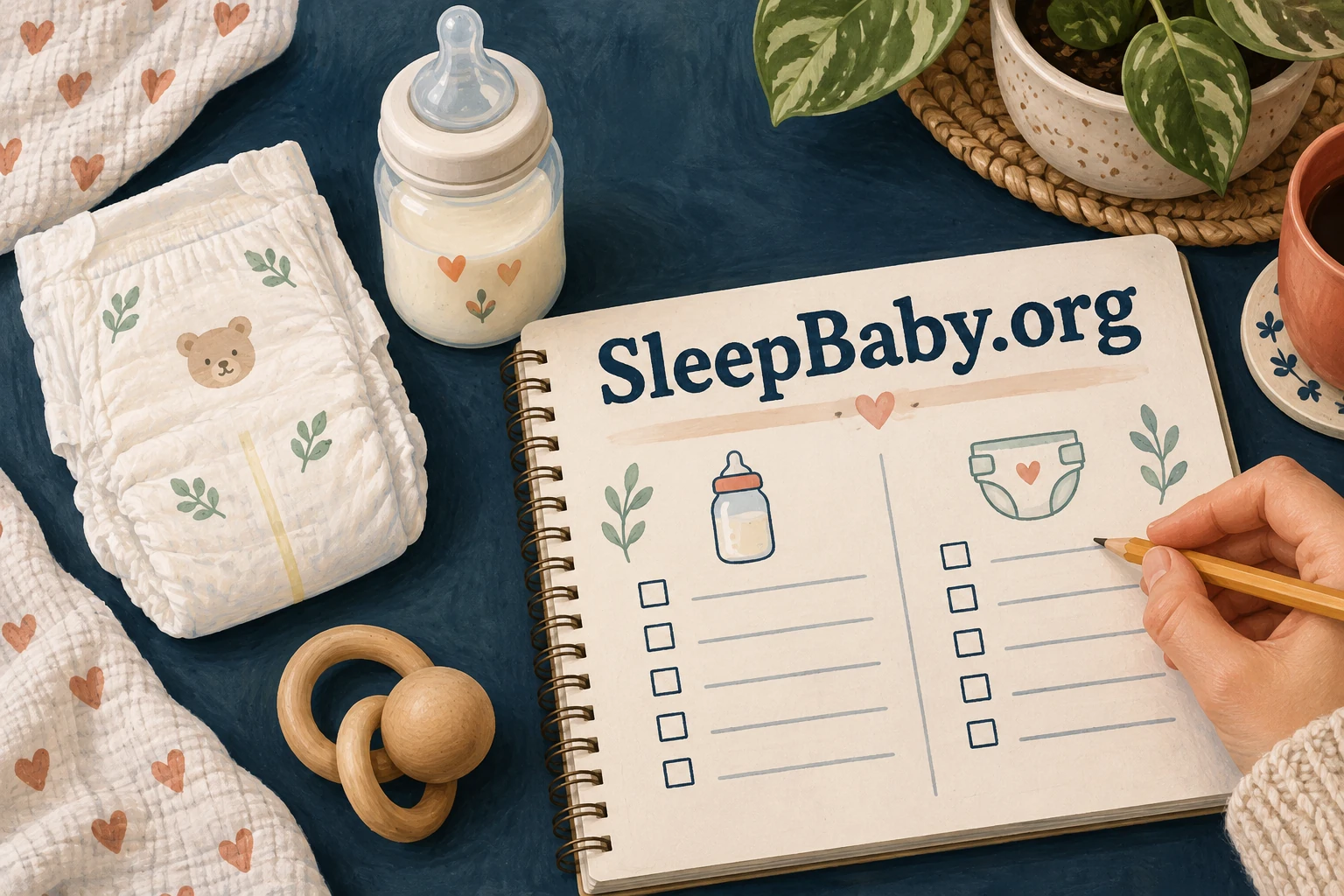
A single wet diaper doesn’t tell the whole story, and a single unsettled feed doesn’t diagnose dehydration. Look at the feeding pattern, your baby’s alertness, diaper output, and the growth checks with their care team. If something has changed, describe the change rather than rely on “seems thirsty.”
For breastfeeding, the NHS lists visible or audible swallowing, a moist mouth after feeding, and being generally content after most feeds among useful signs. A feeding specialist can watch a feed if you’re unsure about attachment or milk transfer. You don’t have to solve that by guessing how much was taken.
Diaper expectations change during the first days. NHS breastfeeding guidance says at least six heavy wet diapers in 24 hours from day five onward; the first 48 hours can look different. Follow your newborn’s discharge advice, and ask promptly if output seems low for their age or has fallen. Don’t wait to reach the end of a 24-hour count when your baby seems unwell.
When low intake needs medical help
Seek prompt medical advice for fewer wet diapers, a dry mouth, a sunken soft spot, unusual drowsiness, or poor feeding. The AAP advises notifying the pediatrician immediately about dehydration signs. A newborn can need help before a parent is certain what to call the problem.
Call emergency services for a baby who cannot be awakened, has serious trouble breathing, collapses, or has a seizure. Unusual sleepiness together with other illness signs shouldn’t be treated as a welcome longer nap.
Fever is another reason to act. A newborn with a rectal temperature of 100.4°F (38°C) or above needs immediate medical advice, even if you’re also worried about hydration. Tell the clinician how the temperature was taken. Don’t try to treat a newborn fever with water and wait to see whether it works.
With vomiting or diarrhea, ask the clinician for a feeding and fluid plan. Continue usual milk feeds as advised; don’t make formula weaker. Oral rehydration solution is a specific treatment, not the same thing as plain water. For a newborn, get professional instructions about whether it is needed and how to use it.
Common reasons parents consider water
“My baby is straining to poop.”
Straining alone doesn’t prove constipation. The AAP notes that passing stool can take obvious effort in a young baby. Hard stools, blood, changes in feeding, and a change in the stool pattern are useful details to report. In the first month, infrequent stooling can also raise a question about intake.
I wouldn’t choose a water dose from advice written for an older child. Ask the newborn’s clinician what the pattern means before trying water, juice, or another remedy. Bring the feeding details too, especially if formula preparation may have changed.
“Someone suggested water for hiccups or fussiness.”
The newborn feeding rule still applies. A suggestion from someone you trust can be well meant without fitting your baby’s age. You can keep the response simple: “We’re using milk feeds, and we’ll check with the baby’s clinician before giving another drink.”
If fussiness comes with poor feeding, unusual sleepiness, fever, or other illness signs, ask for medical advice. Don’t keep trying drinks while the more important change goes unaddressed.
“We’re running low on formula.”
Don’t stretch the supply with extra water. Contact your pediatrician, local health department, WIC office if eligible, food pantry, or social service agency for help finding infant formula. Be direct about when the next feed is due and how much is left. An immediate shortage needs an immediate support plan.
“Would bottled, distilled, or boiled water be different?”
Changing the water’s source doesn’t make a plain-water drink appropriate for a newborn. Water safety matters when you prepare formula; the correct concentration matters too. Both questions need an answer. A label saying “nursery” or “purified” doesn’t replace formula preparation instructions.
When water does become part of feeding
Around six months, when your baby starts solid foods, small sips of water with meals become a different conversation. A cup gives your baby a chance to practice drinking while breast milk or formula remains part of feeding.
The AAP’s general guidance for babies around six to twelve months is about 4 to 8 ounces of water a day. That is not a newborn allowance, and it isn’t a target to force your baby to finish. Ask for individual advice when illness, feeding difficulties, or a medical condition affects their needs.
You don’t need to buy a cup now to solve today’s newborn question. Put the age distinction in the handoff with anyone caring for your baby: water with later meals and a water bottle for a newborn are different decisions.
Keep the nighttime feeding plan clear
If you’re considering water because your newborn keeps waking, don’t use it to replace a needed milk feed or to lengthen the gap between feeds. Ask the care team when your particular baby should be fed or awakened, especially while weight and feeding are being followed.
I would make the next handoff concrete: which milk or formula is being used, where its instructions are, what concerns need a call, and who is handling the next feed. That is a more useful job for a bedside note than a homemade rule about how long a newborn should sleep.
If a baby becomes unusually hard to wake, return to the medical guidance above. Feeding safety comes before an evening routine.
Watch: is my baby getting enough milk?
In this NHS video, health visitor Penny Lazell introduces signs that a baby is getting enough milk. It is a feeding-observation resource, not an assessment of a baby who has already drunk water.
If the video won’t play, use the written NHS guide: look at swallowing during feeds, your baby’s behavior, age-appropriate wet diapers and growth together. Ask for a feed to be observed if you’re uncertain. Urgent illness signs still need medical help.
An optional formula preparation tool
Dr. Brown’s Formula Mixing Pitcher, Blue: if you already use powdered formula and a pitcher fits the preparation plan you’ve been given, this manual pitcher is one option. The manufacturer describes a mixing blade, locking lid and pouring spout.
I would choose it for the mixing task only. It doesn’t measure the right recipe for you, sterilize formula, or change newborn preparation and storage guidance. Its capacity isn’t a feeding amount for a newborn. Follow the formula label, your baby’s care instructions, and the pitcher instructions.
Already-owned alternative: prepare the feed in a suitable clean feeding bottle using the correct water and powder amounts. A separate pitcher isn’t necessary to follow the recipe.
As an Amazon Associate, I earn from qualifying purchases.
Sources
- AAP: How to Safely Prepare Baby Formula With Water
- CDC: Infant Formula Preparation and Storage
- NHS: Drinks and Cups for Babies and Young Children
- NHS: Is My Baby Getting Enough Milk?
- NHS: Dehydration
- AAP: Signs of Dehydration in Infants and Children
- AAP: Fever and Your Baby
- Seattle Children’s: Newborn Illness, How to Recognize
- Poison Control: First Aid for Poisonings
- AAP: How Can I Tell If My Baby Is Constipated?
- AAP: Recommended Drinks for Children Age Five and Younger
- Dr. Brown’s: Formula Mixing Pitcher description
THE NEXT HANDOFF
A clear feed. A clear next step.
Keep the newborn's feeding instructions where the next caregiver can find them. If you're also thinking about ordinary bedtime routines and baby sleep schedules, the SleepBaby.org homepage describes its current offer.
Read it when it fits your day. Medical questions about fluids, feeding, and unusual sleepiness need their own care.





What viewers said10 comments · 4 replies+
Archived comments from the original Baby Sleep Miracle presentation. Not independently verified by SleepBaby.org; individual experiences vary.
Thank you so much for this video! I had no idea about the dangers of baby swings :O
Hi Mary-Ann. I have a question: Is method in any way similar to the ones recommended by Dr Bucknam, Dr. Weissbluth or Dr. Karp? We tried those but none of them help.
Hi Regina, thank you for your question. The short answer is no. The techniques I share in my guide are based on newest scientific research and this is why I have never seen any approach similar to the one I recommend.
This method really works! I tried it on my son Jesus and after just one week he went from waking up more than 5 times a night to waking up just once or twice. You are a lifesaver, Mary-Ann!
I'm truly impressed with how much information you share in your video. And all for free! I can feel that you truly care about mothers like myself, and that's hard to find these days. I have recommended your site to several of my friends already.
Mary-Ann, our child suffers from autism. Is your approach still suited?
Chloe, I made sure my method can be used with any child, even babies who are special like yours. Please note that I'm not a doctor and that I always advice to consult with your physician because nothing is more important than the safety and well-being of your love.
Hallo Mary-Ann, I'm from Germany. Do you have your guide in German?
Hello Heide, we do! Normally you should already see our video in German. If not, please contact our support so they can guide you
Thenk you for your answer, Mary-Ann!
I just completed your approach and I have to say, it worked almost too well. Yes, it took a bit of getting used to with your bedtime routine but the difference is huge. My son George used to take 1 hours to go down and now he's firmly asleep in no more than 10 minutes! You're the best!
It seems I'm the only man watching this video, lol! What you shared about the 'emotional backpack' made immediate sense to me and I can't wait to help my little girl Mila to unpack it!
Hey there, just discovered your site and this really sounds different. Just wanted to say thanks for sharing :)
For everyone who's still thinking about getting Mary-Ann's guide I want to advise you to go ahead. I wasn't sure myself but now I'm so thankful I invested in this program. It made a huge difference in our life as a family and yes, my baby girl does sleep through the night now.