

Yes, a baby who is ready for solid foods, usually around six months, can have thoroughly cooked liver in a suitable texture. Keep it occasional: UK infant guidance says no more than one portion a week because liver is very high in vitamin A. That is a limit, not a weekly goal or permission to serve an adult portion. Liver is optional; your baby can get iron from other foods. I would check the amount, cooking and texture before putting it on the menu.
Never offer raw or undercooked liver. If your baby has already eaten some, the next step depends on what they ate, how it was prepared and whether they have symptoms.
If your baby is unwell after eating
Call emergency services for severe breathing trouble, blue or grey colour, inability to wake your baby, or choking with an ineffective cough or inability to breathe or cry. Sudden tongue or throat swelling or becoming floppy after food can be a severe allergic reaction. Follow a prescribed allergy plan, including adrenaline when indicated, and get emergency help.
Get urgent medical advice for repeated vomiting with inability to keep fluids down, fewer wet nappies, unusual sleepiness, bloody diarrhoea or stopping usual milk feeds while ill. If you are worried about possible food poisoning in a baby under 12 months, contact a clinician promptly; in the UK, call NHS 111. Do not wait for a meal plan to solve an illness.

What makes liver different from another meat?
Liver supplies iron, which is one reason it appears in conversations about starting solids. The NHS lists liver among food sources of iron. But choosing a food involves more than finding the highest number for one nutrient.
Liver also contains a concentrated amount of preformed vitamin A, also called retinol. Your baby needs vitamin A, but more is not automatically better. The body stores vitamin A, so repeated high intake matters. A food can be nutritious and still need limits.
This is different from the vitamin A contribution of carrots or sweet potatoes, which provide beta-carotene that the body can convert. I would not use a warning about frequent liver meals as a reason to remove ordinary vegetables from a varied diet.
You do not need to make liver a milestone. If your family does not eat it, or the preparation feels awkward, other suitable foods can help provide iron. A baby does not need to learn to like every food, and refusing liver does not mean their diet has failed.
When can a baby try liver?
Look for readiness for complementary foods around six months: your baby can stay sitting with their head steady, coordinate picking up food and bringing it to their mouth, and swallow food instead of pushing it back out. These signs work together. Watching you eat or waking more often at night is not enough on its own.
Before that stage, breast milk or first infant formula provides the main nourishment. Once solids begin, milk feeds continue alongside food; liver is not a substitute for an infant’s milk. A baby born prematurely or following a medical feeding plan may need different timing and support, so use the advice from their own team.
For a child already managing solids, the question becomes practical: can you make the food safe and manageable, and does this occasional food fit the rest of their diet? Age on a calendar cannot tell you whether a particular chewy piece is appropriate.
Three checks before the spoon: amount, heat, texture
Amount
Keep liver occasional. Count liver in mixed dishes and liver products too. Check the week’s meals with other caregivers instead of treating each kitchen as a fresh allowance.
Heat
Cook liver all the way through. The centre needs a safe temperature for the required time; a browned outside or a hot pan does not establish that.
Texture
After cooking, make the food moist and manageable for your baby’s current skills, then cool it before serving. Tiny but firm or rubbery pieces are not automatically safe.
How much and how often?
The UK Committee on Toxicity’s vitamin A statement repeats the infant recommendation: babies over six months should have no more than one portion of liver a week. That infant-specific point appears in a wider report; it is not an adult portion recommendation for babies.
The source does not give one universal gram or spoon measure that I can responsibly turn into a serving for every infant. “One portion” should not be read as one whole liver, one adult restaurant serving or a fixed ounce amount. Different liver types, recipes and children’s diets make those shortcuts unhelpful.
For a first taste, keep the offering small and let your baby decide whether to eat. If you want to include liver regularly, ask your health visitor, paediatrician or paediatric dietitian about a suitable amount for your child’s age, usual milk, foods and supplements. You can choose another iron source while getting that advice.
Mixing liver into a large pan of vegetables does not remove its vitamin A. It changes how much liver is in each serving. Keep track of what went into the recipe, and avoid turning a batch of liver purée into an everyday addition to meals. Once-a-week guidance is not a reason to catch up with a bigger serving after missing a week.
A note to another caregiver can be simple: “There was liver in today’s lunch.” That is more useful than everyone independently remembering that liver is an iron-rich food and offering it again.
What about vitamin drops, formula and liver supplements?
Do not add cod liver oil, adult vitamin A tablets or liver capsules to increase the nutritional value of a baby’s meal. Powders and capsules are supplements, not interchangeable with a small taste of cooked food. Their ingredients and concentrations need a separate professional assessment.
Equally, do not stop recommended infant drops just because an adult vitamin A page says people who eat liver weekly should avoid extra vitamin A. Infant recommendations have their own context. For example, UK NHS guidance recommends vitamins A, C and D from six months to under five years, with an exception for babies having at least 500 ml of first infant formula a day.
That is UK guidance, and your child’s needs may differ with location, feeding method or medical care. Bring the actual bottle or a clear label photo when asking about liver and supplements. Keep the usual feeding and prescribed supplement plan in place while checking; do not reduce formula or dilute feeds to make room for liver.

How to cook liver safely for a baby
Start with liver sold for human consumption, follow its use-by date and storage instructions, and keep it refrigerated until preparation. Freshness, an organic label or buying from a trusted supplier does not make raw liver suitable for a baby.
Wash your hands before preparation and after touching raw meat. Keep raw liver and its utensils away from cooked food and the baby’s ready-to-use bowl. Store raw meat covered on the bottom shelf of the fridge so juices cannot drip onto other foods. Clean the preparation surface and equipment before working with the cooked food.
The Food Standards Agency’s cooking guidance specifically includes liver among foods that need cooking all the way through. One accepted combination is a temperature of 75°C at the centre for 30 seconds. Use a clean food thermometer, following its instructions, and check the thickest part of the food. This is the food’s internal temperature, not the oven setting, pan temperature or serving temperature.
There are other accepted time-and-temperature combinations, but do not take the temperature from one and the time from another. A quick sear on each side, a guessed number of minutes or a brown surface is not the same check. Keep cooking until the required condition is met.
When making a larger batch, do not assume that the first piece checked represents every piece. Size, crowding and the appliance affect cooking. Follow the recipe and appliance instructions, allow the food to cook evenly and check it properly before blending. A blender changes texture; it does not finish cooking underdone meat.
After cooking, remove any tough connective tissue or other firm parts, prepare the texture and cool the serving until lukewarm. Check its temperature before offering it. “Cook thoroughly” and “serve comfortably cool” are two different steps, and both matter.
When the cooking is done
Let the next part of the evening be familiar
If your separate question is about everyday bedtime routines or baby sleep schedules, you can read about the SleepBaby.org Method on the homepage.
A new food can make dinner feel like a string of decisions: what went into the pan, whether it cooked through and what texture your baby managed. Once those jobs are done, you can put the unused food away, clean up and return to the ordinary activities your family knows.
I would keep the feeding decision separate from the hope of a better night. Liver is not a sleep treatment, and more iron-rich food is not a reason to expect fewer wakings. A concern about nutrition or illness belongs with the appropriate professional, even when bedtime is also difficult.
For the routine questions that remain, the homepage describes the current SleepBaby.org offer. You can explore it without making tonight’s meal a test your baby has to pass before the evening moves on.
Making the texture manageable
Cooked liver can be firm, grainy or dry, depending on the preparation. Chopping it into small cubes does not necessarily solve that. A baby can struggle with a little rubbery piece just as they can with a larger one.
For a baby managing smooth foods, you can blend thoroughly cooked liver with a little water and a familiar cooked vegetable to make a moist purée. For a child who manages mashed textures, finely work the cooked food into an appropriate moist mash. Keep checking the finished result for firm bits rather than judging it by the recipe’s age label.
Use plain ingredients. Babies do not need salt added to food or cooking water; stock cubes, gravy and ready-made sauces can add salt. If you use another ingredient to soften the mixture, check its suitability and whether it introduces an allergen. Butter, milk or cream changes both the recipe and its allergen content.
You can offer a little alongside a familiar food rather than hiding it throughout the only food your baby will accept. This also makes it easier to notice what they actually eat. Let them stop when they show they have had enough; finishing the bowl is not the goal.
Always have your baby awake, sitting upright and safely supported for food, with an adult watching closely. Do not offer solids while they are lying back, moving around or travelling in a car. If meals repeatedly involve coughing, a wet-sounding voice, distress or difficulty managing texture, seek a feeding assessment rather than continuing to change the cut of liver.
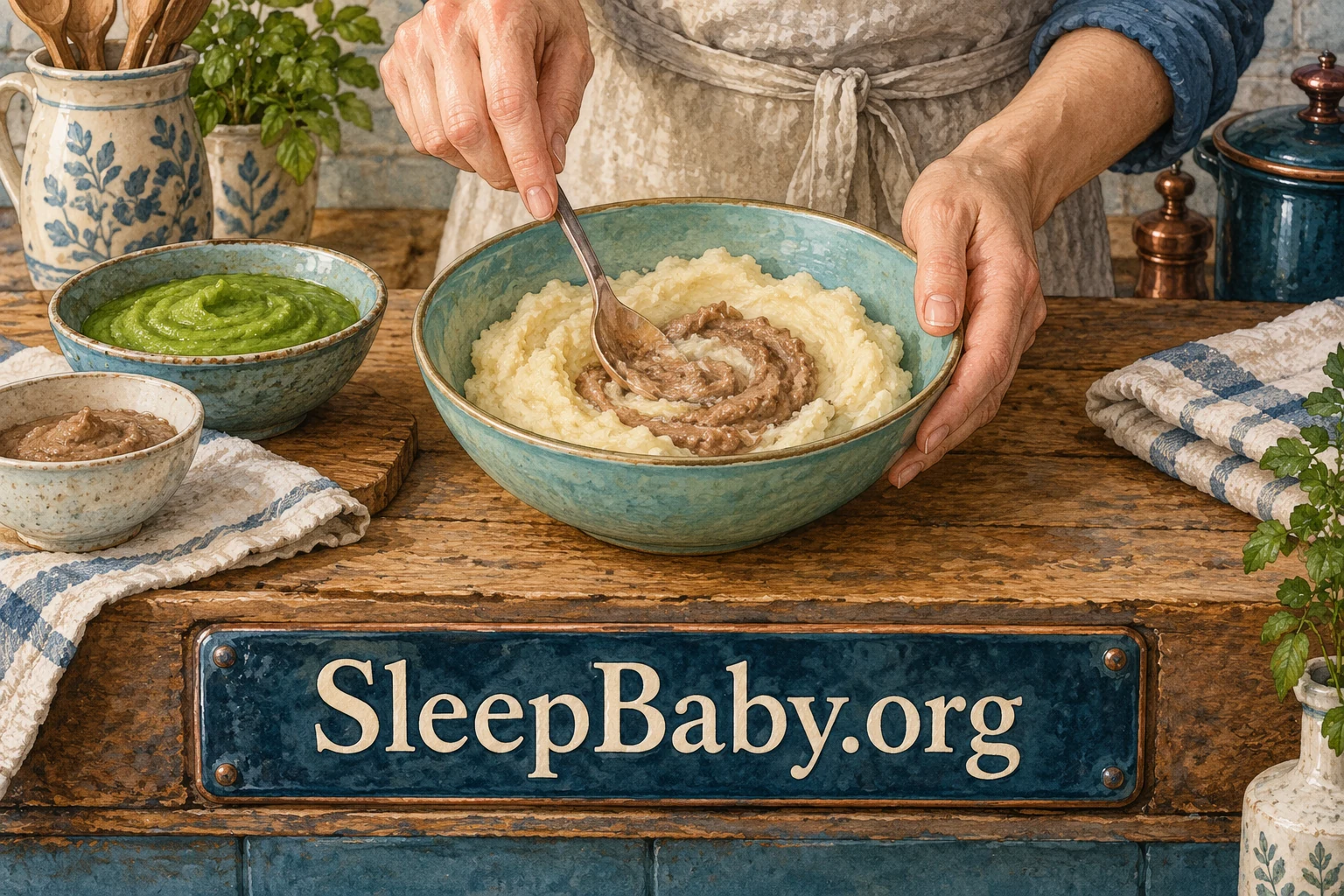
A preparation sequence you can follow
- Choose the occasional meal and check whether another caregiver has already offered liver.
- Prepare plain liver with clean hands, surfaces and equipment, keeping raw and cooked food separate.
- Cook the centre to a safe temperature for the required time, using a clean thermometer.
- Make a moist texture your baby can already manage. Remove firm pieces and cool the serving.
- Offer a small amount without pressure. Keep untouched food separate from the feeding bowl.
This is a workflow, not a prescribed liver portion or a complete daily menu. Your baby’s usual milk, varied foods and any individual feeding plan still apply.
Chicken, beef, lamb, pork or goat liver?
Changing the animal does not remove the main questions. Liver still needs appropriate frequency, thorough cooking and a manageable texture. I would not describe chicken liver as unlimited because it seems softer, or transfer a portion suggested for one product to every other kind.
If you are choosing between types, use one you can obtain safely and prepare confidently. Ask for individual advice if you cannot establish what the product is or how much liver is in a mixed dish. You do not need a ranked list of “best” livers to introduce iron-rich foods.
Other organ meats, such as heart and kidneys, are different foods. They need their own preparation and texture decisions; liver’s vitamin A guidance should not be turned into a rule that all organ meats have the same nutrient content. Nor does feeding an animal’s liver specifically support or “cleanse” your baby’s liver.
Is pâté or liver sausage an easier option?
A smooth spread may look convenient, but texture alone does not make a product suitable. Check whether it contains liver, how much is present, added salt, allergens, alcohol-containing ingredients, cooking requirements, use-by instructions and storage directions. A ready-made adult pâté is not automatically a baby food.
Liver in pâté, liver sausage or a mixed meat dish still counts as liver when planning frequency. Do not treat a spread as an extra category that sits outside the weekly limit. If you cannot establish the ingredients or preparation, choose another suitable food.
A homemade mixture of thoroughly cooked liver and vegetables can be prepared in a texture your baby manages. That does not make an adult pâté recipe safe to copy unchanged: some recipes deliberately leave liver undercooked. Follow the cooking check above, and keep any unused food safely chilled or frozen.
Storing the batch without serving it every day
Batch cooking can save work, but the freezer is a place to save future occasional servings, not a reason to give liver at every meal. Label the container so every caregiver can tell that it contains liver, even after it has been mixed with vegetables.
The NHS advice for children’s food is to cool prepared food quickly, ideally within one to two hours, then refrigerate or freeze it. Use refrigerated food within two days. Divide a batch into smaller containers to cool it efficiently; do not leave a large pan standing out for the afternoon.
Defrost frozen food thoroughly in the fridge, not on the counter. Use it within 24 hours of defrosting. If using a microwave’s defrost setting, use the food straight away. Reheat only once, until steaming hot throughout, then cool the serving before feeding. Stir microwaved food to distribute heat and check for hot spots.
Put only the amount you intend to offer into the feeding bowl. Throw away food left in the baby’s used bowl; do not stir it back into the stored batch. If you cannot establish how long a container has been out, when it was prepared or whether it has already been reheated, use another food.

If your baby already ate liver
A small taste of properly cooked liver is a different situation from repeated large servings, an unknown amount of a supplement or undercooked meat. Start with the facts instead of trying to diagnose vitamin A toxicity from one internet number.
Note the type of liver or product, approximate amount, time eaten, preparation and any vitamin products the baby receives. If there have been frequent liver meals or a substantial or uncertain amount, contact your child’s clinician for advice. For an accidental supplement dose, call your local poison service promptly rather than waiting for symptoms. In the US, call Poison Control at 1-800-222-1222. Keep the packaging. Do not make your baby vomit or give an extra medicine, vitamin or home remedy to counter it.
After raw or undercooked liver, ask for medical advice, particularly if symptoms develop. Food poisoning may begin hours or days later, so being comfortable immediately afterwards does not settle the question. If your child is ill, the urgent signs near the beginning of this article matter more than calculating how many mouthfuls were eaten.
For an ordinary well baby who tried an appropriate cooked taste, return to their usual age-appropriate milk and varied meals. There is no reason to compensate by withholding their next feed. If the amount or supplement combination worries you, get advice about that specific exposure.
Allergy and choking are separate checks
A reaction might relate to liver or to another ingredient in a dish. Introduce known allergenic ingredients in small amounts, one at a time, so you can identify a reaction. If your baby has eczema or an existing food allergy, ask their clinician how to introduce relevant allergens.
Do not interpret repeated coughing or difficulty swallowing as proof that a baby simply dislikes the flavour. Stop the feed and assess what is happening. Severe choking needs immediate first aid and emergency help. For a responsive infant under one year with severe choking, the American Red Cross advises alternating five back blows with five chest thrusts; do not use abdominal thrusts or blindly sweep inside the mouth.
A feeding assessment is appropriate when trouble with textures is recurring, especially alongside poor growth, long or tiring feeds, or a shrinking range of accepted foods. A different recipe can be helpful for ordinary preferences, but it cannot diagnose a swallowing problem.

Other ways to offer iron
If liver is not a good fit, suitable options include appropriately prepared meat, beans or lentils, and iron-fortified infant cereal. Check that cereal actually says it is fortified; do not assume every porridge provides the same amount.
The CDC explains that iron from animal foods is generally easier to absorb than iron from plant foods, and vitamin C can help with plant iron. For example, an age-appropriate lentil mash can sit alongside a safely prepared vitamin C-containing fruit or vegetable. This gives you another practical route without needing liver every week.
If your child has diagnosed iron deficiency or you are worried about their intake or growth, follow the professional assessment and treatment plan. Do not replace prescribed iron with liver, increase liver frequency to treat suspected anaemia, or start an iron supplement yourself. Milk feeding, prematurity and the rest of the diet can all affect individual advice.
A short visual reminder about cooking food
The Food Standards Agency’s Food safety coaching, Part 9: Cooking safely uses a commercial kitchen and burgers to explain cooking. It is general food-safety background, not an infant liver recipe, portion guide or texture demonstration.
Open the FSA cooking video on YouTube
If the player is unavailable, the useful reminder is to cook food thoroughly and check the centre. For liver, use the written temperature-and-time guidance above, then adjust texture and cool the serving. The illustrations in a general cooking video do not establish what a baby can safely eat.
Use equipment for a clear purpose
A clean food thermometer helps you check the cooking temperature; use an appropriate one you already own and follow its instructions. A clean bowl and suitable utensil may be enough for the finished food. There is no need to buy a liver supplement or a special baby-food appliance to make liver part of a diet.

Your next meal can stay simple
Decide first whether liver is something you want to offer at all. If it is, keep it occasional, check the amount in the context of the rest of the diet, cook it thoroughly and make the texture manageable. If any of those steps is unclear, another suitable iron-rich food is a perfectly practical choice for today.
Share the plan with anyone else who feeds your baby. A clear note about what was served and a correctly labelled container are more useful than trying to create a perfect “superfood” meal. Your baby needs an appropriate overall feeding pattern, not a larger serving of one concentrated food.
Sources
- UK Committee on Toxicity: Vitamin A statement, including infant liver frequency
- NHS: Baby vitamins
- NHS: Food poisoning
- NHS: Children's food safety and hygiene
- Food Standards Agency: Cooking your food
- GOV.UK: Cooking food safely
- NHS: Vitamin A
- Fylde Council: Food Standards Agency cooking videos
- NHS: Iron
- Poison Control: First aid for poisonings
- Poison Control: Multivitamin exposures
- CDC: Infant and toddler iron
- NHS: Anaphylaxis
- NHS: Foods and drinks to avoid
- NHS: Foods from around six months
- NHS: Food allergies in babies and children
- NHS: Storing and reheating baby food
- American Red Cross: Infant choking
- NHS: Preparing baby food safely
- NHS: First solid foods
- NHS: Urgent medical help for children
- ASHA: Feeding and swallowing disorders
A practical next meal
Occasional food, thoughtful preparation
You can offer liver carefully or choose another suitable iron-rich food. Keep the amount, cooking and texture questions clear, and ask for individual advice when the diet or supplements make the choice uncertain.
For separate help exploring everyday bedtime routines and sleep schedules, visit SleepBaby.org to read about the SleepBaby.org Method.



What viewers said10 comments · 4 replies+
Archived comments from the original Baby Sleep Miracle presentation. Not independently verified by SleepBaby.org; individual experiences vary.
Thank you so much for this video! I had no idea about the dangers of baby swings :O
Hi Mary-Ann. I have a question: Is method in any way similar to the ones recommended by Dr Bucknam, Dr. Weissbluth or Dr. Karp? We tried those but none of them help.
Hi Regina, thank you for your question. The short answer is no. The techniques I share in my guide are based on newest scientific research and this is why I have never seen any approach similar to the one I recommend.
This method really works! I tried it on my son Jesus and after just one week he went from waking up more than 5 times a night to waking up just once or twice. You are a lifesaver, Mary-Ann!
I'm truly impressed with how much information you share in your video. And all for free! I can feel that you truly care about mothers like myself, and that's hard to find these days. I have recommended your site to several of my friends already.
Mary-Ann, our child suffers from autism. Is your approach still suited?
Chloe, I made sure my method can be used with any child, even babies who are special like yours. Please note that I'm not a doctor and that I always advice to consult with your physician because nothing is more important than the safety and well-being of your love.
Hallo Mary-Ann, I'm from Germany. Do you have your guide in German?
Hello Heide, we do! Normally you should already see our video in German. If not, please contact our support so they can guide you
Thenk you for your answer, Mary-Ann!
I just completed your approach and I have to say, it worked almost too well. Yes, it took a bit of getting used to with your bedtime routine but the difference is huge. My son George used to take 1 hours to go down and now he's firmly asleep in no more than 10 minutes! You're the best!
It seems I'm the only man watching this video, lol! What you shared about the 'emotional backpack' made immediate sense to me and I can't wait to help my little girl Mila to unpack it!
Hey there, just discovered your site and this really sounds different. Just wanted to say thanks for sharing :)
For everyone who's still thinking about getting Mary-Ann's guide I want to advise you to go ahead. I wasn't sure myself but now I'm so thankful I invested in this program. It made a huge difference in our life as a family and yes, my baby girl does sleep through the night now.