
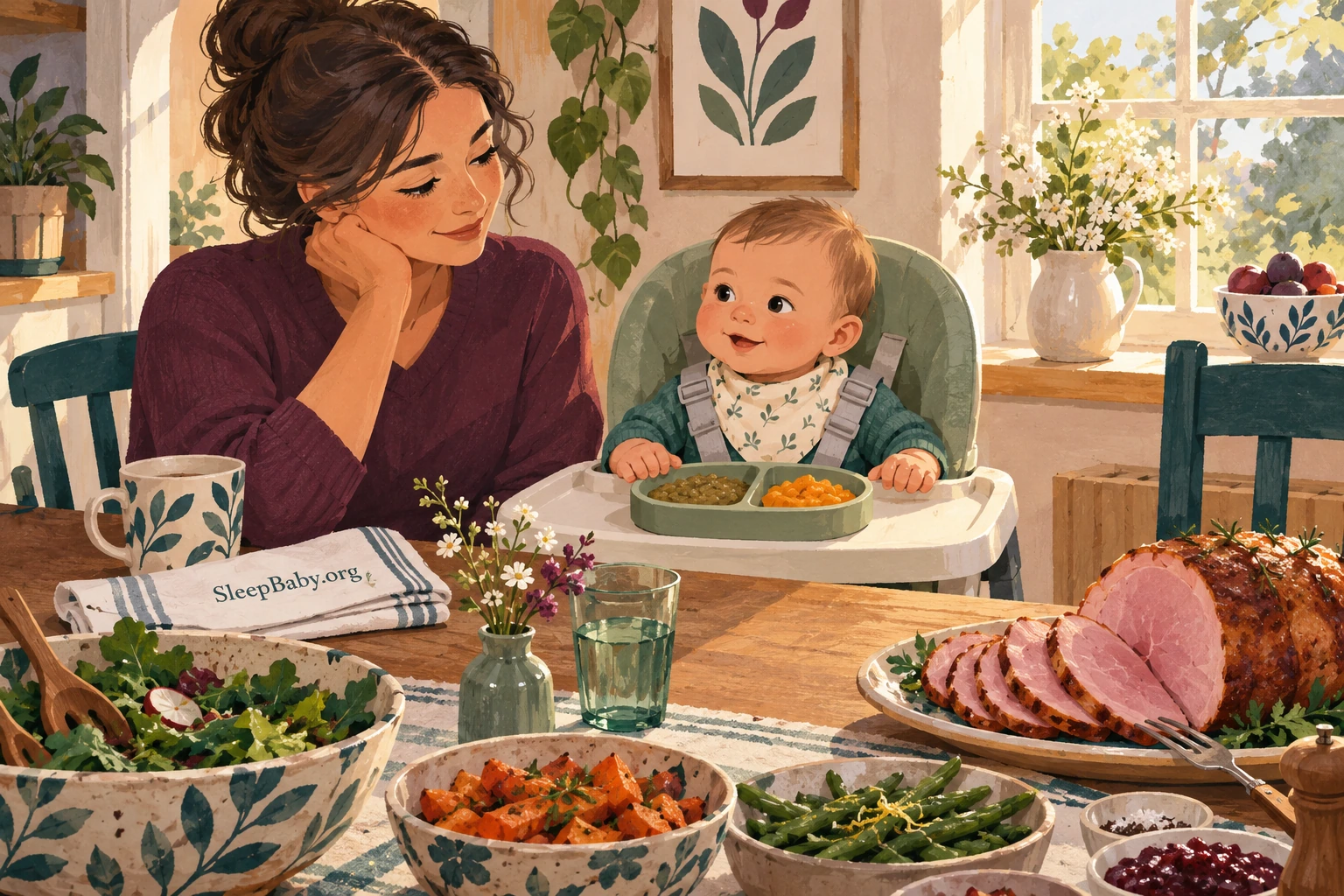
A baby who is ready for solids, usually around 6 months, may have a small amount of safely prepared ham, but it would not be my first or everyday protein choice. Ham is often high in sodium, and some pieces are too tough to manage. Plain cooked meat or mashed beans or lentils are easier starting points. If you do offer ham, check the label, handle it safely, and adapt the texture. Avoid honey-containing ham or glaze before 12 months.
The slice on an adult sandwich and the piece a baby can safely handle are two different things. I would decide what belongs on the baby’s plate before passing the family platter, rather than trying to make a firm cube work at the highchair.
Why ham is not an ideal first food
CDC advises avoiding foods high in sodium for young children and specifically includes ham among processed meats that may be high in salt. A “deli” label does not make ham low sodium. Neither does baking it at home.
The NHS says to limit processed meats such as ham, while noting that small amounts can fit within a balanced diet. I would take that as room for an occasional carefully prepared taste, not a reason to build the baby’s lunches around ham.
You do not need to introduce every food the adults are eating. For an early meal, a plain protein you can make soft and moist gives you fewer things to work around. Sharing the table is still sharing the meal, even when the baby’s bowl looks different.
Readiness matters more than the calendar alone
Solids generally start around 6 months, alongside breast milk or infant formula. CDC’s readiness signs include being able to sit with support, control the head and neck, and swallow food rather than push it back out. If your baby was born early or has feeding or swallowing difficulties, ask their clinician for an individual plan.
An older baby may handle more textures, but that does not make a dry, rubbery piece easier to swallow. Use the skills you see at the meal, not just the month printed on a feeding chart. Teeth alone do not answer the texture question.
The ham check: label, heat, texture
Label: Is it high in sodium? Does it contain honey or an ingredient your baby must avoid?
Heat: Has this particular product been cooked, stored and, when needed, reheated properly?
Texture: Can you prepare it to suit your baby’s current eating skills, without firm chunks, skin, fat or bone?
Passing one check does not answer the others. Lower sodium cannot fix a choking hazard, and reheating cannot make a salty food a better everyday choice.
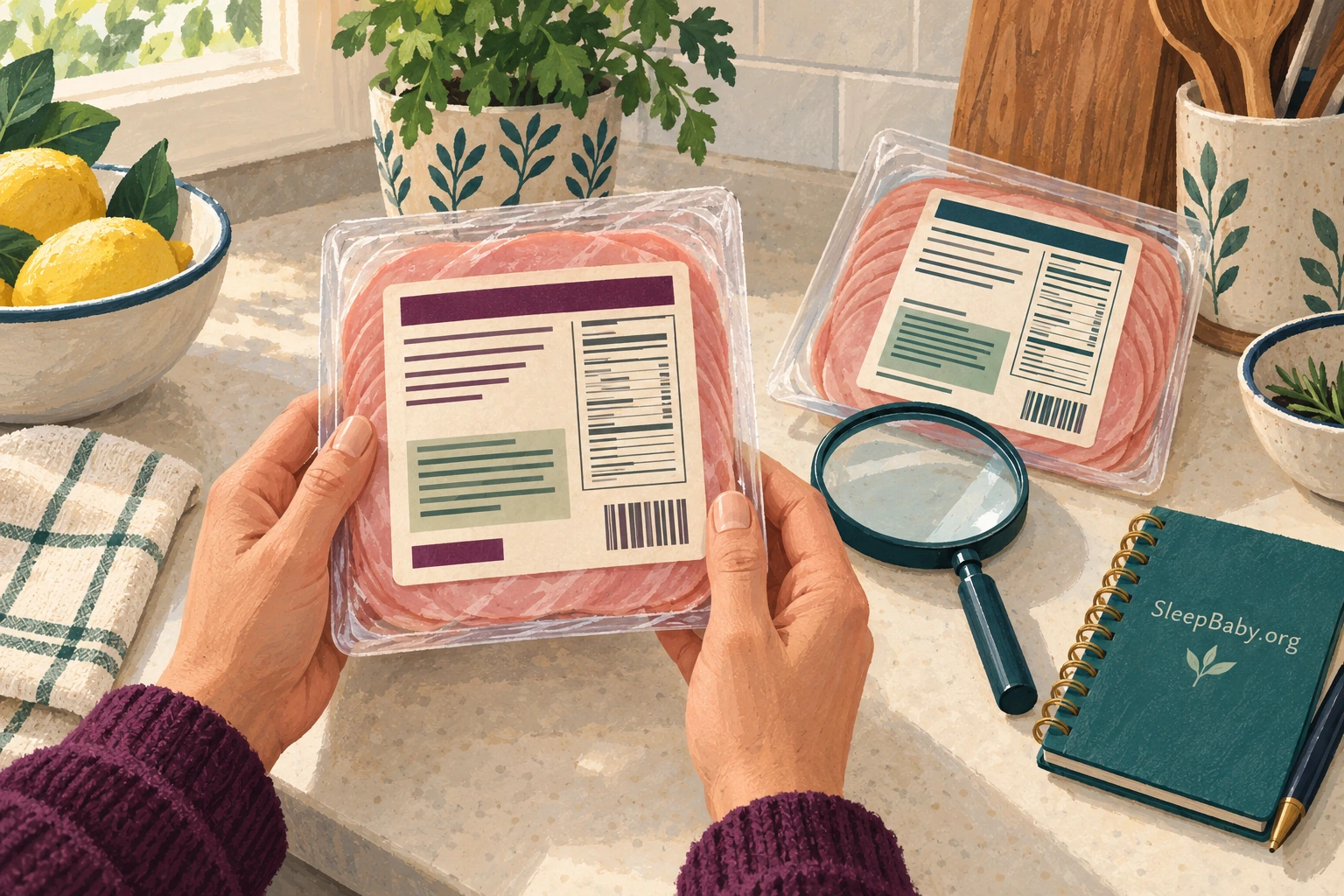
Read the back of the package
Start with the sodium line and serving size. If you compare two packages, compare the same amount of food; an adult serving on a label is not a recommended serving for your baby. A lower number can help you choose between products, but it does not turn processed ham into a necessary baby food.
Then read the ingredients. For a baby under 12 months, skip ham made with honey or a honey-containing glaze. If the ingredient list isn’t available at a gathering, choose another food. There is no need to guess whether wiping off the shiny outer layer removed everything.
If your baby has a food allergy, check the complete label every time. A seasoned meat, glaze or sauce may contain more than pork. The NHS advises checking labels carefully and avoiding an uncertain food when a relevant allergy is known.
Words that do not settle the decision
“Smoked,” “baked,” “uncured” and “no nitrates added” describe different aspects of a product. None tells you all you need to know about sodium, ingredients, safe handling and texture. I would not choose a ham for a baby just because the front of the package sounds simpler.
At a deli counter, ask to see the actual product information. If the answer is only “it’s our mild ham,” you still do not have a sodium comparison or an ingredient list. Choosing plain food already suitable for your baby is a reasonable way to finish the decision.
If your baby already ate some ham
First check how your baby is breathing and behaving. Then consider the piece and the food’s handling: was it a soft taste, a firm chunk, an unknown glaze, or food that had been left out? These are different concerns. Keep the package or a photo of the ingredients if you need to ask for advice.
When the meal needs medical help
Call your local emergency number if your baby cannot breathe, cough or cry, becomes unresponsive, or suddenly has mouth or tongue swelling, breathing difficulty, or unusual limpness after eating.
Seek prompt medical advice for a suspected reaction, repeated vomiting, diarrhea with illness, or feeding that is not returning to normal. Fewer wet diapers, unusual drowsiness or few tears can mean dehydration and need urgent advice.
If your baby has an allergy action plan, follow it. Do not wait for a sleep routine or a video to address urgent symptoms.
The emergency allergy signs above follow NHS food-allergy guidance; its dehydration guidance explains the hydration warning signs. For a specific concern about honey, undercooking, storage or your baby’s health, contact their pediatrician. There is no universal amount of ham that this page can declare safe after the fact.
LET DINNER BE DINNER
A finished meal is not a sleep test
Once the feeding questions are settled, you can plan the rest of the evening without asking ham, protein or a bigger dinner to do the settling. The free planning preview on SleepBaby.org offers three choices and one suggested starting step, with no sign-up or card.
I would make the practical handoff small: one adult puts untouched food away, the other finishes the meal with the baby, and both know what comes next. A wiped tray and a clear next step are more useful planning cues than counting the last three bites.
The optional paid SleepBaby.org Workshop is an online sleep guide with short lessons you can revisit and a seven-night tracker. It offers a separate place for ordinary sleep planning. You can also write the evening handoff on a piece of paper. Neither the preview nor the Workshop assesses choking, allergies or feeding difficulties, and neither promises that changing dinner will change sleep.
Heating and serving are separate steps
Cold-cut ham may be sold ready to eat, but young children need extra food-safety care. The FDA’s food-safety guide for children under 5 recommends reheating luncheon and deli meats until steaming hot, preferably to an internal temperature of 165°F (74°C). Leftovers should also reach 165°F.
That number is for reheating, not for the food going into your baby’s mouth. After heating, let the portion cool and check it before serving. The NHS specifically separates thorough reheating from cooling before feeding.
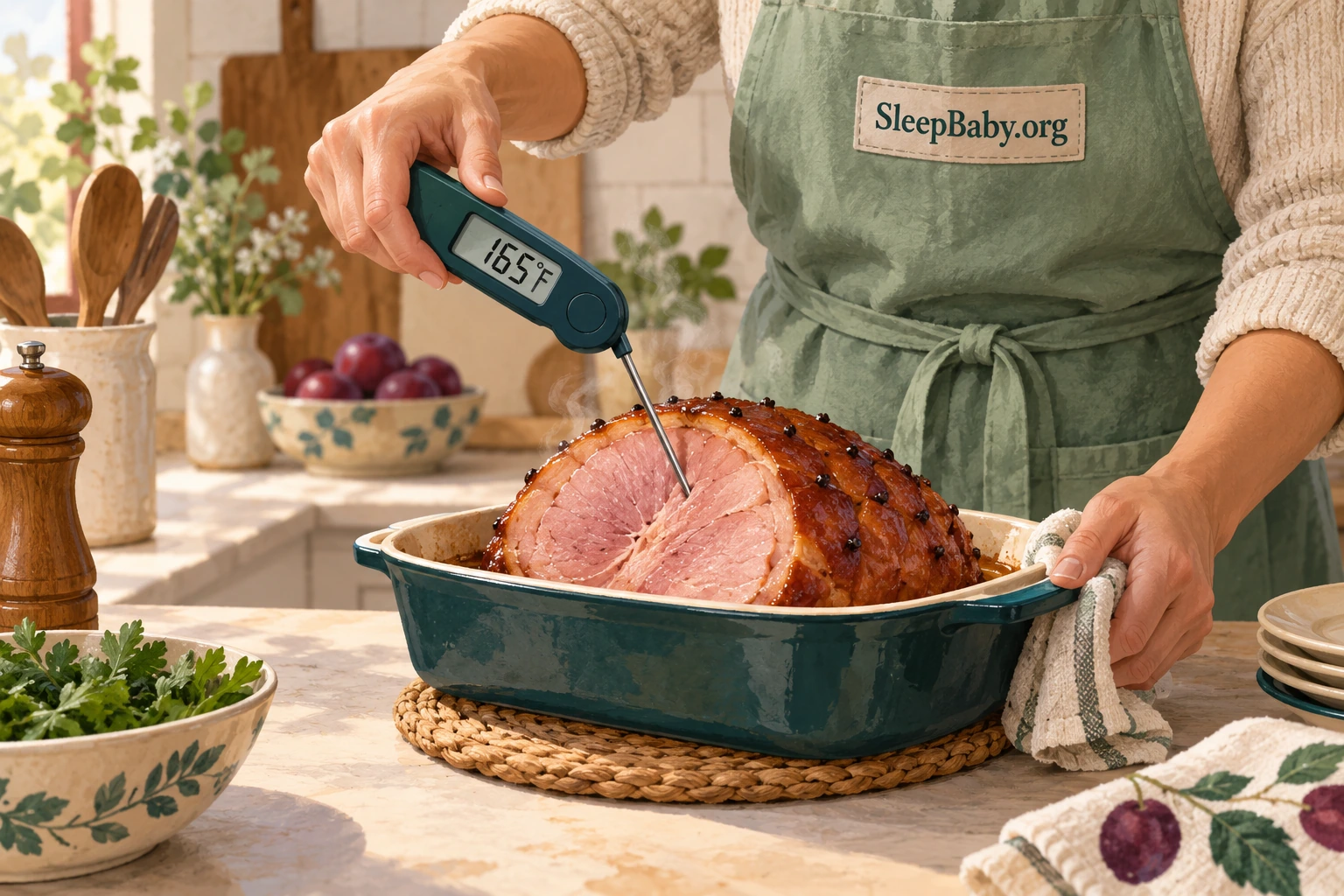
A food thermometer checks the inside of food more reliably than its appearance. Use it according to its instructions, clean it between uses, and keep the sharp probe away from your baby. A thermometer does not tell you whether a meat’s sodium level or texture is suitable.
Don’t assume every ham needs the same cooking method
Check whether the package says fully cooked or requires cooking. Follow the product’s cooking instructions and applicable safe-temperature guidance. A large raw joint is a different cooking task from reheating a slice of deli ham; the deli-meat advice above is not a shortcut for preparing raw meat.
If you cannot tell how the ham was prepared or how long it has been out, pick a different food for the baby. A buffet platter is not a useful place to reconstruct the whole cooking and storage history while someone is waiting with a spoon.
Make the texture manageable, not merely smaller
CDC lists tough or large chunks of meat as choking hazards. Cutting a tough piece into a neat little cube does not change its texture. Avoid thick ham chunks, rubbery folds of cold cuts, chewy rind, and any bone or gristle.
For meat generally, remove skin, visible fat and bones. Prepare it for your baby’s current stage: a smooth blended texture for a baby who needs that, or a suitably soft, finely chopped texture as their skills develop. The NHS also describes very thin strips for meat. That is not permission to offer a tough strip your baby cannot manage.
When I am choosing between laboriously adapting a springy slice of ham and using tender plain meat or mashed lentils, I would choose the softer alternative. If you cannot make the texture appropriate, leave that ham off the baby’s plate.
Keep your baby alert and upright in a safe highchair, and stay with them throughout the meal. Avoid eating in a moving car, while reclining, or while crawling around. Give the meal time and attention; being hungry or in a hurry is not a reason to skip the setup.
Know the infant choking response
This American Red Cross demonstration covers a responsive choking infant. Learn the skill before a meal, rather than waiting for an emergency to start watching.
Written reminder: If an infant can cough or cry, allow coughing and watch closely. If they cannot cough, cry or breathe, call 911 or your local emergency number. For a responsive choking infant, the Red Cross teaches five back blows followed by five chest thrusts, supporting the head and keeping it lower than the body. Infants need chest thrusts, not abdominal thrusts.
If the infant becomes unresponsive, begin CPR on a firm, flat surface, following your training and the dispatcher. Never sweep a finger blindly inside the mouth. See the full Red Cross infant choking instructions for the technique.
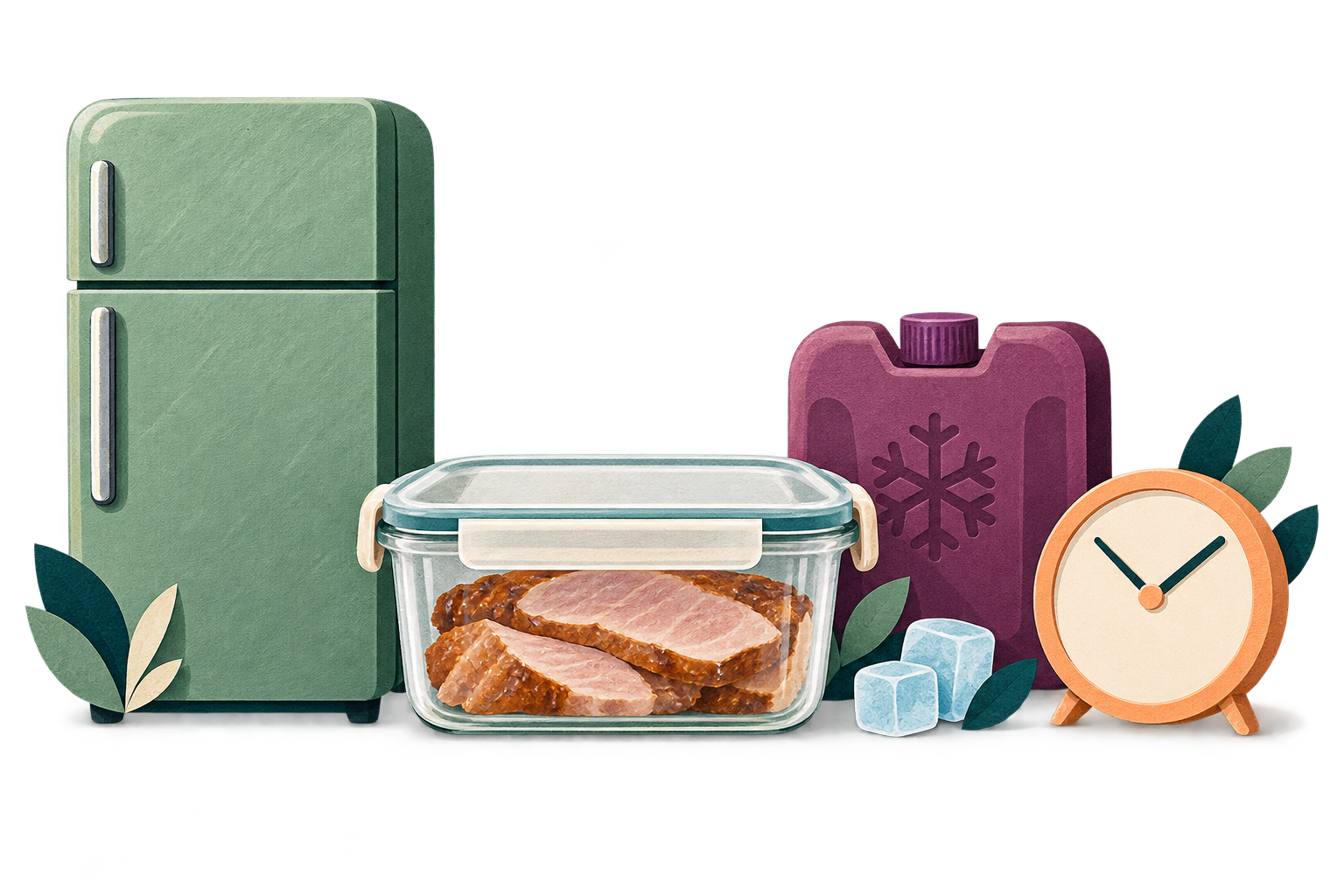
Put the leftovers away before bedtime gets busy
Refrigerate perishable food within 2 hours, or within 1 hour when the temperature is above 90°F (32°C). Keep the refrigerator at 40°F (4°C) or below. These are the FDA’s food-storage limits, not targets for how long to leave dinner sitting out.
Take out only the portion you expect to offer. Keep untouched food separate from food that has been on your baby’s spoon or plate. The NHS advises throwing away half-eaten prepared portions and reheating already-cooked baby food only once.
Follow the package’s storage instructions and dates for the original product. For home-prepared baby food, the NHS recommends cooling promptly and using refrigerated batches within 2 days. Labeling a container when you put it away is easier than trying to remember which dinner it came from.
At a holiday meal, I would give one adult the leftovers job before everyone moves to the living room. The baby does not need another taste passed over the couch, and the serving platter does not need to wait until the bedtime routine is finished.
An optional tool for the heating check
As an Amazon Associate, I earn from qualifying purchases.
The TP19H instant-read food thermometer, sold under ThermoPro/TempPro branding, is one option for an adult checking food temperature. The manufacturer’s model has a folding probe and a backlit display. Those features address the heating step; they do not assess whether a food is right for your baby.
This is a recommendation based on the manufacturer’s specifications, not a personal product test. Keep the probe and battery compartment away from children.
If you already own a working food thermometer suited to the food you’re checking, use it according to its instructions. There is no reason to buy a second one. You can also choose a different appropriately prepared meal instead of making ham work tonight.
What to offer instead of ham
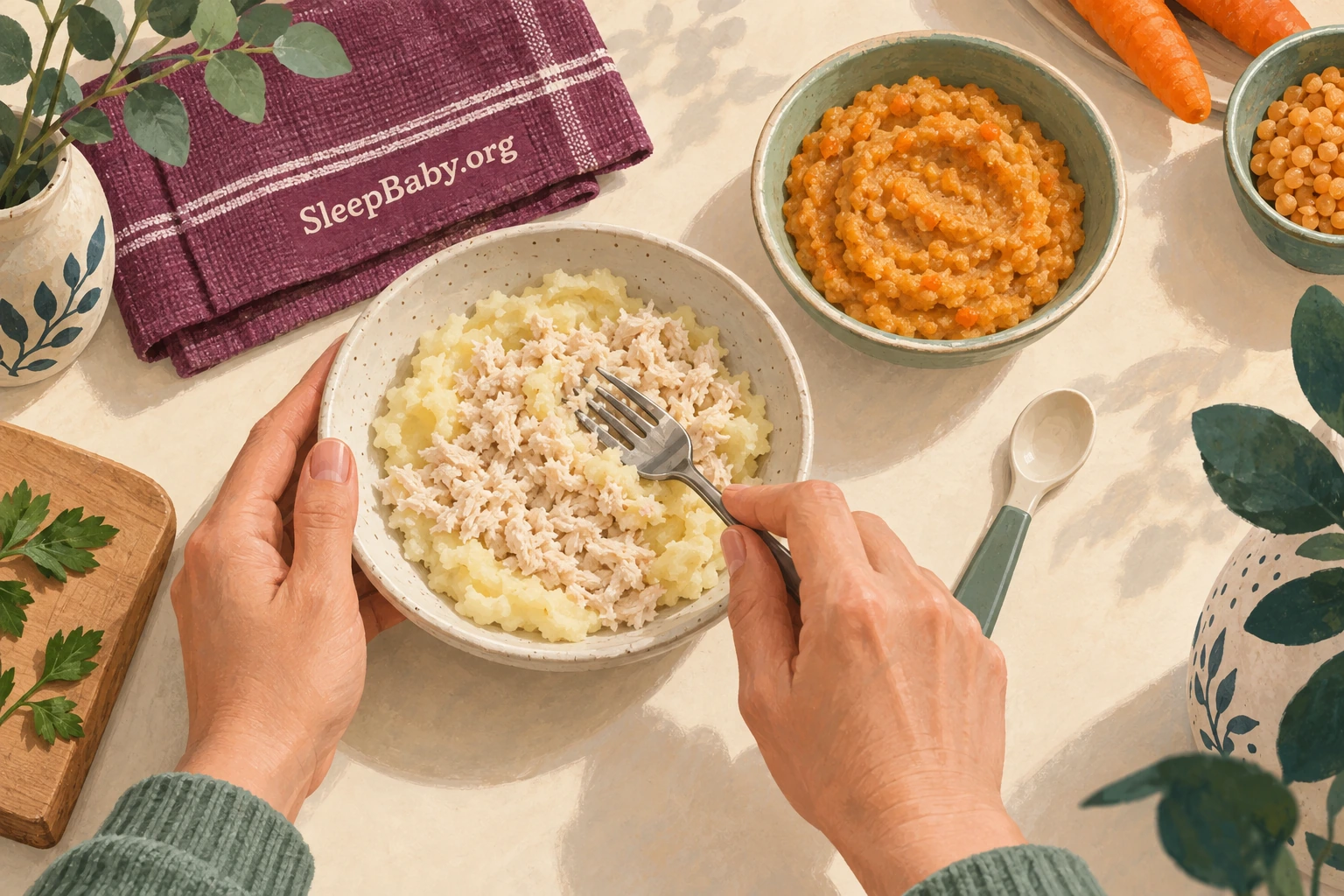
Choose a protein food you can prepare without added salt and with a suitable texture. Possibilities include tender plain chicken or turkey, well-cooked meat blended or finely prepared as needed, and cooked beans or lentils mashed appropriately. Iron-fortified infant cereal can also be part of varied first foods.
A simple plate might pair a familiar soft protein with mashed potato and a cooked vegetable your baby has already tolerated. This is an example, not a required menu or portion target. Follow your baby’s hunger and fullness cues, and keep milk feeds appropriate for their age.
Before the platter reaches the table
Set aside: the baby’s plain, suitably soft food before adding a salty sauce, glaze or gravy.
Tell the other adults: which food is for the baby, who is supervising, and any allergy instructions.
After the meal: put untouched food away promptly and discard the used portion.
Your baby can be included without everyone offering a piece from their own plate.
Common questions about babies and ham
Is low-sodium ham automatically suitable?
No. Compare the actual sodium information and ingredients, then check handling and texture. A lower-sodium option may still be a less useful everyday choice than plain food you can prepare without added salt.
Can a baby eat holiday ham?
The holiday does not change the checks. You need to know the ingredients, how it was cooked and stored, and whether the texture works. Skip honey-containing ham before the first birthday. A separate soft meal lets your baby join everyone without needing a slice of the centerpiece.
Does turning 1 make ham an everyday food?
No. The honey restriction changes at 12 months, but the sodium, food-safety and choking questions remain. Keep offering a variety of suitable protein foods rather than treating a birthday as a switch to an adult sandwich plate.
Will ham or a bigger dinner help my baby sleep longer?
I would not choose ham to change a baby’s sleep. The NHS notes that starting solids does not make a baby more likely to sleep through the night. Stop a meal when your baby shows they have had enough; a few extra bites are not a sleep plan.
If feeding is painful, coughing during meals is recurring, or growth or intake worries you, talk with your baby’s clinician. ASHA recommends seeking help for feeding-skill concerns. Those concerns deserve their own assessment, rather than a trial of a more filling dinner.
Sources
- CDC: Foods and drinks to avoid or limit
- CDC: Starting solid foods
- CDC: Choking hazards
- NHS: First solid foods, readiness and sleep
- NHS: Preparing food safely
- NHS: Storing and reheating baby food
- FDA: Food safety for children under five (PDF)
- NHS: Food allergies in babies
- NHS: Food allergy and emergency signs
- NHS: Dehydration
- American Red Cross: Infant choking
- ASHA: When to seek help with feeding development
- TempPro: TP19H thermometer specifications
THE SAME TABLE. A SUITABLE BABY MEAL.
Make room for the meal your baby can manage
You can leave the ham on the adult platter, choose a plain soft protein for your baby, and still enjoy the meal together. If ham is offered, keep the label, heating and texture checks separate.
When you want help organizing the ordinary evening afterward, the free SleepBaby.org preview offers a starting step. Explore the optional Workshop there while keeping feeding and medical decisions with the appropriate guidance.





What viewers said10 comments · 4 replies+
Archived comments from the original Baby Sleep Miracle presentation. Not independently verified by SleepBaby.org; individual experiences vary.
Thank you so much for this video! I had no idea about the dangers of baby swings :O
Hi Mary-Ann. I have a question: Is method in any way similar to the ones recommended by Dr Bucknam, Dr. Weissbluth or Dr. Karp? We tried those but none of them help.
Hi Regina, thank you for your question. The short answer is no. The techniques I share in my guide are based on newest scientific research and this is why I have never seen any approach similar to the one I recommend.
This method really works! I tried it on my son Jesus and after just one week he went from waking up more than 5 times a night to waking up just once or twice. You are a lifesaver, Mary-Ann!
I'm truly impressed with how much information you share in your video. And all for free! I can feel that you truly care about mothers like myself, and that's hard to find these days. I have recommended your site to several of my friends already.
Mary-Ann, our child suffers from autism. Is your approach still suited?
Chloe, I made sure my method can be used with any child, even babies who are special like yours. Please note that I'm not a doctor and that I always advice to consult with your physician because nothing is more important than the safety and well-being of your love.
Hallo Mary-Ann, I'm from Germany. Do you have your guide in German?
Hello Heide, we do! Normally you should already see our video in German. If not, please contact our support so they can guide you
Thenk you for your answer, Mary-Ann!
I just completed your approach and I have to say, it worked almost too well. Yes, it took a bit of getting used to with your bedtime routine but the difference is huge. My son George used to take 1 hours to go down and now he's firmly asleep in no more than 10 minutes! You're the best!
It seems I'm the only man watching this video, lol! What you shared about the 'emotional backpack' made immediate sense to me and I can't wait to help my little girl Mila to unpack it!
Hey there, just discovered your site and this really sounds different. Just wanted to say thanks for sharing :)
For everyone who's still thinking about getting Mary-Ann's guide I want to advise you to go ahead. I wasn't sure myself but now I'm so thankful I invested in this program. It made a huge difference in our life as a family and yes, my baby girl does sleep through the night now.