
Yes, babies can eat ground turkey from around 6 months, once they’re ready for solids. Cook it to 165°F (74°C) with a food thermometer, then prepare a soft, moist texture your baby can manage and let it cool before serving. The word “ground” on the package doesn’t make the cooked meat ready for a beginner.
I would start with a little fully cooked turkey blended or finely mashed into a familiar vegetable, rather than a pile of dry crumbles. Keep your baby upright, stay beside them, and follow their feeding cues. Turkey belongs alongside their usual milk feeds, not in place of them.
If your baby is choking now and cannot breathe, cry or cough effectively, call your local emergency number and begin infant choking first aid. The serving advice below is for planning a meal, not managing an emergency.
When is a baby ready for ground turkey?
Around 6 months is the usual starting point for complementary foods, including appropriately prepared turkey. Readiness also matters: your baby needs steady head control and the ability to remain sitting for feeding, coordinate food toward their mouth, and swallow it. Night waking or chewing a fist doesn’t establish readiness.
A baby who is beginning with smooth foods may need cooked turkey blended into a smooth purée. Another baby may manage moist mash. As feeding skills develop, you can offer more texture, including finely chopped or ground foods. There isn’t one birthday that makes every crumb or patty suitable.
If your baby was premature, has a swallowing condition, or already follows a feeding plan, ask their clinician how to introduce meat. Follow that individual plan rather than an age label on a recipe. You don’t have to introduce turkey first, and you don’t have to delay all meat until 9 months simply because it feels like a “grown-up” food.
The turkey check: cooked, moist, manageable
Three different questions before the first bite
- COOKED: Did the center reach 165°F?
- Use a food thermometer. Turkey’s color and the minutes on the stove can’t answer this reliably.
- MOIST: Does it break down easily?
- Look for soft turkey incorporated into moist food, without a crisp crust, dry clumps or tough bits.
- MANAGEABLE: Does this suit this baby?
- Choose a texture and serving method matched to current feeding skills. Keep your baby seated upright with an attentive adult.
Passing one check doesn’t pass the others. A soft mixture still needs safe cooking. Fully cooked turkey may still need blending, moistening or a different serving shape.
How I would cook a small batch
Start with plain ground turkey so you control what goes into the baby’s portion. A premixed turkey burger, sausage or meatball may contain added salt and ingredients such as egg, milk or wheat. Read the ingredient list; “turkey” describes the meat, not everything in the packet.
- Keep raw poultry separate. Wash your hands before and after handling it. Use clean utensils and surfaces, and keep raw juices away from cooked food. Don’t rinse raw turkey: splashing can spread contamination.
- Cook completely. Break up the meat in a pan and cook it through, adding enough water or another suitable unsalted liquid to keep the mixture from drying out. There is no reliable universal cooking time: batch size, pan and heat all change it.
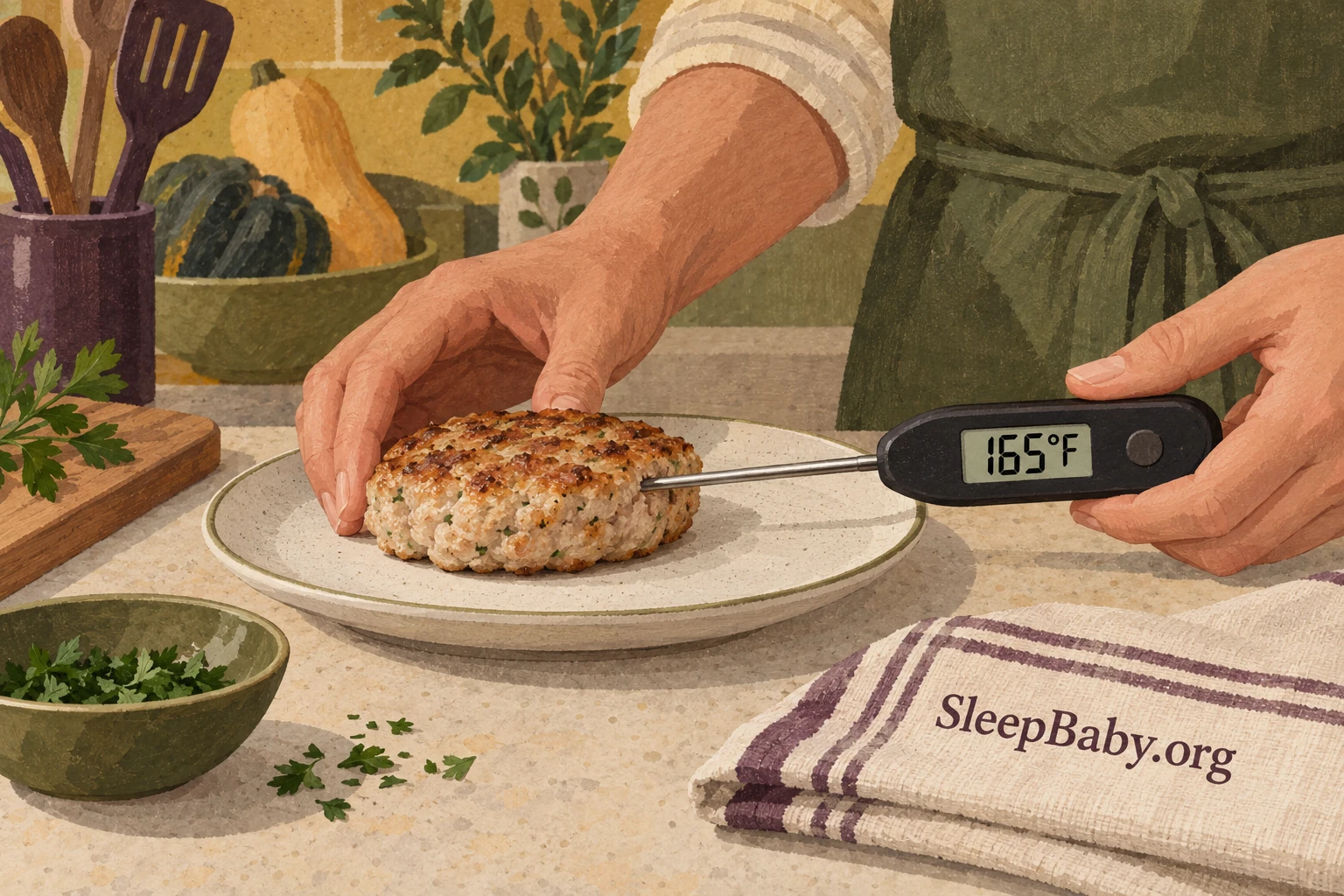
- Measure the food, not the pan. Check the turkey with a food thermometer according to its instructions. Keep the sensing area in the food and away from the hot cookware. Check more than one place in an uneven mixture; it needs to reach 165°F (74°C).
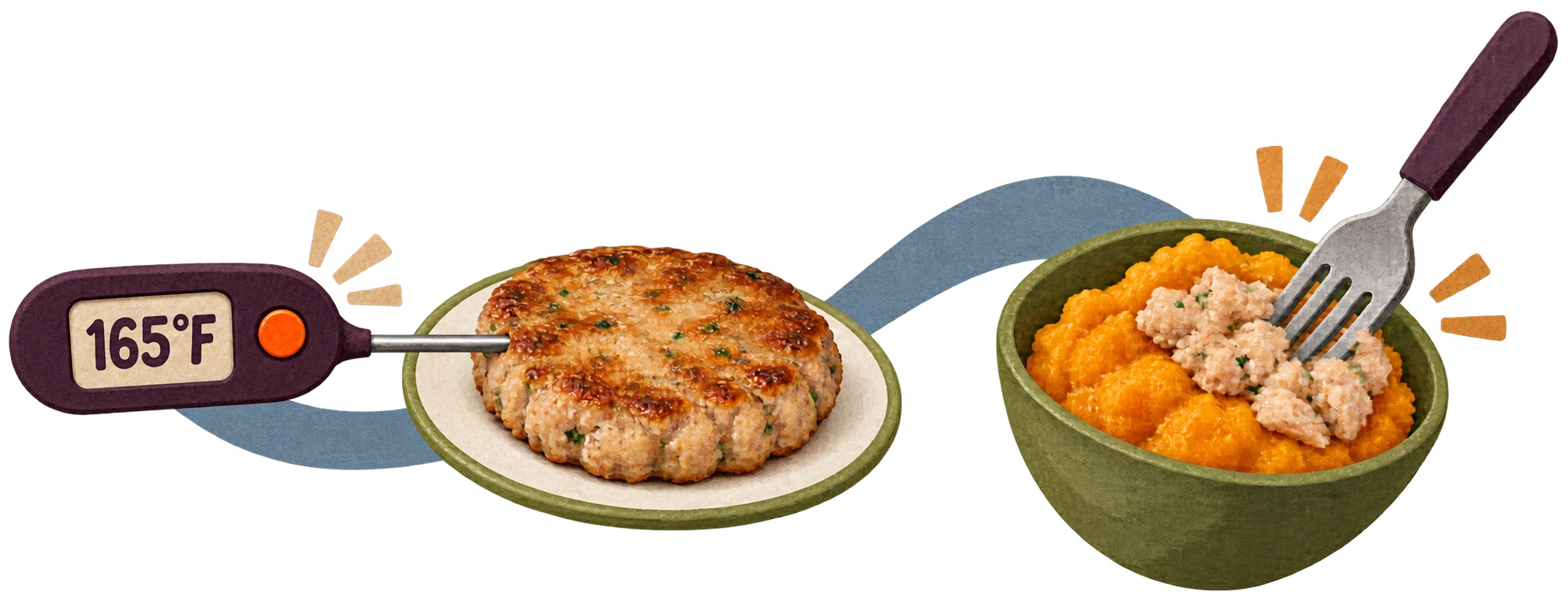
- Adjust the baby’s portion. Blend or mash fully cooked turkey with a familiar soft food, such as cooked squash. Add a little suitable liquid if needed. Check for dry or firm pieces, and make the final texture appropriate for your baby’s skills.
- Cool the serving. Stir and check it before feeding. The cooking temperature is a safety target in the kitchen, never the temperature at which you offer food to a baby.
For a thin turkey patty, insert an appropriate thermometer through the side toward the center, following the device’s required insertion depth. The USDA recommends taking thin foods off the heat for this check. A browned outside or a pale middle is not a substitute for a measured temperature.
I wouldn’t keep cooking solely to make the turkey look darker after it has reached the safe temperature. That can leave a dry serving you then have to fix. Use the thermometer for cooking, and the texture check for feeding.
How to serve it without a dry mouthful
A texture workbench, not an age chart
Beginning with smooth foods: blend fully cooked turkey with a familiar cooked vegetable and enough liquid to make an even texture. Stop and check for stringy or firm pieces before serving.
Managing soft mash: finely crumble the cooked turkey and work it thoroughly into moist mash. Press a sample with a fork. If it stays rubbery, dry or clumped, change the preparation rather than offering it as-is.
Ready for more texture: gradually offer suitable soft, finely chopped or ground food as your baby develops the skills to handle it. A larger mouthful is not a useful test of progress.
The fork check can reveal a problem; it cannot certify a food as choke-proof. Shape, size, your baby’s abilities and supervision still matter.
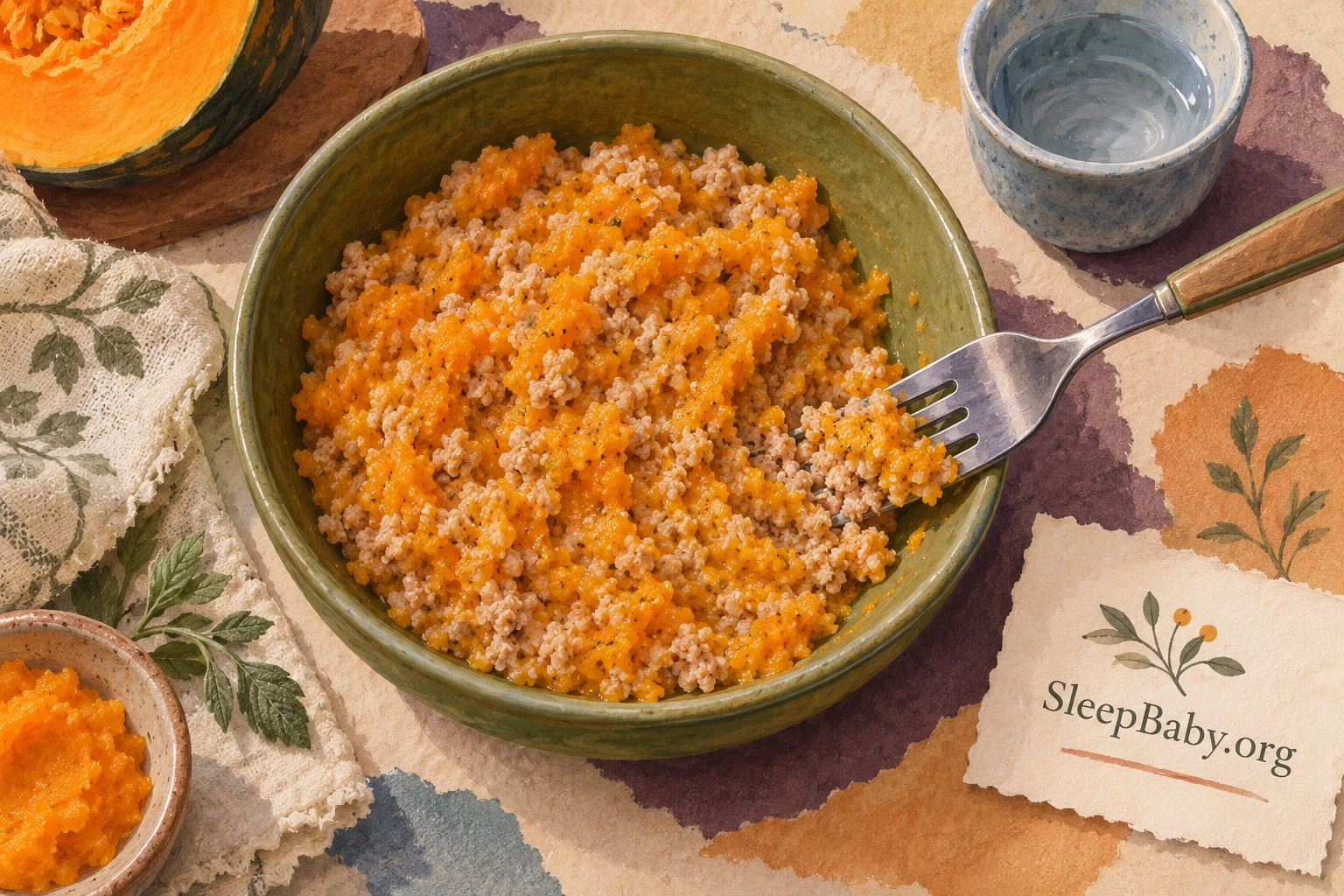
Ground turkey can be used during baby-led feeding, but I wouldn’t recommend a firm, round meatball as a default beginner serving. Meatballs and patties vary enormously. A dense ball with a browned crust behaves differently from tender meat mixed into mash. Cooked meat can be crumbled or blended instead of preserving the shape of the adult meal.
A preloaded spoon of appropriately textured mash can also let your baby participate. Let them approach the spoon or bring it toward their own mouth as their skills allow; don’t push food into a closed mouth. Combining spoon feeding and self-feeding is an option.
Keep the meal seated and unhurried. Secure the high-chair harness, remove distractions, and stay close enough to watch each mouthful. Don’t hand over a turkey snack in a moving stroller or car seat. Small pieces alone do not remove choking risk.
THE MEAL IS ONE PART OF THE EVENING
Put the turkey away. Give the next step its own plan.
A new food can take a lot of attention: checking the temperature, adjusting the texture, watching each bite. Once those feeding decisions are settled, the free SleepBaby.org planning preview gives ordinary sleep planning a separate place, with three choices and one suggested starting step. No sign-up or card is needed.
I would keep the kitchen handoff concrete: put untouched portions in the fridge, finish the meal when your baby is done, and agree on the next ordinary evening step. Turkey does not need to carry the job of making bedtime work. Writing those steps on scrap paper is a useful free starting point.
The optional paid SleepBaby.org Workshop is an online sleep guide with short lessons you can revisit and a seven-night tracker. You can explore it from the homepage if you want more structure. Neither the preview nor the Workshop evaluates feeding readiness, choking, allergies or illness, and neither promises that a different dinner will change your baby’s sleep.
Simple combinations that earn their place on the plate
You don’t need a special baby-meat recipe. The useful question is what makes this serving easier for your baby to eat while giving them variety. I would choose a familiar base for the first turkey meal, especially if a recipe would otherwise introduce several ingredients at once.
- Turkey with cooked squash: blend or mash together to the needed texture. Squash supplies moisture; leave out added salt.
- Turkey with mashed potato and a soft vegetable: keep the mixture moist, and check for firm vegetable pieces as carefully as the meat.
- Turkey in a simple vegetable sauce: finely crumble the meat into a suitable unsalted sauce. Keep any pasta soft and prepared for your baby’s stage, rather than assuming the sauce makes the whole dish suitable.
Plain herbs can add flavor without a salty seasoning packet. Don’t add stock cubes, salty gravy or extra salt to the baby’s portion. If the family dish needs those additions, set the baby’s suitable portion aside first using clean utensils.
If you use a binder in a turkey patty, remember that egg, wheat and milk are separate ingredients to consider. Follow guidance for introducing foods that can trigger allergies one at a time and in small amounts. A mixed recipe makes it harder to work out what caused a reaction if several ingredients are new.
How much turkey should I offer?
Begin with a small amount and let your baby decide how much to eat. Turning away or firmly closing their mouth is a reason to stop, not to sneak in the last spoonful. Keep offering breast milk or infant formula as appropriate; starting turkey is not a reason to remove a usual milk feed.
Turkey contributes protein and nutrients such as iron and zinc as part of a varied diet. It doesn’t need to appear at every meal. Other suitable meats, fish, eggs, beans, lentils and tofu can broaden the menu when prepared appropriately and introduced with their own allergy considerations.
There isn’t a universal “best” choice between turkey and chicken for every baby. I would pay more attention to safe preparation, variety and what your baby can manage than to making one meat win. Don’t choose an extra-lean product because you assume babies need a weight-control diet.
What if my baby spits it out?
First look at the texture. A dry crumble can be harder work than a moist mash, even when both started in the same pan. If the texture is appropriate and your baby simply isn’t interested, stop without pressure and offer it another time. Familiarity often takes repeated opportunities.
Repeated coughing, choking, apparent pain or trouble managing foods deserves a conversation with your child’s clinician or a feeding professional. Don’t keep increasing the texture to “teach” a baby through a recurring problem.
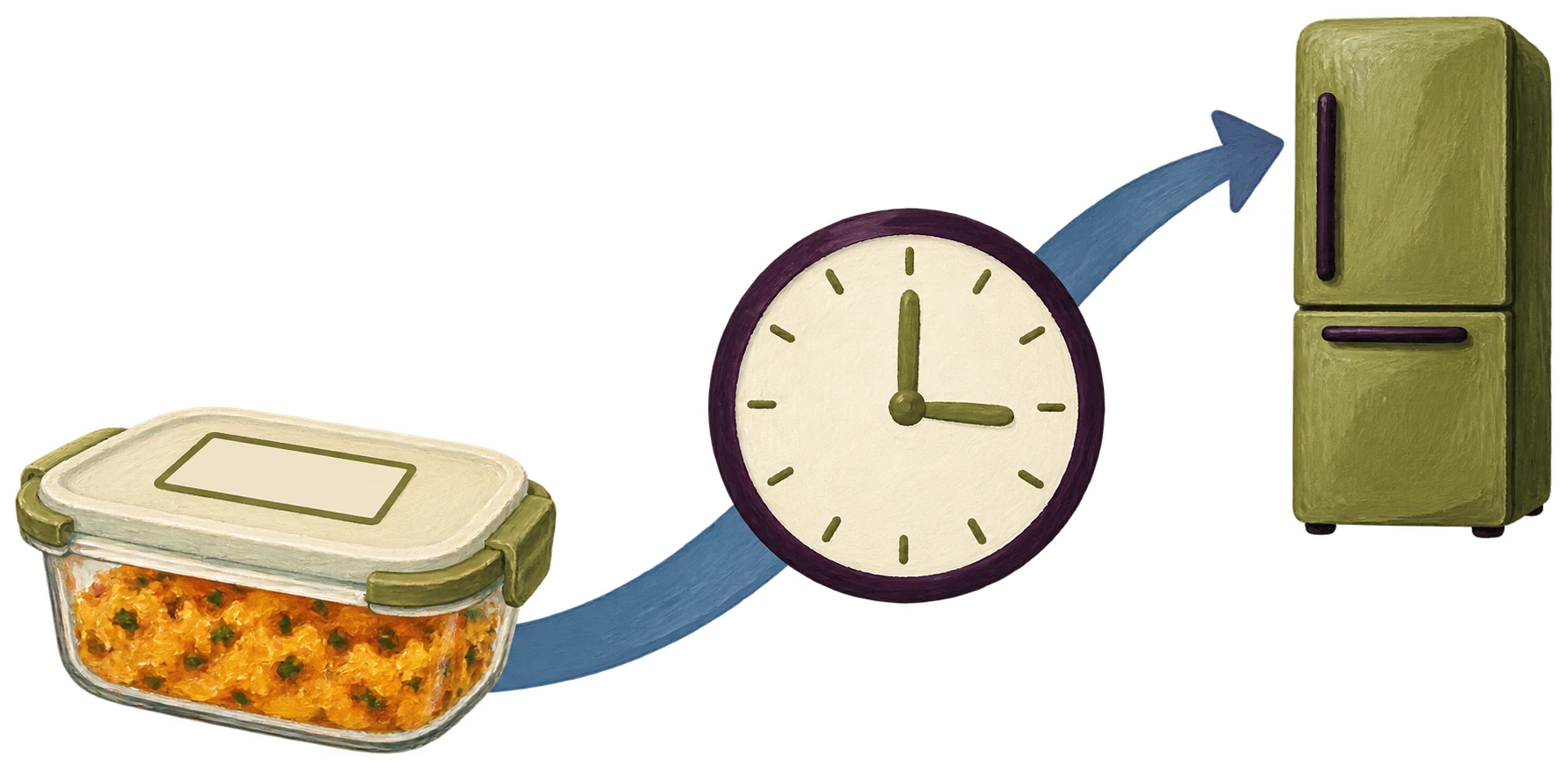
Store the untouched portion before dinner drifts into bedtime
Raw, saved and served are different situations
- Raw ground turkey
- Keep refrigerated at 40°F (4°C) or below and use or freeze within 1–2 days. Thaw in the refrigerator rather than on the counter, and follow the package’s safe-handling instructions.
- Untouched cooked baby portions
- Divide into small, shallow containers and refrigerate promptly. USDA’s limit out of refrigeration is 2 hours, or 1 hour above 90°F (32°C). Don’t wait for a large pot to cool on the counter.
- Prepared baby food in the fridge
- For this guide, use the NHS baby-food limit of 2 days, or freeze promptly for later. This is shorter than USDA’s general 3–4-day guidance for cooked turkey leftovers.
- A portion your baby has eaten from
- Throw it away. Keep it separate from the untouched batch; don’t return used spoonfuls to the storage container.
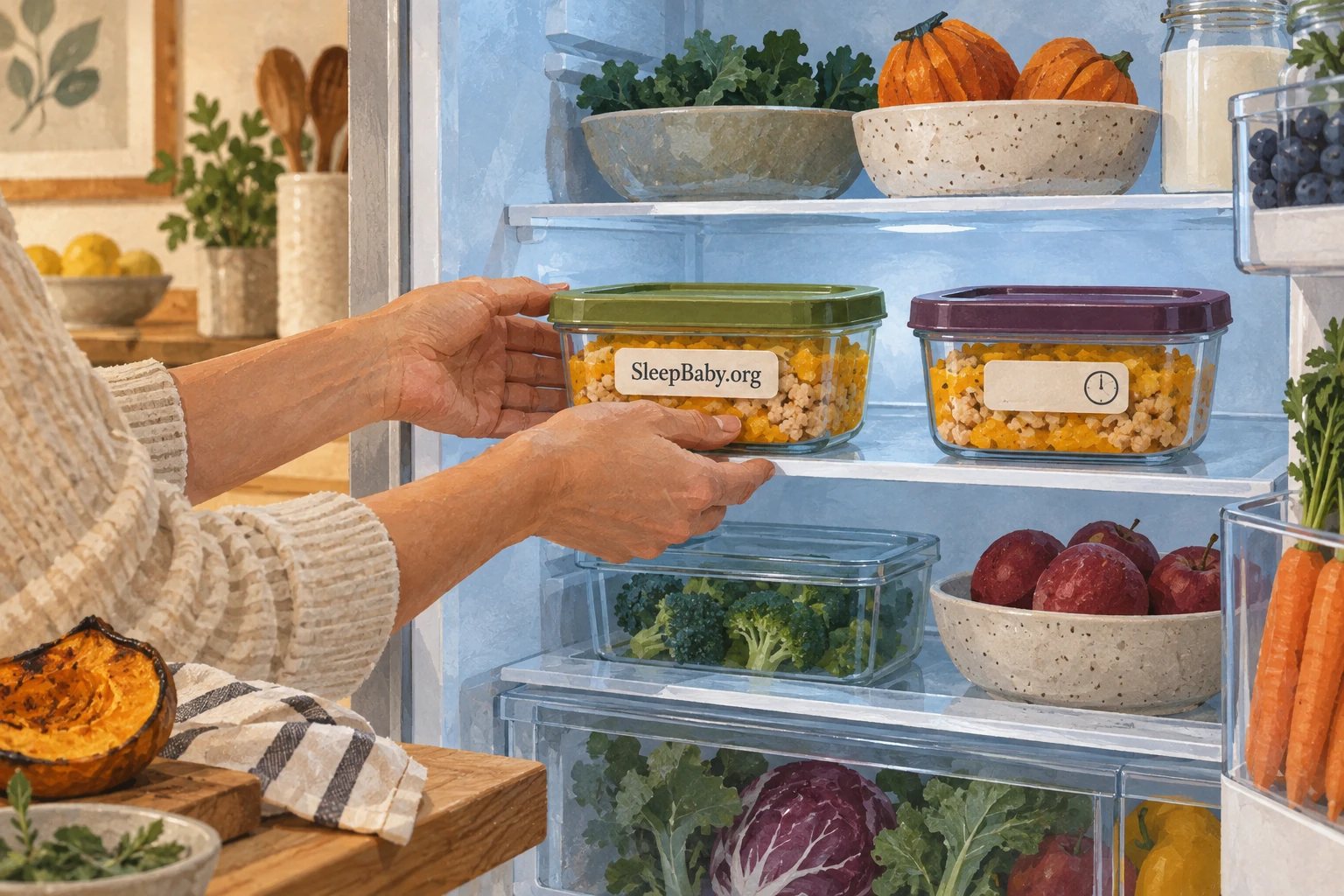
Label saved portions so you don’t have to reconstruct the evening later. Defrost prepared baby food in the fridge, use it within 24 hours after defrosting, and reheat it only once. Reheat turkey to 165°F (74°C), stir thoroughly if microwaved, then allow it to cool and check the serving temperature.
Those steps serve different purposes: reheating deals with the food-safety temperature, stirring addresses uneven heating, and cooling protects your baby’s mouth. If you don’t know how long turkey has been sitting out or how it was stored, I would discard it rather than rely on its smell.
Choking, a reaction or illness: when to get help
Gagging can happen while babies learn textures. A baby who can cough effectively or cry has airflow; stay close and let them cough. Choking can be quiet. If your baby cannot breathe, cry or cough effectively, call emergency services and start age-appropriate choking first aid.
For a responsive choking infant under 1 year, American Red Cross guidance uses cycles of five back blows and five chest thrusts. Do not use abdominal thrusts on an infant. If the baby becomes unresponsive, begin CPR and follow emergency-dispatcher instructions. Remove an object only if you can see it; don’t sweep blindly inside the mouth.
Stop serving the food if you notice a suspected reaction such as hives or vomiting, and seek medical advice. Breathing difficulty, sudden swelling of the lips, mouth, tongue or throat, or a baby who becomes floppy or poorly responsive requires emergency help. Follow an existing prescribed allergy emergency plan if your child has one.
If vomiting or diarrhea develops and your baby has fewer wet diapers, few tears, unusual drowsiness or other signs of dehydration, get prompt medical advice. The timing after a meal doesn’t tell you by itself whether the cause is allergy, infection or something else. Keep the ingredient label and note what was eaten and when.
Watch: American Red Cross infant choking first aid
This demonstration is worth learning before mealtime. It supplements hands-on first-aid training; don’t wait for a video to load during an emergency.
If the video won’t play: the written takeaway is to recognize an ineffective cough or absent cry, get emergency help, and use infant back blows and chest thrusts. See the American Red Cross infant choking instructions for the full sequence, including what to do if the baby becomes unresponsive.
An optional tool for the 165°F check
As an Amazon Associate, I earn from qualifying purchases.
If you don’t already have a suitable food thermometer, the ThermoPro TP19H instant-read food thermometer is one option to consider. The manufacturer’s current TempPro site describes a folding probe and backlit display. I haven’t tested it; this recommendation is for the temperature-checking job, not a promise about speed or performance.
Use what you own: an existing working food thermometer suitable for the food’s thickness can do this job. Follow its insertion instructions and clean the probe as directed. A thermometer checks cooking, not swallowing safety, and its sharp probe belongs in an adult’s hands and out of a baby’s reach.
Will turkey help my baby sleep?
I wouldn’t use turkey as a bedtime strategy. The NHS notes that starting solids doesn’t make a baby more likely to sleep through the night. Offering more turkey to chase a longer stretch of sleep turns a feeding cue into a target it can’t reliably deliver.
Choose a meal when your baby is alert enough to participate, stop when they’re finished, put untouched portions away, and continue your ordinary evening. A smaller meal accepted comfortably is more useful information than a forced extra spoonful. Keep feeding difficulties and new symptoms with your child’s clinician; a sleep plan cannot assess them.
Sources
- NHS: Foods from around six months
- NHS: First solid foods and readiness
- CDC: Tastes and textures
- CDC: Choking hazards
- USDA: Turkey from farm to table
- USDA: Food safety basics
- USDA: Food thermometers
- USDA: Placing a thermometer in thin foods
- USDA: Turkey handling and washing
- NHS: Preparing food safely
- NHS: Storing and reheating baby food
- NHS: Food allergies in babies
- NHS: Food allergy and emergency symptoms
- NHS: Dehydration
- American Red Cross: Infant choking
- ASHA: Feeding development and reasons to seek help
- TempPro: TP19H manufacturer information
COOKED. MOIST. MANAGEABLE.
One useful meal, then one ordinary evening
You can share turkey with your baby without turning dinner into a test. Measure the cooking temperature, prepare the right texture, and stop when your baby has finished. Save the untouched portion promptly.
For a separate place to organize ordinary sleep routines, start with the free planning preview on SleepBaby.org. The optional Workshop is there to explore when you want it; your baby’s feeding and medical needs still come first.





What viewers said10 comments · 4 replies+
Archived comments from the original Baby Sleep Miracle presentation. Not independently verified by SleepBaby.org; individual experiences vary.
Thank you so much for this video! I had no idea about the dangers of baby swings :O
Hi Mary-Ann. I have a question: Is method in any way similar to the ones recommended by Dr Bucknam, Dr. Weissbluth or Dr. Karp? We tried those but none of them help.
Hi Regina, thank you for your question. The short answer is no. The techniques I share in my guide are based on newest scientific research and this is why I have never seen any approach similar to the one I recommend.
This method really works! I tried it on my son Jesus and after just one week he went from waking up more than 5 times a night to waking up just once or twice. You are a lifesaver, Mary-Ann!
I'm truly impressed with how much information you share in your video. And all for free! I can feel that you truly care about mothers like myself, and that's hard to find these days. I have recommended your site to several of my friends already.
Mary-Ann, our child suffers from autism. Is your approach still suited?
Chloe, I made sure my method can be used with any child, even babies who are special like yours. Please note that I'm not a doctor and that I always advice to consult with your physician because nothing is more important than the safety and well-being of your love.
Hallo Mary-Ann, I'm from Germany. Do you have your guide in German?
Hello Heide, we do! Normally you should already see our video in German. If not, please contact our support so they can guide you
Thenk you for your answer, Mary-Ann!
I just completed your approach and I have to say, it worked almost too well. Yes, it took a bit of getting used to with your bedtime routine but the difference is huge. My son George used to take 1 hours to go down and now he's firmly asleep in no more than 10 minutes! You're the best!
It seems I'm the only man watching this video, lol! What you shared about the 'emotional backpack' made immediate sense to me and I can't wait to help my little girl Mila to unpack it!
Hey there, just discovered your site and this really sounds different. Just wanted to say thanks for sharing :)
For everyone who's still thinking about getting Mary-Ann's guide I want to advise you to go ahead. I wasn't sure myself but now I'm so thankful I invested in this program. It made a huge difference in our life as a family and yes, my baby girl does sleep through the night now.