
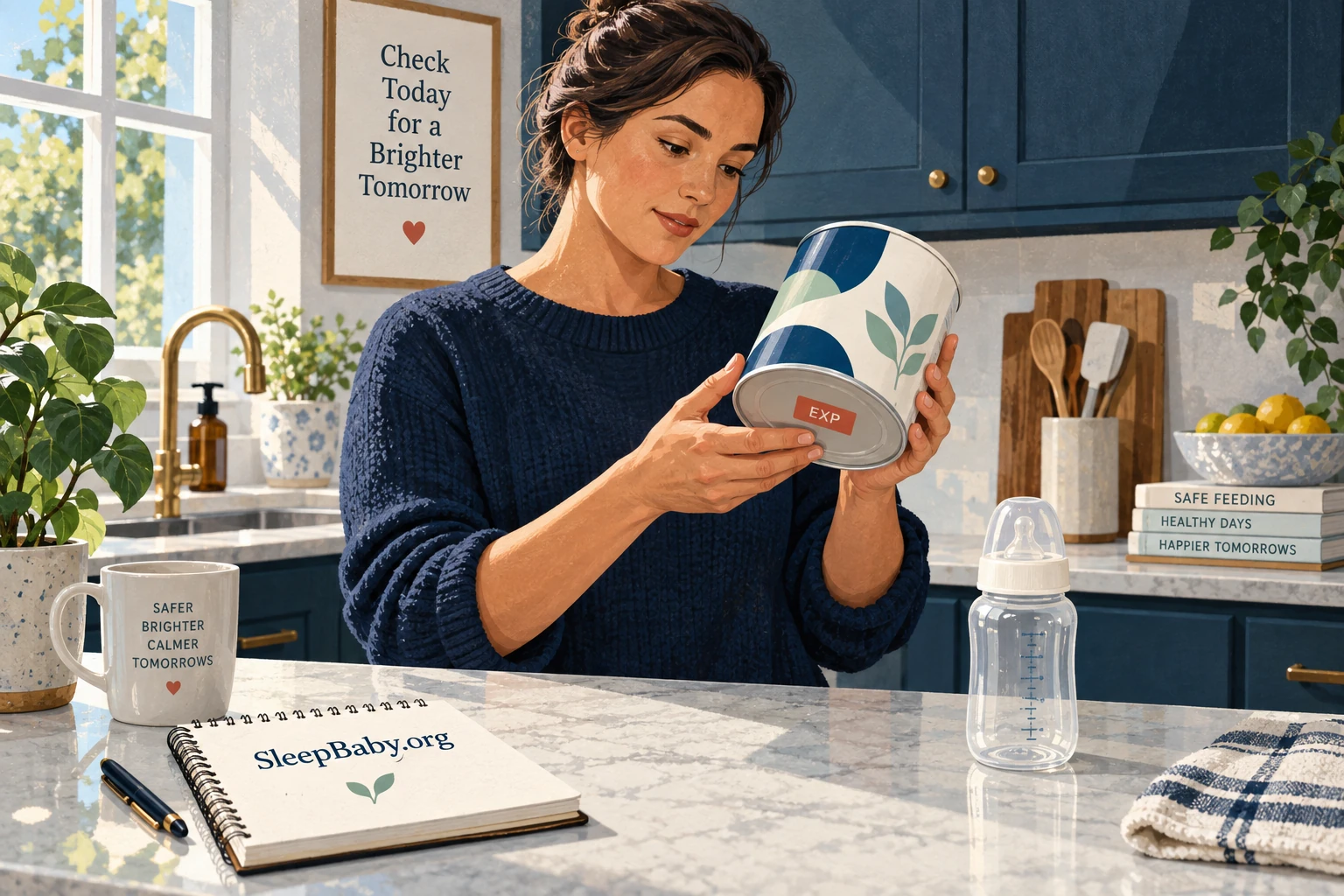
No. Do not feed your baby formula after the manufacturer’s use-by date, even if the container is unopened. An opened container or a prepared bottle can also reach its limit before that printed date. Check the package, when it was opened, and how the bottle was prepared and stored.
If your baby already drank some, stop using that formula, set the container aside, and contact your pediatrician for advice with the label and feeding details. The date alone cannot tell you whether your baby will become ill. I would focus on getting a clear next step rather than trying to judge the bottle by its smell.
Get emergency help now if your baby has trouble breathing, looks blue or gray, is hard to wake, or has a seizure. A baby younger than 3 months with a temperature of 100.4°F (38°C) or higher needs urgent medical advice. Poor feeding, unusual low energy, repeated vomiting or fewer wet diapers also deserve prompt medical attention.
What does the use-by date on infant formula mean?
The date is more than a suggestion about flavor. According to the FDA, manufacturers choose a formula’s use-by date based on testing or other information showing how long it will contain at least the nutrients listed on the label and remain of acceptable quality. The FDA says not to use infant formula after that date.
That does not mean every container becomes contaminated at midnight on its expiration date. It means you should not rely on it beyond the manufacturer’s stated limit. There is no parent-tested grace period for “only one day late,” and keeping the seal intact does not create one.
The other side matters, too: a date in the future does not guarantee that every bottle made from that container is safe. Powdered formula is not sterile. Germs can enter during manufacturing or preparation, and handling and storage still matter. A formula recall can also apply before the use-by date.
Look for the actual date and the product’s instructions, not just a code you assume is a date. If the label is unreadable or confusing, contact the manufacturer. Keep the original packaging so you can identify the product and lot. For recall information, use the FDA’s infant formula information for parents and caregivers.
The three-clock check: printed, opened, prepared
The earliest applicable deadline wins
- 1. PRINTED: What does the package say?
- Do not use formula after its use-by date. This applies even to an unopened container.
- 2. OPENED: When did you break the seal?
- For powder, the usual limit is one month after opening, but check your exact label. Opened liquid formula has its own refrigeration and use instructions; do not apply the powder rule to it.
- 3. PREPARED: When did this bottle begin?
- Use prepared formula within 2 hours of preparation and within 1 hour after feeding starts. Discard leftovers when the feed ends. If you will not use a newly prepared bottle right away, refrigerate it immediately and use within 24 hours of preparation.
A later deadline cannot cancel an earlier one. A future printed date does not extend an opened container’s limit. Starting a feed does not give an old bottle a fresh two hours. Cooling or warming it does not restart a clock.
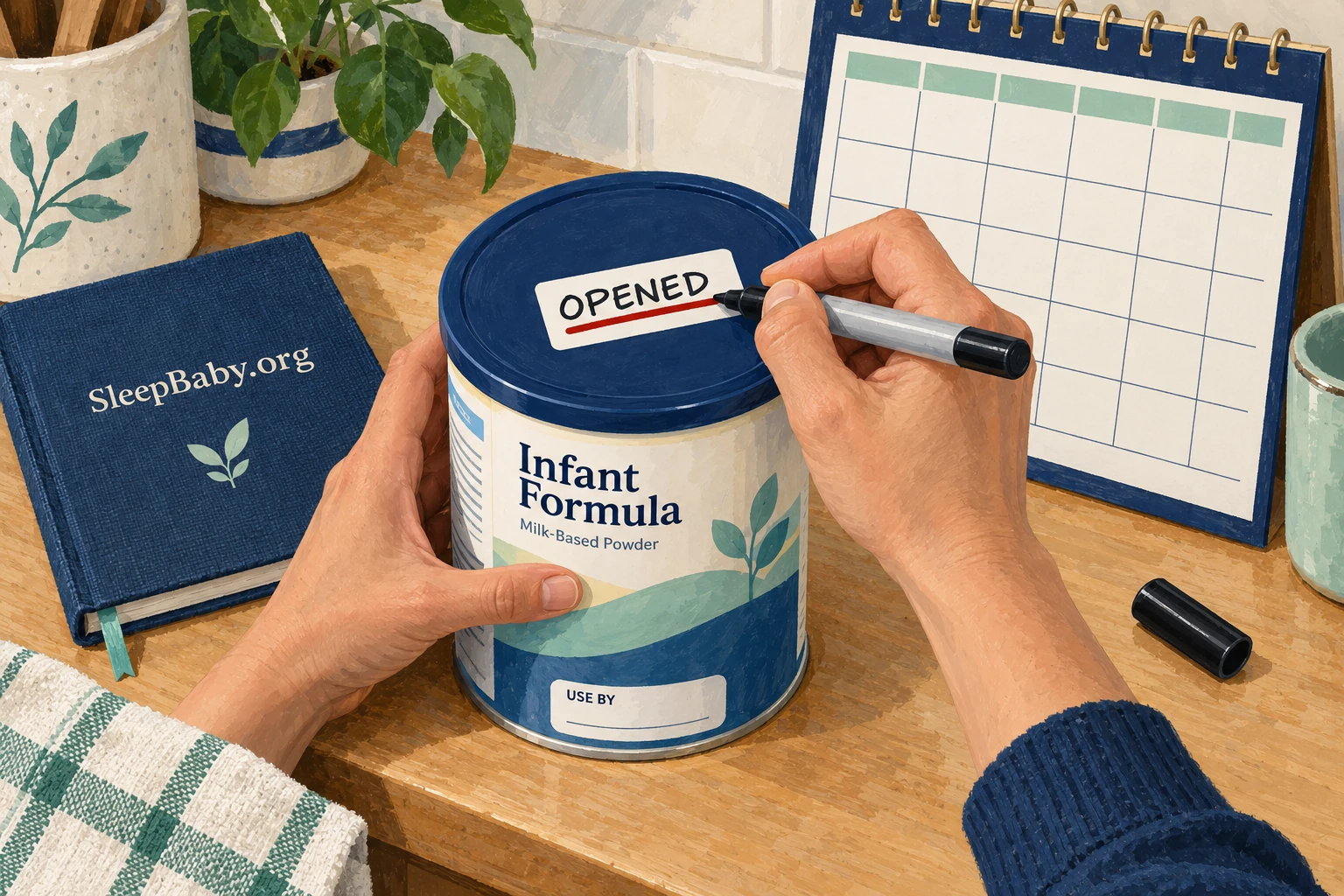
Imagine a powder container whose label says to use it within one month of opening, while the printed use-by date is six months away. The six-month date does not give you six months with an open can. Reverse the situation and the same principle applies: opening a nearly expired can does not add a month beyond its printed date.
I would write the opening date on the lid as soon as the seal comes off. Leave the manufacturer’s date, lot number and preparation instructions visible. A pen and a small piece of tape can do this job; you do not need a special tracking system.
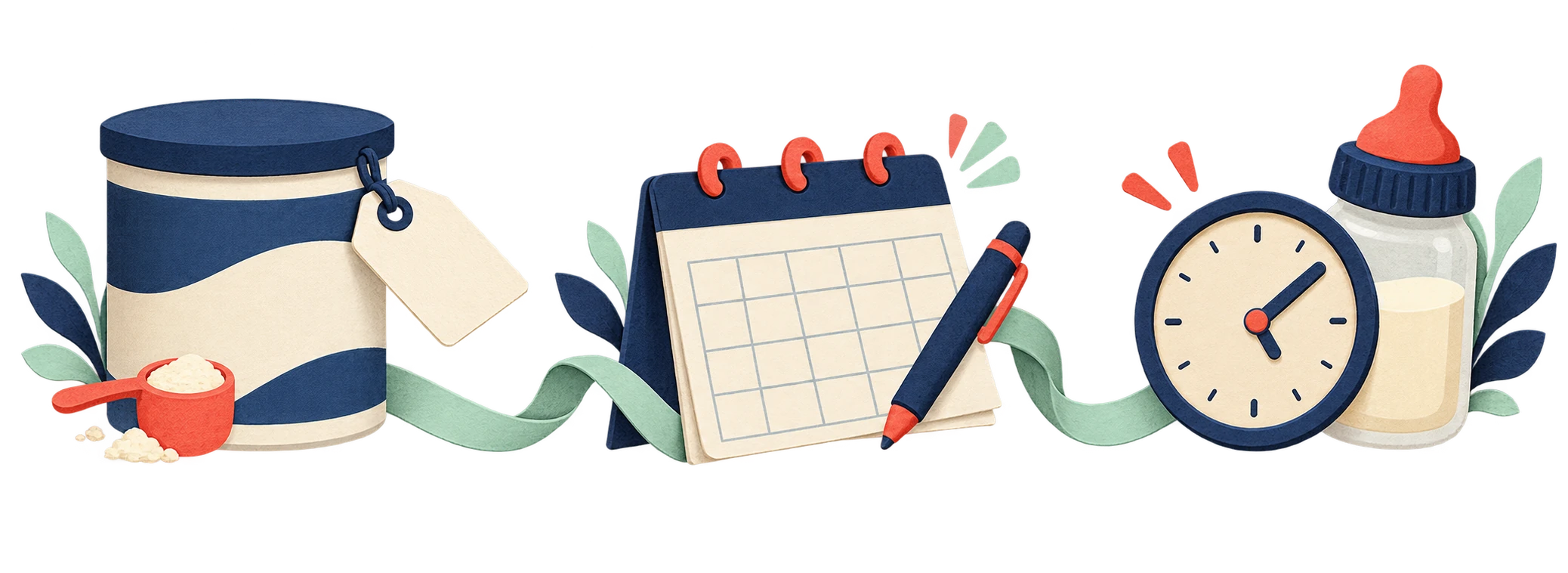
Powder, concentrate and ready-to-feed formula need different handling
Opened powder belongs in a cool, dry place
Close the lid tightly and follow the label’s storage directions. The FDA advises keeping powder out of the refrigerator, where moisture can get into it. Store it indoors in a cool, dry place, away from heat and moisture; a hot car or garage is not a useful backup cupboard.
Keep the scoop and the inside of the container dry. Do not use the same scoop across different products: scoop sizes and mixing directions can differ. If you cannot establish when an open container was started, do not guess from how much powder remains. Ask the manufacturer or your baby’s clinician about the uncertainty, and use a container you can verify for the next feed.
Opened liquid has a separate label deadline
Ready-to-feed formula and liquid concentrate are not the same product. Ready-to-feed formula needs no added water. Concentrate must be mixed with the amount of water specified on its label. Follow that product’s instructions for refrigerating and using the opened, unused remainder.
The one-month powder rule is not a rule for opened liquid. Nor does a container’s storage window allow you to save a bottle your baby has already drunk from. Once you pour and offer a feed, the bottle’s handling and feeding limits also apply.
Higher-risk babies need extra preparation precautions
Babies younger than 2 months, babies born prematurely, and babies with weakened immune systems are at higher risk from germs such as Cronobacter. Ask their clinician which formula and preparation method to use. Sterile liquid formula, such as ready-to-feed formula, can be a safer option for these babies when available and appropriate.
If you use powder for a higher-risk baby, follow the CDC’s additional preparation precautions and your clinician’s instructions. Extra preparation care does not make expired or recalled formula usable. Keep any prescribed feeding plan in place while you get advice.
AFTER THE FEEDING QUESTION IS SETTLED
Give the next caregiver a clear handoff. Give sleep its own plan.
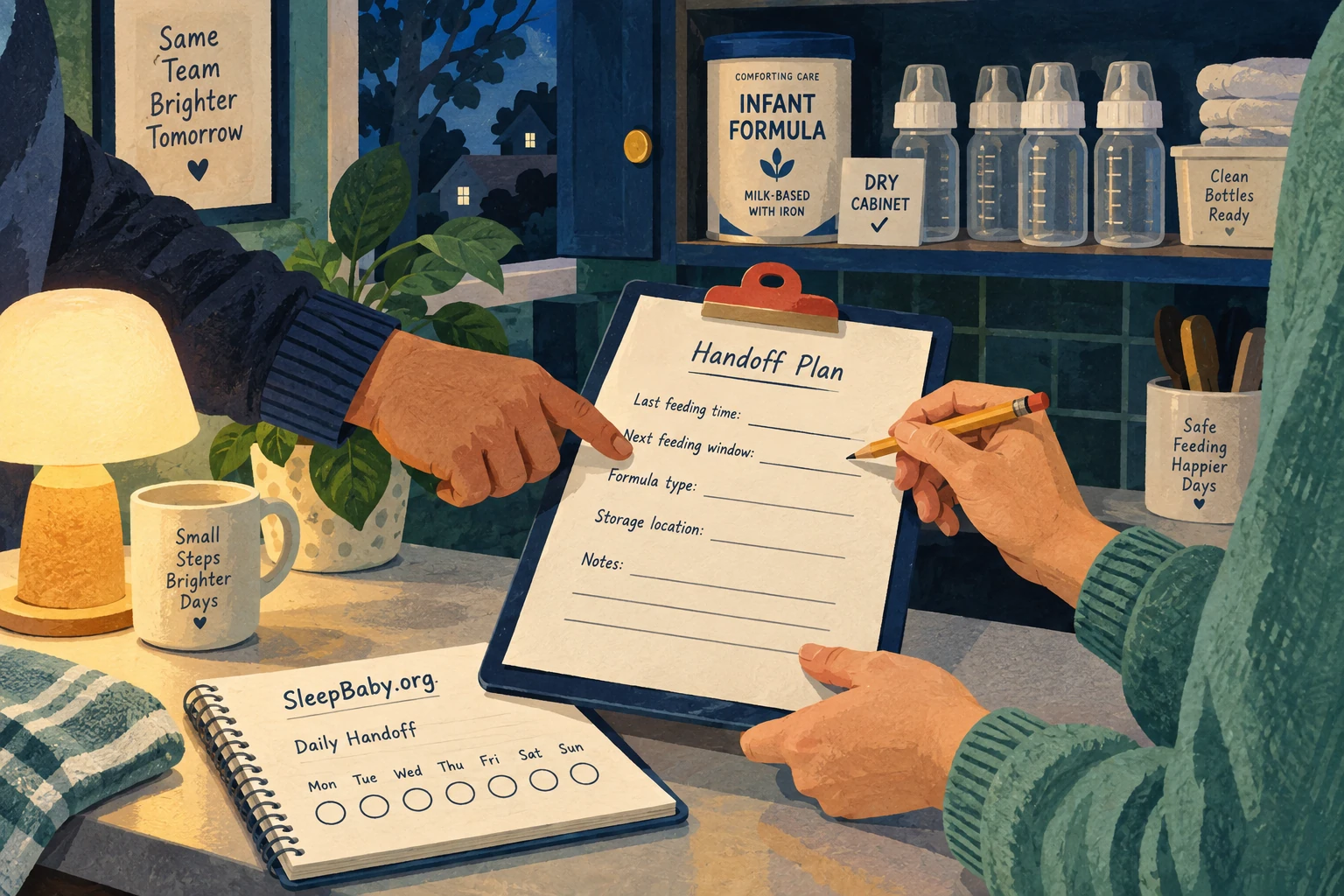
A tired-night handoff can start with a short note: which container is in use, when the bottle was prepared, and what still needs doing. Once the feeding concern is handled, the free SleepBaby.org planning preview offers a separate place to think about ordinary sleep routines. It uses three choices to suggest one starting step, with no sign-up or card.
I would keep the feeding facts somewhere both caregivers can find them, even if that is a piece of paper beside the clean bottles. You should not have to remember another person’s preparation time. Then you can decide which ordinary evening step each person will handle, without asking a bottle of formula to solve sleep.
The optional paid SleepBaby.org Workshop is an online sleep guide with short lessons you can revisit and a seven-night tracker. Explore it from the homepage if that structure would be useful. Neither the preview nor the Workshop decides whether formula is safe, evaluates symptoms or replaces a feeding plan from your baby’s clinician. No particular sleep result is promised.
How long can a prepared formula bottle sit out?
The CDC’s limits are within 2 hours of preparation and within 1 hour after feeding begins. Both apply. The shorter remaining time is the one that matters, and you should throw away leftovers when your baby finishes feeding.
Two examples with the same mixing time
Mixed at 10:00 a.m.; feeding starts at 10:15 a.m. The one-hour feeding limit reaches 11:15 a.m., before the two-hour preparation limit. Discard at the end of the feed, or by 11:15 at the latest.
Mixed at 10:00 a.m.; feeding starts at 11:30 a.m. The two-hour preparation limit reaches noon first. Starting the feed at 11:30 does not extend the bottle to 12:30. Discard at the end of the feed, or by noon at the latest.
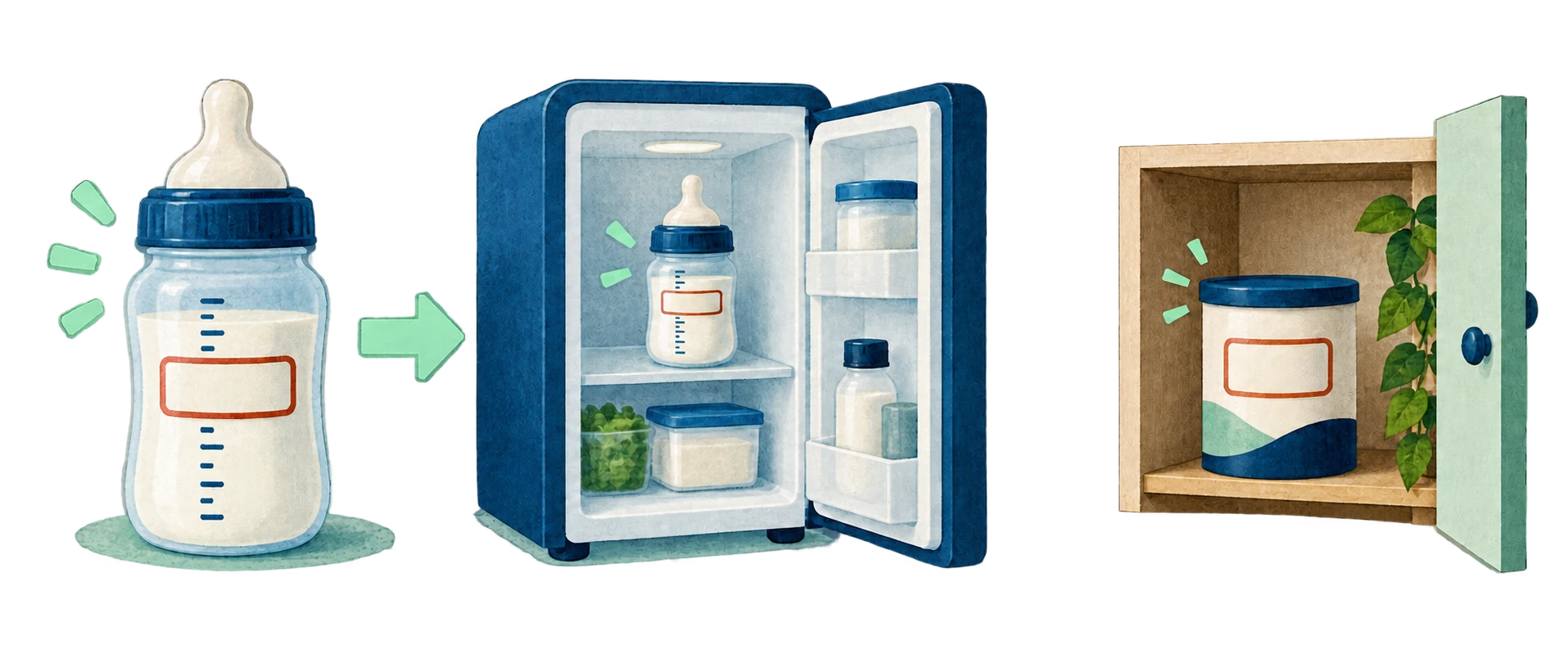
For later: refrigerate a newly prepared, unused bottle immediately if you will not use it right away. Use it within 24 hours of preparation, while keeping it properly refrigerated. Write the preparation time on the bottle. Feeding from it starts the one-hour feeding limit; it does not extend the 24-hour limit.
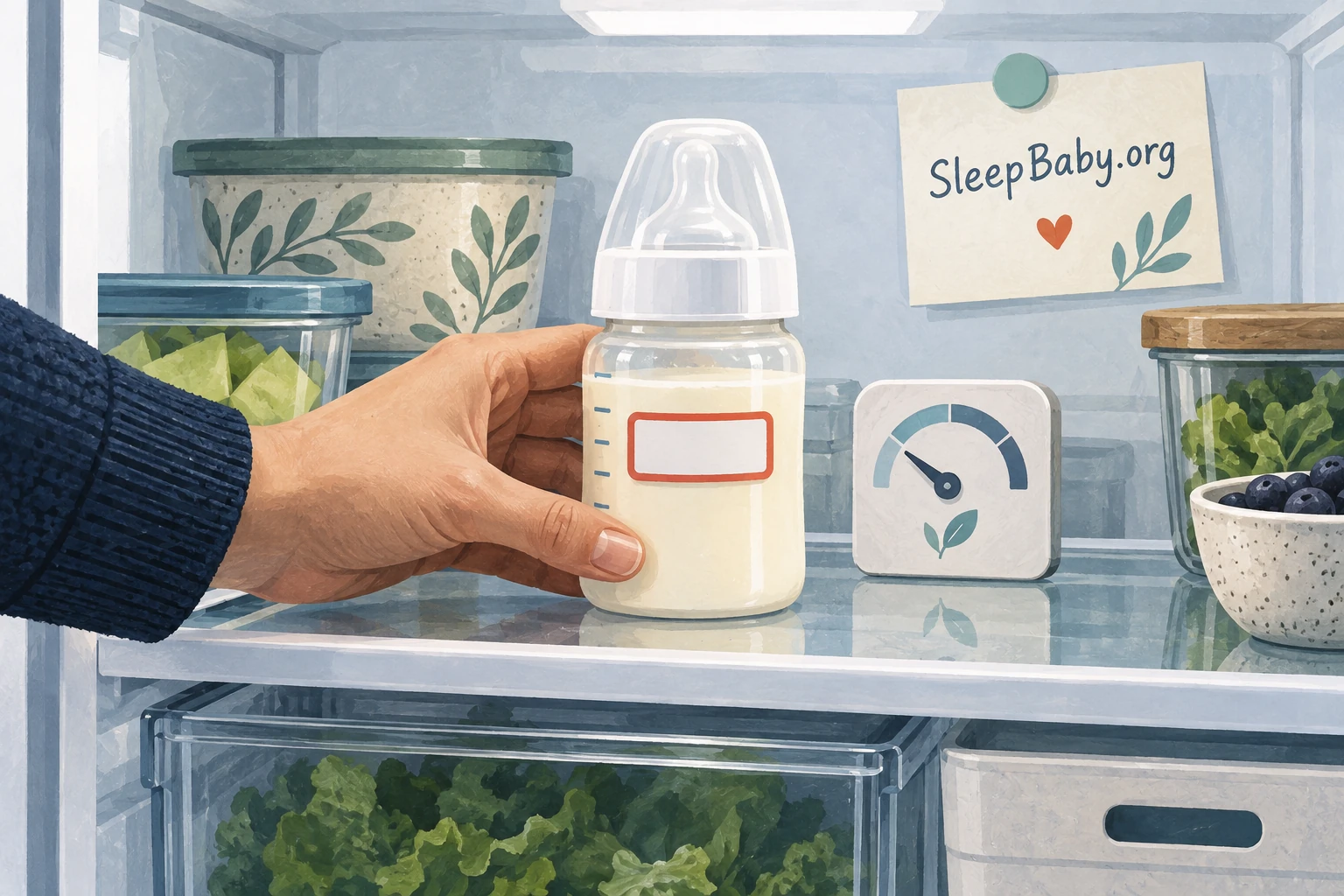
Use a refrigerator kept at 40°F (4°C) or below. A temperature dial setting is not a measurement of the temperature inside. An appliance thermometer can help you check that the fridge is cold enough.
Putting a used bottle back in the refrigerator does not save it for the next feed. Your baby’s saliva mixes with formula during feeding, which can allow bacteria to grow. Adding fresh formula to leftovers does not turn the mixture into a new bottle, either.
Formula does not have to be warmed. If you choose to warm a bottle, follow safe warming directions and check the temperature before feeding; never use a microwave, which can create hot spots. Warming is not a way to rescue expired formula or restart its storage time. Freezing is not a workaround: the FDA does not recommend freezing formula because its components may separate.
My baby drank expired formula. What should I do?
Stop using the questionable formula and contact your pediatrician or their after-hours service for advice. Explain whether you mean an expired container, a container open too long, or a bottle past its preparation or feeding limit. Those are different situations, and the clinician needs the details.
Put these details beside your phone
- Your baby: age, whether they were premature, relevant health conditions, and how they are acting now.
- The formula: brand, exact type, use-by date, lot number, and when you opened it. A photo of the label helps keep the details together.
- The bottle: when it was prepared, how it was stored, when feeding started, and roughly how much your baby drank.
- Any changes: fever, vomiting, diarrhea, poor feeding, unusual crying or low energy, and fewer wet diapers than usual.
You can say: “My baby drank formula and I then noticed a problem with the date or storage time. Here is what I know. What should I do now, and what changes mean we need urgent care?”
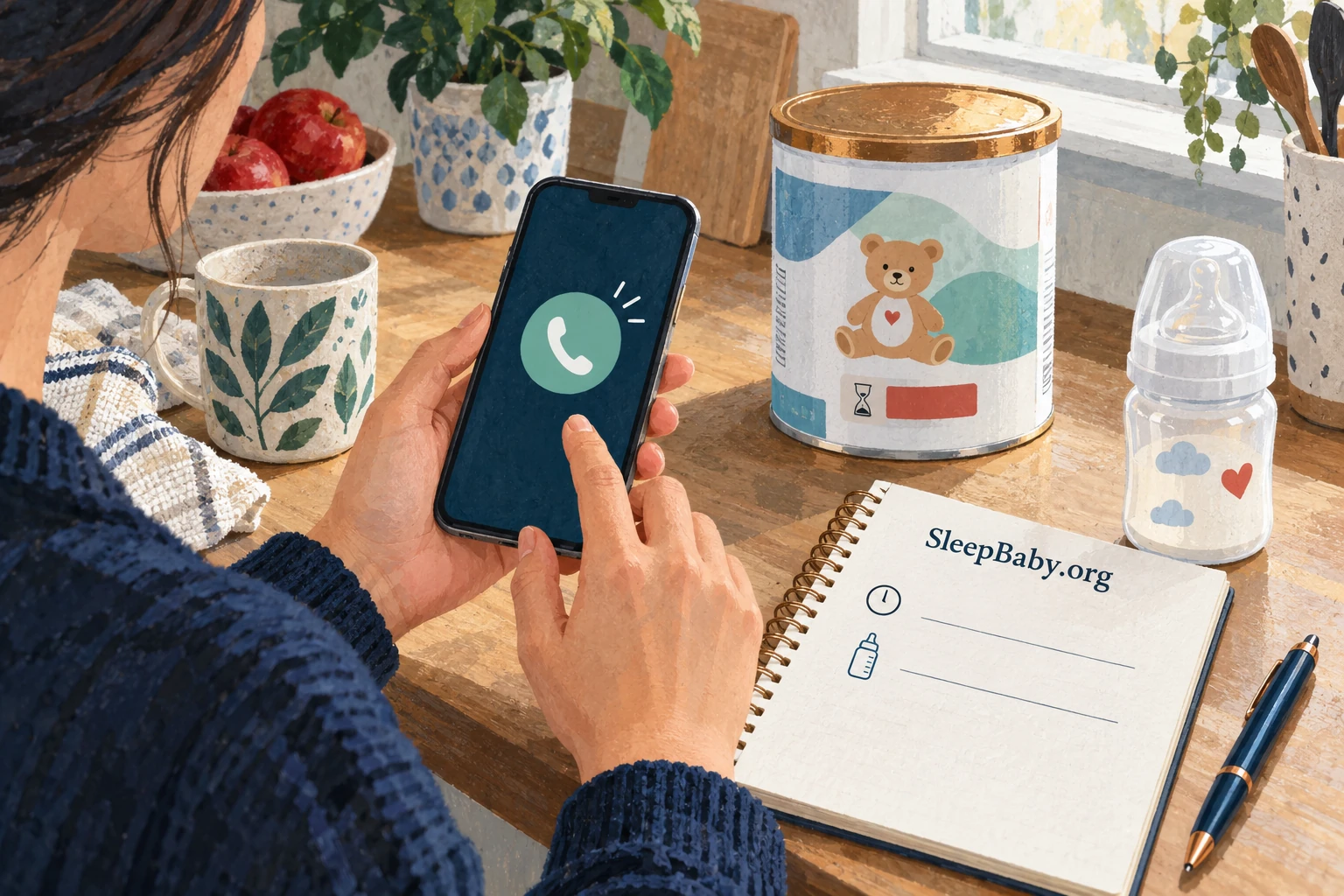
Do not wait for a particular symptom before calling if the formula or handling worries you, especially with a very young or medically vulnerable baby. There is no reliable “watch for exactly this many hours, then you are in the clear” rule based only on an expiration date.
Seek prompt medical advice for poor feeding, excessive crying, unusually low energy, vomiting or diarrhea, or dehydration signs such as fewer wet diapers or few tears when crying. The CDC lists fever, poor feeding, excessive crying and very low energy among early signs of serious Cronobacter illness. These signs need assessment; they do not identify the cause by themselves.
For a baby under 3 months, a temperature of 100.4°F (38°C) or higher needs urgent medical advice. Breathing difficulty, blue or gray coloring, a baby who is hard to wake, or a seizure means emergency help now. Do not spend time calculating bottle deadlines while your baby has an emergency symptom.
What if I have no usable formula for the next feed?
Say that directly when you call your pediatrician: “I do not have safe formula for the next feed.” Ask which suitable replacement you can use and where to obtain it. If your baby needs a specialty formula, make that clear before switching products. Their clinician knows the reason for that formula and can advise on an appropriate alternative.
Do not stretch the remaining formula with extra water, use a homemade recipe, or treat a toddler drink as infant formula. Extra water changes the nutrition and can be dangerous. The fact that something is available in the cupboard does not make it an appropriate replacement.
If cost or access is the problem, contact your local WIC office or other local food-assistance services as well. USAGov’s food-assistance information explains WIC and other programs. Availability, eligibility and timing vary, so ask specifically about immediate help while you arrange the next feed with your baby’s care team.
A sealed expired can should not be donated for another baby to drink. If it was recently purchased, keep the receipt and ask the retailer or manufacturer about a return or replacement. That may address the wasted money, but it does not change the feeding decision.
Can smell, heating or an unopened seal make expired formula okay?
No. A normal smell or appearance cannot establish that formula is safe or still meets its stated nutrient levels. Discard formula that appears spoiled or comes from a damaged or leaking container, but do not use the absence of those warning signs to override a use-by date or storage limit.
Boiling, warming, refrigerating or mixing expired powder into fresh formula does not restore the manufacturer’s nutrient assurance. I would keep the decision simple: use formula that is within its date and handling limits, prepared exactly as directed.
For the next container, wash your hands and clean feeding equipment before preparation. Measure the specified water first, then add the exact amount of powder. Write down the opening date and any bottle preparation time that another caregiver will need. Those small notes prevent the next person from having to reconstruct a feed from memory.
An optional tool for checking refrigerator temperature
If your refrigerator lacks a readable thermometer, the Rubbermaid Commercial Products FGR80DC refrigerator/freezer thermometer is one option. The manufacturer describes a dial display with Fahrenheit and Celsius scales and a design that can hang or stand.
Its job here is limited: help you check whether the refrigerator stays at 40°F (4°C) or below for properly stored, unused prepared formula. It cannot tell you whether a bottle is safe, measure its nutrient quality or extend any deadline. An existing working appliance thermometer can do this job; opening-date notes only need a pen and paper.
As an Amazon Associate, I earn from qualifying purchases.
Watch: Infant Formula Safety Tips from the FDA
This short FDA video reinforces checking the use-by date and seeking reliable guidance. Use the current written preparation and storage limits above alongside it.
If the video will not play, the useful next step is the same: check the exact package instructions and date, use properly prepared formula within its handling limits, and call your baby’s clinician about an accidental feed or an uncertain replacement. The video cannot assess your baby.

Sources
- FDA: Questions and answers about infant formula
- FDA: Handling infant formula safely
- CDC: Infant formula preparation and storage
- CDC: About Cronobacter infection
- CDC: Preventing Cronobacter in infants
- FDA: Infant formula information and safety alerts
- American Academy of Pediatrics: Is baby formula safe?
- NHS: High temperature in children
- NHS: Dehydration
- FDA: Refrigerator temperature and food storage
- USAGov: Food assistance including WIC
- Rubbermaid Commercial Products: FGR80DC refrigerator/freezer thermometer
PRINTED. OPENED. PREPARED.
Make the next bottle easier to check
Use the earliest applicable deadline, keep the original label, and write down the times another caregiver needs. If your baby has already had questionable formula, get medical advice rather than trying to settle the question by smell or a calendar alone.
When the feeding concern is settled, the free planning preview on SleepBaby.org can help you choose a starting point for ordinary sleep planning. The optional Workshop is there to explore from the same homepage.





What viewers said10 comments · 4 replies+
Archived comments from the original Baby Sleep Miracle presentation. Not independently verified by SleepBaby.org; individual experiences vary.
Thank you so much for this video! I had no idea about the dangers of baby swings :O
Hi Mary-Ann. I have a question: Is method in any way similar to the ones recommended by Dr Bucknam, Dr. Weissbluth or Dr. Karp? We tried those but none of them help.
Hi Regina, thank you for your question. The short answer is no. The techniques I share in my guide are based on newest scientific research and this is why I have never seen any approach similar to the one I recommend.
This method really works! I tried it on my son Jesus and after just one week he went from waking up more than 5 times a night to waking up just once or twice. You are a lifesaver, Mary-Ann!
I'm truly impressed with how much information you share in your video. And all for free! I can feel that you truly care about mothers like myself, and that's hard to find these days. I have recommended your site to several of my friends already.
Mary-Ann, our child suffers from autism. Is your approach still suited?
Chloe, I made sure my method can be used with any child, even babies who are special like yours. Please note that I'm not a doctor and that I always advice to consult with your physician because nothing is more important than the safety and well-being of your love.
Hallo Mary-Ann, I'm from Germany. Do you have your guide in German?
Hello Heide, we do! Normally you should already see our video in German. If not, please contact our support so they can guide you
Thenk you for your answer, Mary-Ann!
I just completed your approach and I have to say, it worked almost too well. Yes, it took a bit of getting used to with your bedtime routine but the difference is huge. My son George used to take 1 hours to go down and now he's firmly asleep in no more than 10 minutes! You're the best!
It seems I'm the only man watching this video, lol! What you shared about the 'emotional backpack' made immediate sense to me and I can't wait to help my little girl Mila to unpack it!
Hey there, just discovered your site and this really sounds different. Just wanted to say thanks for sharing :)
For everyone who's still thinking about getting Mary-Ann's guide I want to advise you to go ahead. I wasn't sure myself but now I'm so thankful I invested in this program. It made a huge difference in our life as a family and yes, my baby girl does sleep through the night now.