
Yes, most babies can have black beans when they are ready for solid foods, usually around 6 months. Cook the beans thoroughly and mash or purée them into a moist texture your baby can manage. I would start with a small amount of plain bean mash. Whole beans are a choking hazard; having teeth or reaching 8 months does not make them an appropriate first serving.
The can, saucepan and baby bowl each need a different check. A convenient canned bean may still need softening. A thoroughly cooked batch still needs mashing. And a smooth-looking bowl still needs cooling before you offer it. That is where I would put my attention.

When can babies start eating black beans?
There is no separate 8-month starting rule for black beans. The NHS includes beans and pulses among foods suitable from around 6 months, once a baby is ready for solids. The preparation matters more than the food having a particular birthday attached to it.
Look for the readiness signs together: steady head control while sitting, coordination to bring food toward the mouth and the ability to swallow it rather than push it straight back out. For a premature baby or one with a feeding or swallowing condition, ask their clinician how to apply readiness guidance.
You can introduce black beans in a familiar smooth or mashed consistency. You do not need to offer a whole bean to find out whether your baby likes the flavor. Keep breast milk or infant formula as the main drink through the first year and let a small first serving be an introduction, not a replacement for a milk feed.
I would choose a meal when your baby is awake, settled and comfortably upright. If they are tired, upset or not interested, another time is fine. A new food does not have to be introduced on the day you planned it.
Canned or dried black beans?
For a first small serving, I would usually choose plain canned black beans with no added salt. That is a practical choice, not a claim that dried beans are inferior. It removes the need to cook an entire pot from dry when you only want to prepare a little.
Read the ingredient list and sodium information. Choose plain beans rather than a seasoned sauce if you want control over the rest of the meal. “Organic” does not tell you whether salt was added, and a lower-sodium label does not mean every product contains the same amount.
Drain canned beans and rinse them under running water. Oregon State University Extension recommends draining and rinsing to reduce sodium. Rinsing does not remove all salt or every other ingredient, so it does not replace reading the label.
Then press several beans with a fork. If they resist mashing or retain a firm center, simmer them in fresh water until softer. Follow any package cooking directions too. “Canned” describes how the food was preserved; it does not tell you whether this particular bean will make the texture your baby needs.
If you are starting with dried beans
Sort through them for stones or damaged beans and rinse well. Follow the package’s soaking and cooking directions, using a reliable method for that bean. Oregon State’s basic method is to soak, drain and rinse, then bring the beans to a boil in fresh water before simmering until tender.
Check more than one bean after cooking. The center should break down easily, without a hard or chalky middle. Do not stop merely because the suggested time has elapsed. Old beans, the cooking method and other conditions can change how quickly they soften.
Keep uncooked beans out of reach, including any that roll off the counter. They are ingredients for an adult to prepare, not a snack or a sensory-play material to leave with a baby. Soaking alone does not make dried beans ready to eat.
For a first baby portion, I would use the stovetop method or the pressure cooker manufacturer’s specific bean instructions rather than improvise a low-temperature method. Raw and undercooked beans can contain lectins. The well-established slow-cooker warning is especially important for dried red kidney beans; Health Canada’s instructions are specific to that bean. Do not assume every bean variety or mixed-bean bag has identical cooking requirements.
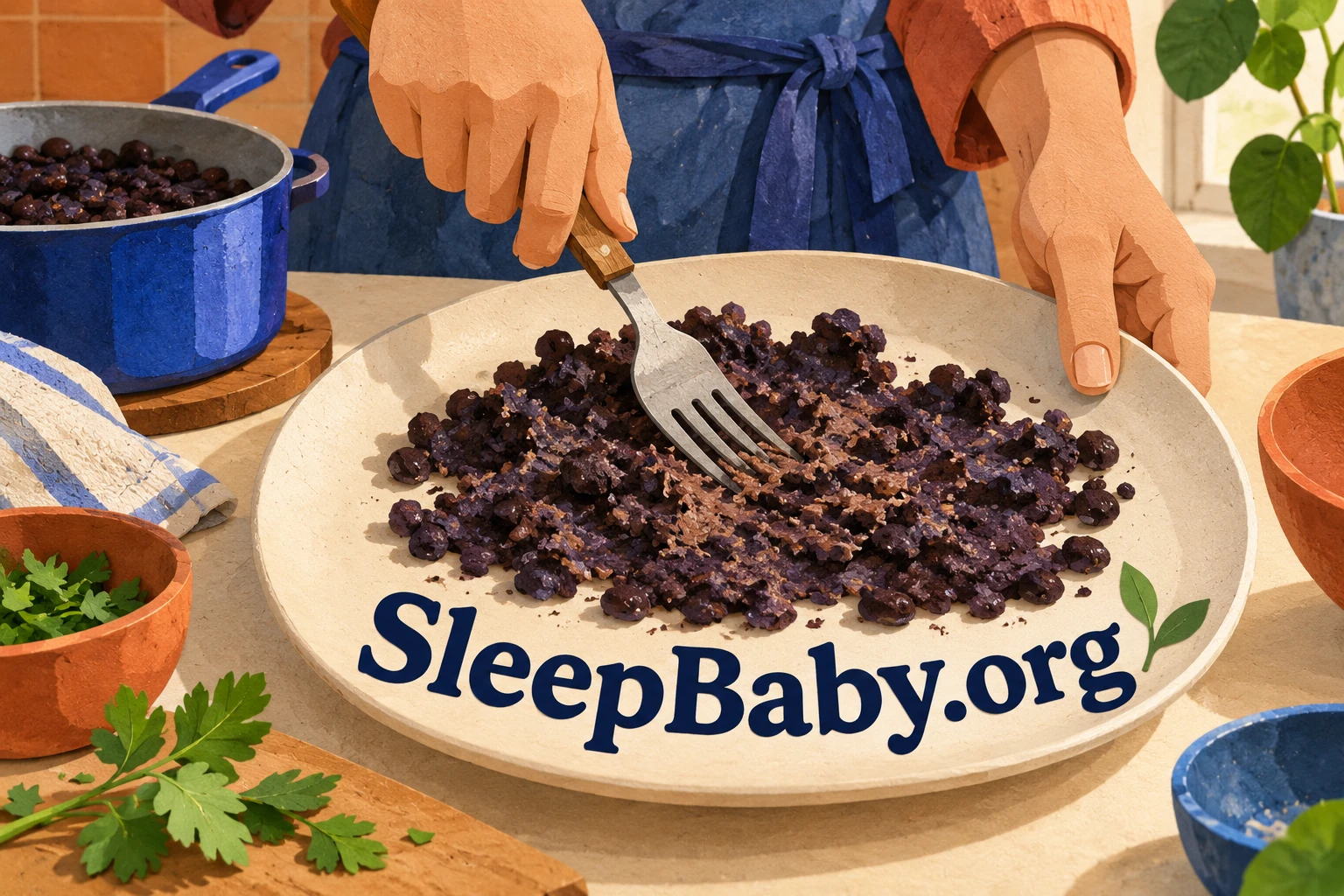
Soft center. Broken shape. Moist spoonful.
These are the three things I would inspect in the finished food, not just in the recipe.
- Soft center:
- A cooled cooked bean should give way readily under a fork. Leave out any that stay firm; continue cooking the batch if it needs more time.
- Broken shape:
- Mash thoroughly or blend. Look around the edge of the bowl for whole beans that escaped the fork. A few flattened beans do not make the rest of the bowl ready.
- Moist spoonful:
- Adjust a stiff mash with a little suitable liquid or familiar moist food. Recheck after it stands, because a thick bean mixture can become firmer as it cools.
This is a preparation aid, not a guarantee against choking. Follow an individual texture plan if your baby has one.
Start with thoroughly cooked, plain beans and clean equipment. A fork and a sturdy bowl may be enough for a mash; use a blender if your baby needs a smoother consistency. There is no need to buy a machine just for this meal.
AFTER THE FIRST BOWL
A soft spoonful is a food decision. Bedtime gets its own plan.

The SleepBaby.org homepage describes the current SleepBaby.org Method and its information about bedtime routines and baby sleep schedules.
Cooking, mashing and watching a first bean meal is enough to concentrate on at the table. I would not ask that bowl to deliver a longer night as well. Once the food is put away, an ordinary evening routine is a separate question you can consider.
If routines are what you are working on, read about the Method on the homepage and decide whether its information fits your needs. Keep needed milk feeds and individual feeding advice in place. Sleep planning does not treat discomfort, assess a reaction or replace urgent care.
How I would make a small bowl of black bean mash
- Put a little cooked bean into the bowl. Keep the rest of the batch separate, with its own clean utensil. You can offer more if your baby wants it.
- Break down the beans. Mash firmly, checking for whole beans and firm fragments. For a purée, blend until the texture is as smooth as your baby needs.
- Adjust the consistency. Add a little water or a familiar suitable moist food and mix well. The goal is a manageable spoonful, not a dense lump that holds the shape of the scoop.
- Check temperature and texture together. Stir a warmed portion and let it cool. Look at the food you are actually about to offer, rather than assuming the middle is the same as the edge.
- Offer without pressure. Let your baby set the pace. Pause for a closed mouth or turned head, and do not keep slipping in another spoonful after they have finished.
You do not have to pick every softened skin off a bean before blending it. What matters is the final consistency. If skins remain as tough pieces your baby cannot manage, work on the preparation or choose a smoother alternative. If feeding regularly involves coughing, distress or difficulty moving food, ask for a feeding assessment rather than keep changing the recipe alone.
For self-feeding, a preloaded spoon of manageable mash is an option. “Baby-led” does not require loose whole beans on the tray. Stay beside your baby and use the same cooking and texture checks whichever feeding approach your family uses.
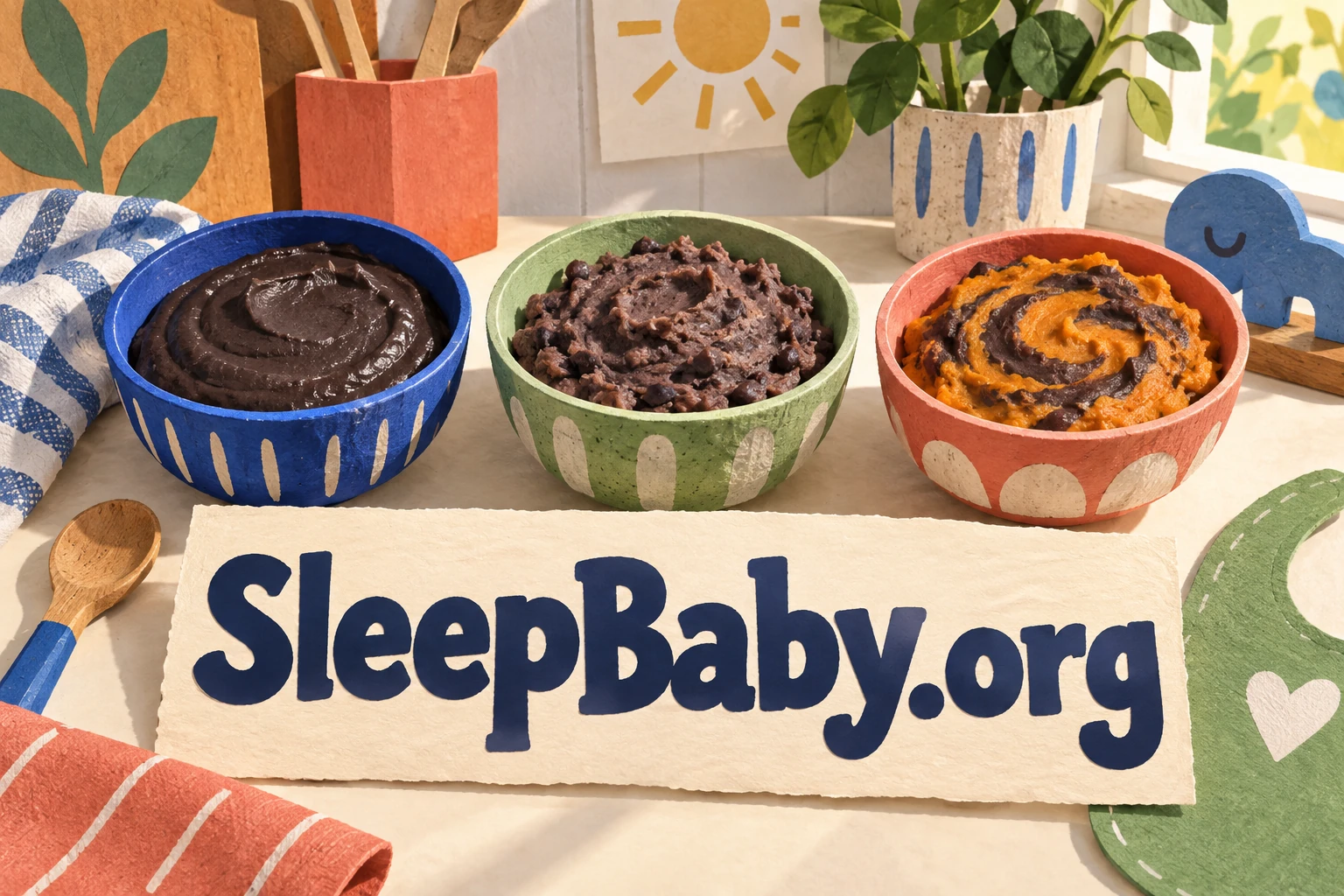
Three ways to include black beans in a meal
Use familiar ingredients around the new bean flavor at first. That makes a simple meal easier to prepare and gives you a clearer ingredient list if a possible reaction needs discussing.
- Black bean and sweet potato mash.
- Cook the sweet potato until soft and mash it with the cooked beans. Blend if needed, or keep a soft, moist mash if that is a consistency your baby already handles. Check both ingredients for remaining firm pieces.
- Bean mash with a suitable fruit or vegetable.
- Serve the mash alongside a manageable preparation of a vitamin C food, such as soft cooked broccoli or mashed ripe mango. You do not have to hide the beans in the fruit. Keep each part at an appropriate texture.
- A plain portion from family dinner.
- Set aside cooked beans before adding salty stock, a seasoning packet or a hot sauce. Mash the baby portion and pair it with other suitable food. If the family dish is already seasoned, consider whether another plain food is the easier choice.
Refried black beans can work as an idea for texture, but read the recipe or label. They may contain added salt, dairy or other ingredients you need to account for. The word “refried” does not guarantee a smooth mixture; inspect it for whole beans too.
I would skip crunchy bean snacks, tortilla chips and a firm, crusted bean patty for a new eater. The presence of beans does not tell you how the finished product behaves in the mouth. A soft bean mash and a crisp bean chip are different feeding decisions.
What black beans contribute nutritionally
Black beans can contribute plant protein, fiber and iron as part of a varied diet. They are one useful food, not a complete meal plan by themselves. A small first taste will not supply everything your baby needs, and that is not its job.
Vitamin C foods can help the body absorb iron from plant foods. Alberta Health Services gives black beans with mango as one example. Use a preparation your baby can manage; the nutrition pairing does not cancel the texture check.
Keep offering a variety of suitable iron-rich foods, including iron-fortified infant cereal and other foods that fit your family’s diet. If your baby follows a vegan diet, has a limited intake or needs treatment for iron deficiency, work with their clinician or pediatric dietitian. Bean portions are not a substitute for prescribed supplements or an individual nutrition plan.
I would not set a compulsory teaspoon-to-tablespoon progression. Start with a little, offer more when wanted and watch your baby’s hunger and fullness cues. The amount they enjoy can change from one meal to the next.
Will black beans make my baby gassy?
They can contribute to gas. The National Institute of Diabetes and Digestive and Kidney Diseases lists beans and other legumes among foods whose carbohydrates may produce gas during digestion. That general explanation does not tell us that every unsettled baby has a bean problem.
I would offer a small amount initially and observe your baby rather than plan a large bean meal. Note the portion, the other ingredients and what actually happened. Passing gas while otherwise comfortable is different from persistent pain, repeated vomiting or a baby who is feeding poorly.
Soaking and rinsing may change some of the components in a bean dish, but I would not promise a gas-free meal. Nor would I add supplements, “digestive” drops or a home remedy to compensate for the food. Discuss persistent symptoms with your baby’s clinician instead of repeatedly testing bigger and smaller bean portions.
Seek prompt medical advice for significant or persistent pain, repeated vomiting or diarrhea, blood in the stool, poor feeding or fewer wet diapers than usual. A baby who is difficult to wake, has breathing trouble or is not responding normally needs emergency help. Do not dismiss those symptoms as ordinary wind because beans were on the menu.
Do I need to stop eating beans while breastfeeding?
Not as a routine rule. The NHS includes beans and pulses in a healthy breastfeeding diet. Gas in your own digestive tract is not a reason by itself to remove an entire food group from your diet.
If your baby has persistent symptoms or a suspected food allergy, discuss the pattern with their clinician. An individualized elimination plan is different from assuming a fussy evening means the beans you ate caused it. I would not start cutting out several foods without advice.
Allergy, choking and an unusual diaper
A reaction is possible to a food even if it is not among the most common allergens. Stop the food and seek medical advice for suspected allergy symptoms such as hives or vomiting. Note the ingredients and timing, and do not offer another taste to check whether it happens again.
Sudden tongue or throat swelling, breathing difficulty, collapse or a floppy baby who is not responding normally requires emergency help. Follow any prescribed allergy emergency plan. Check other ingredients too: cheese, yogurt or a sauce in the bean dish may matter.
For a responsive infant with severe choking who cannot cough, cry or breathe, the American Red Cross teaches alternating 5 back blows and 5 chest thrusts while getting emergency help. If the baby becomes unresponsive, follow your CPR training and the dispatcher’s instructions. Never sweep blindly inside the mouth.
Food can affect stool appearance, but I would not automatically blame genuinely black, tarry stool on black beans. Red, black or pale white stool deserves a call to your child’s clinician; get urgent care if your baby also seems very unwell. Seattle Children’s explains the colors that merit medical advice. A food diary or photo may help the discussion, but do not let collecting one delay care.
Saving bean mash for another meal
Use a small feeding bowl and keep the untouched batch separate. Discard food left in the bowl your baby has eaten from. Do not scrape it back into the container or put a used spoon into the saved portion.
NHS guidance recommends cooling cooked baby food promptly, ideally within 1–2 hours, then refrigerating or freezing it. Use refrigerated prepared baby food within 2 days, or follow a shorter applicable product instruction. Small containers make it easier to save only what you will need.
Defrost frozen portions in the refrigerator or using a microwave’s defrost setting. Use within 24 hours after defrosting. Reheat only once until steaming hot throughout, then stir and cool before serving. Check the actual food temperature, especially after microwave heating.
A mixed dish follows the needs of all its ingredients. Rice requires extra care: NHS advice is to cool it within 1 hour and use refrigerated rice within 24 hours. Do not apply the general 2-day baby-food window to a bean-and-rice mixture.
Write down the ingredients and date. “Black beans, sweet potato” gives another caregiver more useful information than “dinner.” If you cannot establish how a saved portion was handled, choose a fresh suitable food.
Can black beans help my baby sleep longer?
I would not increase a bean portion, introduce solids early or replace a needed milk feed to try to extend sleep. The NHS says starting solids does not make babies more likely to sleep through the night. Black beans belong in a feeding decision, not a promise about how long the next stretch of sleep will last.
If your baby seems uncomfortable after a meal, attend to the symptoms first. Ordinary bedtime planning is separate from assessing an allergy, a swallowing difficulty or an unwell baby.
Review infant choking first aid before introducing solid foods
This American Red Cross demonstration is relevant to caregivers preparing beans and other solid foods. In an emergency, get help and act; do not stop to watch a video.
Written takeaway: For a responsive infant with severe choking, alternate 5 back blows and 5 chest thrusts while getting emergency help. If they become unresponsive, follow your CPR training and the dispatcher’s instructions. Do not use a blind finger sweep.
An optional masher for a small cooked portion
The OXO Tot Food Masher is a small bowl-and-masher set with ridges designed for mashing soft food. It may be useful for thoroughly cooked beans or the soft vegetable you pair with them. It does not cook dried beans or certify the finished texture as suitable for your baby.
Already-owned alternative: use a fork and sturdy bowl, or an existing blender when you need a smooth purée. Inspect the whole portion whichever tool you choose. No purchase is necessary if your current tools do the job.
This description comes from OXO’s product information, not a personal product test. No affiliate purchase link is included.
Quick answers for the next bowl
Can an 8-month-old have whole black beans?
I would keep changing their shape. An age or tooth count does not remove the choking concern with whole beans. Use a moist mash or purée matched to current feeding skills and follow any individual feeding advice.
Must I use fresh beans rather than canned?
No. Plain canned beans are a practical option. Choose no-added-salt when available, drain and rinse, then check softness and prepare the texture. Canned beans do not need the dried-bean soaking step.
Can I use black bean sauce?
Read the ingredients. A salty fermented black bean sauce is not interchangeable with plain cooked black turtle beans and may use different beans or other allergens. I would choose plain beans for a first introduction.
What if my baby refuses the mash?
Stop without pressure. You can offer it another day in a suitable preparation or alongside a familiar food. A refused bowl does not mean you need to sweeten it, hide it in a drink or insist on finishing a set amount.
For the next meal, I would choose plain, thoroughly cooked beans and check the cooled spoonful. Soft center, broken shape and a manageable consistency are more useful than a perfect-looking bowl.
ONE SMALL MEAL AT A TIME
Finish the feeding question. Then consider the evening.
For information about ordinary bedtime routines and baby sleep schedules, visit the homepage to read about the SleepBaby.org Method. Your baby’s feeding needs and care instructions come first.
Sources
- CDC: Introducing solid foods
- NHS: Feeding from around six months
- CDC: Choking hazards
- Oregon State University Extension: Beans
- FDA: Natural toxins in food
- Health Canada: Lectins in dry legumes
- Alberta Health Services: Iron in infant and young-child nutrition
- AAP: Iron deficiency and anemia
- NIDDK: Food and gas in the digestive tract
- NHS: Breastfeeding and diet
- Chelsea and Westminster Hospital: Breastfeeding your baby
- NHS: Dehydration
- NHS: Diarrhoea and vomiting
- NHS: Urgent help for babies and children under five
- Seattle Children’s: Stool colors and when to call
- Lee Kum Kee: Black bean garlic sauce ingredients
- NHS: Your baby’s first solid foods
- NHS: Food allergy
- NHS: Foods to avoid giving babies
- NHS: Storing and reheating baby food
- American Red Cross: Infant choking
- NHS: Swallowing problems
- OXO: Tot Food Masher product information





What viewers said10 comments · 4 replies+
Archived comments from the original Baby Sleep Miracle presentation. Not independently verified by SleepBaby.org; individual experiences vary.
Thank you so much for this video! I had no idea about the dangers of baby swings :O
Hi Mary-Ann. I have a question: Is method in any way similar to the ones recommended by Dr Bucknam, Dr. Weissbluth or Dr. Karp? We tried those but none of them help.
Hi Regina, thank you for your question. The short answer is no. The techniques I share in my guide are based on newest scientific research and this is why I have never seen any approach similar to the one I recommend.
This method really works! I tried it on my son Jesus and after just one week he went from waking up more than 5 times a night to waking up just once or twice. You are a lifesaver, Mary-Ann!
I'm truly impressed with how much information you share in your video. And all for free! I can feel that you truly care about mothers like myself, and that's hard to find these days. I have recommended your site to several of my friends already.
Mary-Ann, our child suffers from autism. Is your approach still suited?
Chloe, I made sure my method can be used with any child, even babies who are special like yours. Please note that I'm not a doctor and that I always advice to consult with your physician because nothing is more important than the safety and well-being of your love.
Hallo Mary-Ann, I'm from Germany. Do you have your guide in German?
Hello Heide, we do! Normally you should already see our video in German. If not, please contact our support so they can guide you
Thenk you for your answer, Mary-Ann!
I just completed your approach and I have to say, it worked almost too well. Yes, it took a bit of getting used to with your bedtime routine but the difference is huge. My son George used to take 1 hours to go down and now he's firmly asleep in no more than 10 minutes! You're the best!
It seems I'm the only man watching this video, lol! What you shared about the 'emotional backpack' made immediate sense to me and I can't wait to help my little girl Mila to unpack it!
Hey there, just discovered your site and this really sounds different. Just wanted to say thanks for sharing :)
For everyone who's still thinking about getting Mary-Ann's guide I want to advise you to go ahead. I wasn't sure myself but now I'm so thankful I invested in this program. It made a huge difference in our life as a family and yes, my baby girl does sleep through the night now.