A clear safe-sleep boundary, with a gentler way to keep the bunny in bedtime
The tiny ear in your baby’s hand is not the whole question
You may be watching your baby rub one velvety Jellycat ear between two fingers and thinking, this is the one thing that makes bedtime feel soft—do I really have to take it away? I understand why the question feels bigger than a toy. You are trying to protect sleep, comfort, and safety at the same time.
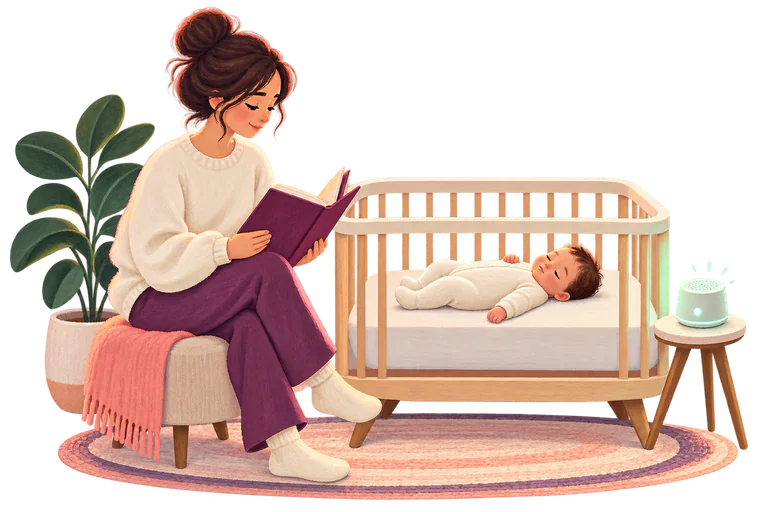
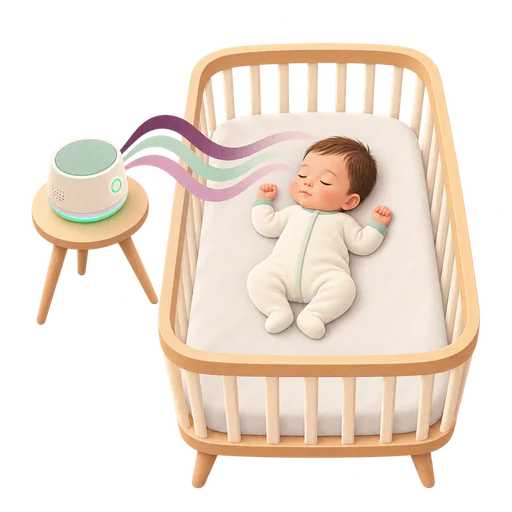
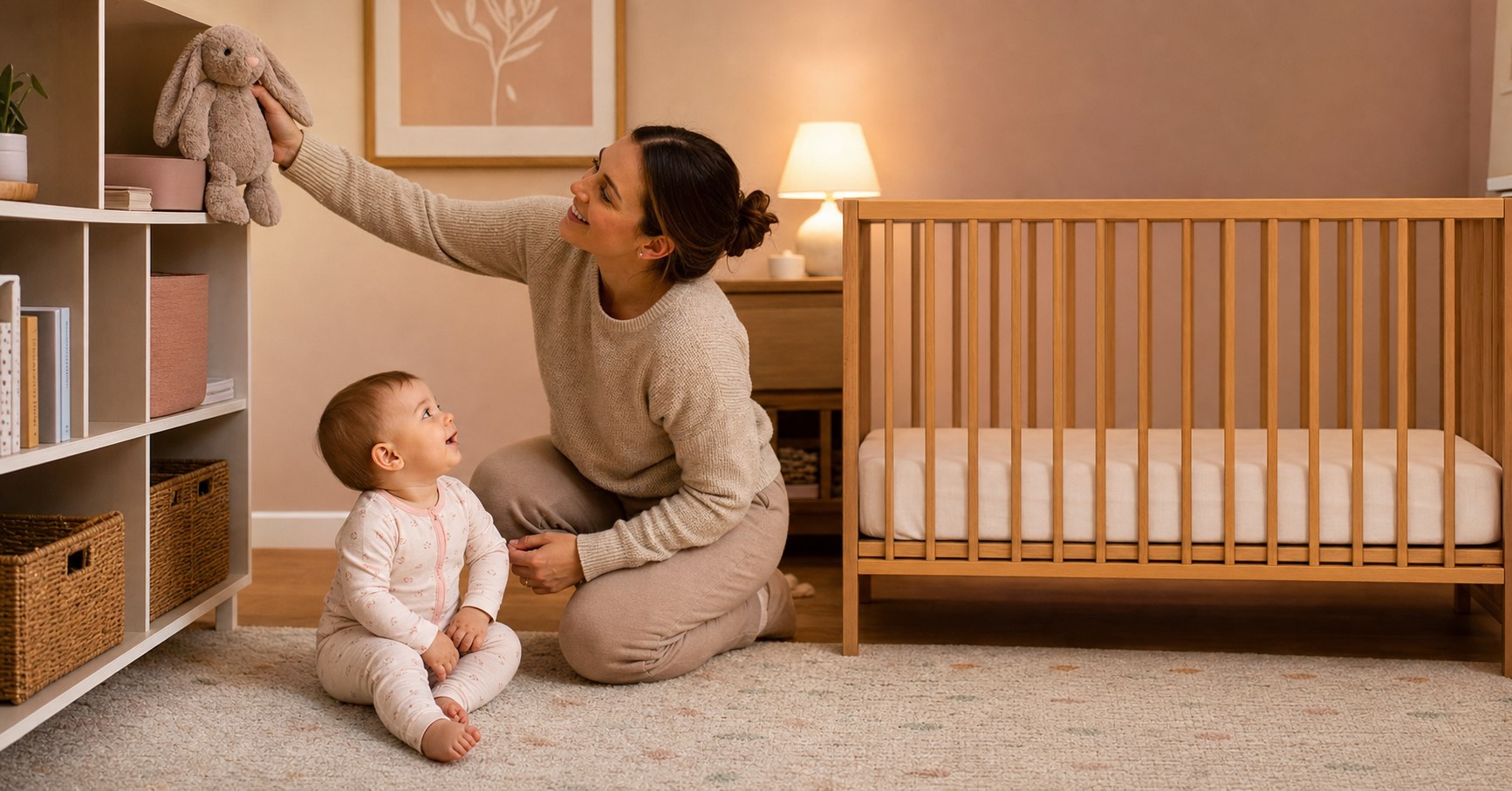
For a baby under 12 months, the answer is no: a Jellycat plush, comforter, soother, cloth book, or any other soft object should not stay in the crib, bassinet, portable crib, or play yard for naps or nighttime sleep. Put your baby on their back on a firm, flat, level, safety-approved sleep surface with only a fitted sheet. The Jellycat can be part of the awake bedtime ritual, then it needs to be parked outside the sleep space before your baby goes down.
Why the rule stays simple during the first year
Infant safe-sleep guidance is built around removing objects that can cover a baby’s nose or mouth, trap exhaled air, or interfere with an open airway. A plush toy does not have to look large to become part of that risk. Babies move unpredictably. A soft ear, paw, blanket-like corner, or attached fabric can shift near the face after you leave the room.
That is why I would not make the decision by asking whether a particular Jellycat feels tiny, breathable, floppy, or light in an adult hand. The useful question is simpler: is it an object other than the fitted sheet? During the first year, if the answer is yes, it belongs outside the infant sleep space.
The same boundary applies to nighttime sleep and naps. Daylight, an open door, a video monitor, or a shorter expected sleep does not change what is physically in the crib. A monitor can show you a problem; it cannot keep fabric away from a baby’s airway. Room-sharing also does not turn a plush into a safe sleep object.
I also would not use “my baby can roll” as an exception. Rolling is an important developmental change, but it does not make a baby able to identify and reliably move every soft object away from the face while asleep. Continue placing your baby on their back at the start of every sleep, and keep the sleep space clear even after rolling begins.
The boundary I use
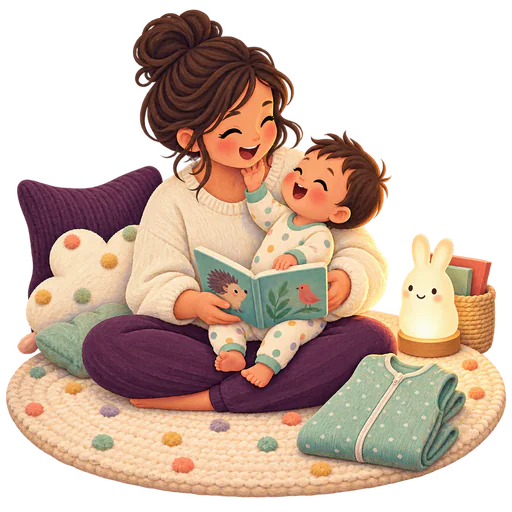
Awake and supervised: the Jellycat may join the cuddle, song, or story.
Going into the sleep space: the Jellycat leaves. Baby goes in on their back; the fitted sheet stays; everything else stays out.
“Suitable from birth” does not mean “suitable for infant sleep”
This is the label trap beneath many Jellycat questions. A manufacturer may describe a product as “suitable from birth” based on the product category, testing, materials, or intended age of supervised use. That phrase is not a safe-sleep clearance, and it does not override the guidance to keep soft objects out of an infant’s sleep area.
A Jellycat can be age-appropriate for an awake newborn to see or touch with an adult present and still be inappropriate to leave beside that same newborn for sleep. Those two statements are not contradictory; they answer two different questions.
| What you see | What it can tell you | What it cannot tell you |
|---|---|---|
| “Suitable from birth” | The maker considers the product suitable for that age under its stated use and care directions. | It does not mean the item may be left in a crib or bassinet during infant sleep. |
| A small or soft design | It describes size or feel. | It does not create a “small lovey” exception during the first year. |
| A clean, undamaged toy | It may be appropriate for supervised awake play if the instructions allow it. | Good condition does not make a soft object appropriate for infant sleep. |

Use a Jellycat handoff instead of a crib exception
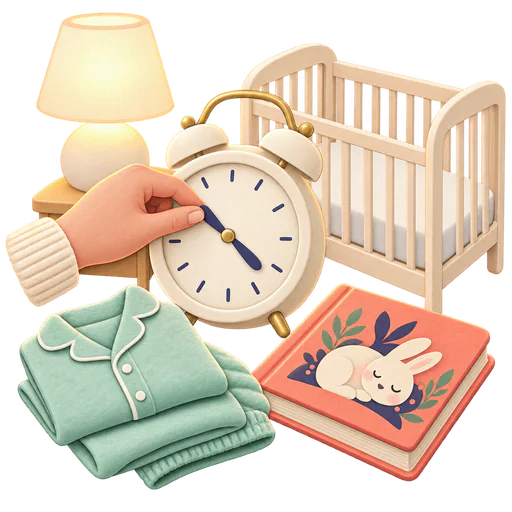
You do not have to erase the bunny from bedtime. I prefer giving it a clear job and a clear stopping point. That preserves the familiar sensory cue without asking a soft object to do safety work it cannot do.
-
Hold while awake
Let your baby touch the ear or paw while held in your arms, sitting with you, or lying on a separate awake-play surface under direct supervision.
-
Read, touch, or sing
Pair the Jellycat with one repeatable action: the last page of a short book, one quiet song, or a simple goodnight phrase.
-
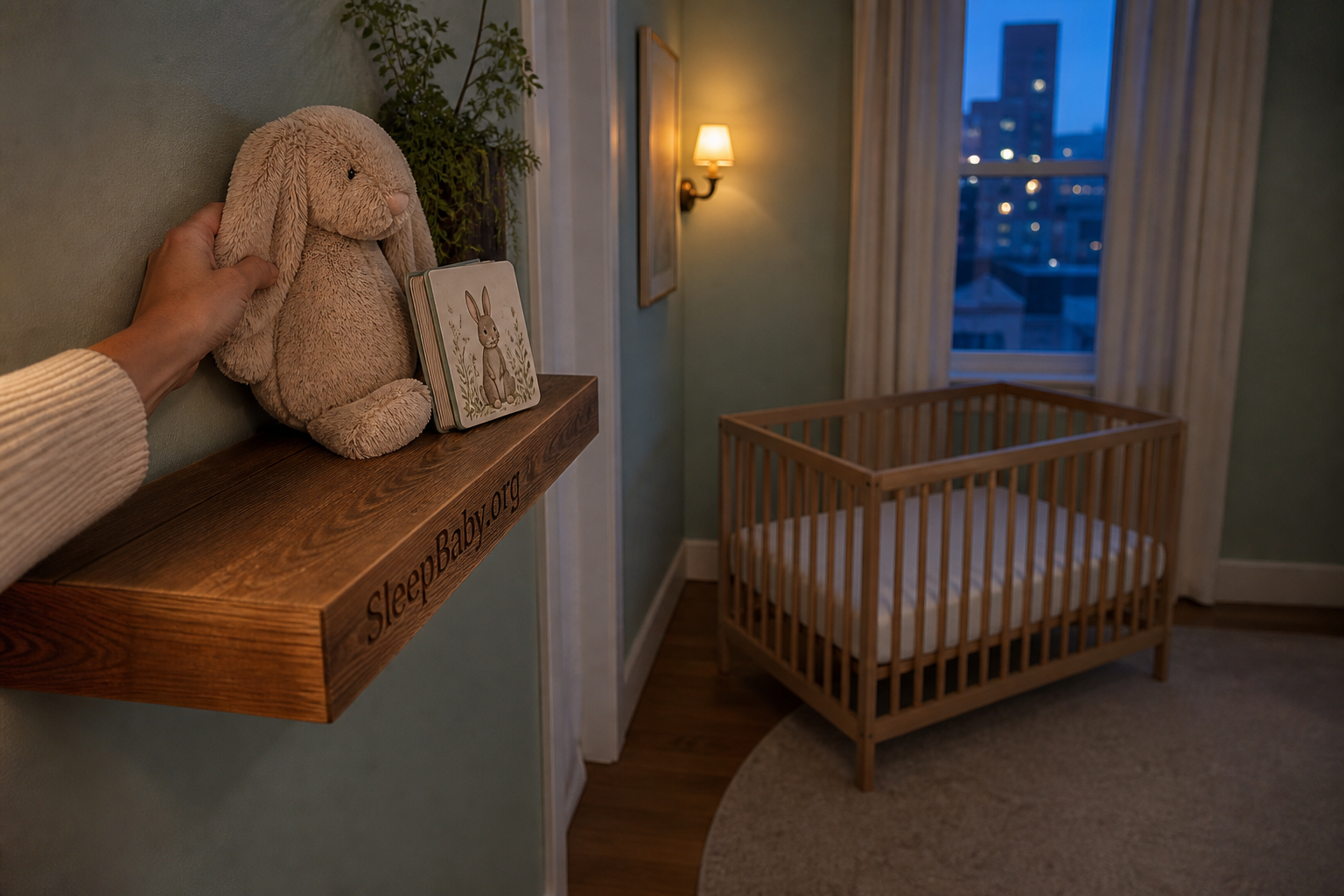
Park it visibly
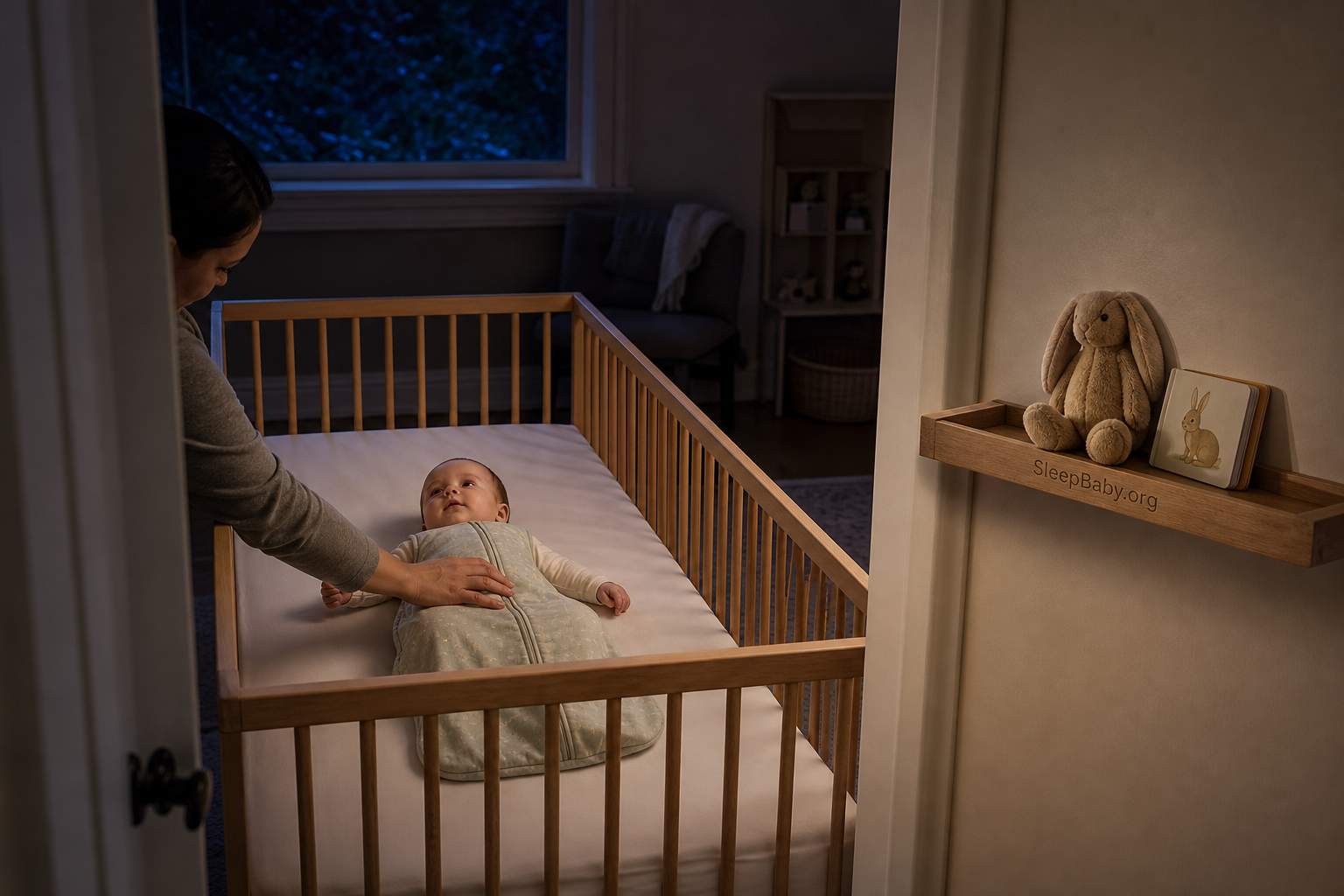
Place the toy and any book on a stable shelf or dresser outside the sleep space and out of your baby’s reach. Use the same spot each night.
-
Keep the sleep cue
Say the same goodnight phrase, place your baby on their back in the bare sleep space, and reunite baby and bunny only after your baby is awake and out.
This sequence works because the object is not the only cue. Your voice, the order of events, the dimmer room, the same final phrase, and the movement from arms to crib all become part of the pattern. If the Jellycat is being washed, lost, or suddenly rejected, the rest of the routine can still carry bedtime.
Choose the parking spot before you start the story. It should not be on a crib rail, hanging from a mobile, tucked just outside the mattress, or close enough that an older mobile baby can pull it in. A shelf across the room is clearer than a surface beside the crib. The point is not merely that you intend to remove the toy; the final sleep environment should already be set before you place your baby down.
If your baby enjoys peekaboo or searches for the bunny after it disappears, a brief awake hide-and-return game that supports object permanence can make the handoff feel predictable. Let the bunny “sleep” on its shelf, reveal it once while your baby is still in your arms, then end the game before the crib transfer. Keep this playful practice outside the urgent safety instruction itself.
A hypothetical Kacey-and-Benjamin bedtime handoff
What I would do when Benjamin’s fingers are still holding on
This is a clearly labeled hypothetical scene to show the routine, not a claim about my family’s history and not evidence for the safety rule.
I picture Benjamin awake in my lap for the last page, his fingers finding the bunny’s soft tail while I read. I would not make that sweet little grip the enemy. I would name what is happening: “One more touch, then Bunny waits on the shelf.”
When the page ends, I would close the book, stand with Benjamin still in my arms, and park both the book and the plush in their visible place across the room. If his hand reached back, I would keep the boundary calm instead of sneaking the toy away. “Bunny waits here. I stay with you for our goodnight.” Then I would use the same short phrase, place Benjamin on his back in the bare crib, and let my voice—not an object beside his face—carry the final beat.
The point of the scene is not that a particular sentence guarantees an easy bedtime. It is that we can acknowledge attachment without turning attachment into a crib-safety exception. The bunny remains part of the relationship and the ritual. The boundary remains part of the sleep environment.
The common exceptions that are not exceptions
“What if it is a very small Jellycat?”
There is no evidence-based first-year rule that changes at a particular plush size. Small does not mean unable to move near the nose or mouth. Use the same bare-sleep-space answer.
“What if my baby is already rolling both ways?”
Keep placing your baby down on their back and keep the sleep space clear. Rolling ability does not certify that a sleeping baby can reliably manage soft material near the face.
“Can I wait until my baby falls asleep and remove it?”
That plan builds the sleep onset around an object that is in the crib during a vulnerable transition. It also depends on perfect timing every time. Complete the handoff before you place your baby in the sleep space.
“What if I am watching on the monitor?”
A monitor is not a substitute for a safe environment. It cannot prevent an object from shifting, and a caregiver may not recognize a subtle airway problem quickly enough from a screen.
“What about a Jellycat comforter or soother instead of a stuffed animal?”
The name does not change the material. If it is a soft object, blanket-like piece, cloth book, comforter, or soother, it stays out of the infant sleep space.
The same logic applies when a baby is congested, overtired, teething, traveling, or sleeping in a different approved space. Those hard nights can make a soft object feel especially important, but they do not make the sleep surface safer. Offer comfort in your arms while awake, use the routine, then reset the bare sleep space.
Do a final-room reset, not a midnight object hunt
The easiest time to keep a Jellycat out of the crib is before your baby is in it. I like a final-room reset because it catches the ordinary moments when a safe plan gets fuzzy: someone sets the bunny on the mattress while finding pajamas, a sibling “helps” by tucking it near the rail, or a tired adult plans to come back and remove it later.
Before the last cuddle, look at the actual sleep space from the doorway. The mattress should be firm, flat, level, and covered by its fitted sheet. Move out the Jellycat, books, blankets, pillows, positioners, bumper pads, loose sheets, and other toys. Check that the parked bunny is not close enough to be pulled through the rails or dropped in by another child. Then the room is ready before the transfer becomes emotional.
- Baby begins on the back. If your baby can roll independently, you still start every sleep on the back; you do not use a plush to hold a position.
- The fitted sheet is the only item on the surface. No Jellycat, book, cloth comforter, spare pacifier clip, blanket, pillow, or monitor accessory sits beside baby.
- The bunny’s parking spot is fixed and out of reach. A stable shelf is better than a crib rail, nearby chair, or changing surface that can become a launch point back into the crib.
- Every caregiver knows the same ending. Share one sentence: “The Jellycat is for awake cuddles; it waits on the shelf for every nap and night.”
If your baby falls asleep while holding the Jellycat in your arms, gently take the toy before making the transfer. You do not need to wake your baby deliberately just to perform the handoff script, but the object should not travel into the crib. Place baby on the back in the clear sleep space. If the transfer fails and you return to cuddling, reset the same boundary on the next attempt.
A pacifier has separate safe-sleep guidance and should not be treated as proof that any soothing object is allowed. If you offer one, do not attach it to a Jellycat, plush holder, cord, ribbon, or clip in the sleep space. The soft attachment changes the setup. A pacifier that falls out after sleep begins does not need to be put back.
Use the same reset away from home. A safety-approved travel crib or portable play yard is not a relaxed version of the rule. Ask grandparents, babysitters, and childcare providers to leave the Jellycat outside the sleep space for naps as well as nights. Pack the familiar book or plush for the awake ritual, and pack a plan for where it will be parked.
This is also why I would not wait for a product recall or warning about one exact bunny. The recommendation is about the infant sleep environment, not a verdict that a particular Jellycat is badly made. A lovely, well-made toy can be used in the wrong place. Moving it to the shelf lets it remain lovely without asking it to become sleep equipment.
What changes after the first birthday—and what does not
The American Academy of Pediatrics’ infant safe-sleep recommendations focus on the first year, with the highest risk concentrated earlier in infancy. After 12 months, the under-one rule no longer answers the whole question. That does not turn a birthday into universal permission for every stuffed toy.
I would make the post-first-birthday decision by looking at the actual child, the exact Jellycat, and the exact sleep space. Follow the crib, toddler-bed, and product instructions. If your child has a medical, developmental, motor, or airway concern that could affect how they move or respond during sleep, ask their clinician about that individual situation rather than relying on a general age line.
A cautious after-one inspection
- Check the sleep-space instructions. Do not add an item the crib or bed manufacturer says should not be there.
- Check size and shape. Avoid an oversized item that crowds the sleeping area, could cover the face, or could be used as a climbing step.
- Check every seam and attachment. Pull gently at ears, tails, ribbons, tags, stitched features, and any decorative part. Retire the toy if something is loose.
- Check filling and condition. Look for escaping stuffing, pellets, torn fabric, matted wet areas, odors, or damage after washing.
- Check the child. Notice whether your child puts fabric over the face, chews through material, throws objects to climb, or becomes tangled in attached pieces.
- Keep the quantity modest. “One carefully checked comfort object” is a different environment from a mattress crowded by soft toys.
Inspection is not a one-time ceremony. A toy that was intact last month may have a loosened seam today. Build a quick check into washing or bedding-change day. Jellycat’s own safety and care guidance can help you follow the instructions for the exact product, but product care still does not replace sleep-space judgment.
If you are uncertain, the awake-only routine remains a complete option after age one. A child can love a Jellycat at story time, park it on a shelf, and see it again in the morning. There is no developmental requirement to put a comfort object in the bed.
Weighted, damaged, or modified Jellycats need a separate no
Do not assume the answer for an ordinary intact plush automatically covers a weighted comfort toy, a microwavable insert, added beads, a repaired seam, or a modified product. Weight can add pressure and can make an item harder for a child to move. Loose pellets, filling, buttons, ribbons, or repair materials can create choking or entanglement concerns.
For an infant, these items stay out with every other soft object. For an older child, follow the exact manufacturer’s age and use directions and the sleep-space instructions; do not improvise overnight use. If an item is torn or leaking, remove it from access until it is repaired according to the maker’s directions or retired.
If your baby protests when the Jellycat leaves
Protest does not mean the safe boundary is wrong; it means the transition needs practice. Start the handoff earlier in the routine, when your baby is calmer. Give the bunny a predictable parking phrase and keep the final steps short. You can offer your voice, a hand on the chest while your baby is awake, or another response that fits your family’s settling approach without leaving an object behind.
Look at the full bedtime rather than asking the Jellycat to solve every wake-up. Is your baby hungry, uncomfortable, newly ill, or at a schedule transition? Is the room reasonably dark and calm? Is the final wake window plausible for your baby’s age and individual pattern? A toy cannot correct a mismatched sleep opportunity, and removing it does not require ignoring another real need.
If your baby repeatedly needs help settling, choose a response you can repeat at both bedtime and ordinary night wakes. The goal is not a performance of perfect independence. It is a clear environment and a caregiving response you can use without placing softness beside your baby’s face.
An awake-only Jellycat bedtime pick
Give the bunny a clear job with a touch-and-feel board book
The Jellycat If I Were a Bunny touch-and-feel board book fits this exact situation because it turns the Jellycat theme into one bounded, awake activity: touch the textures, finish the last page, then park the book outside the crib. I prefer it here over buying another plush, generic nursery gear, or a storage product because the book supplies the stopping point the routine needs. It keeps the familiar bunny idea in bedtime without suggesting that a soft toy belongs beside a sleeping infant.
The book is not a sleep aid or safety device, and it should not stay in the crib, bassinet, portable crib, or play yard. Use it while your baby is awake and supervised, then place it on the same outside-the-sleep-space shelf as the plush.
See the Jellycat bunny board book on Amazon
As an Amazon Associate, SleepBaby.org may earn from qualifying purchases.
Watch the bare-sleep-space reset
Safe Sleep for Your Baby
When a beloved toy makes the rule feel abstract, this NICHD Safe to Sleep video brings the environment back into focus: baby on the back, a firm flat surface, and no soft objects in the sleep area.
Jellycat takeaway: let the bunny belong to the awake ritual, then check the final frame of the real room—the infant sleep surface should contain only the fitted sheet.
Jellycat and baby sleep: quick answers
Can a newborn sleep with a Jellycat?
No. Keep Jellycats and all other soft objects out of a newborn’s crib, bassinet, portable crib, or play yard. Use a firm, flat, level sleep surface with a fitted sheet only and place baby on their back.
Can my six-month-old sleep with a small Jellycat?
No. Size does not create an exception, and rolling does not create one either. The first-year boundary remains a bare infant sleep space.
What if the Jellycat says it is suitable from birth?
That is a product-age statement, not permission for unsupervised infant sleep. A product can be suitable for supervised awake use from birth and still need to stay out of the crib.
Can I use a Jellycat only for naps?
No. The safe-sleep environment is the same for naps and nights. Shorter sleep, daylight, or active monitoring does not change the object in the sleep space.
Is a Jellycat safe in the crib after age one?
After 12 months, infant guidance changes, but do not treat the birthday as automatic approval. Check the exact toy for size, loose parts, seams, filling, damage, and attached pieces; follow the sleep-space and product instructions; and consider your individual child’s abilities.
Where should the Jellycat wait overnight?
Use a stable shelf or dresser outside the crib and out of reach. Avoid crib rails, mobiles, nearby surfaces, and anywhere a mobile baby could pull the toy into the sleep area.

Sources
- American Academy of Pediatrics: Sleep-Related Infant Deaths—Updated 2022 Recommendations
- American Academy of Pediatrics: Evidence Base for the 2022 Updated Recommendations
- NICHD Safe to Sleep: Make Baby’s Sleep Area Safe
- Centers for Disease Control and Prevention: Helping Babies Sleep Safely
- U.S. Consumer Product Safety Commission: Crib Safety Tips
- American Academy of Pediatrics: Safe Sleep and Your Baby
- HealthyChildren.org: Bedtime Trouble
- Jellycat: Safety & Care
Keep the comfort; move the object
Build tonight’s bunny handoff in two minutes
Pick one awake Jellycat moment, one shelf outside the sleep space, and one goodnight phrase you can repeat. When the last page or song ends, park the bunny, place your baby on their back in the bare sleep space, and let the routine—not the plush—carry the transition.