The short answer
Can a baby sleep with a hoodie?
No—for ordinary infant naps and nighttime sleep, take the hoodie or hooded onesie off. Dress your baby in simple, correctly fitted sleepwear, keep the head and face uncovered, and use a firm, flat, level sleep surface with no loose items. Folding the hood down is not the same as removing it; the extra fabric is still attached and can shift.
If your baby has already fallen asleep in hooded daywear, you do not need to panic. Move through one calm reset: transfer to the regular sleep space, remove the hoodie, check the chest or upper back, choose one fitted sleep layer for the room, and keep the crib or bassinet empty.
Composite Kacey-and-Benjamin scene
The zipper you do not want to touch
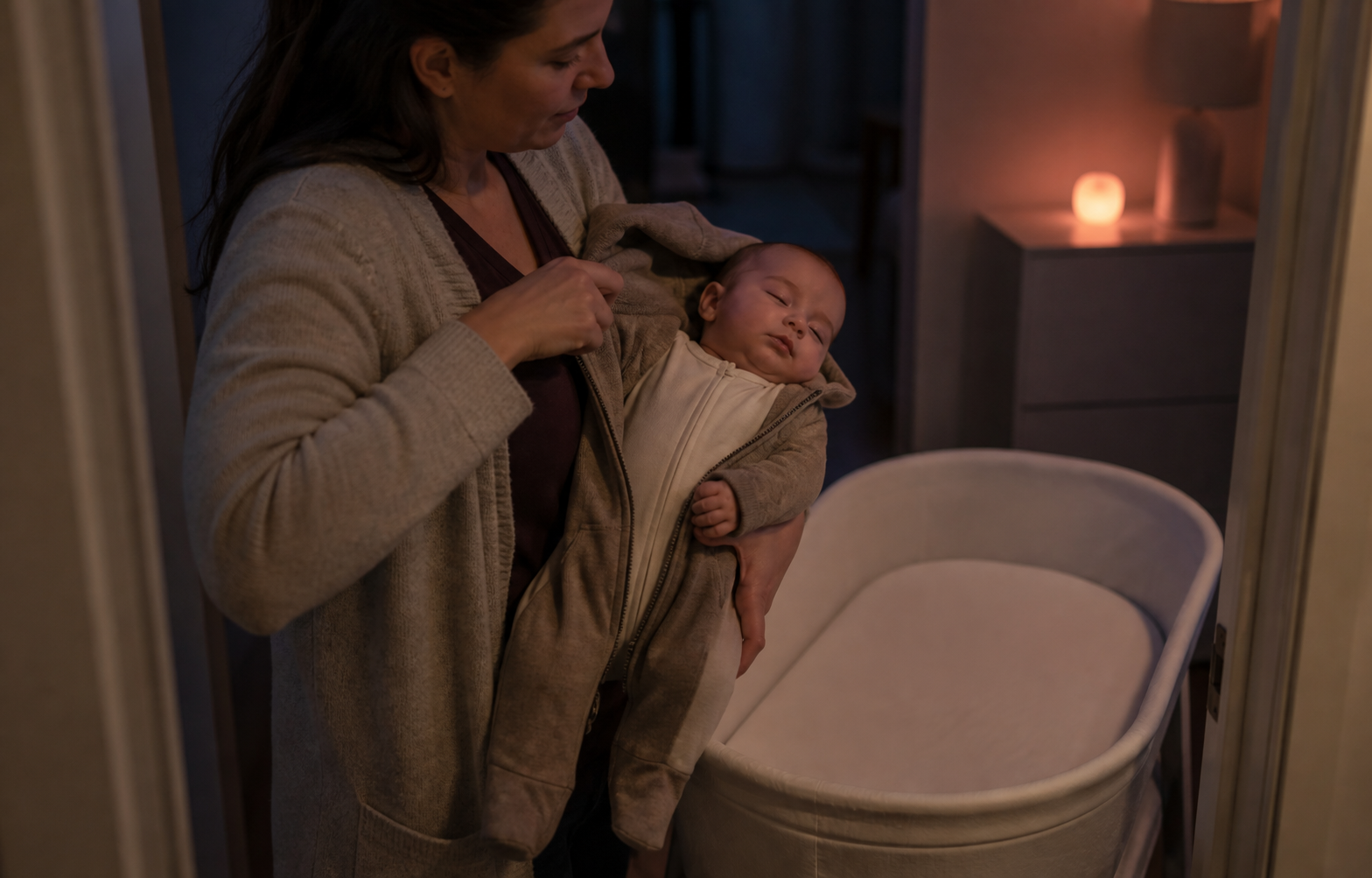
Imagine me easing the car-seat buckle away from a sleeping Benjamin after a cold trip home. His little zip hoodie is warm from the car, his eyelids have finally surrendered, and the zipper suddenly sounds as loud as a garage door. In this composite moment, every tired-parent instinct says, Do not disturb the arrangement that is currently producing sleep.
But the choice is not between a cozy baby and a cold one. It is between leaving daywear attached for unsupervised sleep and rebuilding warmth with clothing made for sleep. I would rather risk a brief protest while I remove the hoodie than spend the next hour wondering where that hood has shifted. The replacement picture is wonderfully unremarkable: fitted pajamas, an uncovered head, one suitable wearable layer if the room calls for it, and a clear bassinet.
This is a labeled composite, not Kacey’s biography or medical evidence. Its job is to name the real friction in the question: sometimes the safest clothing change is the one most likely to wake the baby you just got to sleep.
Why “hood down” is not the same as “hoodie off”
A hoodie is daywear. Even with the hood folded behind the neck, it leaves an attached panel of fabric, seams, bulk, and sometimes cords, toggles, decorative pieces, or a heavy collar that simple sleepwear does not need. Health Canada specifically warns that daywear may contain hoods, straps, and other parts that are not appropriate for unsupervised sleep and recommends simple, fitted sleepwear instead.
I would not turn that into a scarier claim than the evidence supports. This does not mean every baby who dozed in a hoodie was harmed, and it does not give us an incidence number for hood-related sleep deaths. It gives us a clear clothing-design principle: when a garment has a feature that serves no purpose during infant sleep and can move near the head or neck, take that feature out of the equation.
Pulling the hood up adds a second problem. The American Academy of Pediatrics and NIH Safe to Sleep advise keeping an infant’s head and face uncovered and avoiding overheating. A hood is not a safe way to make an indoor sleep space warmer. If you are wondering whether a hat can replace it, the same head-uncovered logic applies; our guide to why an indoor sleep hat is not the replacement explains that adjacent decision.
What changes when the lights go out?
| Garment | Sleep decision | Why |
|---|---|---|
| Zip hoodie, hood folded down | Remove | The hood and extra neck fabric remain attached daywear. |
| Hooded onesie or bunting | Change before routine sleep | A built-in hood is still a hood, even if the rest looks pajama-like. |
| Fitted sleeper | Usually the simplest base | No loose hood, cord, pillow, or blanket is added to the sleep space. |
| Correctly sized, nonweighted wearable blanket | May be an option | It provides a wearable layer while the head stays uncovered; fit and product instructions matter. |
| Weighted sleep clothing | Do not use | AAP safe-sleep guidance advises against weighted clothing and weighted bedding for infants. |
Use the hoodie-off reset instead of guessing
The best replacement for a degree-by-degree outfit chart is a short sequence you can repeat in a real house. Charts look reassuring because they promise an exact answer, but the AAP notes that evidence does not support one universal room-temperature formula. Rooms differ. Babies differ. Fabrics and fits differ. The decision still has to happen on the baby in front of you.
Move, remove, check, dress, clear
- Move to the sleep setup. If your baby fell asleep in a car seat after travel, stroller, carrier, swing, or an adult’s arms, transfer to the regular firm, flat, level infant sleep surface as soon as it is safe and practical.
- Remove the hoodie. Take off hooded daywear, bulky outerwear, and anything with a cord, toggle, detachable piece, or heavy collar. Do not solve the hood by folding it down.
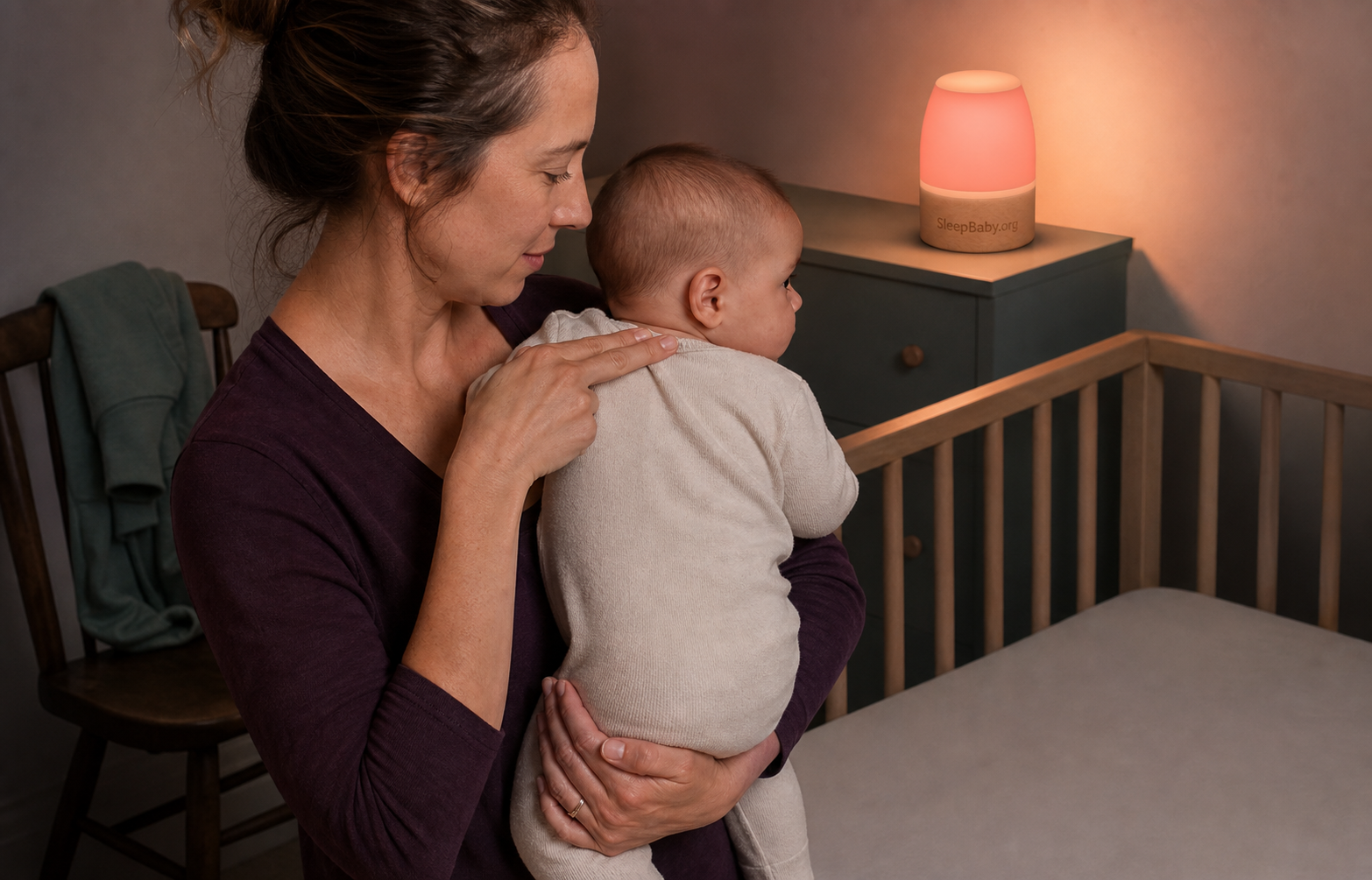
- Check the trunk. Feel the chest or upper back. Do not let cool hands or feet make the entire decision for you.
- Dress in one ordinary fitted plan. Start with a fitted sleeper. If another layer is appropriate, use a correctly sized, nonweighted wearable blanket that follows its instructions and suits the room.
- Keep the sleep space clear. No loose blanket, pillow, positioner, cooling pad, weighted item, or improvised cover belongs around the baby.
That order matters. If you start by adding a blanket because the baby’s fingers feel cool, you may never remove the hooded layer that created the question. If you start with the room, the trunk, and one fitted plan, each choice has a job. Nothing is there merely because it looked cozy during the drive home.
Check the chest, not just the hands
A baby’s hands and feet can feel cooler than the torso. They are easy to reach, which makes them tempting little thermometers, but they are not the best verdict on core warmth. I would slide two fingers against the chest or upper back and pay attention to the whole picture: Does the skin feel comfortably warm, or hot? Is the baby sweating, flushed, or unusually warm at the trunk? Does the room feel warm to an adult in ordinary clothing?
The AAP and NIH Safe to Sleep identify sweating, flushing, hot skin, or a hot chest as signs that a baby may be too warm. If you find those ordinary overheating clues, remove a layer and reassess. Our separate guide to what to check when a baby sweats during sleep can help with the nonemergency details once the sleep setup is safe.
What I would not do is chase an exact thermostat number as if it could inspect the baby’s clothing for me. “One more layer than an adult would wear comfortably in the same environment” is an AAP rule of thumb, not permission to stack layers until the arithmetic looks right. Fabric weight, room changes, fit, illness, and the baby’s response still matter.
Choose one fitted sleep plan
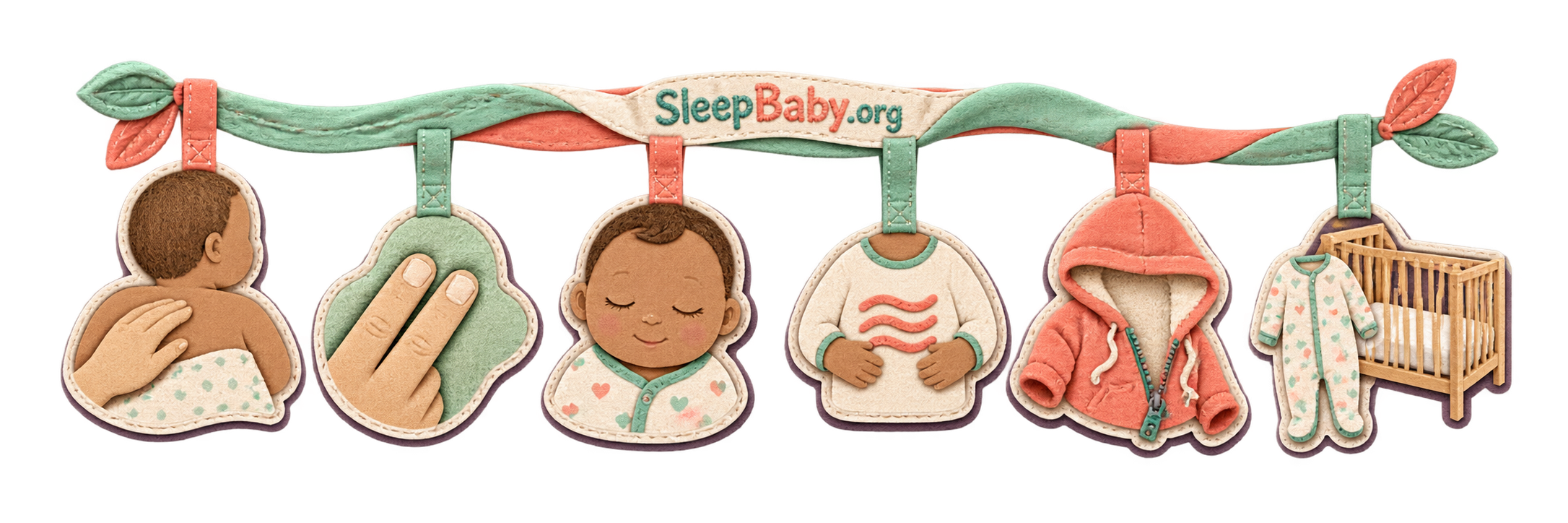
Once the hoodie is off, the next decision should get simpler, not more elaborate. A fitted sleeper may be enough. If the room and your baby call for another layer, a correctly sized wearable blanket can provide warmth without placing a loose blanket in the sleep space. The head stays uncovered. The garment must not be weighted. The neck and arm openings should fit according to the product instructions so the baby cannot slip down inside it.
A sleep sack does not make an unsafe mattress safe, fix an inclined surface, prevent SIDS, or guarantee sleep. It is clothing. That limited job is exactly why it can be useful here: it replaces a hooded daytime layer without asking a hood, blanket, pillow, or positioner to do work inside the crib.
I also would not double two sleep bags or improvise by sizing up for “room to grow.” The Lullaby Trust advises choosing the right size and avoiding doubled sleep bags or weighted bedding. A wearable layer earns its place by fitting the baby you have tonight, not the baby you expect to have after three laundry cycles and a growth spurt.
Do a four-point fit check before lights out
“Correctly sized” can sound like label language until you are standing beside the crib with an actual garment. I would check four places while the baby is awake and visible, then stop adjusting once the fit is right.
- Neck opening: it should follow the product’s fit instructions and should not be so large that the baby’s head could slip down through it. A neckline that gaps dramatically when you lift the shoulders is not fixed by adding clothing underneath.
- Arm openings: they should be appropriate for the baby’s size, without enough excess space for the torso to slide inside the garment. Adjustable underarm snaps are useful only when they are set correctly.
- Length and movement: the garment should allow normal hip and leg movement while staying away from the face. More length is not automatically more useful, and the age printed on a label is not a substitute for the manufacturer’s actual sizing measurements.
- Closures and condition: fasten zippers, snaps, or covers as directed. Retire the item if a closure is damaged or a piece is coming loose. A sleep layer should not require a safety pin, improvised tie, rolled neckline, or other home repair to fit.
Then watch the baby rather than the marketing copy. Recheck the trunk after the room or clothing has changed. If the baby is hot, sweaty, or flushed, remove a layer. If the fit is wrong, switch garments instead of trying to make the wrong size behave. The goal is not to build an outfit that survives every possible temperature; it is to make one clear, observable choice for this sleep.
A hoodless layer for this exact job
Woolino 4 Season Ultimate Baby Sleep Bag
If the hoodie keeps reappearing because you want one wearable layer that can stay useful across changing seasons, the baby-size Woolino is a strong article-specific option. It is hoodless and nonweighted, and the manufacturer lists merino-wool lining, an organic-cotton outer, adjustable underarm snaps, and a broad stated size window. Those details make it a more direct replacement for hooded daywear than a room thermometer, which can describe the room but cannot dress the baby.
It also fits this decision better than recommending another narrow single-size cotton sack simply because it is cheaper or familiar. The practical reason to buy is fewer garment-category guesses: one correctly fitted wearable layer can replace the recurring “hoodie or blanket?” debate while the head stays uncovered. Check the current listing, minimum age, size chart, room guidance, and care instructions before use; no sleep bag regulates every baby perfectly or guarantees safer or longer sleep.
See the Woolino 4 Season Ultimate Baby Sleep Bag on Amazon
As an Amazon Associate, SleepBaby may earn from qualifying purchases.
Outerwear can be useful outside and wrong for sleep
The hoodie question often begins before bedtime. A baby falls asleep during a chilly stroller walk, in a carrier under a parent’s coat, or on the ride home. The garment may have been sensible for the awake outdoor part of the evening. That does not make it the right indoor sleep layer.
Once you come inside, reassess instead of preserving the outdoor outfit by default. Remove bulky outerwear and the hooded layer. If the baby is in a sitting device after travel, move them to the regular firm, flat, level sleep surface as soon as it is safe and practical. Then rebuild the clothing plan for the room. A warm car, a cool hallway, and a heated nursery are three different environments even if the baby slept through all three like someone who has delegated logistics to the adults.
This is also why I would tell another caregiver exactly what changed. “He was warm outside” is not enough information after the coat and hoodie come off. “He is in a fitted sleeper now; his chest felt comfortable; the room is cooler than the car” gives the next adult something they can actually use.
What about an older baby or toddler?
The AAP safe-infant-sleep recommendations apply through the first birthday, so for an infant the answer stays direct: use simple sleepwear, keep the head uncovered, and keep the sleep space bare. Being able to roll, sit, or pull up does not turn a hooded garment into sleepwear. Motor milestones change many things. They do not make attached fabric around the head and neck more necessary.
After infancy, the sleep environment and developmental risks change, but outerwear still is not my first choice for bed. Use age-appropriate pajamas without a hood or neck cord. The U.S. Consumer Product Safety Commission separately warns about hood and neck drawstrings on children’s upper outerwear in the sizes covered by its rules because of strangulation hazards. That guidance should not be stretched into an infant-SIDS claim, but it is a good reason to keep cords and outerwear out of a child’s sleep clothing at any age.
For a toddler who insists on the favorite hoodie, I would move the comfort object into the routine rather than the bed: wear it during stories, then trade it for pajamas before lights out. The boundary can be warm without being negotiable. “Hoodie for books, pajamas for sleep” is easier to repeat than a nightly argument about whether the hood will stay put.
Give the next caregiver four facts
- What came off
- The zip hoodie, coat, hat, or hooded bunting used outside.
- What stayed on
- The fitted sleeper and, if used, one correctly sized nonweighted wearable layer.
- What the trunk felt like
- Comfortably warm, cool enough to reassess, or hot enough that a layer was removed.
- What changed once
- Name the one adjustment so nobody keeps adding and removing layers independently.
That last line saves a surprising amount of confusion. Without it, one adult removes the hoodie, another adds a blanket, and a third turns up the thermostat because the baby’s hands felt cool. The baby has acquired three climate strategies before midnight and none of the adults knows which one produced the sweaty chest.
Watch the head-uncovered rule in context
NIH Safe to Sleep: Hats Off
The NIH Safe to Sleep “Hats Off to Reduce the Risk of Sleep-Related Infant Death” video supports the same practical boundary: indoor infant sleep should keep the head uncovered. The privacy-enhanced player below shows the recommendation in its official safe-sleep context. The short clip makes two boundaries visible at once: a baby can be dressed for the room without covering the head, and warmth choices should not introduce loose bedding or extra fabric around the face. Watch for that separation, then carry it back to the hoodie decision: change the garment, not the uncovered-head rule.
Takeaway: Make “head uncovered indoors” part of the clothing plan before the baby goes down, rather than trying to monitor whether a hood stays where you left it.
If the hoodie is on now, do this in order
- Go to the baby and look at breathing, color, responsiveness, position, and the sleep surface.
- If the baby is in a car seat, stroller, carrier, swing, or another sitting device after travel, transfer to the regular infant sleep space as soon as safe and practical.
- Remove the hoodie, hooded onesie, or bulky outer layer. Keep the head and face uncovered.
- Check the chest or upper back. If the baby feels hot, is sweating, or looks flushed, remove a layer and reassess the room and clothing.
- Use a fitted sleeper and, when appropriate, one correctly sized nonweighted wearable blanket. Leave the sleep space firm, flat, level, and empty.
If the clothing change wakes the baby, the wake-up is frustrating; it is not evidence that the reset was wrong. Settle the baby using your usual safe routine. I would not add the hoodie back merely because it worked as a portable lullaby in the car. Sleep sometimes arrives wearing the wrong outfit. We can keep the sleep and change the outfit—or, on a less cooperative night, change the outfit and rebuild the sleep.
When warmth is not the real problem
A clothing adjustment is not treatment for illness. If your baby has trouble breathing, develops a blue or gray color, is unusually difficult to wake, seems severely unwell, or has another emergency sign, seek emergency help rather than experimenting with layers. If there is fever, poor feeding, vomiting, a major change in alertness, or you are concerned about how your baby is acting, contact your pediatric clinician for guidance appropriate to your baby’s age and symptoms.
That boundary deserves its own paragraph because “feels warm” can mean two very different things at 2 a.m. One is a baby wearing too much clothing in a warm room. The other is a baby who may be ill. The chest check helps with the first question; it cannot diagnose the second. When the whole baby looks wrong, stop treating the wardrobe as the problem.
The hoodie questions that still come up
What if the hood is tiny and cannot reach the face?
I would still remove the garment for routine infant sleep. The decision is not based only on whether you can pull the hood over the face while the baby is awake in front of you. It is based on using simple fitted sleepwear without an attached sleep-unnecessary feature around the head and neck during unsupervised sleep.
What if the hoodie has no drawstrings?
No drawstrings is better than drawstrings, but it does not turn a hooded daytime garment into the simplest sleepwear choice. The hood and extra fabric remain. Choose the fitted sleeper or correctly sized wearable layer instead.
Can my baby nap in a hoodie if I am watching?
Routine sleep clothing should not depend on a caregiver noticing the exact second fabric shifts. Supervision also does not change the recommendation to use a proper infant sleep surface or keep the head uncovered. Build the same setup for naps that you want at night: back to sleep, firm and flat, head uncovered, simple fitted clothing, clear space.
What if the bedroom is genuinely cold?
Address the room and use room-appropriate fitted sleepwear. A correctly sized, nonweighted wearable blanket may be part of that plan. Do not solve a cold room with a hood, loose blanket, doubled sleep bags, or a weighted garment. If you cannot keep the room reasonably comfortable or your baby repeatedly seems too cold or too hot despite ordinary adjustments, ask your pediatric clinician for individualized guidance.
Does rolling change the hoodie answer?
No. Rolling skill affects other sleep questions, including swaddling, but it does not make head covering or attached hood fabric useful. Continue placing an infant on the back for every sleep, stop swaddling when the baby shows signs of trying to roll, and use clothing that fits the current developmental stage.

The quiet zipper can still be the right sound
Back in that composite driveway, the zipper still sounds offensively loud. Benjamin may still open one eye. The transfer may still lose some of its magic. What changes is the meaning of the interruption.
I am not taking warmth away. I am moving warmth into a plan that does not need a hood to stay exactly where I left it: check the room, check the trunk, use one fitted layer, uncover the head, clear the sleep space. That is a much smaller job than guarding a folded hood all night, and it is a job another tired caregiver can repeat without reading your mind.
The hoodie can wait on the hook for the next cold stroller walk. Sleep gets simpler clothes.
Sources
- American Academy of Pediatrics: 2022 safe sleep policy statement
- HealthyChildren.org: Safe Sleep—9 Ways to Reduce a Baby’s Risk of SIDS & Suffocation
- NIH Safe to Sleep: Ways to Reduce Baby’s Risk
- Health Canada: Dressing your baby for sleep
- The Lullaby Trust: How to dress your baby for sleep
- U.S. Consumer Product Safety Commission: Drawstrings in Children’s Upper Outerwear
- Woolino: 4 Season Ultimate Baby Sleep Bag product identity and fit details
When one warm layer turns into a whole-night question
Make the next bedtime decision smaller
The hoodie does not need a substitute complicated enough to keep you awake. SleepBaby helps you turn real bedtime questions into clear next steps—what to change, what to leave alone, and what matters tonight—without promising a perfect night.






What viewers said10 comments · 4 replies+
Archived comments from the original Baby Sleep Miracle presentation. Not independently verified by SleepBaby.org; individual experiences vary.
Thank you so much for this video! I had no idea about the dangers of baby swings :O
Hi Mary-Ann. I have a question: Is method in any way similar to the ones recommended by Dr Bucknam, Dr. Weissbluth or Dr. Karp? We tried those but none of them help.
Hi Regina, thank you for your question. The short answer is no. The techniques I share in my guide are based on newest scientific research and this is why I have never seen any approach similar to the one I recommend.
This method really works! I tried it on my son Jesus and after just one week he went from waking up more than 5 times a night to waking up just once or twice. You are a lifesaver, Mary-Ann!
I'm truly impressed with how much information you share in your video. And all for free! I can feel that you truly care about mothers like myself, and that's hard to find these days. I have recommended your site to several of my friends already.
Mary-Ann, our child suffers from autism. Is your approach still suited?
Chloe, I made sure my method can be used with any child, even babies who are special like yours. Please note that I'm not a doctor and that I always advice to consult with your physician because nothing is more important than the safety and well-being of your love.
Hallo Mary-Ann, I'm from Germany. Do you have your guide in German?
Hello Heide, we do! Normally you should already see our video in German. If not, please contact our support so they can guide you
Thenk you for your answer, Mary-Ann!
I just completed your approach and I have to say, it worked almost too well. Yes, it took a bit of getting used to with your bedtime routine but the difference is huge. My son George used to take 1 hours to go down and now he's firmly asleep in no more than 10 minutes! You're the best!
It seems I'm the only man watching this video, lol! What you shared about the 'emotional backpack' made immediate sense to me and I can't wait to help my little girl Mila to unpack it!
Hey there, just discovered your site and this really sounds different. Just wanted to say thanks for sharing :)
For everyone who's still thinking about getting Mary-Ann's guide I want to advise you to go ahead. I wasn't sure myself but now I'm so thankful I invested in this program. It made a huge difference in our life as a family and yes, my baby girl does sleep through the night now.