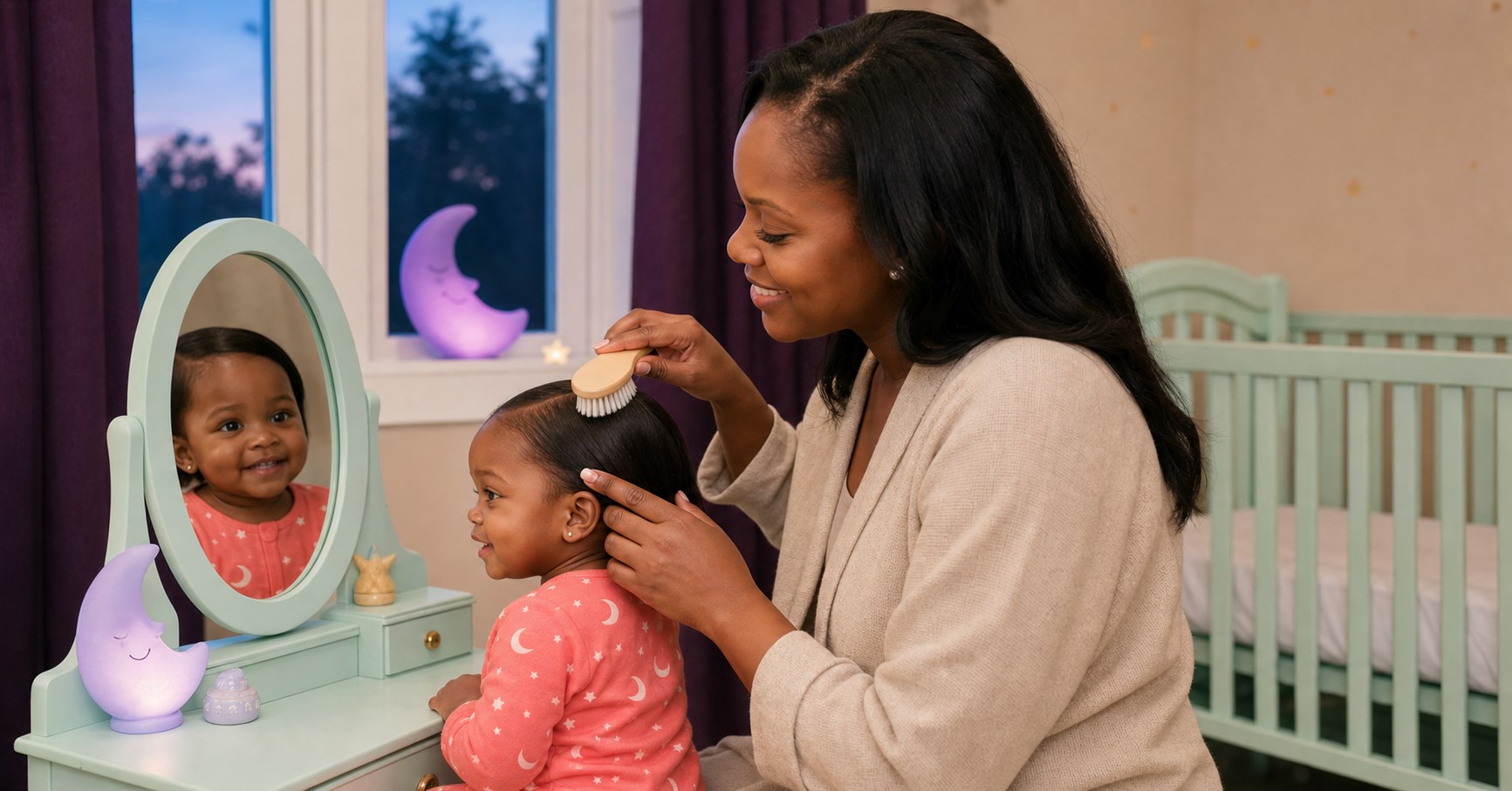
For new parents, it’s not uncommon to wonder about the characteristics of your newborn, particularly when it comes to their hair. You might find yourself asking, “Why does my black baby have straight hair?” Understanding the genetics of hair texture can help answer this and other similar questions. This article provides insights into the topic and explains how SleepBaby.org can help.
The Science of Hair Texture
Why Your Black Baby Might Have Straight Hair
Hair texture is largely determined by genetics and can vary greatly among individuals. If your black baby has straight hair, it could be due to a combination of genes inherited from both parents. Over time, your baby’s hair texture may change and become more aligned with what’s typical in your family or ethnic group.
The Role of Genetics
Genetics plays a vital role in determining hair texture. If both parents carry genes for straight hair, even if they themselves do not express it, they can pass these on to their children, resulting in a black baby with straight hair.
Changes in Hair Texture
Remember, your baby’s hair texture may not be permanent. It is common for a baby’s hair texture and color to change over the first few years of life.
When Hair is Linked to Health
Signs of Healthy Hair
The texture of your baby’s hair, whether straight or curly, is less important than its health. Signs of healthy hair include smoothness, shine, and a lack of excessive dryness or breakage.
When to Be Concerned
While a change in hair texture is usually no cause for concern, certain conditions, such as hair loss or thin, brittle hair, could indicate nutritional deficiencies or health issues. If you notice any worrying signs, it’s best to consult a pediatrician.
Exploring the Genetics of Hair Texture
Can a Black Baby Have Straight Hair?
Yes, a black baby can indeed have straight hair. Hair texture is determined by a mix of genetics, and it’s entirely possible for a black baby to be born with straight hair.
Is Straight Hair Genetic?
Absolutely, straight hair is a genetic trait. Just like skin color, eye color, and other physical traits, the texture of your hair is largely influenced by the genes you inherit from your parents.
Is Straight Hair a Caucasian Trait?
Straight hair is not exclusively a Caucasian trait. Although it is more common among people of Asian descent, individuals from any ethnic background can have straight hair, including those of African descent.
Is Straight Hair Dominant or Recessive?
Straight hair is generally considered a recessive trait. However, the genetics of hair texture are complex and not completely understood. A baby could inherit straight hair even if both parents have curly hair, due to the interplay of multiple genes.
Understanding the Changes in Hair Texture
At What Age Does a Black Baby’s Hair Texture Change?
A black baby’s hair texture can start to change anywhere from a few months old to their toddler years. It’s not uncommon to see changes in both the texture and color of a child’s hair as they grow.
Can You Be Born with Straight Hair That Turns Curly?
Yes, it’s entirely possible to be born with straight hair that turns curly, or vice versa. As your baby grows, you may notice changes in their hair texture due to hormonal changes, diet, or environmental factors.
Exploring Hair Types and Terminologies
What is African-American Hair Called?
African-American hair is often referred to as “afro-textured” or “kinky” hair. However, there’s a wide range of hair textures within the African-American community, from straight to wavy to tightly coiled.
What is 4C Hair Type?
Type 4C hair is a classification in the hair typing system used to describe tightly coiled, kinky hair common among people of African descent. However, it’s important to note that not all black individuals have 4C hair; some may have straight or wavy hair.
Can Black People Have Type 1 Hair?
Yes, black people can have Type 1 hair, which is characterized as straight. Hair type is determined by multiple factors, including genetic diversity, so it’s possible for individuals of any ethnic background to have any hair type.
Caring for Your Baby’s Straight Hair
What Can I Do with My Straight Baby’s Hair?
Caring for your baby’s straight hair involves gentle cleaning, regular conditioning, and minimal manipulation to maintain its health and shine.
How Do I Know If My 4C Hair Is Healthy?
Even though your baby may not have 4C hair, it’s good to know the signs of healthy hair. They include hydration, minimal breakage, and a certain level of elasticity.
How SleepBaby.org Can Help
At SleepBaby.org, we know how important your baby’s wellbeing is to you. While understanding why your black baby has straight hair might not directly relate to their sleep, maintaining a relaxed, well-informed environment contributes to a better sleep routine. We offer resources on a range of topics, from soothing a fussy baby to establishing healthy sleep habits, ensuring you have the knowledge you need to support your child’s growth and development. Discover how SleepBaby.org can support you on your parenting journey.
Parental Experiences: Navigating Hair Texture Changes in Black Babies
“When our daughter Kira was born, she had hair as smooth and straight as silk. For the first few months, I was constantly asked if we were sure she was ours. Funny, right? Anyway, it wasn’t until she was around six months that I noticed her hair slowly started to curl at the ends. Now at two years old, she’s got these beautiful, tight coils, just like her mom. It’s been a fascinating journey, honestly. Seeing that transformation, it just reminded us that genetics can be quite unpredictable.” – Jerome, Atlanta
“Oh, goodness. Let me tell you about my son Jamal. Born with a full head of straight hair. His dad has 4C type hair and mine is more 3B, so we didn’t see that coming. At around nine months, his hair began to curl up a little. But then, right before his first birthday, his hair straightened back again. I’ve given up trying to predict what it’ll do next. It’s a wild ride, and we’re just along for it.” – Tasha, Chicago
“My little Ava was born with straight hair, which came as a shock since both my wife and I have coily hair. We expected her hair to curl up in the first few months, but it didn’t. Ava is now three, and her hair is as straight as ever. We’ve realized that her hair texture doesn’t define her any less as a black girl. She’s just as beautiful and special with her straight hair.” – Marcus, Philadelphia
Conclusion
Understanding your baby’s unique attributes, like why your black baby has straight hair, adds to the joy of parenting. Over time, your baby’s hair texture might change, reflecting the complex interplay of genetics. No matter the texture, focusing on maintaining healthy hair is essential. Always remember, every child is unique, and so are their hair characteristics. Embrace them!



What viewers said10 comments · 4 replies+
Archived comments from the original Baby Sleep Miracle presentation. Not independently verified by SleepBaby.org; individual experiences vary.
Thank you so much for this video! I had no idea about the dangers of baby swings :O
Hi Mary-Ann. I have a question: Is method in any way similar to the ones recommended by Dr Bucknam, Dr. Weissbluth or Dr. Karp? We tried those but none of them help.
Hi Regina, thank you for your question. The short answer is no. The techniques I share in my guide are based on newest scientific research and this is why I have never seen any approach similar to the one I recommend.
This method really works! I tried it on my son Jesus and after just one week he went from waking up more than 5 times a night to waking up just once or twice. You are a lifesaver, Mary-Ann!
I'm truly impressed with how much information you share in your video. And all for free! I can feel that you truly care about mothers like myself, and that's hard to find these days. I have recommended your site to several of my friends already.
Mary-Ann, our child suffers from autism. Is your approach still suited?
Chloe, I made sure my method can be used with any child, even babies who are special like yours. Please note that I'm not a doctor and that I always advice to consult with your physician because nothing is more important than the safety and well-being of your love.
Hallo Mary-Ann, I'm from Germany. Do you have your guide in German?
Hello Heide, we do! Normally you should already see our video in German. If not, please contact our support so they can guide you
Thenk you for your answer, Mary-Ann!
I just completed your approach and I have to say, it worked almost too well. Yes, it took a bit of getting used to with your bedtime routine but the difference is huge. My son George used to take 1 hours to go down and now he's firmly asleep in no more than 10 minutes! You're the best!
It seems I'm the only man watching this video, lol! What you shared about the 'emotional backpack' made immediate sense to me and I can't wait to help my little girl Mila to unpack it!
Hey there, just discovered your site and this really sounds different. Just wanted to say thanks for sharing :)
For everyone who's still thinking about getting Mary-Ann's guide I want to advise you to go ahead. I wasn't sure myself but now I'm so thankful I invested in this program. It made a huge difference in our life as a family and yes, my baby girl does sleep through the night now.