The monitor shows a baby who was asleep ten minutes ago and is now on their belly, furious about the transportation arrangements.
Rolling can wake a baby for a while. Keep the sleep space safe while the skill becomes familiar.
Always place your baby on their back at the start of every sleep. If your baby can roll both back-to-stomach and stomach-to-back independently, federal safe-sleep guidance says you may leave them in the position they choose after back placement. If they can roll only one way, you can reposition them onto their back when you notice. Stop swaddling as soon as rolling begins, keep the crib bare, and never add a positioner, wedge, pillow, blanket, bumper, or weighted product to prevent the roll.12
I would treat the waking as a skill-and-settling problem, not as permission to change the safe-sleep rules. The useful question is not “How do I stop every roll?” It is “What can my baby do independently, and how do I respond without making the crib less safe?”
SleepBaby.org · The original video
A little help
for the night ahead.
Take a moment to watch the original Baby Sleep Miracle presentation. Your article will be right here when you’re ready to keep reading.
Ready to get started?Take the next step with SleepBaby.
Help my baby sleep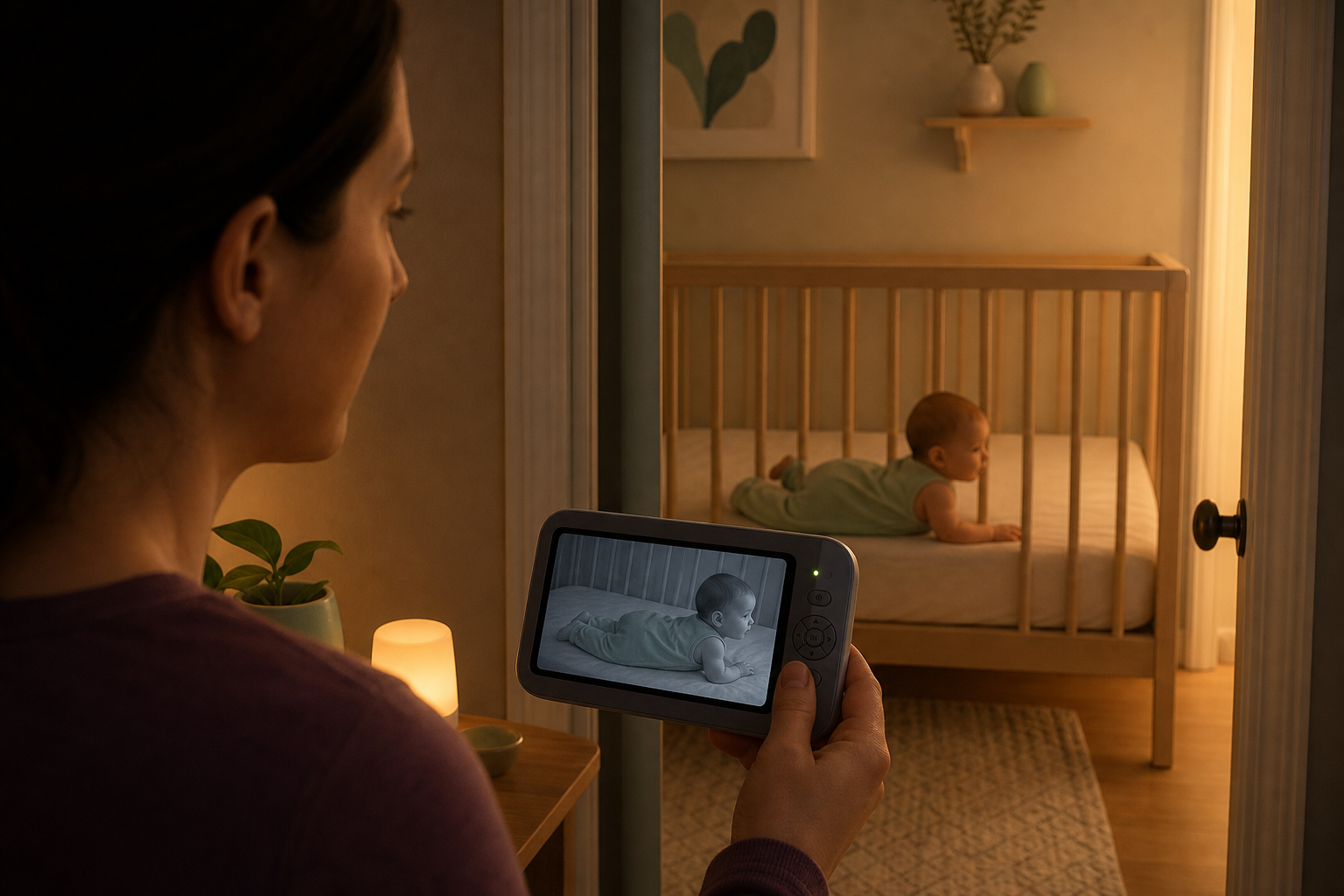
Why does rolling suddenly wake my baby?
Rolling is a motor skill, but bedtime turns it into a sensory event. The mattress feels different against the chest. The head is facing another direction. One arm may land beneath the body. A baby who practiced happily on the floor at noon may be startled by the same movement in a dark crib at midnight.
I would expect three patterns to overlap. First, the movement may happen before the baby knows how to reverse it. Second, the baby may practice because new skills have a way of appearing in the crib with no respect for business hours. Third, a caregiver who sees the roll may intervene quickly and repeatedly, which can become part of the waking loop even when the intervention began for a sensible reason.
None of that means the baby is manipulating you or has permanently “broken” sleep. Night waking is developmentally normal, and rolling is a normal motor milestone. The CDC lists rolling from tummy to back among movement milestones commonly demonstrated by 6 months, while NICHD notes that some babies start rolling earlier.15 A milestone list is not a deadline, and waking alone does not diagnose a developmental problem.
The private fear is usually sharper: What if my baby rolls into danger while I am asleep? I do not answer that fear with a promise that nothing bad can happen. I answer it with the parts you can control: how you place the baby, what the baby wears, what is in the crib, and whether the baby can independently move in both directions.

The direction check that changes what you do tonight
Not rolling yet
Continue back placement. If you still swaddle, stop at the first sign of trying to roll. You may choose to transition earlier so arms-free sleep is not brand-new on the same night rolling begins.
Rolling one way
Place baby on the back. If they roll onto the stomach and cannot independently return, you can reposition them to the back when you notice. Keep practicing movement during supervised awake time.
Rolling both ways
Place baby on the back initially. If they then choose another position, you do not need to spend the night repeatedly flipping them. Keep the sleep space bare and clothing nonrestrictive.
I would check the skill during calm, supervised floor time rather than testing it by waiting for a distressed baby to demonstrate at 3 a.m. Can your baby move from back to belly and belly to back without being pulled, propped, or nudged? One lucky tumble is less informative than a movement you have watched the baby initiate and complete.
What should I do when my baby rolls and cries?
Begin with the same responsive settling you would use for another wake: pause long enough to understand what is happening, then respond if your baby is escalating or needs help. The exact soothing method can fit your family. The safety boundaries do not change.
- Look before changing the setup. Is the baby breathing normally? Is the face clear? Is an arm awkwardly trapped? Is the garment riding up?
- Use the direction rule. A one-way roller may be repositioned. A confident two-way roller can generally remain in the chosen position after being placed down on the back.
- Soothe without adding equipment. Use your voice, a brief touch, picking up when needed, or the settling approach you normally use. Do not add a wedge, rolled towel, positioner, pillow, or blanket.
- Return the crib to boring. A fitted sheet and correctly sized sleep clothing are enough. Boring is doing excellent work here.
I would not change the schedule, feeding plan, room, sound, bedtime routine, and response method all on the same night unless another need clearly requires it. Rolling may be the obvious new variable. Keeping the rest steady lets you see whether the waking eases as the skill becomes familiar.
If the baby calms when repositioned but rolls again immediately, you have learned something important: the movement itself is available, even if the return trip is not. For a one-way roller, you may have a repetitive stretch. I know that is not a glamorous answer. It is still safer than pinning the baby into place with a product.

Stop swaddling when rolling starts
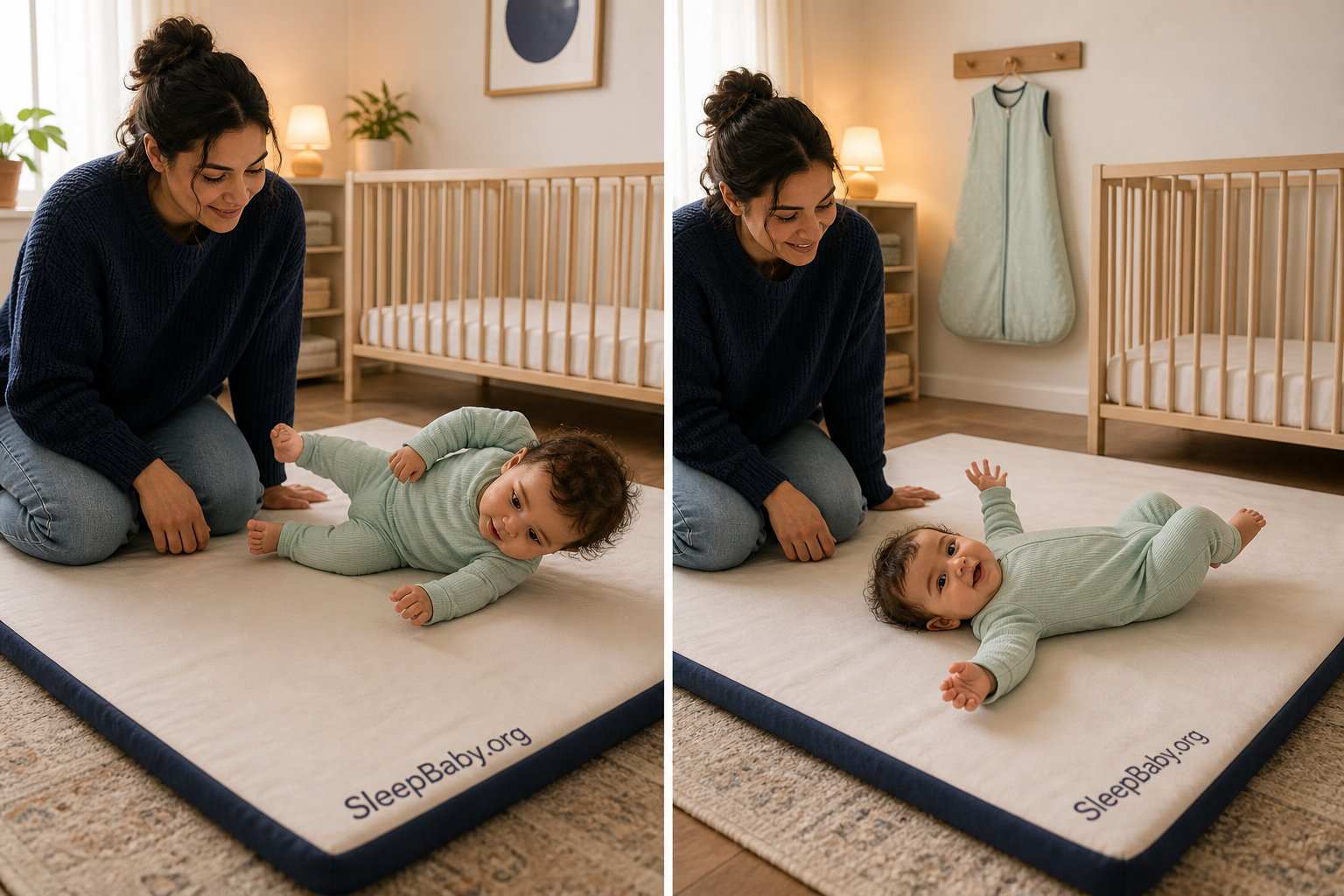
This is the boundary I would not negotiate for one more peaceful stretch. Once a baby starts rolling or trying to roll, stop swaddling. A swaddled baby may have difficulty using the arms and upper body to adjust position. NICHD and the AAP both advise ending swaddling when rolling begins, and weighted swaddles are not recommended.123
Move to fitted pajamas or a correctly sized, unweighted, noncompressive sleep sack that leaves the arms, chest, and body free to move. “Arms out” is not enough if a transitional wrap still compresses the torso or restricts shoulder movement. Read the garment instructions and look at what it physically does on your baby.
The first arms-free nights may add waking because the startle response feels more noticeable and the hands have suddenly joined the bedtime meeting. I would solve that with ordinary soothing and time, not by restoring compression after the safety boundary has arrived.
How Long Does the Rolling Phase Last?
There is no evidence-based countdown that fits every baby. I would be suspicious of anyone promising “three nights” as if motor development signed a service-level agreement. Some babies settle quickly once they can roll back. Others keep waking because the skill overlaps with feeding changes, illness, a schedule mismatch, teething discomfort, or a broader period of rapid development.
Instead of counting nights, I would watch the direction of change:
- Is the baby becoming less surprised by the belly position?
- Can they lift and turn the head comfortably during awake practice?
- Is the return roll appearing more often?
- Are wakes becoming shorter or less distressed?
- Does the baby seem well, feed normally, and move both sides of the body similarly?
A rough night is not a trend. I would look across several days while staying attentive to anything that seems medically wrong. The goal is not to force independent settling before your family is ready. The goal is to respond without creating a hazardous workaround.
A small observation log that will not take over your life
For three nights, record only the details that could change a decision. I would use one line per wake, not a color-coded research institute on the kitchen counter.
| Notice | Record | Why it matters |
|---|---|---|
| Starting position | Placed on back | Confirms the safe-sleep starting rule stayed consistent. |
| Direction | Back-to-belly, belly-to-back, or both | Determines whether repositioning is useful. |
| Response | Calmed in place, repositioned, picked up | Shows what actually helped rather than what you meant to try. |
| Body and health | Normal breathing, feeding, temperature, movement | Separates a motor adjustment from an illness or medical concern. |
Take the log to your pediatrician if you are unsure about the movement. A short awake-time video can also be useful when the concern is one-sided movement or difficulty returning from the belly, but do not delay urgent care to record anything.

Use awake time to make the movement less mysterious
Supervised tummy time and floor play help babies strengthen the neck, shoulders, trunk, and arms used in rolling.23 I would offer practice when the baby is awake, calm, and watched—not exhausted, freshly fed to discomfort, or left alone.
Place a toy or your face slightly to the side to invite turning. Give the baby room to initiate. If an arm gets tucked, you can help create space without completing every movement for them. Practice both directions. The point is not to drill a baby into performing on schedule; it is to provide safe opportunities for the body to learn.
If tummy time is consistently miserable, try shorter sessions more often, use your chest while you are awake and attentive, or ask the pediatrician or a physical therapist for individualized ideas. I would pay attention to a strong side preference, persistent head tilt, unusual stiffness or floppiness, or a skill that appeared and then disappeared.
When rolling wakes deserve a pediatrician call
Most rolling-related waking is not an emergency. Still, the phrase “it is probably developmental” should never be used to explain away a baby who looks unwell. Contact your pediatrician if you notice:
- movement that is consistently one-sided or an arm or leg that seems used much less;
- unusual stiffness, floppiness, repeated abnormal movements, or loss of a skill;
- difficulty lifting or turning the head during supervised awake time;
- feeding decline, repeated vomiting, fever, markedly fewer wet diapers, or unusual sleepiness;
- persistent distress that does not fit the usual pattern;
- concern about prematurity, a medical condition, reflux, or a clinician-directed positioning plan.
Seek emergency help for severe breathing trouble, blue or gray color, unresponsiveness, a seizure, or another acute emergency. I would act on the baby in front of me, not wait for a monitor alert or an online article to grant permission.

Official safe-sleep refresher
Safe Sleep for Your Baby
Before another night of monitor gymnastics, this short NICHD video resets the parts of the sleep environment that remain under adult control.
Takeaway: place your baby on their back in a firm, flat, clear sleep space. Rolling changes what the baby may do after placement; it does not change the adult’s safe starting setup.
What I would carry into tonight
I would retire the idea that a good night requires keeping a mobile baby perfectly still. I would place the baby on the back, keep both arms free once rolling starts, clear the crib, and use the two-way movement check to decide whether repositioning is useful.
If your baby is a one-way roller, you may still make several trips down the hall. If your baby rolls both ways, you can stop treating every change of position as a siren. The monitor may remain the most watched screen in the house for a little while, but it no longer has to ask an unanswered question each time the baby turns.
Back placement is your job. A bare crib is your job. Responsive care is your job. The independently chosen position of a capable two-way roller does not need to become an all-night wrestling match.
Common rolling-wake situations, answered plainly
My baby rolls onto the belly and immediately screams. Should I flip them?
If your baby can roll only from back to belly, you can reposition them onto the back when you notice. If they can independently roll both ways, you may leave them in the chosen position after initially placing them on the back, but you can still respond and soothe when they are upset. I would not confuse “you do not have to flip” with “you are not allowed to comfort.” Pick up, settle, or help as your baby needs; simply return them to the same bare, flat sleep space without props.
My baby can roll both ways during the day but cries as if trapped at night. Does that count?
The motor ability still counts, but darkness, fatigue, and surprise can make an available skill harder to organize. I would observe several awake examples to confirm the movement is genuinely independent and not a momentum-assisted tumble. At night, you may soothe a capable two-way roller without committing to a mandatory flip after every turn. If the baby seems physically unable to move in a way they previously could, or the distress looks unusual, contact the pediatrician rather than assuming every episode is ordinary practice.
My baby rolls only from back to belly. Will repositioning create a habit?
Safety and physical ability come before anxiety about habits. NICHD says a baby who can roll only one way can be repositioned to the back after rolling onto the stomach.1 I would respond calmly and keep the interaction boring, but I would not refuse help merely to protect an abstract sleep-training rule. The pattern usually changes as the return roll develops. Awake practice can support that skill without turning the night into a lesson.
Should I wake my baby if I discover them sleeping on the belly?
First check the direction ability and the sleep environment. If the baby independently rolls both ways, was placed on the back, is unswaddled, and is sleeping in a bare approved space, guidance allows the baby to remain in the chosen position. If the baby rolls only one way, repositioning to the back is reasonable. I would never place a baby down on the belly to avoid the wake, even if that position seems preferred. The safe starting position remains the back for every sleep.
Why does my baby keep rolling into the crib rails?
Mobility can carry a baby sideways before spatial judgment catches up. A standards-compliant crib with a firm mattress and no bumper is designed to be used without padding around the rails. Do not add mesh or padded bumpers, pillows, or rolled blankets to soften the perimeter. I would calmly reposition a stuck or distressed baby as needed and check that the mattress fits properly and the crib is assembled according to its instructions. A limb briefly between rails can look alarming; added padding creates more serious hazards.
Can I use a pacifier when rolling wakes my baby?
A pacifier may remain part of sleep if your baby already uses one safely and your clinician has not advised otherwise. Do not attach it to clothing, a cord, a stuffed animal, or a clip in the sleep space. If it falls out after the baby is asleep, you do not need to replace it solely for safety. I would also notice whether replacing it twenty times is helping the rolling adjustment or simply becoming the next reason everyone stays awake.
Do I need to remove the sleep sack?
Not necessarily. A correctly sized, unweighted, noncompressive sleep sack that leaves the arms, chest, and body free can provide warmth without loose bedding. Check that the neckline cannot rise over the mouth and nose, that the arm openings are not large enough for the baby to slip inside, and that the garment allows the legs and hips to move. Stop using any product that functions like a swaddle or restricts movement after rolling starts. I care more about function and fit than the label printed on the package.
Could the waking actually be a schedule problem?
Yes. Rolling may be the visible event while overtiredness, undertiredness, hunger, illness, or a changing nap pattern supplies the wakefulness. I would first preserve the rolling safety rules, then compare the timing with the week before the skill appeared. Is bedtime suddenly much later? Did the last nap change? Are feeds normal? Does the baby wake before rolling, then turn while already awake? That sequence matters. Adjust one plausible schedule variable at a time instead of blaming every wake on motor practice.
What should daycare or grandparents do?
Give every caregiver the same short rule: place the baby on the back, use the approved arms-free garment, keep the sleep space bare, and respond according to the baby’s observed rolling ability. Say explicitly whether you have seen both directions independently. I would remove retired swaddles from the sleep area so nobody reaches for one automatically. A written handoff prevents the 1 p.m. nap from following a completely different safety plan than the 1 a.m. wake.
Should I move my baby to a bigger crib when rolling starts?
A baby who still fits an approved bassinet may not need an immediate move solely because of one roll, but the product’s limits control. Many bassinets require discontinuation when a baby can roll, push up, or reaches a stated weight or developmental limit. Read the exact instructions now. If the limit has been reached, move to an approved crib or play yard with a firm, flat mattress and fitted sheet. I would not improvise extra space inside a product the baby has outgrown.
Can a monitor tell me whether the position is safe?
A monitor can show movement or sound, but it cannot make the sleep space safe, verify that a garment fits, or replace direct assessment of a baby who looks unwell. Consumer breathing or oxygen alerts can also create false reassurance or false alarms. I use the monitor as a window, not a medical clearance system. The crib setup and the baby’s actual ability matter more than a green icon. For breathing difficulty, color change, unresponsiveness, or another emergency sign, act on the baby and seek help.
The four-line handoff for another caregiver
- Start: “Place the baby on their back for every sleep.”
- Wear: “Use this fitted, unweighted, arms-free garment; do not swaddle.”
- Roll: “We have observed [one-way/both-way] independent rolling, so [reposition to the back/allow the chosen position after back placement].”
- Space: “Keep the crib bare and call me about unusual movement, breathing, illness, or persistent distress.”
I like this script because it survives exhaustion. It does not ask a grandparent or daycare worker to remember a long article. It names the starting position, clothing, movement ability, and escalation boundary—the four facts that change care.
Sources
- Eunice Kennedy Shriver National Institute of Child Health and Human Development. About Back Sleeping. Safe to Sleep. Accessed August 2026.
- Eunice Kennedy Shriver National Institute of Child Health and Human Development. Ways to Reduce Baby’s Risk. Safe to Sleep. Accessed August 2026.
- American Academy of Pediatrics. Safe Sleep: Ways to Reduce a Baby’s Risk of SIDS and Suffocation. HealthyChildren.org. Accessed August 2026.
- U.S. Consumer Product Safety Commission. Safe Sleep — Cribs and Infant Products. Accessed August 2026.
- Centers for Disease Control and Prevention. Milestones in Action: By 6 Months. Updated February 2026.
SleepBaby.org · The original video
A next step for
the next bedtime.
Still thinking about sleep? Watch the presentation here, then explore the SleepBaby program whenever you’re ready.
Ready to get started?Take the next step with SleepBaby.
Help my baby sleep