The short answer
Yes, a baby can wake up to poop—and the diaper needs care, not a midnight reinvention
The snap of a diaper tab at 2 a.m. is a tiny sound with astonishing authority. If your baby has pooped, change the diaper promptly, keep the room dim enough to remain nighttime but bright enough to work safely, and return your baby to sleep on their back in a firm, flat, empty crib or bassinet.
Nighttime itself does not tell you whether the stool is normal. What matters is whether it looks and feels typical for your baby, or whether there is a sudden watery pattern, hard painful stool, blood, vomiting, fever, poor feeding, fewer wet diapers, unusual sleepiness, or behavior that is meaningfully different.
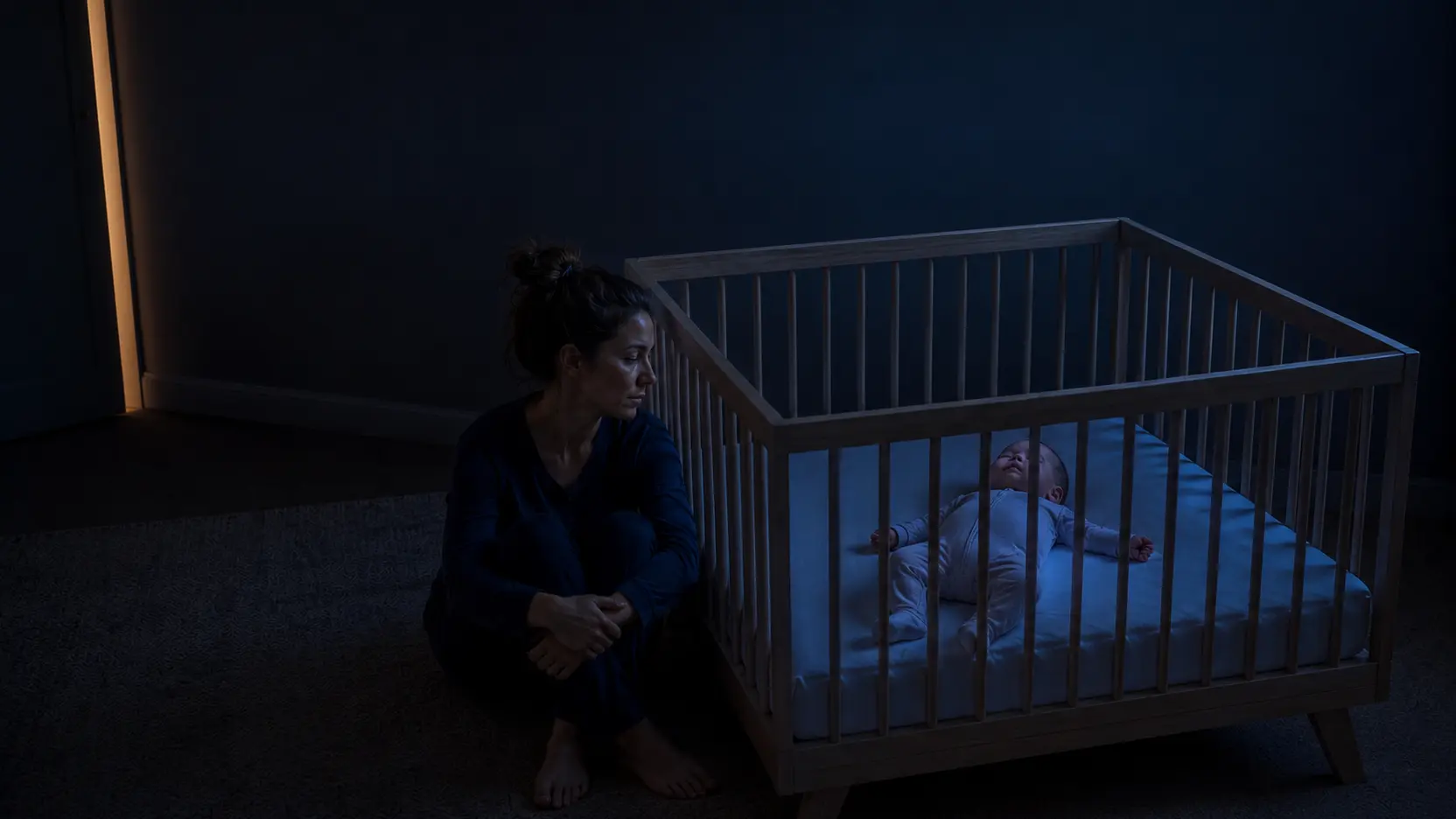
I know the private question hiding beneath “why does my baby wake up to poop?” It is usually not a request for a digestive-system lecture. It is: Do I have to wake this baby all the way up, did I cause this with the schedule, and how will I know if I am dismissing something important?
My answer is to separate the care decision from the detective work. The care decision is immediate: clean the baby, protect the skin, and restore safe sleep. The detective work is slower: look at the stool, the baby, and the pattern over time. You do not have to solve both while holding one clean diaper between your teeth.

A clearly labeled composite Kacey-and-Benjamin scene
The diaper tab is evidence, not a verdict
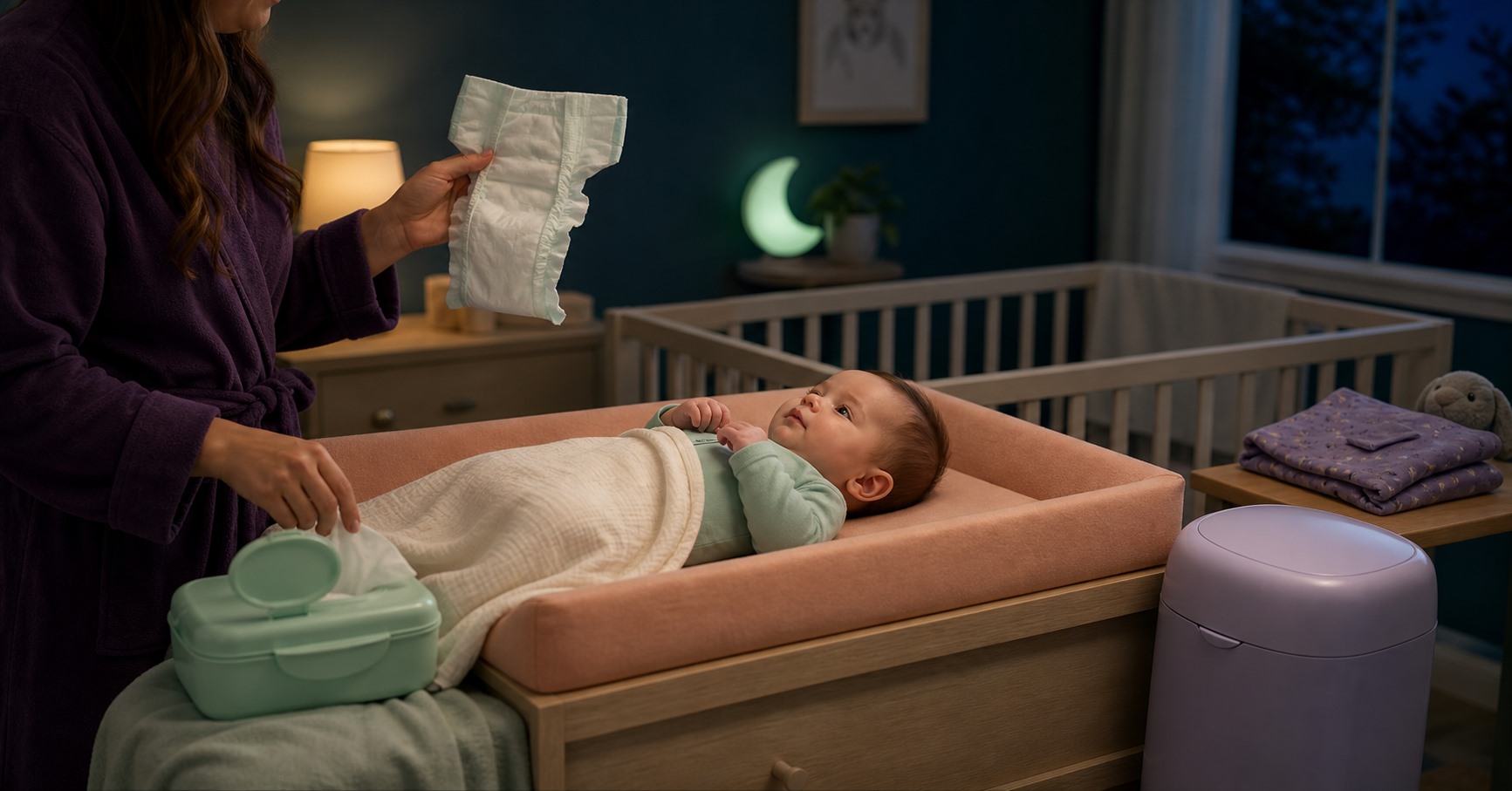
Imagine me as Kacey in a composite nighttime scene, with Benjamin drowsy on a secured changing surface and one stubborn diaper tab stuck to my sleeve. I notice the stool before I notice the clock. Is this familiar in color and consistency? Is Benjamin feeding and responding as usual? Is there wet urine in the larger daily pattern? Or is tonight a clear departure?
This scene is a composite teaching example, not a claim about a real family event and not medical evidence. Its job is to show the distinction I want you to keep: a normal-looking poop that happened at night is a cleanup problem; a sudden stool change alongside concerning symptoms is a health question. Those are not the same problem merely because both arrived in pajamas.
Why would a baby poop during sleep or wake to poop?
Babies do not reserve digestion for convenient office hours. Young babies feed frequently across day and night, and stool frequency varies widely with age and feeding pattern. A breastfed infant may have stools that are loose, seedy, and frequent without having diarrhea. Formula-fed stool may look different. As solids enter the picture, stool often changes again. The useful comparison is usually your baby’s own recent baseline, not a stranger’s diaper count.
Sometimes the bowel movement wakes the baby because pushing, the sensation of stool, a leak, or irritated skin is uncomfortable. Sometimes the baby was already waking to feed or move between sleep cycles and happened to poop during the same interval. Sometimes the caregiver discovers the stool during an unrelated waking. Those possibilities feel different at 2 a.m., but none automatically means the sleep schedule is broken.
I would resist the tempting story that one late nap, one bedtime feed, or one “wrong” food placed the poop on the clock. Timing can be worth observing, especially after a feeding or diet change, but a single night does not establish cause. Changing five parts of the day to chase one bowel movement usually creates five new mysteries.

The night-diaper decoder
Look at the diaper, then the baby, then the pattern
Lane 1: Familiar stool, baby otherwise well
The color and consistency fit your baby’s normal range. Feeding, wet diapers, alertness, temperature, and comfort are not concerning.
Tonight: change, clean, settle, and return to safe sleep. Observe without launching a schedule overhaul.
Lane 2: Suddenly watery or much more frequent
The stool pattern changed clearly, especially with vomiting, fever, poor feeding, reduced urine, low energy, blood, or a baby who seems unwell.
Tonight: move from sleep troubleshooting to pediatric guidance. Young infants and dehydration concerns deserve a lower threshold for calling.
Lane 3: Hard, dry, difficult, or painful
Stool is hard or lumpy, passing it seems painful, or the pattern comes with persistent belly pain, swelling, vomiting, blood, or poor growth.
Tonight: document what you see and ask the clinician about constipation. Do not improvise laxatives or age-inappropriate fluids.
SleepBaby.org original teaching component: this is an observation path, not a diagnostic test.
How do I change a poopy diaper without starting the day?
The goal is not to keep the baby perfectly asleep. A complete stool cleanup may wake them, and safety matters more than preserving a sleep cycle. The goal is to avoid adding stimulation that the job does not require.
- 1. Prepare before lifting. Put the clean diaper, wipes or cleaning supplies, disposal bag, clothing if needed, and a washable barrier within your reach but outside the crib or bassinet. Preparation is what keeps “one diaper” from becoming a brightly lit cabinet expedition.
- 2. Use enough light to be safe. Dim does not mean invisible. You need to see the skin, stool, fasteners, and changing surface. Aim light at the work area rather than the baby’s face when possible.
- 3. Keep one hand on the baby. Use a stable changing surface, never leave the baby unattended, clean carefully, and contain the dirty diaper and used materials. Wash your hands and clean the surface according to the product and public-health guidance.
- 4. Make the social signal boring. A calm voice is fine. Bright overhead lights, play, repeated eye-contact games, and a tour of the house are optional and usually unhelpful.
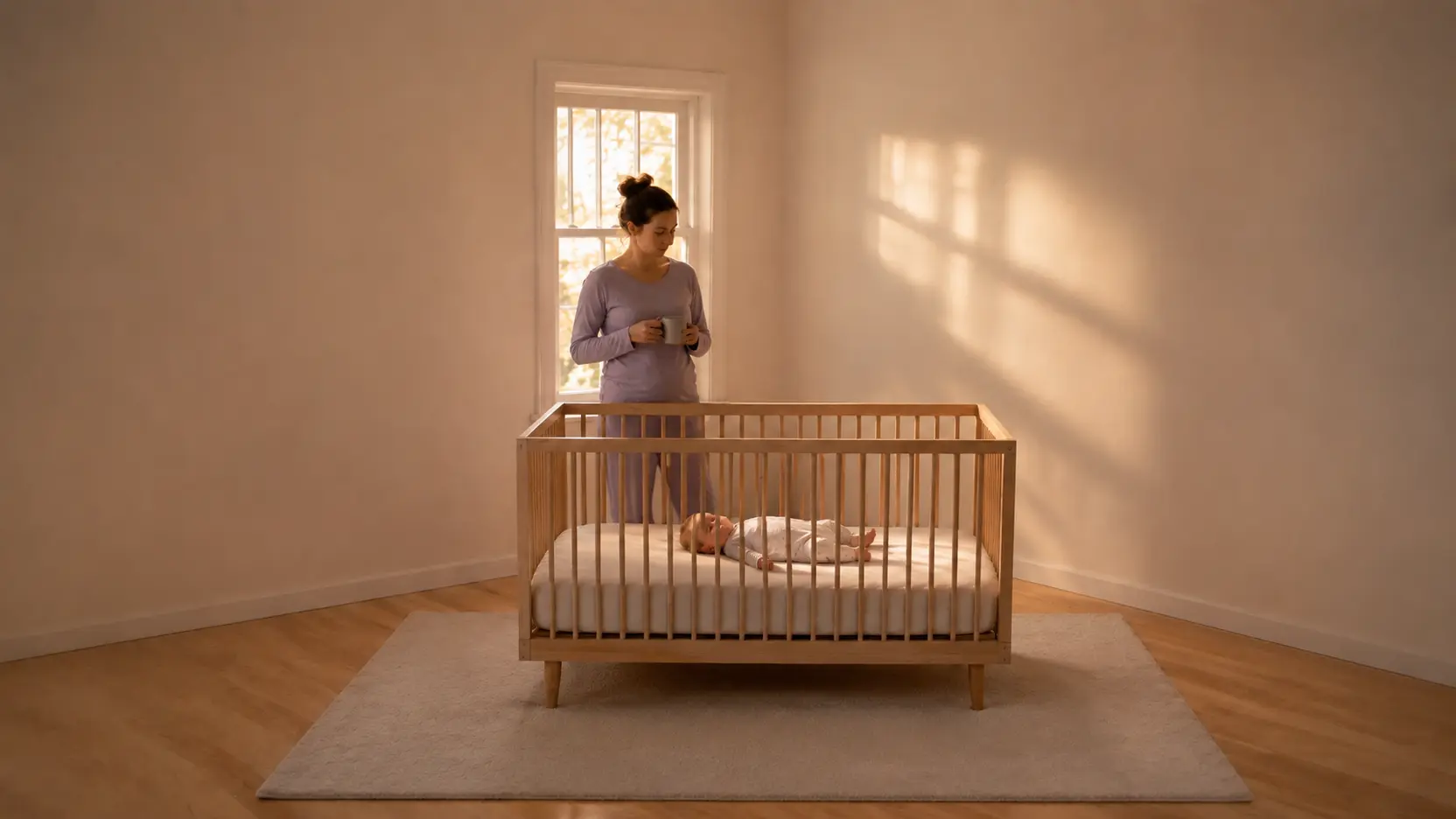
- 5. Reset the sleep space. Put the baby on their back on a firm, flat, empty approved sleep surface. Remove every wipe, diaper, liner, tube, toy, and loose cloth from the crib or bassinet.
If stool has already irritated the skin or repeated changes are becoming painful, the separate guide to diaper rash care and when to call is the more useful next read. That link belongs here, after the cleanup method—not inside the urgent symptom path.


How can I tell normal loose baby poop from diarrhea?
This distinction is difficult because healthy breastfed stools can already be loose. I would not diagnose diarrhea from one photograph or from the fact that stool escaped a diaper. The American Academy of Pediatrics guidance puts more weight on a sudden increase in looseness and frequency compared with the baby’s usual pattern, plus the baby’s age and other symptoms.
Look beyond the bowel movement. Is the baby feeding normally? Are wet diapers continuing? Is the mouth moist? Is the baby alert and responsive during awake periods? Is there fever, repeated vomiting, blood, severe pain, unusual lethargy, or behavior that feels plainly wrong? Diarrhea matters partly because babies can lose fluid quickly, so reduced urine or other dehydration concerns should move the question to the pediatrician rather than a sleep experiment.
Because age changes the meaning of fever and feeding problems, use your clinician’s instructions for your baby. This article cannot examine hydration, growth, or the stool. It can help you notice the right things and describe them clearly.
What if my baby wakes because pooping looks hard or painful?
Grunting and turning red can look dramatic, but appearance alone does not tell you whether stool is constipated. The stool itself matters. NIDDK describes constipation using features such as hard, dry, lumpy, difficult, or painful stools and, in older children, a reduced pattern. For an infant, I would bring the age, feeding pattern, stool appearance, frequency, pain, belly symptoms, and any blood or vomiting to the clinician rather than choosing a treatment from one symptom.
Do not dilute formula, add extra water, start juice, change feeding intervals, or give a laxative merely to move poop away from bedtime. Those choices can be age-sensitive and medically important. NIDDK specifically advises not giving a child laxatives unless a clinician says to do so. If constipation is suspected, the useful question is not “How do I make the baby stop waking?” It is “What is making stool difficult, and what plan is appropriate for this baby’s age and feeding?”
Do not run a 2 a.m. digestive experiment
- Do not keep a hungry baby waiting to feed in hopes of changing stool timing.
- Do not dilute formula or alter its preparation.
- Do not add water, juice, supplements, or laxatives without age-appropriate clinical guidance.
- Do not keep a tired baby awake to manufacture a daytime bowel movement.
- Do not change food, nap timing, bedtime, diaper brand, and settling method all at once.

Age and feeding change the context—not the basic response
A newborn who feeds around the clock has more opportunities to stool around the clock. A baby who has recently changed feeding patterns may also have a different stool pattern. An older baby eating solids can produce stool that looks, smells, and behaves differently again. That is why “How old is your baby, how are they fed, and what changed?” are better opening questions than “What time did it happen?”
Still, I would not build a rigid chart that promises night poop should disappear by a certain month. Development is not a delivery-tracking page. Some babies consolidate bowel movements; some remain variable. A baby who usually stools during the day can have an ordinary night bowel movement. An age trend does not overrule what you see in the diaper or how the baby is acting.
Four context questions that earn their place
Is this stool familiar?
Compare consistency, color, amount, and frequency with your baby’s own recent pattern. Familiar does not mean identical; it means the change is not sudden or striking.
Did feeding change?
Note a new formula, a recent feeding-plan change, new solid foods, illness affecting intake, or substantially different feeding behavior. Record it; do not reverse a needed feeding plan on your own.
Is the baby well between diapers?
Feeding, wet diapers, alertness, consolability, temperature when illness is possible, and the presence or absence of vomiting matter more than the nighttime label.
Is the skin now part of the waking?
Repeated stool exposure, leaking, vigorous wiping, or a developing rash may make the change itself painful and make resettling harder even when digestion is ordinary.
SleepBaby.org original teaching component: context changes the question you ask; it does not provide a home diagnosis.
What about an unusual stool color?
Stool color can vary with feeding and diet, and a single surprising shade is not automatically an emergency. But some color changes should not be filed under “weird diaper, probably fine.” Blood-red stool, black stool that is not the expected early newborn meconium context, or pale white or clay-colored stool deserves prompt clinical guidance. Bring a clear description, and follow the clinician’s instructions about whether a photograph or diaper is useful.
I would keep color interpretation modest because lighting, food, medicines, and diaper materials can alter what a caregiver thinks they see. Do not use an online color chart to overrule a baby who looks ill. Likewise, do not let a cheerful baby erase a clearly concerning stool finding. The clinician gets both pieces: what the diaper looked like and how the baby was doing.
Make the pediatric call easier to answer
When you are tired, “Something is wrong with the poop” can be the only sentence available. A short, factual report helps the clinician triage without requiring you to become a digestive detective. I would have these details ready:
- The baby’s age and relevant medical or feeding context.
- When the stool pattern changed and how many unusual stools you observed.
- Whether stool is watery, hard, painful, bloody, unusually pale, or otherwise different from baseline.
- Feeding compared with normal and whether vomiting is present.
- Wet diapers or urine compared with the baby’s usual pattern.
- Temperature if illness is possible and you have measured it using the method your clinician recommends.
- Alertness, comfort, belly swelling or pain, and whether the baby is consolable.
- Any recent feeding change, new food, illness exposure, medicine, or clinician-directed treatment.
Then ask one direct question: Based on my baby’s age and this pattern, what should I do now, what should I watch next, and what would make this urgent? That question is more useful than asking whether night poop is “normal” in the abstract.
Three common nighttime decisions
Should I wake a sleeping baby after I notice poop? Change a soiled diaper rather than leaving stool against the skin. You do not need to create extra wakefulness, but you do need enough light and alertness to clean the baby and use the changing surface safely.
Should I feed again because the baby pooped? A bowel movement does not automatically require an extra feed, and it does not cancel a feed that is due. Follow feeding cues and the baby’s established feeding plan. If diarrhea, vomiting, poor intake, or dehydration is possible, ask the clinician for age-appropriate instructions instead of improvising fluids.
Should I push bedtime later so the baby poops first? I would not use sleep deprivation as bowel scheduling. A later bedtime may simply create an overtired baby who still poops at night. Observe genuine patterns, protect feeding and safe sleep, and adjust only a nonmedical routine detail that has a clear purpose.
What should I track if this keeps happening?
A short record is useful when it helps you see a pattern or speak precisely with the pediatrician. It becomes unhelpful when it turns every diaper into a performance review. Three to five ordinary days is often enough to organize what you are seeing unless the clinician asks for something different.
| Notice | Write down | Why it helps |
|---|---|---|
| Timing | Feeds, sleep start, waking, bowel movement | Shows sequence without claiming cause |
| Stool | Usual or sudden change; loose, watery, soft, formed, hard; unusual color or blood | Separates timing from consistency and warning signs |
| Baby | Feeding, wet diapers, temperature when illness is possible, comfort, alertness, vomiting | Adds the health context a clock cannot provide |
| Afterward | How long cleanup took; whether skin was sore; whether baby settled | Reveals whether the main problem is digestion, skin, or a stimulating routine |
SleepBaby.org original teaching component: use descriptions, not a home diagnosis. If warning signs are present, call rather than waiting to complete the chart.
If the baby is well, what can I change?
First, make the cleanup easier rather than trying to command the bowel. Put a complete change set where you can reach it safely. Choose one task light. Keep pajamas simple. Make sure the disposal route and handwashing plan do not require carrying the baby through a dark obstacle course. If another adult is available, decide before bed who changes and who resets supplies.
Second, protect the rest of the routine. Feed according to the baby’s established needs and care plan. Do not stretch feeds or push bedtime later to chase a different poop hour. If a newborn’s whole night is fragmented by feeding and short sleep stretches, the broader guide to what to do when a newborn will not sleep at night addresses that larger pattern without pretending the diaper is the only cause.
Third, change one nonmedical variable at a time. Perhaps the changing station can be quieter, the supplies can be closer, or the post-change soothing can be shorter and more familiar. Give the baby a chance to show whether that helped. I care less about producing a perfect night than about avoiding a frantic loop in which every waking creates a brand-new routine.


A practical nighttime-station pick
Munchkin Waterproof Changing Pad Liners, 3 Count
A washable waterproof liner solves the most specific post-answer job here: containing an overnight stool leak so the changing surface can be reset without rebuilding the entire station. I prefer that fit to a diaper pail, which helps after disposal, or another nursery light, which is useful but not poop-specific.
The three-liner set gives you a simple rotation—one in use, one ready, one being washed. That is a concrete reason to consider it if night changes repeatedly soil the changing-pad cover. It does not prevent waking, improve sleep, treat diarrhea or constipation, or replace safe diapering and handwashing. Keep every liner and changing supply outside the crib or bassinet.
See the washable changing-pad liners on Amazon
As an Amazon Associate, SleepBaby may earn from qualifying purchases.
The diaper tab can go back to being a diaper tab
At the beginning of the night, that little tab can feel like evidence that the schedule failed, the feeding went wrong, or the next three hours are already lost. After you sort the problem correctly, it becomes smaller. Familiar stool and a well baby call for a competent cleanup. A sudden watery pattern or an unwell baby calls for medical guidance. Hard, painful stool calls for an age-specific constipation conversation.
What I would carry back into the dark room is not a promise that your baby will stop pooping at night. It is a cleaner decision: care first, observe what matters, and do not make the clock perform a diagnosis it cannot make. Then close the diaper, wash your hands, clear the sleep space, and let nighttime be nighttime again.
The reset after every nighttime change
Return to a clear, firm, flat sleep space
The diapering job and the sleep-safety job meet at one simple handoff: remove every changing supply, liner, wipe, and loose object before your baby goes back into the crib or bassinet.
Takeaway: after the cleanup, the safe destination is unchanged—baby on their back, on a firm flat surface, with the sleep space empty.
Watch the CDC safe-sleep video on YouTube if the embedded player is unavailable.
Sources
- American Academy of Pediatrics: Diarrhea in Babies
- American Academy of Pediatrics: Diarrhea symptom guidance
- NIDDK: Symptoms and Causes of Constipation in Children
- NIDDK: Diagnosis of Constipation in Children
- NIDDK: Treatment for Constipation in Children
- CDC: Helping Babies Sleep Safely
- CDC: Steps for Safe and Healthy Diapering in the Home
When the diaper is handled but sleep still feels scrambled
Build the next calm step for the rest of the night
SleepBaby can help you separate the care your baby needs from the extra stimulation nobody needs at 2 a.m.—without promising that a schedule can override feeding, illness, or digestion.