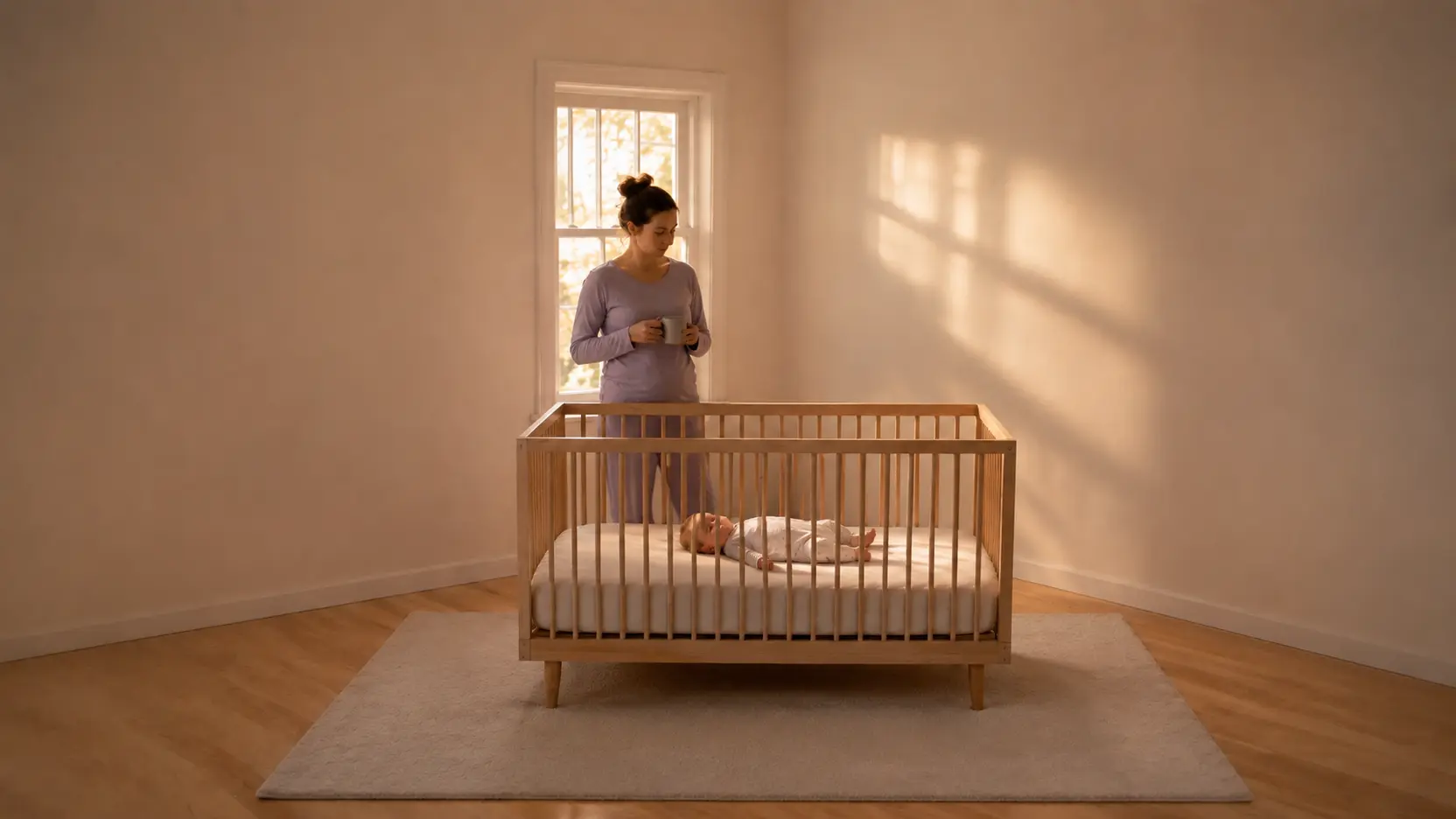
When the monitor brightens and the grin arrives first
A waking smile is lovely. It is also only one frame.
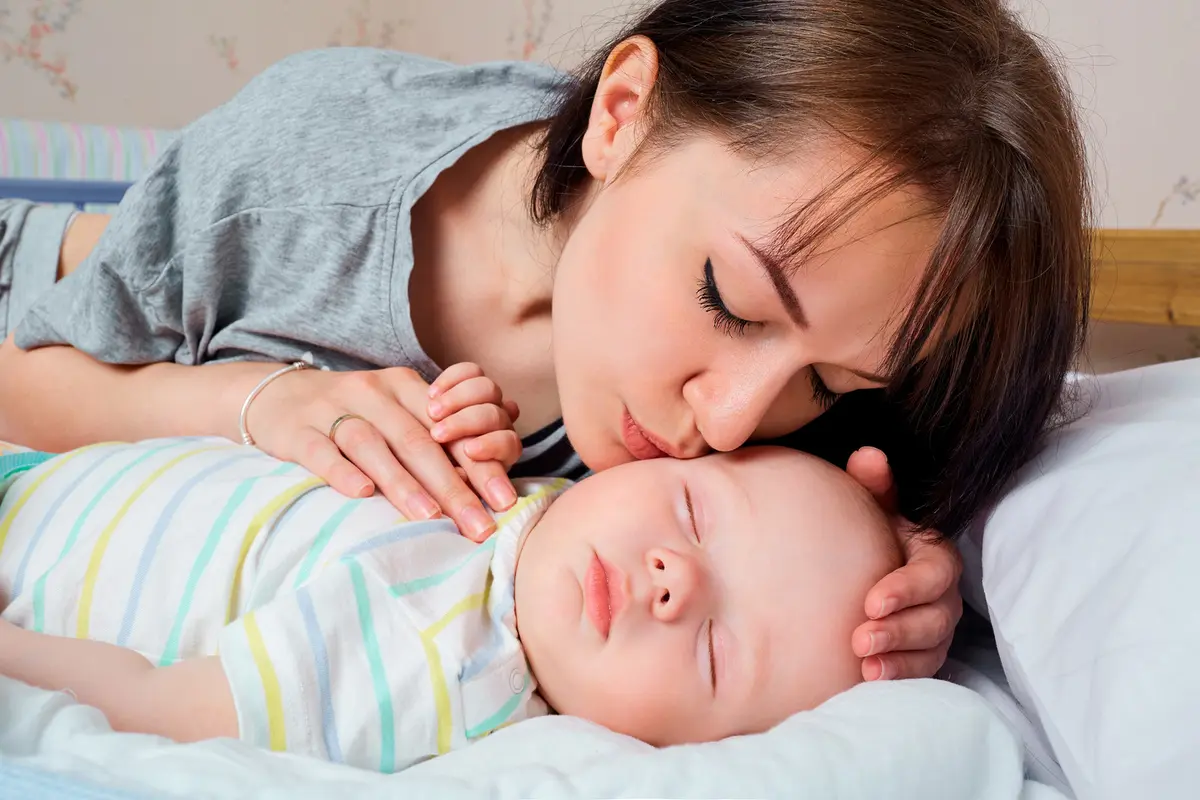
A baby who wakes up smiling is usually making an ordinary expression during the shift from sleep to alertness. A newborn may smile spontaneously during active sleep; around the end of the second month, many babies also begin smiling back when a familiar person talks or smiles. The grin does not, by itself, prove a good dream, a restorative nap, secure attachment, perfect health, or a passed milestone. I would enjoy it without asking it to certify the whole night. Notice what happened before the eyes fully opened, what happens when your face and voice arrive, and how breathing, color, movement, feeding, and alertness look over the next few minutes.
The private question is often bigger than “Why is she smiling?” It is: Can I trust this sweet face to tell me that everything is okay? You can trust the moment to be sweet. For decisions, read the whole waking baby.

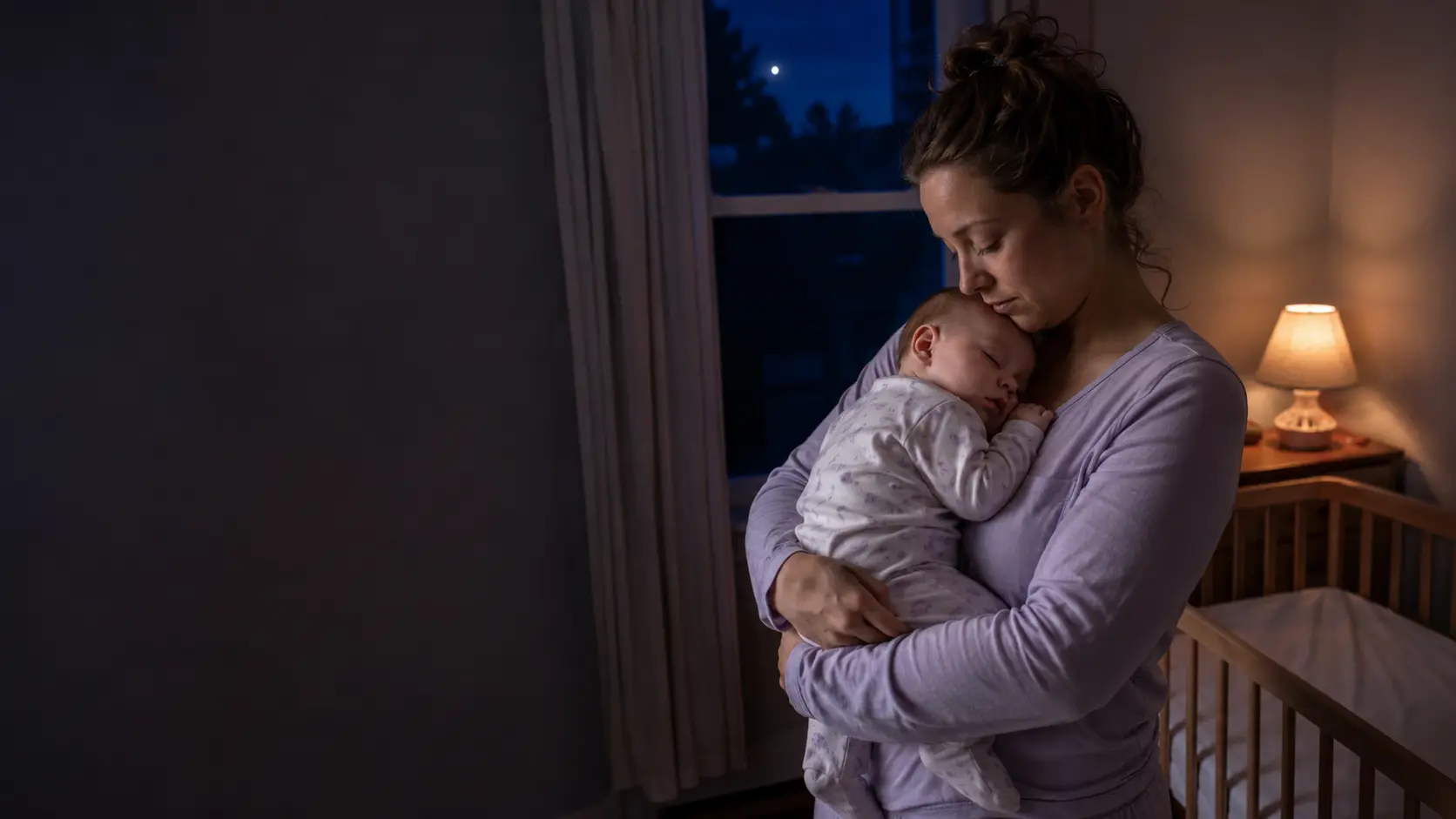
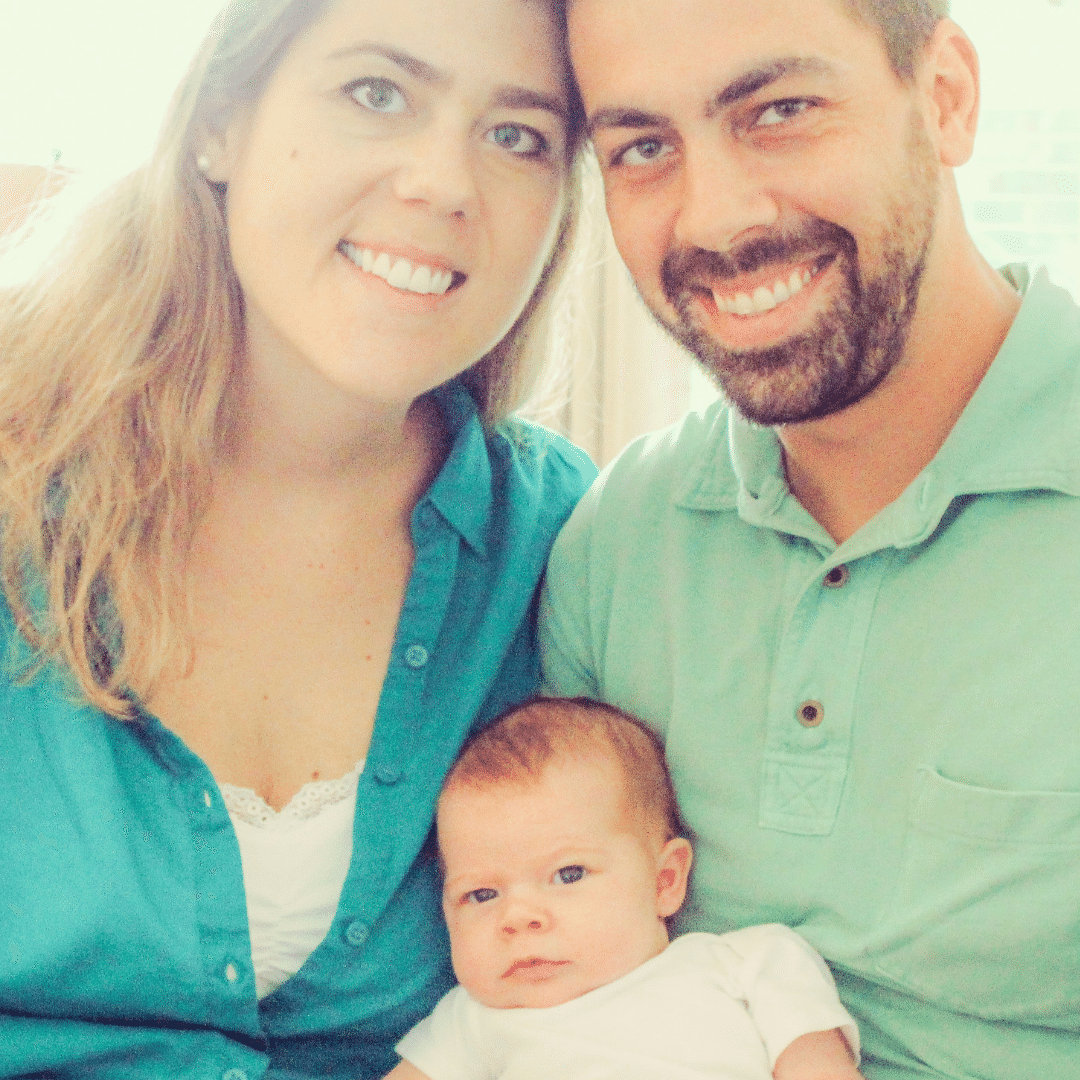
A clearly labeled composite Kacey-and-Benjamin scene — this imagined scene represents a familiar parent moment. It is not a record of a real family event and is not medical or developmental evidence.
The verdict I almost asked one smile to deliver
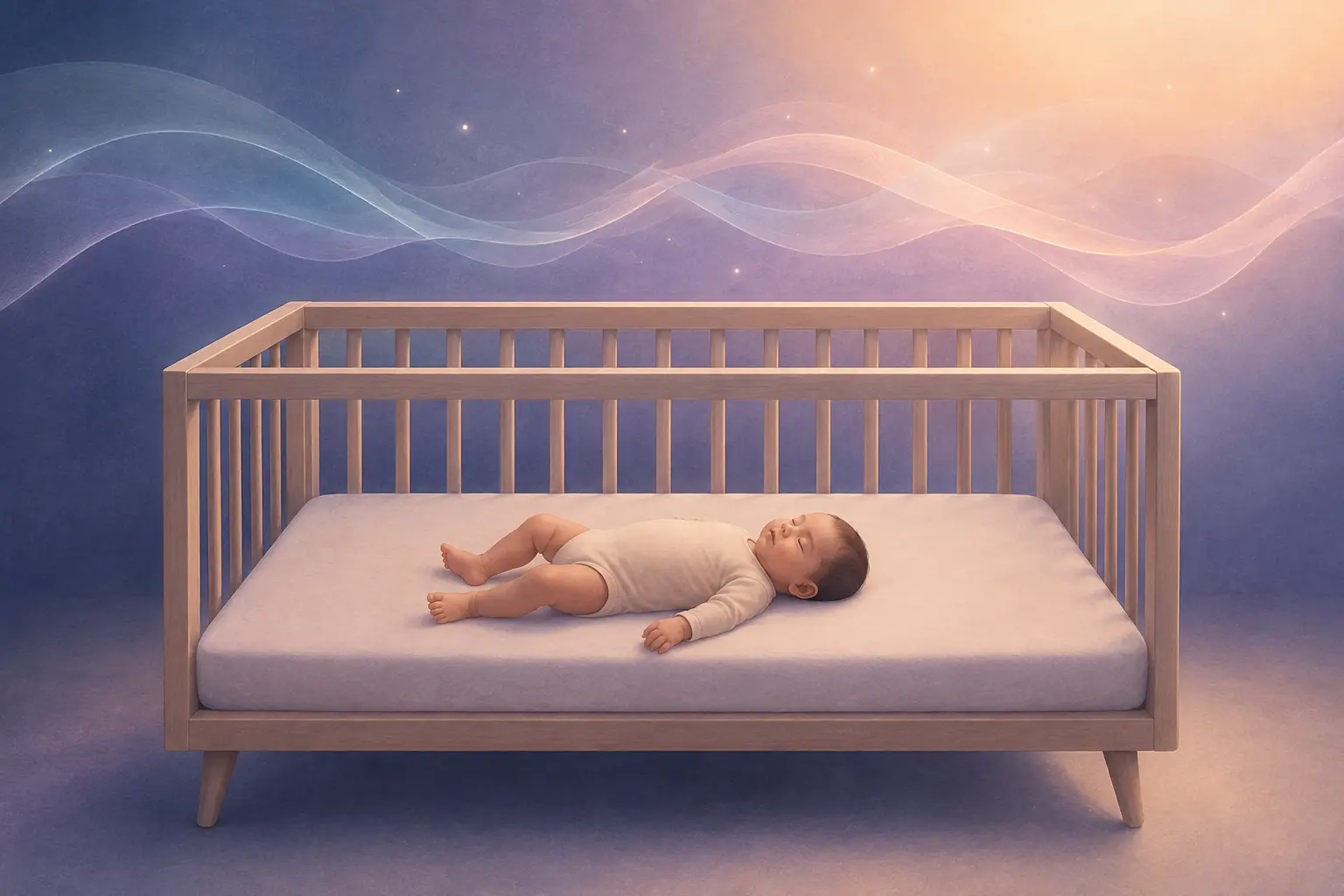
In this composite scene, the first line of daylight has reached the curtain when I step toward Benjamin’s sleep space. His mouth curls into a grin before his eyes have fully settled on me. For one soft second, I want the smile to answer everything at once: Did you sleep well? Are you happy? Do you know me? Are we doing okay?
Then I wait. His shoulders loosen. His color looks usual. His breathing is easy. When I say his name, his eyes find my face and the smile returns with more intention. A few minutes later he is stretching, rooting, and making it quite clear that breakfast has become the more important agenda item.
That pause is the heart of this article. I did not flatten the joy. I simply stopped asking one expression to write a report about the whole child. I watched three beats instead: before waking, with me, and the next five minutes.

The smile may belong to sleep, waking, or the conversation between you
A smile can look identical in a photograph while doing different work in real time. That is why the surrounding state matters more than the curve of the mouth.
A spontaneous sleep smile
Often appears while a newborn is still asleep or drowsy. You may also see small movements, grimaces, rapid eye movements beneath closed lids, stretching, or brief startles. A video-polysomnography study found nearly all observed newborn smiles in its small sample occurred during active sleep.4
What it does not reveal: dream content, happiness, gas, attachment, health, or whether the sleep was “good.” The evidence supports a relationship with sleep state, not a window into a baby’s private experience.
A responsive social smile
Appears as part of a back-and-forth exchange: the awake baby looks toward a face or voice and smiles in response. CDC lists smiling when you talk or smile among milestones most babies can do by 2 months, and AAP guidance places the first social smile around the end of the second month.12
What matters: the developing pattern across time—looking at faces, responding to familiar people, and participating in small exchanges—not one perfectly timed grin.
Newborns move through deep sleep, active sleep, drowsiness, quiet alertness, active alertness, and crying. The borders are not tidy. A smile may begin during active sleep and still be present as the eyes open. If you want the wider map, this guide to how active sleep and baby sleep cycles change by age explains why transitions can look so busy.

Read the wake-up in three beats
I like this sequence because it lets a parent keep the tenderness and still make a sensible decision. It does not require a developmental quiz, a sleep score, or a phone held six inches from a baby’s face. It asks you to notice what is already happening.
Before the eyes fully open
Was the baby still asleep, drowsy, stretching, grimacing, or moving through a noisy transition? If yes, the smile may be a spontaneous sleep expression. Let it be an observation rather than a story about dreams or rest.
With your face and voice
Once the baby is awake, offer the familiar face and voice she knows. Does she look toward you, brighten, quiet, smile again, or make a small sound? Those back-and-forth moments are more informative than a grin captured before she was fully alert.
Over the next five minutes
How do breathing, color, movement, responsiveness, feeding cues, and overall behavior look? The answer to “What should I do next?” lives here. The smile is one frame; the whole wake-up is the scene.

What I would do when the smile arrives
- Pause long enough to see the state. A baby who is still drowsy may drift again. A baby who is quietly alert may be ready for connection. A baby whose rooting, fussing, or body tension is building may be telling you that the next job is feeding, comfort, or a diaper—not smile analysis.
- Arrive softly. Smile back, say a few words, or imitate a small sound. I would not turn the crib-side moment into repeated “Can you smile for me?” auditions. Babies are allowed to look away, warm up slowly, or change their minds.
- Follow the response. If the baby stays engaged, enjoy a short exchange. If she yawns, averts her gaze, arches, stiffens, splays her fingers, fusses, or seems overwhelmed, reduce the stimulation and move to the next care need.
- Move awake play out of the sleep space. Lift the baby to the usual supervised play area before adding a mirror, card, or toy. Keep the crib or bassinet firm, flat, and bare for the next sleep.
- Notice patterns without grading them. One wake-up may be bright and social; the next may be hungry and unimpressed by your entire personality. Look across days, not for a perfect performance at a particular minute.
An older baby who wakes cheerful may stay happily awake for a while. You do not need to end a comfortable interaction only because an app’s timer has reached zero. If the clock is starting to boss the room around, this guide to why a smiling baby is not a wake-window stopwatch may help you use timing as context instead of a verdict.


For the awake smile-back moment
Baby Einstein Flip For Art High Contrast Floor Mirror with Activity Cards
A floor mirror can give you and an alert baby one shared thing to look at after that waking smile. If the baby wants to look rather than smile back, the removable high-contrast cards offer another quiet focus. It fits this exact interaction better than a monitor, sleep tracker, crib toy, or routine product because it brings you into the exchange instead of measuring the baby from a distance or placing anything in the sleep space.
Why this one earns the spot: the Flip For Art set combines a prop-up baby-safe mirror and high-contrast activity cards in one battery-free floor activity. You can make faces, switch to a simple card, and fold the set away when the baby’s cues say the moment is over. That is a useful, specific job—not a claim that a product can cause smiling, speed development, improve sleep, or rule out a concern.
Use boundary: supervised awake floor play only. Never place the mirror, cards, fabric, link, or any toy in a crib or bassinet; remove it before sleep and follow the manufacturer’s instructions.
See the Flip For Art floor mirror on Amazon
As an Amazon Associate, SleepBaby may earn from qualifying purchases.
Age changes what the smile can reasonably tell you
A newborn smiling during sleep
Call it a spontaneous sleep smile or an active-sleep smile. Newborn active sleep can include rapid eye movements, facial movement, starts, and small body motions. A small study found a strong association between newborn smiles and active sleep, but it did not decode dreams or emotional meaning.34
Around the end of the second month
The more useful shift is the developing pattern of social exchange: looking toward faces, seeming pleased when a familiar caregiver approaches, and smiling back during interaction. A milestone checklist helps start a conversation; it is not a home diagnosis, a deadline for one exact day, or a demand that a tired baby perform on cue.
An older baby waking cheerfully
The smile may be a genuine invitation: pick me up, talk to me, feed me, let me look around. It still cannot certify enough sleep or erase discomfort or illness. Let the next cues decide whether the morning begins with food, cuddling, quiet play, or a slower transition.
Babies born early may be discussed using adjusted-age context, and development varies. If you are concerned about a pattern—or about a skill that appeared and then disappeared—bring the observation to your child’s clinician. Do not turn the bedroom into a nightly milestone exam.
What if my baby does not smile when waking?
The reverse question deserves the same restraint. A baby who wakes quietly, fusses, cries, stares past you, roots immediately, or needs several minutes to organize is not giving you a failing grade. Waking is a transition, and babies do not owe us the same entrance every time. Hunger, a wet diaper, a startle, the light in the room, a short nap, a long nap, illness, temperament, and plain moment-to-moment variation can all shape what arrives first.
I would not compare Tuesday morning with a polished milestone clip, another parent’s monitor screenshot, or even Monday morning in the same crib. I would ask a narrower question: Across ordinary awake moments, does my baby sometimes settle enough to notice a familiar face or voice and join an exchange in an age-appropriate way? That exchange may begin with stillness, widening eyes, a softened forehead, a small sound, a turn toward you, or a pause in movement before it becomes a smile.
A missed smile is not a missed milestone
- One wake-up is too small a sample. The baby may still be drowsy, hungry, overstimulated, or simply looking elsewhere.
- One person is not the only audience. Notice responses with other familiar caregivers during calm awake time.
- One day is not the whole pattern. Developmental questions belong across time and context, not inside a single performance.
- A checklist is not a verdict. If a pattern concerns you, use the CDC milestone material to organize a clinician conversation rather than to diagnose at home.
For a baby born early, ask the clinician how adjusted age should shape the conversation. For any baby, a skill that appeared and was then lost deserves attention. Those are pattern questions. They are different from a sleepy baby declining to grin at 6:12 on one particular morning.
Invite a smile without turning the crib into a stage
When parents worry about a milestone, our instinct can become louder and faster: repeat the name, lean closer, widen the smile, add a toy, make another sound, try again. I understand the impulse. I also think the clearest interaction often begins with less. A waking baby may need a few seconds to finish crossing from sleep into alertness before another face, voice, and object make sense.
1. Arrive softly
Let your face enter the baby’s comfortable view. Use one familiar phrase or the baby’s name in your ordinary voice. Then pause long enough to see a response instead of stacking prompts.
2. Follow the answer
A smile may invite another smile. A turn away, yawn, tense body, frown, hiccup, or escalating fuss may ask for less input, a feed, a cuddle, or more time. Responsiveness includes stopping.
3. Leave room for variation
Some exchanges are bright and obvious. Others are tiny. The goal is not to collect a grin; it is to notice and answer the baby who is actually in front of you.
This is where I separate connection from evaluation. Connection says, “I am here, and I am listening.” Evaluation says, “Show me the sign I need so I can stop worrying.” The first stance gives the baby room to participate or take a break. The second can make every ordinary variation feel like evidence. If concern remains after the moment passes, write it down and bring the pattern to a clinician; do not keep asking the baby to resolve it in real time.
After the wake-up is complete, ordinary supervised floor time can give you another calm place to interact. Keep sleep spaces bare and use toys only while the baby is awake and directly supervised. The point is not to manufacture a milestone. It is to offer a safe setting where faces, voices, movement, and pauses can become a back-and-forth conversation.
Build a pattern, not a highlight reel
If I were trying to understand repeated smiling wake-ups—or worried that responsive smiles were not appearing—I would not save only the cutest screenshots. I would use a tiny observation note for a few ordinary moments and then stop. The purpose is to preserve context for my own thinking or a clinician conversation, not to monitor the baby all day.
Four lines are enough
- State: asleep, drowsy, quietly alert, active and alert, fussing, or crying.
- Trigger: the expression began on its own, with a familiar voice or face, during feeding, or after another change.
- Whole-baby response: eye contact or gaze direction, sounds, movement, breathing, color, feeding, and ability to settle.
- Pattern: familiar for this baby, new but brief, persistent, increasing, disappearing, or paired with another concern.
A short video can sometimes help a clinician understand a movement or expression that is difficult to describe, but filming should never delay urgent care. It also should not become a requirement for enjoying the baby. Most smiling wake-ups need no record at all. The note is useful only when a real question keeps returning.
The pattern protects against two opposite errors. First, it prevents a lovely smile from erasing poor feeding, unusual weakness, breathing difficulty, fever, or a sudden change in responsiveness. Second, it prevents one flat or fussy wake-up from becoming proof that development, attachment, or sleep is going wrong. A broader sample lets ordinary variability remain ordinary while making a meaningful change easier to describe.
If the question is primarily about whether the baby is getting enough sleep, use sleep information rather than facial expression: age context, total sleep across the day, the baby’s usual cues, and what happens over repeated sleep periods. The broader sleep-cycle context can help explain why a baby may surface differently at different points in a sleep period. It still cannot turn a smile into a sleep score.
How to turn worry into a useful clinician conversation
“She does not smile enough” is a real concern, but it is hard for anyone to interpret without context. A more useful description includes age, whether the baby was born early, what you see during calm awake periods, who or what tends to bring a response, what other communication you notice, and whether anything has changed or been lost.
A clear way to ask
A useful first sentence gives your baby’s age and birth timing, what you see during calm awake time, what happens when a familiar person talks or smiles, how long the pattern has lasted, the exact change that concerns you, and whether feeding, movement, breathing, color, or alertness also look different.
You do not need to fill every blank perfectly. The structure simply moves the conversation from a single expression toward the whole child.
Bring questions sooner when your intuition says the baby is not acting like themselves, especially with poor feeding, unusual sleepiness, weak movement, an unfamiliar cry, fever in a young infant, or a lost skill. Seek urgent help for a baby who cannot be awakened, is markedly weak, has severe breathing effort or grunting with each breath, looks blue or gray around the lips, tongue, or face, or may be having a seizure. In those moments, the smile—present or absent—is not the deciding signal.
I want parents to leave this distinction with both tenderness and traction: you are allowed to love the expression, and you are allowed to look beyond it. Joy and careful observation do not compete. One keeps the moment human; the other keeps the decision grounded.
A responsive smile in context
What the CDC example shows—and what it cannot prove
This CDC clip shows a baby smiling as a caregiver talks and smiles. It is useful because the expression appears inside a social exchange, not as a frozen face. It is still one example, not a screening test, diagnosis, sleep-quality measure, or standard your baby must copy on camera.
If the player does not load, watch the CDC milestone example on YouTube.
Takeaway: offer your face and voice, enjoy the response, and allow the baby to look away or take a break. The interaction is a conversation, not a test.

When the rest of the wake-up matters more than the grin
A smile should never overrule something your eyes, ears, or hands are telling you about the whole baby. I would separate the next decision into calm observation, a prompt clinician call, and urgent help.
Calm observation
- Usual color
- Comfortable breathing
- Ordinary movement and tone
- Responds in a familiar way
- Feeds and behaves near the usual pattern
Enjoy the smile and follow the baby’s next cue.
Prompt medical guidance
- Unusual sleepiness or a sudden “not my baby” change
- Poor feeding, weak suck, less movement, or a weak/strange cry
- Fever in a baby younger than 12 weeks
- A lost skill, repeated developmental concern, or persistent change from baseline
Contact the child’s clinician or the appropriate medical service for guidance. A smile does not cancel these signs.
Urgent help now
- Cannot wake or is markedly weak
- Severe breathing effort or grunting with each breath
- Blue or gray lips, tongue, or face
- A suspected seizure or another immediate emergency
Seek emergency help now. Do not wait for another smile or use an article, app, monitor, or milestone video as reassurance.
These boundaries come from the whole child, not from a theory about facial expression. That distinction is protective: it keeps ordinary smiles ordinary and concerning body signs visible.
Five stories a smile cannot tell
“She had a good dream.”
We cannot read dream content from a newborn smile. The evidence here describes behavioral state, not the story inside a sleeping brain.
“That nap was restorative.”
A cheerful wake-up does not measure sleep duration, continuity, or whether the baby has met a sleep need. Look at the broader day and the baby’s cues.
“She feels completely safe and secure.”
Warm, responsive caregiving matters, but one expression is not an attachment score. Relationship develops through thousands of ordinary exchanges, including the grumpy ones.
“He must be healthy.”
A sick or uncomfortable baby can still smile. Breathing, color, feeding, responsiveness, movement, fever, and baseline behavior carry the medical decision.
“The milestone is passed.”
A social smile is part of a developing pattern, not a one-time checkbox. Checklists guide observation and clinician conversation; they do not diagnose a child at home.
I do not think any of those corrections make the moment less meaningful. They make it honest. The smile can be a doorway into connection without being forced to carry a backpack full of conclusions.

What to remember at the next smiling wake-up
Keep the smile. Widen the frame.
- Before: asleep, drowsy, or fully alert?
- With you: does the awake baby respond to a familiar face and voice?
- Next five minutes: what do breathing, color, movement, responsiveness, feeding, and the baby’s usual pattern say?
If everything else looks ordinary, you do not need to solve the grin. Smile back. Feed, cuddle, or move to supervised awake play as the baby asks. If the whole child looks different, let that—rather than the expression—guide the call.
I return to that composite dawn scene and see it differently now. Benjamin’s smile is no longer a verdict I need to interrogate. It is the first bright frame of a wake-up I know how to read. The curtain is still turning blue. The day is still beginning. I can enjoy the grin and wait for the rest of him to arrive.
Sources
- Centers for Disease Control and Prevention. Milestones by 2 Months.
- American Academy of Pediatrics, HealthyChildren.org. When do babies first smile?
- American Academy of Pediatrics, HealthyChildren.org. States of Consciousness in Newborns.
- Mota-Rolim et al. A video polysomnographic study of spontaneous smiling during sleep in newborns. Journal of Sleep Research, 2020.
- Kawakami et al. Smiling in newborns during communicative wake and active sleep. Infant Behavior and Development, 2011.
- American Academy of Pediatrics, HealthyChildren.org. Newborn Illness—How to Recognize.
- American Academy of Pediatrics, HealthyChildren.org. Back to Sleep, Tummy to Play.
- Centers for Disease Control and Prevention. 2-Months Smiles when you talk to or smile at him.
When a beautiful wake-up still leaves you with a nighttime question
Keep the grin. Make the next sleep decision from the whole picture.
The hardest part of baby sleep is rarely one expression or one clock time. It is knowing which detail matters, which one can wait, and what to do when the next night looks different. SleepBaby turns those small, real moments into calmer decisions you can actually use.