When two tiny knees point sideways on the monitor
Baby sleeps like a frog: is that position normal?
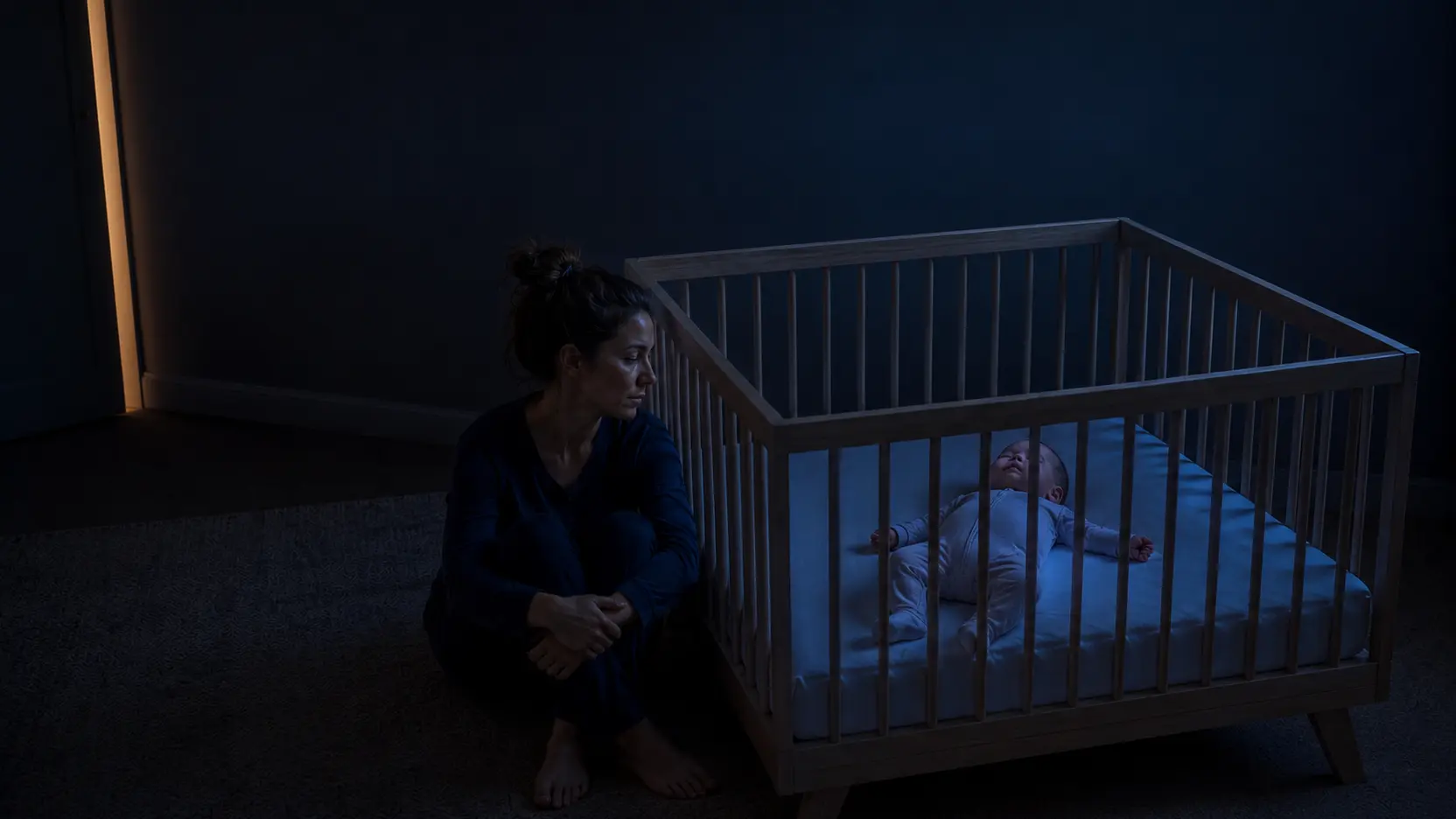
You set your baby down on their back. Ten minutes later, their knees are bent, their hips are open, and their feet have drifted toward each other. The silhouette looks so deliberate that it can feel like a clue you are supposed to interpret.
A young baby sleeping on their back with both legs bent and relaxed outward in a symmetrical “frog” or “M” shape is usually showing a normal flexed infant posture—not a position you need to straighten. Keep placing your baby on their back for every sleep on a firm, flat, safety-approved surface with only a fitted sheet. Do not wedge, strap, stretch, or reposition the legs to make them look more adult.
The useful question is not whether the knees look froggy. It is whether both legs move comfortably and similarly when your baby is awake, and whether the sleep environment itself follows safe-sleep guidance. One leg that moves differently, unequal leg length, restricted outward movement, pain, unusual floppiness, or breathing trouble deserves medical attention.

Leg shape and sleep direction are two different decisions
This distinction clears up most of the confusion. “Frog position” describes what the hips and knees are doing. “Back sleeping” describes which surface of the body is against the mattress. A baby can be safely placed on their back and still let both knees fall outward. Those facts do not compete.
Newborns arrive with flexed limbs after months in a compact uterine position. Their posture gradually changes as their nervous system, muscles, joints, and movement repertoire develop. When a relaxed baby lies supine, the hips may flex and rotate outward while the knees bend. The result can look like a tiny person preparing for a squat they have no intention of finishing.
I would not press the knees down, pull the legs straight, or keep tucking them together. Normal movement needs room. The American Academy of Pediatrics’ parent guidance on hip-healthy swaddling specifically recommends leaving enough space for a baby’s legs to bend up and out. That is very different from claiming the frog pose strengthens legs, guarantees healthy hips, or predicts early walking. Those claims go beyond the evidence.
Read the whole posture, not one cute outline
- Usually reassuring
- Both hips and knees rest in a similar shape; both legs kick and open during awake time; diaper changes are comfortable; feeding, alertness, breathing, and development otherwise look usual.
- Worth a routine clinician question
- One leg repeatedly rests or moves differently, one hip seems harder to open during ordinary care, the legs appear different lengths, or your baby has breech or family-history risk for developmental dysplasia of the hip.
- Needs prompt assessment
- A new loss of movement, swelling, significant pain with ordinary handling, fever with an unwell baby, or a leg that suddenly looks injured.
- Emergency
- Breathing difficulty, abnormal color, limpness, choking, or unusual difficulty waking—regardless of how the legs are positioned.
SleepBaby.org posture decoder: observe symmetry, movement, comfort, and the sleep environment together.

Why babies fold into that familiar M shape
A baby’s resting posture reflects age, muscle tone, joint position, gravity, and what they were doing just before sleep. Younger babies often hold more flexion. Some unfold slowly after being carried or fed. Others kick vigorously and then settle with their hips open. The shape may become less obvious as the baby grows, spends more supervised awake time moving freely, and develops stronger voluntary control.
That does not mean every baby follows one timeline. Nor does it mean you should use the posture as a home hip test. Developmental dysplasia of the hip (DDH) can be painless and may not be obvious to a parent. Clinicians assess risk factors and examine hip stability and motion; ultrasound or X-ray may be used when indicated. A sleeping silhouette cannot confirm or exclude it.
The current version of this article used to say DDH was not genetic. That is inaccurate. Family history is a recognized risk factor, as is breech presentation. If your baby was breech late in pregnancy, has a close family history of infant hip treatment, or your clinician arranged hip imaging, keep those appointments even when the frog shape looks perfectly symmetrical.
Three contexts that can make the same leg shape mean different things
The monitor gives you a silhouette, not a medical history. I find it more useful to sort that silhouette into three contexts than to stare harder at the knees: a relaxed sleeping posture, a movement pattern you can notice while your baby is awake, or a position created by treatment equipment. They may look similar for one frozen second, but they ask very different things of you.
1. A relaxed, symmetrical sleep posture
This is the ordinary version: your baby was placed on their back, the crib is clear, the face is unobstructed, and both legs have settled into roughly the same bent shape. The legs may shift during active sleep, stretch after a startle, or end up less perfectly matched by morning. Babies are not flat-lay photographs. What reassures me is the pattern over time—easy breathing, comfortable sleep, ordinary feeding and alertness, and two legs that move freely when the baby wakes.
You do not need to keep checking whether the knees form a mathematically correct letter M. If you have zoomed the monitor far enough to count pajama fibers, you have already collected all the useful information that camera is likely to provide. Return to the basics you can control: back placement, firm flat surface, bare sleep space, correctly fitted clothing, and a comfortable room temperature.
2. A repeated awake movement difference
A consistent one-sided difference deserves more attention than a single sleeping pose. During a normal diaper change, you may notice that one thigh does not open as far, one leg kicks less, or routine movement repeatedly causes distress. That is not an invitation to push farther. It is a reason to stop, remember what you saw, and contact the clinician who can examine the baby properly.
I would describe the observation in plain language: “Her right leg usually stays straighter during diaper changes,” or “He cries when the left thigh moves outward during ordinary cleaning.” Add when it began, whether it happens every time, and any known breech or family-history risk. That is more useful than announcing that the baby “sleeps like a frog,” because it tells the clinician which function changed and in what setting.
3. A prescribed treatment position
A baby being treated for developmental dysplasia of the hip may wear a Pavlik harness or another device chosen and fitted by a specialist. The equipment can hold the hips flexed and outward, but that does not turn a similar-looking natural pose into treatment. Nor should a parent copy the position with blankets, straps, tight swaddling, or a product marketed as “supportive.”
If your baby wears a harness, use the sleep, clothing, skin-care, diapering, and strap instructions from the orthopaedic team. Ask whom to call if a strap shifts, the skin becomes irritated, or the baby stops moving a leg as expected. I would not use a general article—or a late-night product photo—as permission to adjust a prescribed device. Treatment works as a clinical plan, not as a shape.
Same outline, different next step
- Symmetrical during safe back sleep: leave the legs alone and keep the crib bare.
- Repeatedly different while awake: note the side, movement and timing; call the clinician.
- Created by prescribed equipment: follow the treating team’s instructions exactly.
What a useful observation sounds like
Parents are often told to “watch it,” which is frustratingly vague when you are already watching a baby monitor as if it has become the household’s most serious television channel. I would narrow the assignment. You are not screening for a diagnosis. You are gathering a few ordinary details that help a clinician decide whether an exam is needed.
Notice the pattern across one or two routine awake periods: whether both legs kick; whether both knees bend; whether the difference is always on the same side; whether ordinary dressing or cleaning causes pain; and whether the change is new. Also notice the rest of the baby. Fever, swelling, unusual sleepiness, poor feeding, breathing difficulty, or a sudden loss of movement changes the urgency. A peaceful symmetrical sleeper with normal awake movement is a very different situation from an unwell baby who has stopped moving one leg.
A short video of spontaneous awake movement can be useful if it is easy to take, but care comes first. Do not provoke the movement, repeat something painful, or delay urgent assessment for better footage. I would rather bring a slightly blurry ten-second clip and a clear sentence than turn the changing table into a home examination room.
Do not “fix” a normal-looking posture with sleep equipment
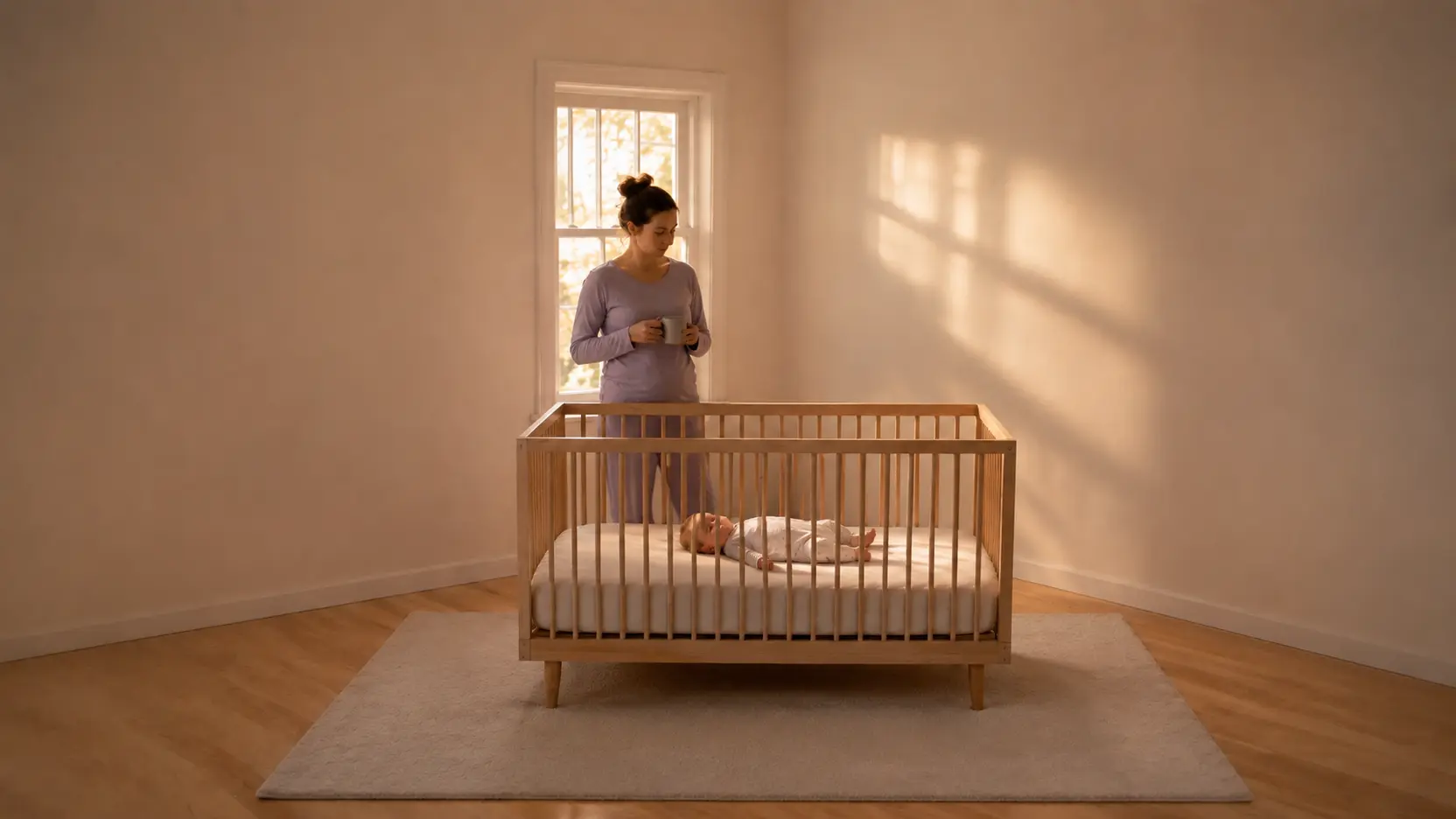
No wedge, bolster, rolled towel, nest, pillow, or positioner belongs in an infant sleep space to hold the hips or legs in a chosen arrangement. Positioners can create suffocation and entrapment hazards. A safe sleep surface works because it is firm, flat, level, and clear—not because it keeps a baby photographically centered.
Do not add a blanket over the legs to keep them together. Do not tie the ankles, tuck fabric tightly around the lower body, or use a weighted sleep sack. If your baby has diagnosed DDH and wears a Pavlik harness, follow the orthopaedic team’s exact instructions. Do not adjust straps or improvise positioning from an article, video, or product listing.
If your baby rolls independently, continue placing them down on their back. Once a baby can roll from back to stomach and stomach to back, safe-sleep guidance generally allows them to remain in the position they reach on their own, while the sleep space stays bare. Do not turn a rolling baby back all night or install equipment to prevent rolling. If they are still swaddled when rolling attempts begin, stop swaddling.
Before you move the legs, ask what problem you are solving
- Baby is on their back, comfortable, and symmetrical: solve nothing. Let the legs rest.
- Clothing pulls the knees together: change the fit, not the baby’s joints.
- A swaddle pins the legs straight: loosen the hip area or choose a correctly sized hip-roomy option; stop swaddling at rolling signs.
- One leg moves differently: record what you notice during ordinary care and ask the clinician. Do not repeatedly manipulate the hip.
- The sleep surface needs props to hold a position: remove the props and return to a bare, approved sleep surface.

Check what the swaddle or sleepwear lets the hips do
A swaddle may feel snug around the upper body while still leaving the hips and knees room to flex. The lower portion should not force the legs straight and pressed together. During awake care, your baby should be able to bend the knees and move the hips naturally. If the garment is too small, rides up, compresses the chest, or restricts leg motion, it is not the right fit.
Swaddling is a soothing technique, not a safe-sleep requirement and not a treatment for hip development. Place a swaddled baby only on their back, monitor for overheating, and stop at the first signs of trying to roll. A non-swaddling wearable blanket that allows free movement may continue later when correctly sized and used according to its instructions. Avoid all weighted versions.
Room temperature and the baby’s clothing layers matter more than whether the knees are exposed to air. Check the chest or back for warmth rather than using cool hands or feet alone. Sweating, damp hair, flushed skin, heat rash, or rapid breathing can signal overheating. Remove a layer and reassess; breathing difficulty needs urgent help.
A practical option for warmth without pinning the legs
My article-specific pick: HALO cotton muslin SleepSack wearable blanket
If your real problem is keeping a back-sleeping baby comfortably dressed while leaving the hips and knees free, this nonweighted wearable blanket is a better fit than a loose crib blanket or a lower-body swaddle that pulls the legs straight. The sleeveless design and roomy sack shape preserve space for ordinary kicking and the relaxed M position. Choose the size from the manufacturer’s current chart and stop using any garment that rides over the face or restricts movement.
I would buy this for the narrow job it actually performs: replacing loose warmth with one contained layer while keeping leg motion available. I would not buy it to treat DDH, prevent SIDS, stop rolling, or correct posture; it cannot do those things.
See the HALO cotton muslin SleepSack on Amazon
As an Amazon Associate, SleepBaby may earn from qualifying purchases.
The useful check happens while your baby is awake
Sleep is a poor time to test movement. At the next ordinary diaper change, notice rather than perform an exam. Do both legs kick? Do both knees bend? Does each thigh move outward comfortably during routine cleaning and dressing? Does one side consistently stop sooner or seem painful? You are looking for a repeatable difference, not trying to reproduce a clinician’s hip maneuvers.
Skin creases alone are not a diagnosis. A hip click may be benign or may deserve assessment depending on the context. Unequal leg length, one leg moving differently, restricted outward motion, dragging one leg while crawling, or a limp after walking begins are more useful reasons to contact a clinician. Mention breech position and family history because they change the risk picture.
If your baby was born prematurely or spent time in neonatal care, ask the care team which positioning guidance applies. Therapeutic positioning in a monitored neonatal unit is not a home-sleep template. Equipment, boundaries, and handling used by trained staff for a specific baby should not be recreated in an unattended crib.

A 24-hour observation note for the pediatrician
- Is the posture symmetrical during sleep?
- Do both legs move similarly during awake play and diaper changes?
- Does movement cause crying or seem newly limited?
- Was the baby breech, or is there family history of infant hip treatment?
- Is there unusual floppiness, feeding difficulty, breathing concern, or missed developmental skill alongside the posture?
- What changed, and when did you first notice it?
A brief video of spontaneous awake movement may help your clinician understand what you mean. Do not delay urgent care to record it.

Questions parents ask after seeing frog legs on the monitor
Should I straighten my baby’s legs after they fall asleep?
No, not when both legs are comfortably and symmetrically flexed. Straightening them does not improve safe sleep and may wake the baby for no benefit. Keep the sleep space safe and observe ordinary movement when the baby is awake.
Does sleeping like a frog mean hip dysplasia?
No. A frog-like posture alone does not diagnose DDH. Risk factors, clinical examination, movement differences, and imaging when indicated matter. Keep routine newborn and well-child hip checks, and raise specific asymmetry or risk factors with the clinician.
Does it prove my baby’s hips are healthy?
No. A symmetrical pose may be reassuring, but it cannot rule out DDH. Likewise, a baby receiving DDH treatment may be intentionally held in hip flexion and abduction by a professionally fitted harness. Similar-looking shapes can have very different clinical contexts.
Can my baby sleep on their stomach with frog legs?
Always place an infant on their back for sleep. If a baby can roll both directions independently and rolls to the stomach, safe-sleep guidance allows them to remain in the position reached while the crib stays bare. Never place a non-rolling baby prone or use props to create the pose.
What if the frog position is stronger on one side?
Notice whether the difference repeats during awake movement and ordinary care. Contact the pediatric clinician if one leg opens less, moves differently, seems shorter, or causes pain. A photo alone cannot determine why.
Is “frog breathing” related to frog legs?
No. The nickname for leg posture does not explain abnormal breathing. Young babies often breathe with noticeable belly movement, but chest retractions, grunting, nostril flaring, blue or gray color, long pauses, or difficulty waking need urgent assessment. Do not let a cute posture label soften a breathing concern.
When will my baby stop sleeping this way?
There is no single deadline. The posture often becomes less pronounced as movement patterns mature, but babies vary. What matters is comfortable, symmetric movement and progress in the broader developmental picture—not the date the knees begin pointing forward.
Watch the sleep environment, not just the knees
CDC: how to build a safer infant sleep space
This demonstration helps separate the part you can safely leave alone—the relaxed leg shape—from the parts you actively control: back placement, a firm flat surface, and a bare crib.
Takeaway: Start every sleep on the back and remove hazards; do not add a device to manage a normal leg posture.

What I would do tonight
- Place your baby on their back in the bare crib or bassinet.
- Leave symmetrical, relaxed bent legs alone.
- Check that pajamas or the sleep sack fit without riding up or restricting the hips.
- Remove positioners, wedges, loose blankets, and weighted products.
- If swaddling, confirm there is room for hip and knee flexion; stop at rolling signs.
- During the next awake diaper change, notice whether both legs move similarly and comfortably.
- Write down repeat asymmetry or a risk factor and bring it to the clinician; seek urgent help for breathing trouble, abnormal color, severe pain, or unusual unresponsiveness.
I would resist the urge to conduct a midnight anatomy seminar over the crib rail. You do not need to prove what every angle means. You need a safe environment, a calm look at the whole baby, and a clear threshold for asking for help.

The monitor can go back to being a monitor
Those two sideways knees may still be the first thing you notice. Now they carry less imaginary weight. A symmetrical M on a back-sleeping, comfortably breathing baby is usually a resting shape, not a message that you failed to decode.
I would let the legs be legs. I would spend my attention on the things that change safety: how the baby was placed, what is in the crib, whether rolling has begun, whether clothing allows movement, and whether both sides behave similarly when the baby is awake.
The outline on the screen has not changed. Your question has. Instead of “How do I straighten this?” it becomes “Is the whole setup safe, and is the movement comfortable and symmetrical?” That is a question you can answer without waking anyone—including yourself more than necessary.
Sources
For fewer monitor mysteries tonight
Build sleep decisions around what matters, not every unusual silhouette
SleepBaby can help you separate normal baby movement from the setup choices that deserve action, so bedtime feels more observable and less like a nightly exam.