A calm, conditional answer for fresh-air nights
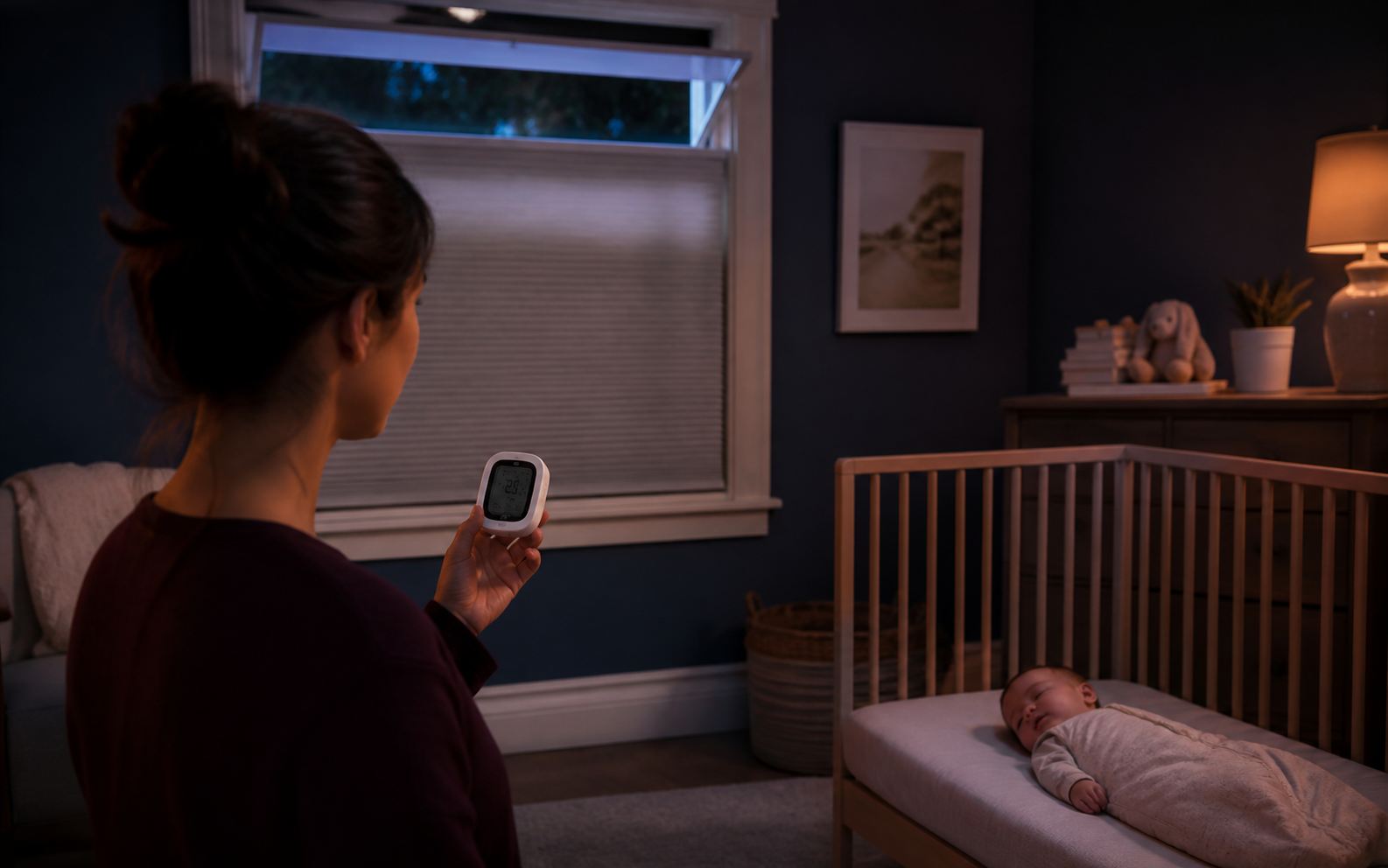
The curtain lifts, the room feels less stuffy, and for about three seconds an open nursery window seems like the most wholesome decision you have made all day. Then you notice the crib, the cord, the temperature reading, and the traffic outside. Suddenly the breeze has paperwork.
Yes, a baby can sleep with a window open—but only when the opening is physically safe, the outdoor air is suitable, the room stays comfortably temperate, and the baby still sleeps in a clear, firm, flat sleep space. The open window is not a sleep-safety feature by itself. If it creates a reachable fall hazard, a cold or hot room, smoke or polluted air, excessive humidity, a strong draft, disruptive noise, or a security concern, close it and use a safer way to manage the room.
I would not chase one “perfect” nursery temperature while ignoring the conditions that actually change overnight. I would check the opening, the air outside, the room, and the sleep space—in that order. That turns a vague late-night worry into four decisions you can make.
The four checks before you crack the window
- Opening: Can a child reach, climb to, push against, or become caught near it? Is the opening properly limited or guarded?
- Outdoor air: Is there wildfire smoke, poor air quality, heavy traffic exhaust, intense pollen, pesticide drift, or another local concern?
- Room: Will the room stay comfortable rather than becoming hot, cold, very humid, wet, or noisy?
- Sleep space: Is the crib or bassinet still firm, flat, empty, away from curtains and cords, and positioned so air is not blasting directly across the baby?
If any answer is uncertain, close the window while you solve that exact issue. Fresh air is optional. A safe sleep setup is not.
SleepBaby.org · The original video
A little help
for the night ahead.
Take a moment to watch the original Baby Sleep Miracle presentation. Your article will be right here when you’re ready to keep reading.
Ready to get started?Take the next step with SleepBaby.
Help my baby sleep
First, protect the opening—not just the crib
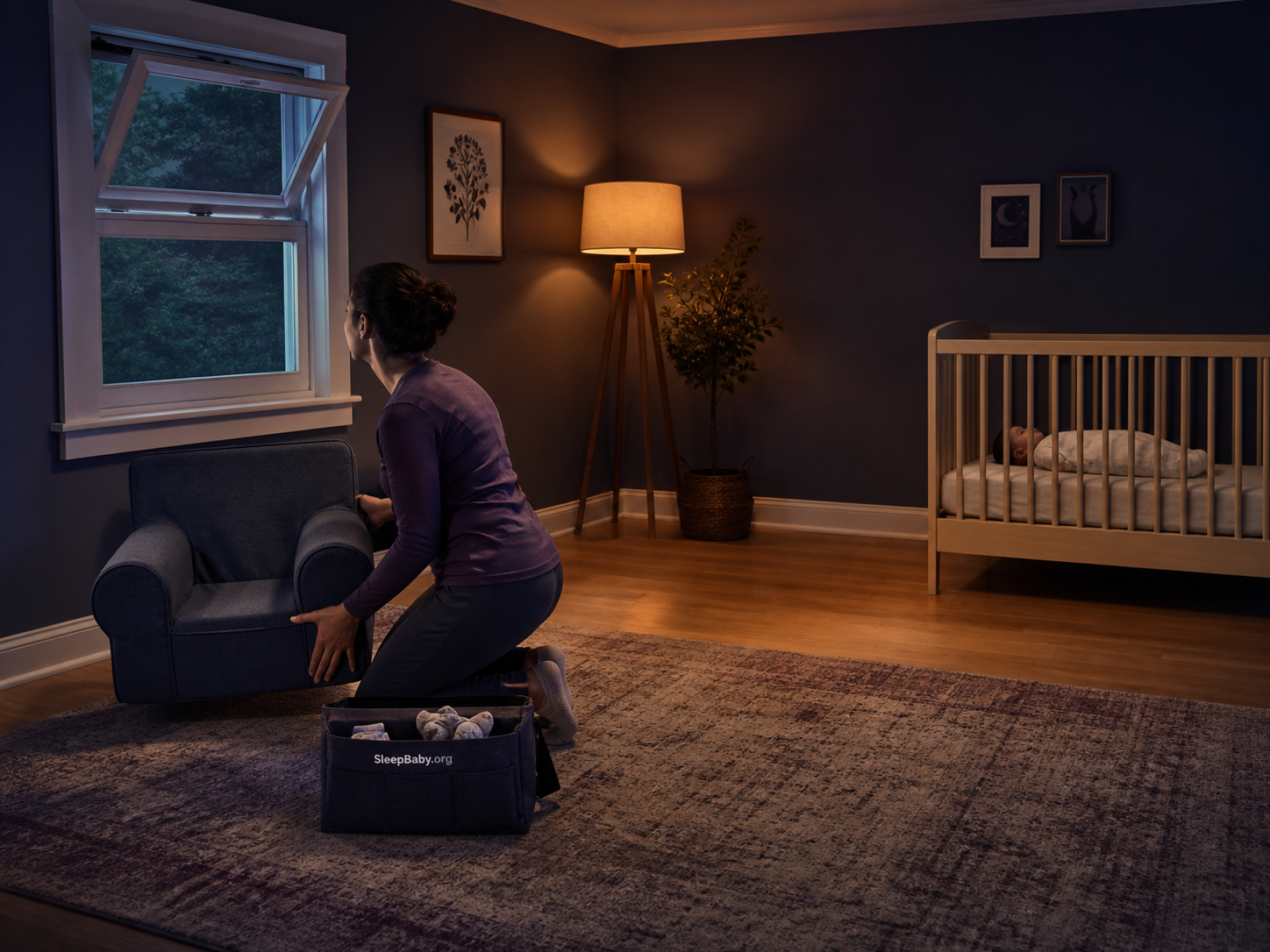
A newborn cannot climb to a window tonight, but nursery decisions have a habit of becoming toddler-room decisions while nobody is looking. The U.S. Consumer Product Safety Commission recommends window guards or window stops, limiting openings to no more than four inches, opening from the top when possible, and keeping furniture away from windows. A normal insect screen does not prevent a child from falling.
That distinction matters because “the screen is secure” sounds reassuring while answering the wrong question. A screen is designed mainly to keep insects out. It is not a child-fall barrier. Keep the crib, changing furniture, toy storage, chairs, and anything climbable away from the opening. Secure blind and curtain cords completely out of reach; cordless coverings are the cleaner choice.
Window guards and stops also have to work with the room’s emergency-escape plan. Follow the product instructions, local building and fire codes, and landlord requirements. On lower floors, CPSC notes that guards may need an emergency release that adults and older children can operate. A device that blocks escape can trade one hazard for another.
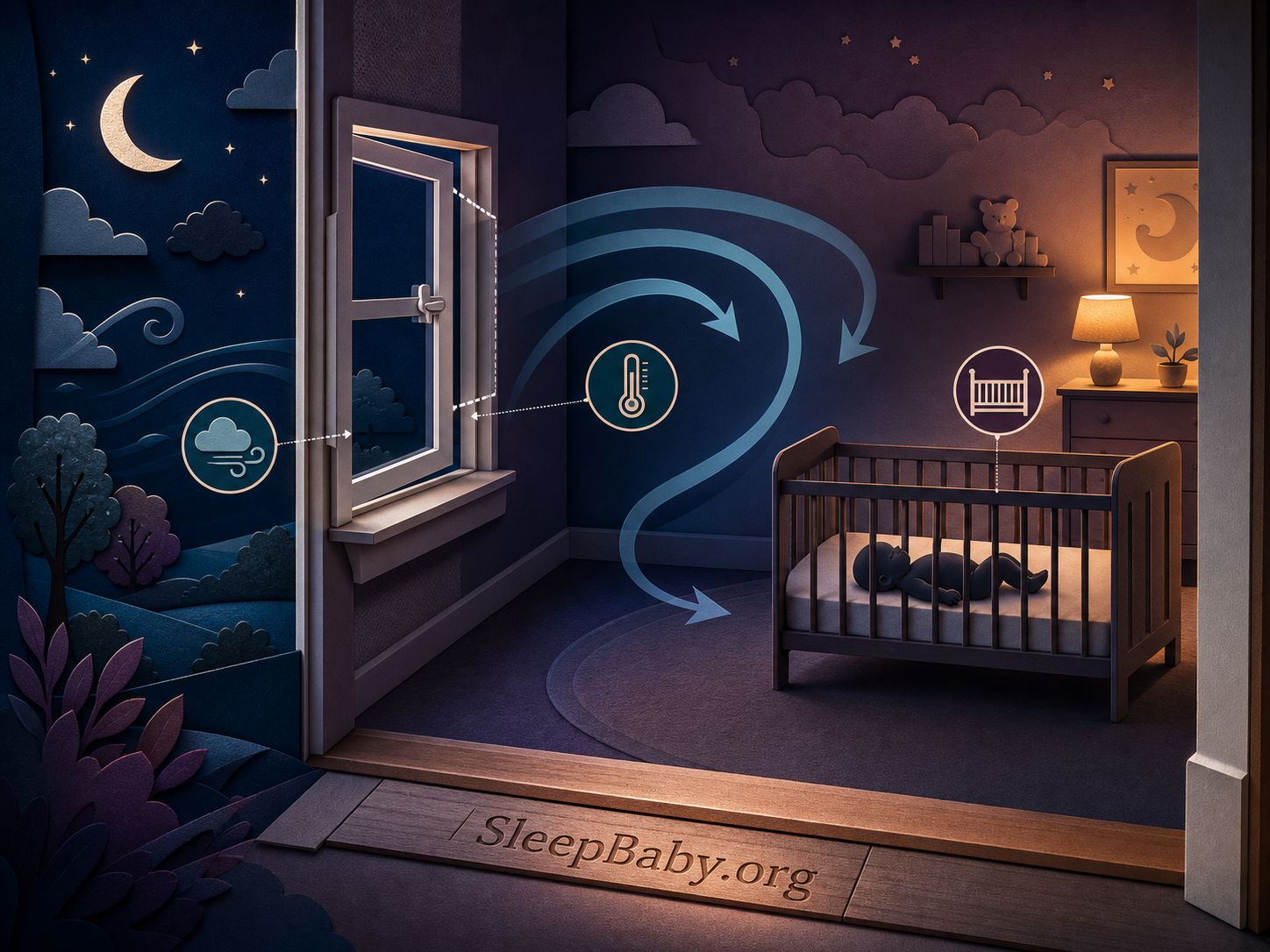
A nursery window hazard map
Below the sill
Move the crib and climbable furniture away. Do not create a step up to the opening.
Across the opening
Use a correctly selected and installed guard or opening-control device when needed. Do not count a standard screen as protection.
Beside the frame
Remove dangling blind cords, curtain ties, monitor cables, and anything a child could pull or wrap around the neck.
Beyond the glass
Check smoke, pollution, pollen, weather, noise, rain, insects, and home security before choosing ventilation.
Use outdoor air only when it is actually better
Opening a window can increase ventilation. The EPA also makes the important second half of that sentence clear: do not do it when outdoor air creates a safety or health risk, when pollution is high, or when the outdoor conditions make the room too hot, cold, or humid. “Fresh” describes where the air came from; it does not certify what is in it.
Before bedtime, check a reliable local air-quality source such as AirNow if smoke or pollution is possible. Consider the very local picture too: idling vehicles beneath the window, a neighbor’s fire pit, nearby construction, lawn chemicals, or a high-pollen night. If someone in the household has asthma or significant allergies, their clinician’s plan should outrank a general ventilation tip.
Source control comes first. Do not use an open window to compensate for smoke, mold, fuel-burning appliance problems, strong chemical fumes, or another indoor source that needs to be removed or professionally addressed. Make sure working smoke and carbon-monoxide alarms are installed as appropriate for your home.

There is no magic number that makes every open-window night safe
The live version of this article treated 68–72°F (20–22°C) as a universal SIDS-prevention range. I would not present that as a magic line. Homes, clothing, humidity, air movement, health, and measurement location all matter. The more useful goal is to prevent overheating and keep the room comfortably temperate.
CDC advises not covering a baby’s head or allowing a baby to get too hot. Sweating or a hot chest can be signs of overheating. Dress the baby for the room rather than for the weather app, and use ordinary sleep clothing or a properly sized, non-weighted wearable blanket when appropriate—never weighted sleep products. Cool hands or feet alone do not reliably tell you how warm a baby’s core feels.
Place a room thermometer where it reflects the sleep area, not on a sunny sill or directly in the incoming air. Check it after the weather changes, not only at bedtime. If the window makes you repeatedly adjust layers through the night, the simpler answer may be to close it.
Tonight’s open-or-close table
| Condition | What I would do | Why |
|---|---|---|
| Comfortable weather, good outdoor air, secure opening | Open slightly and recheck the room later | Ventilation may help without adding an obvious hazard |
| Wildfire smoke, poor AQI, strong traffic exhaust, pesticide use | Close the window; use filtered/mechanical options if available | Outdoor air is not the better air tonight |
| Cold snap, heat wave, driving rain, very high humidity | Close it or sharply reduce the opening | Comfort, moisture, and temperature can change quickly |
| Reachable sill, ordinary screen only, climbable furniture | Close and repair the physical setup before using it | The fall hazard overrides the ventilation benefit |
| Baby is ill, breathing unusually, feeding poorly, or hard to wake | Seek medical guidance based on symptoms | A window adjustment is not treatment |
A clearly labeled composite Kacey-and-Benjamin window check
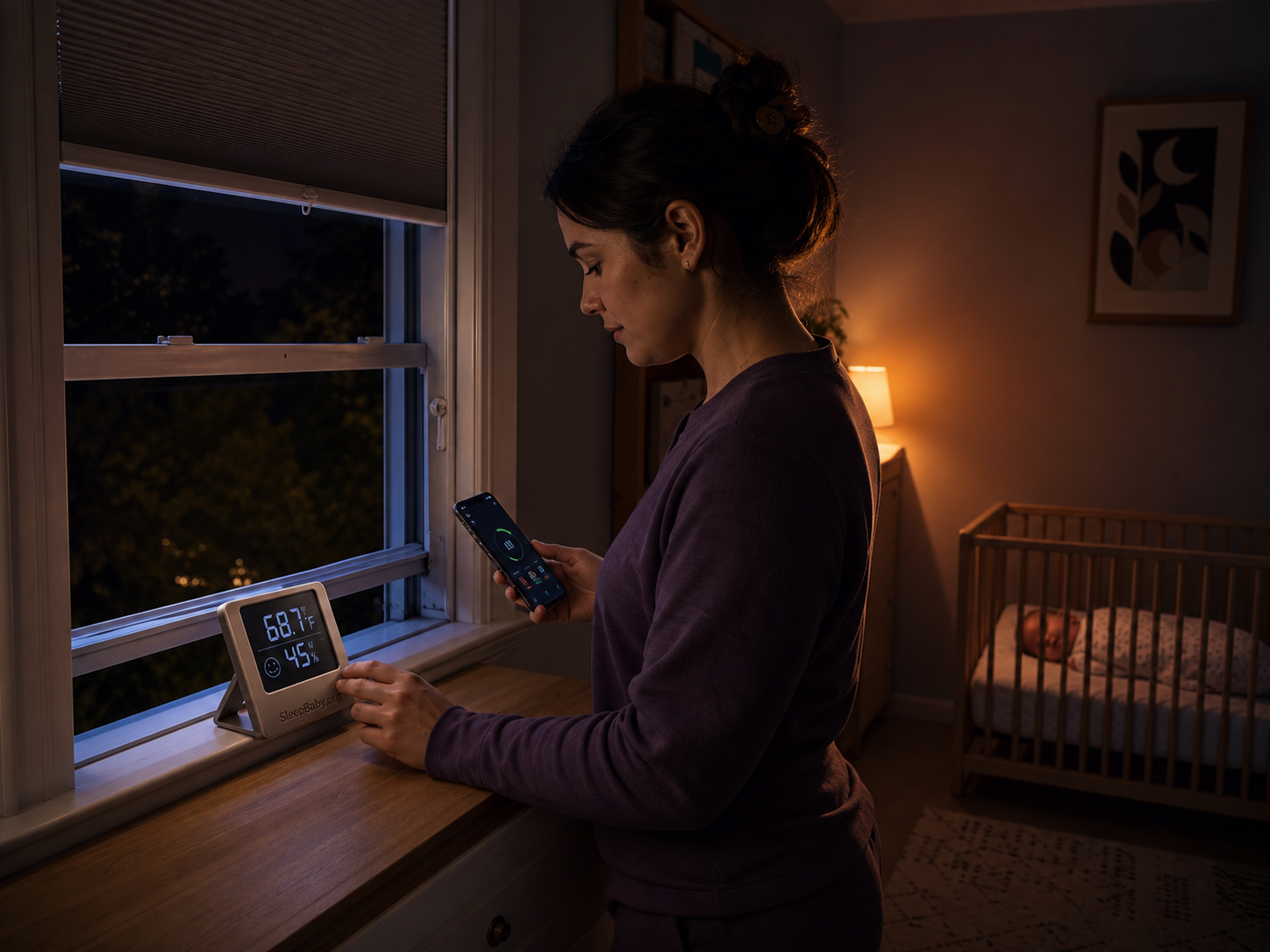
Composite scene, not documentary family history: Imagine Kacey standing beside Benjamin’s crib at 10:41 p.m., one hand feeling the air near the mattress and the other holding a phone with the local air-quality report open. The curtain is moving beautifully. The room thermometer is drifting downward. A delivery truck is idling below the window. The breeze has now submitted three conflicting references.
I would not turn that into a referendum on whether open windows are “good” or “bad.” I would close this one tonight, keep Benjamin’s ordinary safe-sleep setup unchanged, and try again on a cleaner, milder night. The story earns its place because it shows the real decision: conditions beat atmosphere. A moving curtain can look peaceful without telling you whether the opening is secure, the air is clean, or the room will stay comfortable.
Keep the safe-sleep foundation boring and unchanged
The window decision sits around the edges of safe sleep; it does not replace the center. Put a baby on their back for every sleep on a firm, flat, non-inclined mattress in a safety-approved crib or bassinet, covered only by a fitted sheet. Keep pillows, loose blankets, bumpers, toys, positioners, and other soft items out. If the harder problem is getting a newborn onto that surface, use the separate safe bassinet transfer guide without changing the window decision. Room-share without bed-sharing, ideally through at least the first six months, as CDC summarizes from AAP guidance.
Do not point a strong draft directly at the baby, but do not add a blanket or crib cover to “block” it. Move the crib or change the opening instead. Keep curtains from blowing into the sleep space. If an older baby can stand, reassess every reachable cord, latch, guard, and piece of furniture at their new height.
If your baby has trouble breathing, looks blue or gray, is unusually hard to wake, or has another emergency symptom, call emergency services. Contact a pediatric clinician for concerning breathing, persistent cough, fever in a young infant, feeding difficulty, dehydration signs, or symptoms that make you wonder whether environmental changes are enough. An open or closed window is not a treatment for illness.

Watch with the written checklist beside you
CDC’s safe-sleep foundation in under two minutes
The window is one environmental variable. This official CDC video keeps the non-negotiable sleep setup in view while you decide about ventilation.
Takeaway: Back, flat, firm, empty, and comfortably dressed remain the foundation whether the window is open or closed. Watch directly on the verified CDC YouTube channel.
A useful product only where the physical opening is the problem
Article-specific window-safety pick
Guardian Angel adjustable window guard
If the room’s real weak point is a child-accessible window, I would rather use a purpose-built, correctly sized guard than trust a standard insect screen or improvise with a loose track block. This product fits the exact job discussed here: adding a physical barrier at a compatible opening while preserving a planned adult emergency release. Measure first, confirm the window type, follow every installation instruction, and check local fire/building requirements. It does not replace supervision or make every window configuration safe.
Check the Guardian Angel window guard on Amazon
As an Amazon Associate, SleepBaby may earn from qualifying purchases.
The five-minute bedtime check
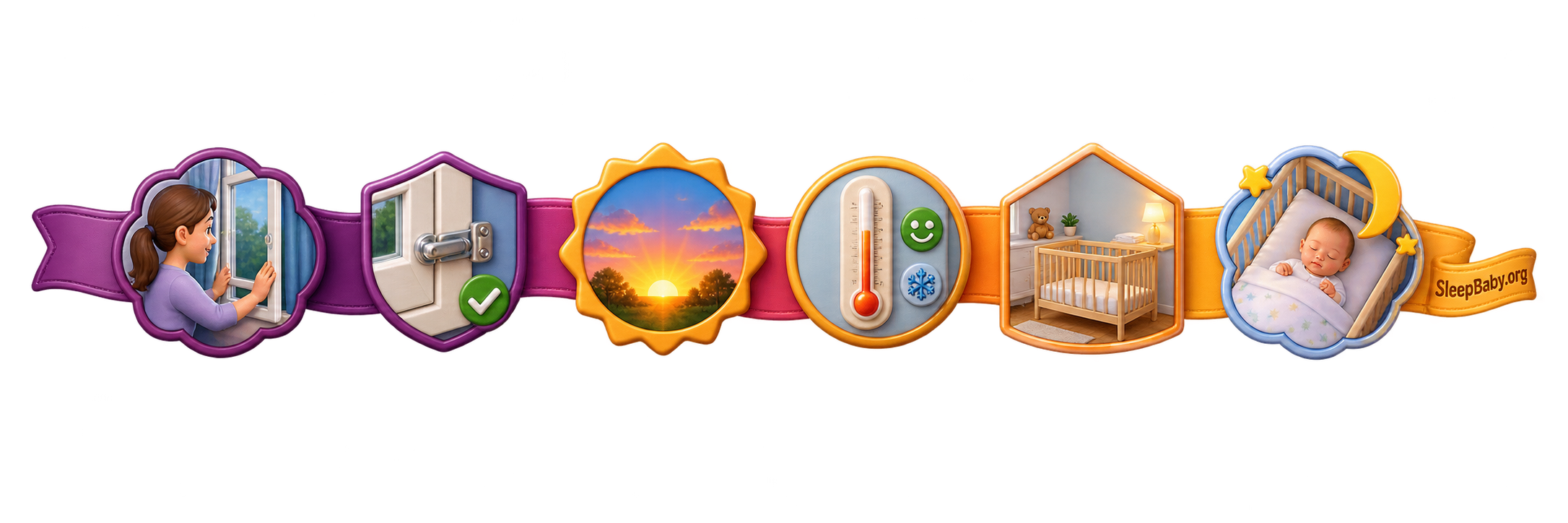
- Look outside: weather, smoke, pollution, pollen, noise, and security.
- Look at the opening: guard or stop, emergency release, screen limitations, cords, and climbable furniture.
- Look at the crib: back-sleep setup, firm flat mattress, fitted sheet, empty space, and no curtain or direct draft crossing it.
- Check the room where the baby sleeps, then recheck after conditions change.
- Change one variable. Do not add blankets, covers, positioners, or weighted products to compensate for the window.
I like this checklist because it refuses to make the breeze the main character. You are not trying to create a photograph of a peaceful nursery. You are deciding whether this particular opening improves this particular room tonight.
What I want you to notice when the curtain moves
The moving curtain from the beginning can become useful—just not as proof. Let it remind you to check the gap, the crib distance, the room reading, and the air outside. On a mild, clean, secure night, the window may stay open. On a smoky, cold, humid, noisy, or physically unsafe night, closing it is not depriving your baby of something essential. It is simply choosing the better room.
When one room check turns into twelve bedtime questions
Build a calmer plan for the whole night
You checked the latch, the air, the thermometer, and the crib. Now your brain would like to review naps, feeds, bedtime timing, and every noise the monitor has ever made. SleepBaby.org can help you sort the next sleep question without changing six things at once.
Sources
SleepBaby.org · The original video
A next step for
the next bedtime.
Still thinking about sleep? Watch the presentation here, then explore the SleepBaby program whenever you’re ready.
Ready to get started?Take the next step with SleepBaby.
Help my baby sleep