
BATH-TO-BEDTIME, WITHOUT THE PANIC
Can my baby sleep with wet hair?
Wet hair does not give a baby a cold. The useful question is simpler: is your baby comfortable, is the sleep surface dry, and have you kept every towel, hood, hat, and loose item out of the crib?

I know what the search box version of this question says. But the parent version usually sounds more like: Did I just make my baby sick because bath time ran late and I could not get that soft little head completely dry?
No. You did not cause a cold. Colds come from respiratory viruses, not from wet hair. What damp hair can do is make a baby feel chilly, soak a neckline, or leave a damp patch where you want a dry sleep surface. Those are practical problems with practical fixes—not evidence that you failed bedtime.

What actually matters when a baby goes to bed with damp hair
I would check three things, in this order:
Comfort
The scalp can be slightly damp, but your baby should not be shivering, clammy, or wearing wet clothing around the neck and shoulders.
A dry sleep surface
The fitted sheet and mattress area should be dry. Do not improvise with a towel, cloth diaper, pillow, or absorbent pad under the head.
Normal safe-sleep setup
Place your baby on their back on a firm, flat approved sleep surface with only a fitted sheet. Damp hair does not create an exception to that rule.
The two-minute “dry enough” bedtime reset
If your baby is already giving you the heavy-eyelid stare, this is not the moment to begin a salon appointment. Try this:
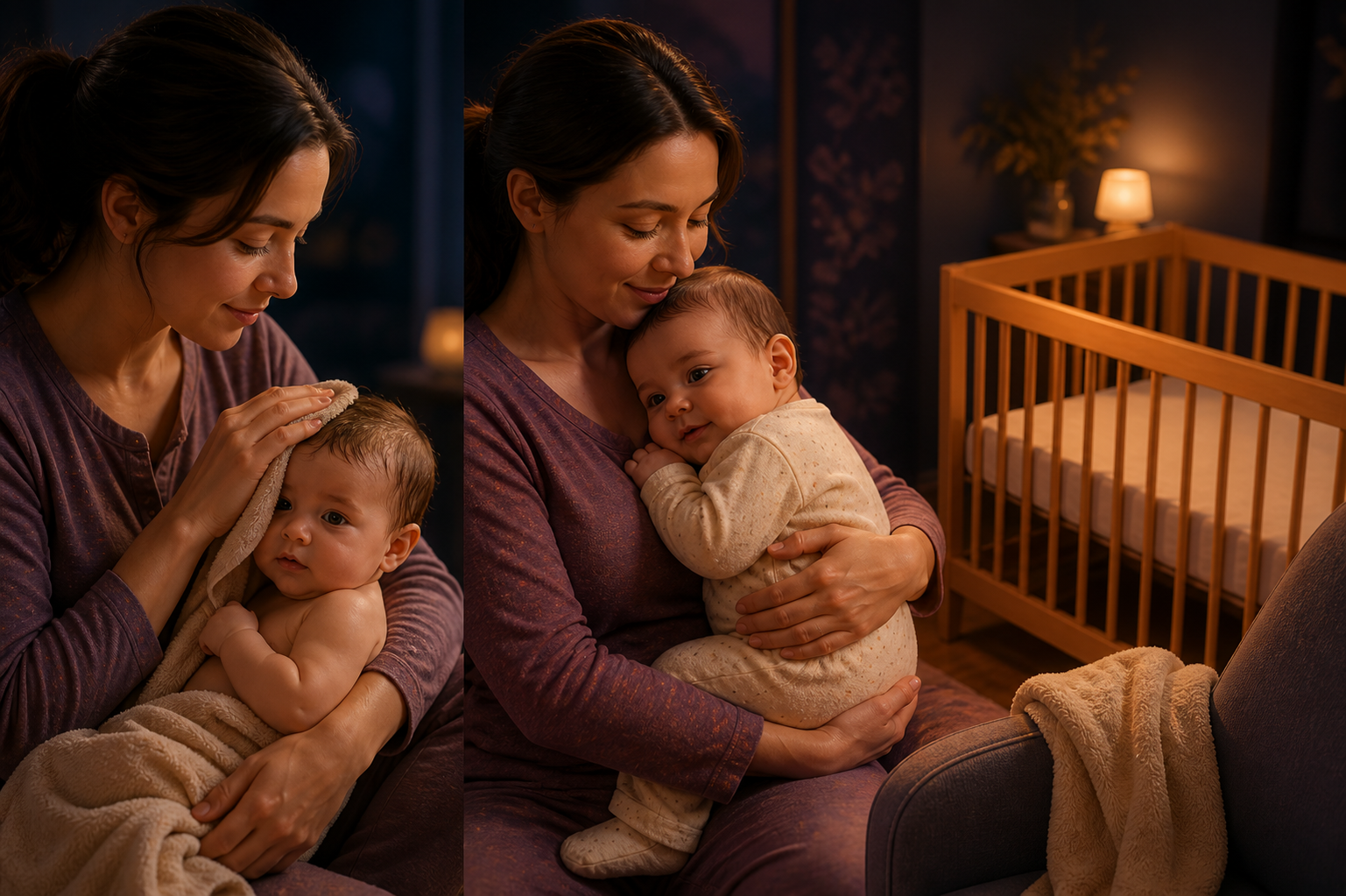
- Blot, do not scrub. Wrap the towel around the back and sides of the head while you hold your baby. Press gently, lift, and move to a dry section of towel.
- Check the hidden damp spots. Feel behind the ears, at the nape of the neck, and where thicker hair rests against the scalp.
- Change any damp neckline. A dry sleeper matters more than perfectly dry hair.
- Pause for one quiet minute. A feed, book, cuddle, or dim-room song gives a little air-drying time without turning bedtime into a battle.
- Remove the towel completely. Then use your usual safe sleepwear and place your baby down in the usual safe sleep space.
If the ends are still a little cool or damp but the scalp is no longer dripping, the clothing is dry, and the sleep surface will stay dry, you have handled the part that matters.
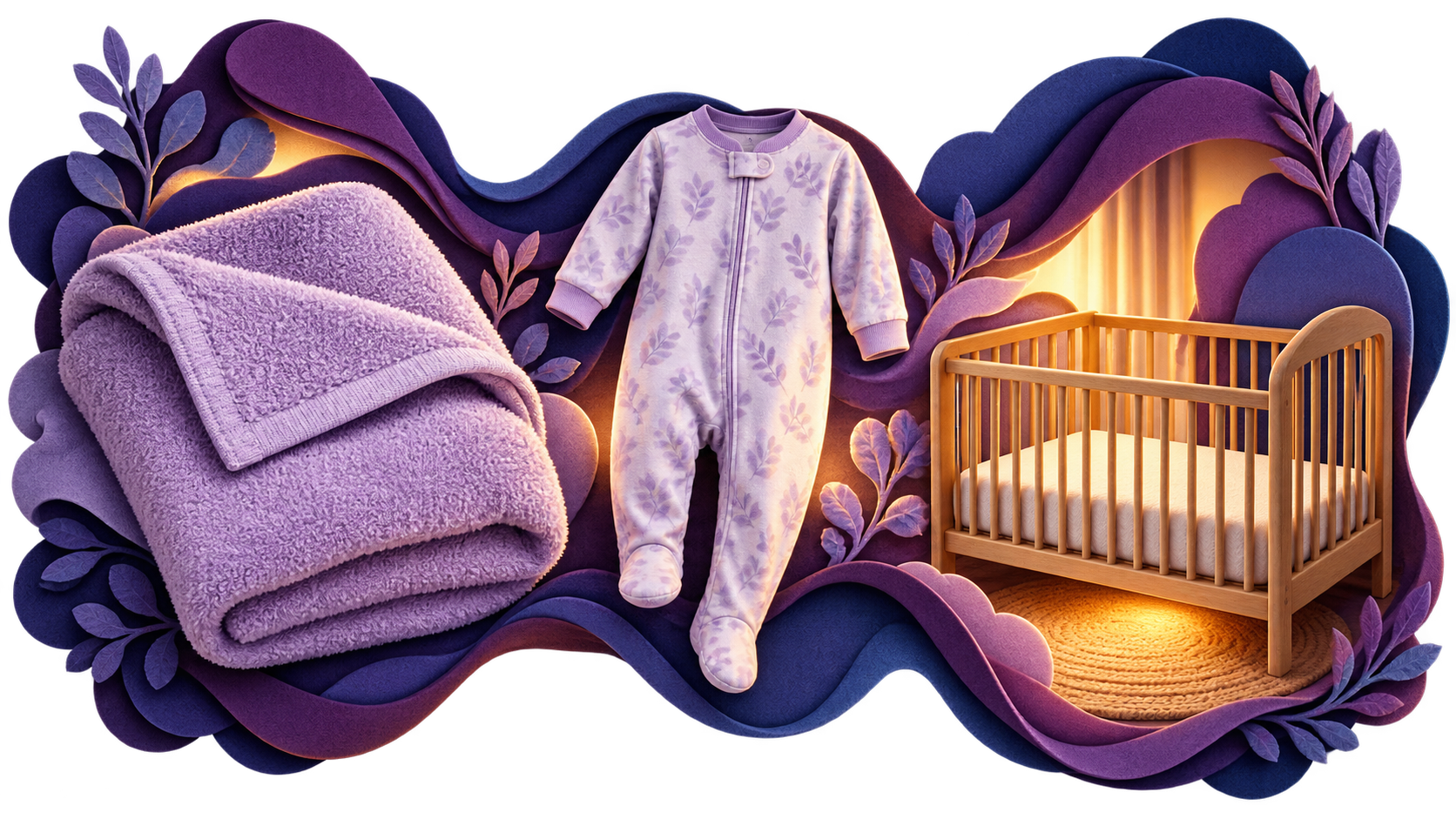
A KACEY + BENJAMIN COMPOSITE
This is a clearly labeled composite scene, built from the ordinary bedtime decisions parents describe; it is not a claim about a documented event from our family history.
The bedtime math nobody warns you about
I can picture myself standing in a dim hallway with Benjamin, a towel, and the kind of damp baby hair that seems to manufacture more water after you have already dried it twice. In my head, two clocks are running. One says, “Dry the hair.” The other says, “This child is nine minutes away from becoming an overtired courtroom attorney.”
Benjamin would be looking at the sleepy baby. I would be looking at the damp curl. Both of us would be acting as if the curl had been appointed head of household.
The useful move is not to win against the curl. It is to get the baby’s neck and pajamas dry, keep the crib bare, and protect the calm that bath time was supposed to create. That is the changed question I want you to carry away: not Is every hair dry? but Is my baby comfortable and is the sleep setup still safe?

Will wet hair make a baby sick?
Wet hair does not cause a cold. The viruses that cause colds spread from infected people and contaminated droplets or surfaces. A late bath cannot manufacture a respiratory virus.
That does not mean every sniffle after bath night should be ignored. Babies get viral infections, and the timing can overlap with anything: a bath, a walk, a new pajama set, or the moment you finally sat down. The overlap does not prove the cause.
Wet hair can
- feel cool or uncomfortable
- dampen clothing at the neck
- leave a damp sleep surface if the hair is dripping
- make a tired parent worry
Wet hair does not
- create a cold virus
- justify loose towels or hats in the crib
- require keeping an overtired baby awake until every strand is dry
- replace an actual symptom check when a baby seems unwell
How to tell “a little cool” from actually uncomfortable
Hair exposed to air often feels cooler than the rest of the body because water is evaporating. That cool sensation can make a parent assume the baby’s whole body is cold. Check the baby, not just the hair.
Feel the chest or upper back with a warm, dry hand. A comfortably warm torso, normal color, relaxed breathing, and ordinary behavior are more useful than cool fingertips or a cool damp curl. Hands and feet can feel cooler without telling you that the baby needs another layer.
If the neck of the sleeper is wet, change it. If the chest feels hot or the hair is wet with sweat, remove an unnecessary layer and reassess. If the baby is shivering or the room is genuinely cold, dry the baby more thoroughly and warm the room—not the crib—with safe household heating practices. Never place a hot-water bottle, heating pad, electric blanket, or warmed object in an infant sleep space.
This is where the wet-hair myth can pull parents in opposite directions. One parent adds too many layers because the hair feels cool. Another assumes all dampness came from the bath and misses that the baby is sweating. The same calm touch check prevents both mistakes. If warmth is the real worry, use the same chest-and-layer clues in our guide to checking whether a baby is cold while sleeping.
Will damp hair make a baby wake more often?
It might if the baby is uncomfortable, if a damp collar cools the neck, or if the whole routine became stimulating and long. But there is no dependable rule that slightly damp hair causes night waking. Infant sleep changes for many reasons, and a single rough night after a bath does not prove the bath was responsible.
If you notice a consistent pattern, change one thing at a time. Blot more carefully at the nape. Move hair washing earlier. Use a second dry towel for the final pass. Keep the rest of bedtime unchanged for several nights. That gives you a useful comparison without rebuilding the routine around a guess.
I would not respond to one post-bath waking by skipping needed feeds, changing safe-sleep practices, or introducing an unneeded sleep product. Start with comfort and routine. Small, repeatable observations beat a bedtime superstition every time.
For an older baby who rolls, crawls, or has a lot of hair
The practical drying steps stay the same, while the mechanics get more athletic. Dry the scalp while your baby is securely seated on your lap or held on a stable, dry surface—not standing on a slippery bathroom floor. Give a safe toy or sing the same short song so blotting has a predictable ending.
Once placed in the crib, continue to put the baby down on their back. If an older baby can roll both ways independently, you do not need to keep turning them back, but the crib should still begin bare and the head should remain uncovered. A towel, wrap, or pillow does not become safe because the baby is mobile.
Do you need a hair dryer?
Usually, no. A towel and a short wind-down are the simpler tools. A hair dryer adds hot air, noise, a cord, and an electrical appliance near a wet routine. A baby’s scalp and skin are sensitive, and an adult can misjudge heat that feels mild from a distance.
If your child’s clinician has given you a specific hair or scalp-care instruction, follow that plan. For an ordinary bath, gentle towel blotting is enough. If you choose to use moving air at all, avoid heat, keep the appliance far from the baby and water, keep the cord controlled, and test the air continuously with your own skin. But do not let a gadget become the reason bedtime stretches another twenty minutes.
What if your baby has thick, curly, or slow-drying hair?
More hair can hold more water, so “a little damp” may last longer. You still do not need to chase complete dryness. Work in sections with the towel: lift the hair gently, blot near the scalp, and rotate to a dry part of the fabric. Then use the rest of the bedtime routine as passive drying time.
Avoid tight wraps, clips, elastic bands, or anything that could remain on the baby during sleep. Avoid vigorous rubbing that tangles curls or irritates the scalp. If a bonnet, wrap, or specialty hair covering is part of your family’s hair care, ask your child’s clinician when it is age-appropriate and safe; do not add it to an infant sleep space on your own.
Should you move bath time earlier?
You can, if the timing routinely leaves everyone rushed. But you do not have to redesign the entire evening because one bath ended with damp hair. Bath time is allowed to be flexible. For some babies it is calming; for others it is a splashy second wind with strong opinions about washcloth ownership.
If thick hair regularly stays wet, try beginning the bath ten or fifteen minutes earlier and placing the most air-drying-friendly steps after it: pajamas, feeding, a short book, then bed. That creates drying time without adding a separate task. The routine remains recognizable because the order stays the same.
You can also wash hair less often than you bathe the body, depending on your baby’s age, scalp, activity, and clinician’s advice. Babies generally do not need shampoo every night. If nightly hair washing is drying the scalp, tangling curls, or making bedtime harder, the answer may be to change wash frequency—not to buy a hotter dryer.
Five fixes that create a bigger problem than damp hair
1. Putting a towel under the baby’s head
It feels logical because adults protect pillows this way. An infant sleep space is different. The towel is a loose item and should stay out. Dry the baby before the crib rather than modifying the crib.
2. Leaving a hood up for sleep
A hooded towel is useful in your arms and finished when drying is finished. Pull the hood down, remove the towel, and keep the baby’s head uncovered for sleep.
3. Adding extra layers “just in case”
Damp hair does not mean the baby needs to be bundled. Overheating is its own concern. Dress for the room and check the chest or back rather than responding to cool hair with a pile of blankets.
4. Rubbing until the scalp is angry
Friction is not a race against water. Blotting with a dry section of towel is gentler and often more effective than repeatedly scrubbing the same wet fabric over the same spot.
5. Keeping a sleepy baby up for perfection
If your baby is comfortable and the safe-sleep conditions are met, protecting bedtime is reasonable. There is no prize for the final dry strand, and overtiredness can turn a small worry into a long night.
A bath-to-bed routine that leaves room for real life
Here is a flexible sequence, not a law:
- Prepare before the bath. Put the towel, diaper, dry pajamas, and sleepwear within reach so you never have to step away from the baby.
- Keep the bath short and supervised. Stay within arm’s reach and keep your attention on the baby, not on collecting products.
- Dry the body first. A dry chest, back, skin folds, and neckline make the baby comfortable quickly.
- Blot the scalp. Use a dry part of the towel and gently press around the crown, behind the ears, and at the nape.
- Dress in dry clothes. This is the moment the towel and hood retire for the night.
- Use the calming step as drying time. Feed, cuddle, sing, or read in the comfortably warm room.
- Do one final touch check. Comfortable chest, dry neckline, no dripping hair, dry fitted sheet, bare sleep space.
The sequence works because it solves several bedtime jobs at once. It does not demand that you hold a wide-awake baby under a stream of air. It also gives you a stopping point. Parents often need that more than they need one more technique.
WATCH: WARM ENOUGH, NEVER OVERHEATED
Keep the bedtime warmth check simple
NICHD’s Safe to Sleep guidance helps separate comfortable sleep clothing from adding hats, towels, or loose layers after a bath. The point is not to make every hair dry; it is to keep your baby comfortably dressed with the head uncovered and the sleep space bare.
Takeaway: dry clothing and an uncovered head belong in the routine; the towel never belongs in the crib.
Do oils, leave-ins, or detanglers change the answer?
They do not change safe-sleep rules, but they can change how wet or coated the hair feels. Use the smallest amount of an age-appropriate product that your baby’s skin tolerates, and follow the product directions or your clinician’s plan. More product does not make hair safer for sleep, and a heavily coated scalp can make it harder to tell whether the dampness is water, sweat, or residue.
Keep oils and slippery bottles out of reach during the bath. Clean any product from your hands before lifting the baby, and wipe spills so the floor is not slick. If a product causes redness, swelling, hives, wheezing, or sudden distress, stop using it and seek medical advice; difficulty breathing or facial swelling requires urgent help.
What about a newborn?
Newborns can lose heat more easily than older children, so keep the room comfortably warm during the bath, use warm water rather than hot water, and dry the head and body promptly. That is different from saying every hair must be bone-dry.
For a newborn, I would prioritize a short bath, immediate gentle drying, dry clothing, skin-to-skin or a calm feed if that is part of your routine, and the normal safe sleep setup. Do not put a hat on a baby for indoor sleep unless your medical team has given a specific instruction in a monitored clinical context.

If the hair is wet from sweat, ask a different question
Bath-damp hair has an obvious source. Sweat-damp hair can be a clue that the room, clothing, swaddle, or sleep sack is too warm. Feel your baby’s chest or back rather than using cool hands and feet as your temperature guide. Look for sweating, flushed skin, a hot chest, heat rash, or rapid breathing.
Where did the dampness come from?
Just had a bath: blot the scalp, dry clothing and neckline, remove the towel, continue bedtime.
Woke up sweaty: reduce excess layers, check the room and sleepwear, and watch how your baby is acting.
Damp plus fever or illness signs: treat this as a symptom question, not a wet-hair question.
Do not use extra blankets to “balance out” damp hair. If a baby needs warmth, choose appropriate sleep clothing or a correctly sized wearable blanket, and keep the sleep space bare.
Cradle cap, eczema, and sensitive scalps
If your baby has cradle cap, eczema, broken skin, or a prescribed scalp treatment, the wet-hair question is secondary to the care plan. Pat rather than scrub. Use only products recommended for your baby’s age and skin. Do not pick scales or try to speed drying with high heat.
Call your pediatric clinician if the scalp is oozing, increasingly red, swollen, painful, foul-smelling, or accompanied by fever, or if a rash is spreading. Those are not consequences of “letting wet hair happen”; they are reasons for a proper assessment.
The safe-sleep reset after bath time
Bath time creates a pile of soft things—towels, washcloths, robes, hooded wraps—that belong near a baby while an adult is actively caring for them. None of those items belongs in the crib or bassinet.
- Baby goes down on their back.
- The sleep surface is firm, flat, and approved for infant sleep.
- Only a fitted sheet is on the mattress.
- The towel, washcloth, hood, hat, pillow, and loose blanket stay out.
- Sleep clothing is dry and appropriate for the room.
- The baby’s face and head remain uncovered.
When the problem is not the wet hair
A baby who is breathing comfortably, feeding normally, waking normally, and simply has damp post-bath hair usually needs a towel—not a medical evaluation. Get medical help when symptoms, age, or behavior make the situation concerning.
Quick answers for the last five minutes of bedtime
Can a baby sleep with slightly damp hair?
Yes, if the baby is comfortable, clothing and sleep surface are dry, and the normal safe-sleep setup is unchanged.
Will wet hair cause a cold?
No. Respiratory viruses cause colds. Wet hair may feel chilly, but it does not create a virus.
Should I put a towel under my baby’s head?
No. Keep towels and all loose items out of an infant’s sleep space. Dry the hair while holding and supervising your baby, then remove the towel.
Should my baby wear a hat to bed after a bath?
No for routine indoor infant sleep. Keep the head and face uncovered and use appropriate sleep clothing for warmth.
What if bedtime is already late?
Blot the scalp, change any damp clothing, keep the crib dry and bare, and let bedtime happen. Perfectly dry hair is not worth pushing a tired baby far past sleep.
The question changed—and that is the relief
You started with: Can my baby sleep with wet hair?
The better question is: Is my baby comfortable, in dry clothing, on a dry and safe sleep surface?
If the answer is yes, you can stop negotiating with the final damp curl. Towel off what you can, remove every loose bath item, keep the crib bare, and let your baby sleep.
Sources
TONIGHT’S TINY PLAN
Blot. Dress. Bare crib. Bed.
Save those four words for the next bath that runs into bedtime. You do not need a perfect blowout. You need a comfortable baby and the same safe sleep space you use every night. SleepBaby can help you keep the rest of the night just as practical.






What viewers said10 comments · 4 replies+
Archived comments from the original Baby Sleep Miracle presentation. Not independently verified by SleepBaby.org; individual experiences vary.
Thank you so much for this video! I had no idea about the dangers of baby swings :O
Hi Mary-Ann. I have a question: Is method in any way similar to the ones recommended by Dr Bucknam, Dr. Weissbluth or Dr. Karp? We tried those but none of them help.
Hi Regina, thank you for your question. The short answer is no. The techniques I share in my guide are based on newest scientific research and this is why I have never seen any approach similar to the one I recommend.
This method really works! I tried it on my son Jesus and after just one week he went from waking up more than 5 times a night to waking up just once or twice. You are a lifesaver, Mary-Ann!
I'm truly impressed with how much information you share in your video. And all for free! I can feel that you truly care about mothers like myself, and that's hard to find these days. I have recommended your site to several of my friends already.
Mary-Ann, our child suffers from autism. Is your approach still suited?
Chloe, I made sure my method can be used with any child, even babies who are special like yours. Please note that I'm not a doctor and that I always advice to consult with your physician because nothing is more important than the safety and well-being of your love.
Hallo Mary-Ann, I'm from Germany. Do you have your guide in German?
Hello Heide, we do! Normally you should already see our video in German. If not, please contact our support so they can guide you
Thenk you for your answer, Mary-Ann!
I just completed your approach and I have to say, it worked almost too well. Yes, it took a bit of getting used to with your bedtime routine but the difference is huge. My son George used to take 1 hours to go down and now he's firmly asleep in no more than 10 minutes! You're the best!
It seems I'm the only man watching this video, lol! What you shared about the 'emotional backpack' made immediate sense to me and I can't wait to help my little girl Mila to unpack it!
Hey there, just discovered your site and this really sounds different. Just wanted to say thanks for sharing :)
For everyone who's still thinking about getting Mary-Ann's guide I want to advise you to go ahead. I wasn't sure myself but now I'm so thankful I invested in this program. It made a huge difference in our life as a family and yes, my baby girl does sleep through the night now.