
The answer before you touch the doorknob
Yes, a comfortable baby can usually stay asleep with hiccups
The monitor shows a tiny rhythmic jump under your baby’s pajamas, then another. If your baby is sleeping comfortably, breathing easily, showing their usual color, and otherwise acting and feeding normally, you generally do not need to wake them just to stop ordinary hiccups. Keep the sleep setup exactly as it was: baby on the back, on a firm, flat, level approved infant sleep surface, with only a fitted sheet. Hiccups do not create an exception for side sleep, stomach sleep, an incline, a positioner, a swing, or a car seat. [1][2]
The sound is not the whole decision. Breathing effort, blue or gray color, choking, unusual difficulty waking, seizure-like movement, or a baby who looks seriously ill changes the question immediately. I would read the whole baby before I read meaning into the hiccup.

The 30-second whole-baby check
At night, repetition can make a small thing feel urgent. A single hiccup is easy to dismiss; twenty in a row can sound as if the body is filing a complaint. The American Academy of Pediatrics notes that babies hiccup from time to time and that it often bothers parents more than it bothers the baby. [1] That is reassuring, but I do not want reassurance to become a blindfold. Look at the baby around the hiccup.
1 · Breathing
Easy or working hard?
Ordinary hiccups are brief rhythmic contractions. Look for breathing between them. Struggling, pulling in around the ribs, gasping, choking, or pauses that worry you need a direct check and urgent help as appropriate.
2 · Color
Usual color or a real change?
Blue, gray, or purple lips or skin are emergency signs. Dim screens and night-vision color can mislead, so go to your baby when the image is unclear.
3 · Responsiveness
Sleeping or unusually hard to rouse?
Normal sleep is different from limpness, unresponsiveness, a seizure, or extreme difficulty waking. If that distinction is not clear, stop watching remotely and assess directly.
4 · Comfort
Sleeping through or repeatedly distressed?
A relaxed face and body support leaving the baby asleep. Persistent crying, painful arching, repeated coughing, gagging, or vomiting belong in a different branch.
5 · The day around it
Feeding and acting normally?
Good intake, usual wet diapers, ordinary movement, and a familiar pattern support observation. Poor feeding, fever, dehydration signs, weak movement, or behavior that looks wrong deserve clinician guidance.
Comfortable baby, easy breathing, usual color, ordinary sleep, normal feeding and behavior: leave the sleep space alone and let the hiccups pass. One part is unclear: check directly. A clinician sign is present: call. An emergency sign is present: act now. That hierarchy is more useful than timing the episode or counting every little jump.
This is also why I would not use a hiccup counter as a diagnostic tool. Ten gentle hiccups in a comfortable baby can be far less important than one change in breathing, color, responsiveness, or feeding. The frequency may be interesting. The whole-baby picture decides what you do.

Why babies can hiccup so dramatically and sleep right through it
A hiccup begins with an involuntary contraction of the diaphragm, the broad muscle involved in breathing beneath the lungs. The vocal cords then close quickly, producing the familiar sound. Babies experience this reflex often. Feeding can be part of the context because stomach expansion and swallowed air may trigger an episode, but a hiccup by itself does not prove overfeeding, reflux, allergy, or a problem with the bottle or breast. [1][3]
That distinction matters because the movement can look bigger than the baby’s reaction to it. An infant may make a tiny full-body jump while remaining deeply relaxed. The parent, meanwhile, is suddenly watching the monitor with the focus of someone reviewing security footage from a very small, very sleepy bank. That is the one gentle joke I will permit near this topic, because underneath it is a serious truth: you are not bothered by the sound. You are trying to decide whether your baby is okay.
Keep the reflex in proportion
Most ordinary episodes end on their own. I would not wake a comfortable sleeping baby, repeatedly rub the back, offer an unnecessary feed, or change the sleep position solely because the rhythm is annoying to watch. Waking can create a new problem without solving the old one. The better move is to keep the safe sleep setup boring and use the whole-baby check.
Common does not mean that every situation paired with hiccups is unimportant. A baby can hiccup and also be ill, uncomfortable, feeding poorly, or struggling to breathe. The hiccup is then one detail, not the explanation. Cleveland Clinic notes that when reflux is relevant, parents may also see symptoms such as spit-up, coughing, irritability, crying, or back arching; hiccups alone do not make the diagnosis. [3]
Safe sleep stays flat, even when the hiccups look uncomfortable
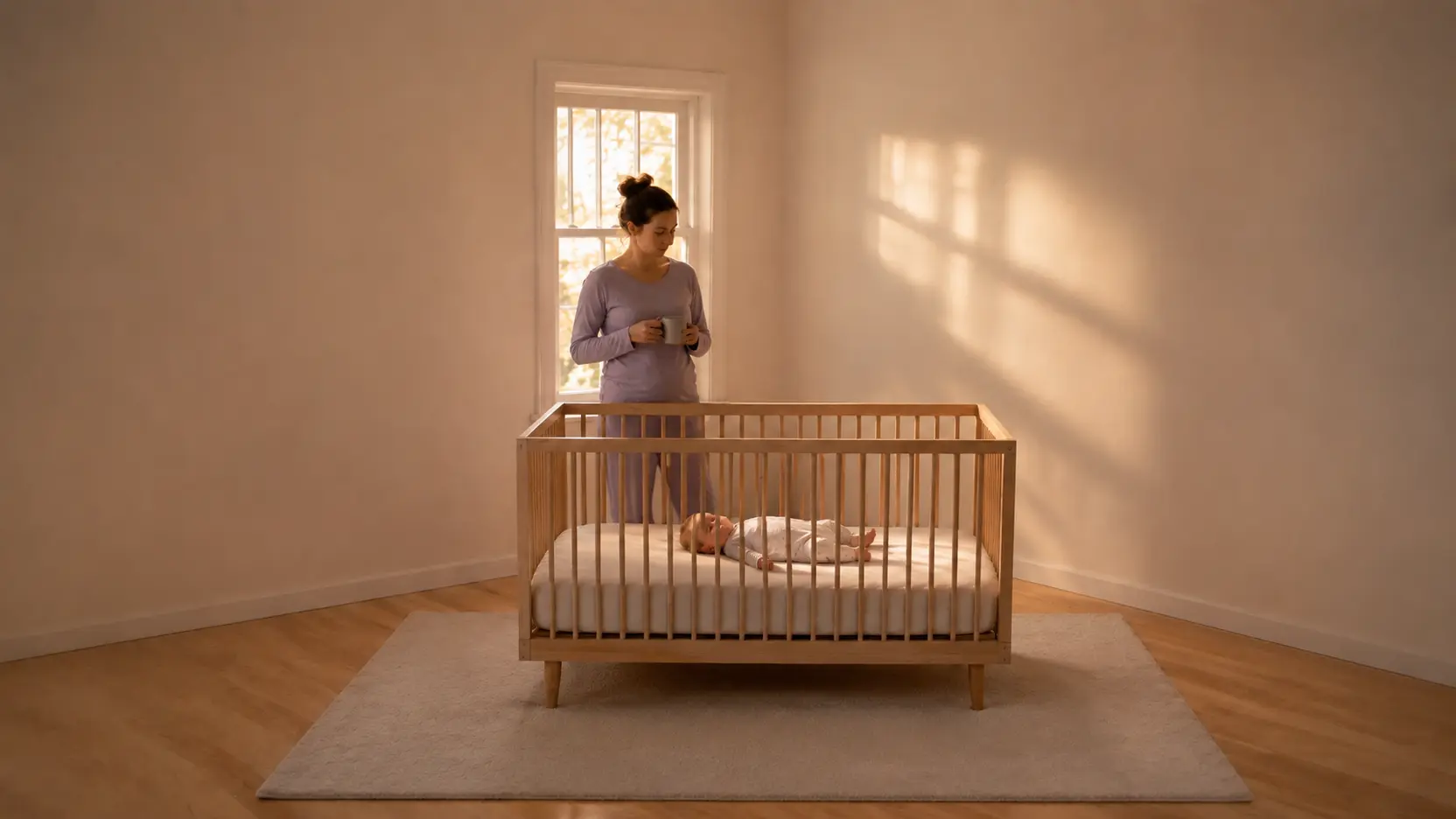
The safest answer is not the most visually satisfying one. You do not need to tilt the mattress, add a wedge, roll the baby onto the side, prop the head, tuck in a blanket, or let the baby finish the night in a swing or car seat. Place every infant on the back for sleep, on a firm, flat, level approved sleep surface covered only by a fitted sheet, and keep soft objects and loose bedding out. That guidance also applies to babies with reflux. [2]
The setup does not negotiate with the hiccup
Back · firm · flat · level · bare
During awake care
You may pause a feed, hold the baby upright while awake and directly supervised, reposition, or burp as needed.
When sleep begins
Return the baby to the approved flat sleep surface on the back. Upright comfort is not an inclined sleep plan.
If the baby rolls
Continue placing the baby on the back. Follow current rolling and swaddling guidance; hiccups do not change those boundaries.
If back placement itself leads to crying after the hiccups stop, that is a separate question. Our guide to what to check when your baby cries after being placed on the back can help you look at timing, comfort, feeding, and the sleep transition without creating an unsafe positioning exception.
NICHD Safe to Sleep · the environment that does not change
Watch the safe-sleep geometry, not a hiccup-stopping trick
This official NICHD video belongs here because hiccups can tempt a tired parent to elevate, prop, or reposition a sleeping baby. The demonstration reinforces the back, flat surface, and bare space that remain in place; it does not offer a treatment for hiccups.
Takeaway: the next-sleep setup stays ordinary. If playback is unavailable, watch the NICHD video on YouTube; the written safety guidance above remains complete without it.


When hiccups interrupt a feed—or arrive right after one
If hiccups begin during an active feed, the AAP suggests changing position, trying to burp the baby, and helping the baby relax before continuing. Feeding before a baby becomes extremely hungry may also reduce some feeding-time episodes because frantic feeding can mean more swallowed air. [1] I would treat these as practical options, not as a promise that perfect technique produces a hiccup-free baby.
Pause
Stop the rush, not the feeding plan
If the baby is sputtering, gulping, pulling off, or frustrated, pause. Newborn intake, clinician-directed schedules, and hunger still matter.
Reposition or burp
Use awake, supported care
Change the feeding position or offer a calm burp if that normally helps. Do not frighten the baby, hold the breath, or give unapproved liquids.
Resume or reassess
Follow the baby and the plan
Resume when the baby is calm and interested. If feeding is repeatedly painful, inefficient, refused, or followed by significant vomiting or distress, call the clinician.
Return to sleep
Back, flat, level, bare
After any awake-supervised upright time, place the baby on the back in the approved sleep space. Do not leave the baby sleeping upright to prevent hiccups or spit-up.
A sleeping baby who has already completed the needed feed is different from a baby whose hiccups interrupted active feeding. I would not automatically wake the sleeping baby to burp again. But I also would not let “hiccups are common” override a newborn feeding plan, poor weight gain, prematurity instructions, or a pattern of falling asleep before effective feeds. In those cases, follow the individualized plan and ask the clinician what they want you to do.
Spit-up can look alarming, especially when it arrives beside hiccups, but it still does not justify an inclined sleep surface. The AAP’s parent guidance keeps babies flat and on the back even when they spit up. [1] Repeated forceful vomiting, blood or green material, pain, dehydration signs, poor intake, or poor growth are not ordinary hiccup questions and deserve medical guidance.
A hypothetical Kacey-and-Benjamin monitor moment
The hand on the doorknob
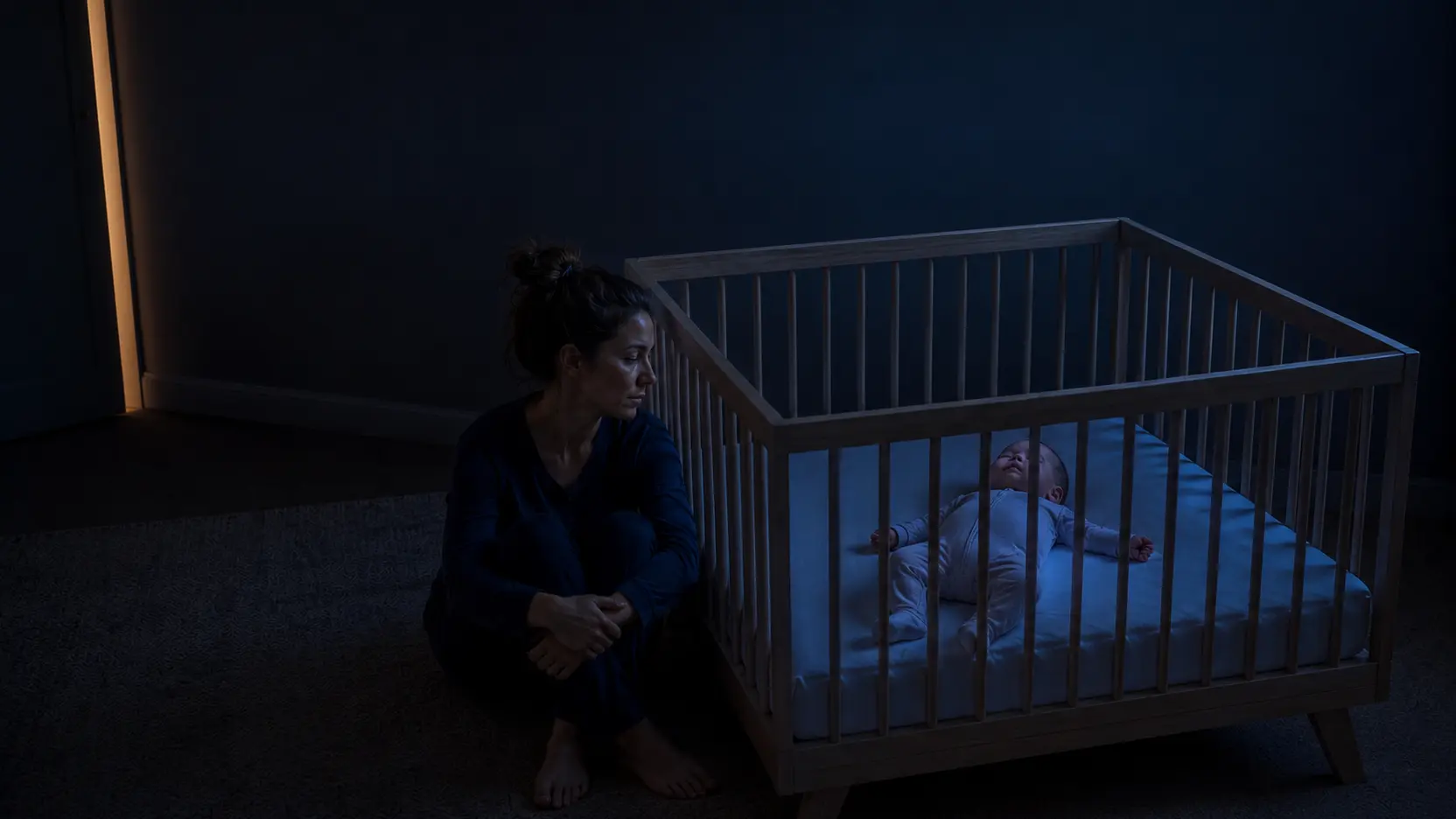
Imagine hypothetical Benjamin at 1:52 a.m., asleep on his back in a bare crib. Each hiccup lifts the center of his pajamas by a fraction, and my hand is already on the doorknob because watching a baby make a repeated movement activates a very old parental instinct: go in and fix the moving thing.
Before opening the door, I would slow the scene down. Is his breathing easy between hiccups? Does his body look relaxed? Is his color ordinary, allowing for the limits of a night-vision screen? Did he feed normally, make his usual wet diapers, and act like himself before bed? If any answer is unclear, I go in. If the whole picture is calm, I leave the safe setup alone.
This hypothetical scene is not medical evidence or a claim about Benjamin’s history. It is a way to name the decision hiding beneath your search. The question is not “Can I tolerate another hiccup?” It is “Do I have a comfortable sleeping baby with a harmless reflex, or is there another sign asking me to act?” Once that question is visible, the doorknob becomes a choice rather than a reflex.

What I would not try on a sleeping baby
Adult hiccup folklore is not an infant-care plan. Do not frighten a baby, pull the tongue, press on the eyes, interrupt breathing, offer honey, give sugar, tea, water, gripe water, or another remedy unless your baby’s clinician has specifically instructed an age-appropriate product for an unrelated reason. Hiccups usually pass without a trick, and a remedy can create a feeding, choking, allergy, contamination, or dosing question that was not there before.
I would also leave the sleep surface alone. No mattress elevation. No rolled towel under the mattress. No positioner around the body. No side-sleep prop. No pillow beneath the head. No transfer to a swing, carrier, car seat, couch, adult bed, or sleeping adult’s chest as a hiccup solution. A comfortable baby does not need a more complicated sleep environment; a distressed baby needs assessment, not decorative engineering.
Protect sleep without naming a diagnosis
Repeatedly waking the baby can become its own loop. Wake, burp, settle, transfer, hiccup again, repeat—until the hiccups have stopped and everyone else is now wide awake. If the whole-baby check is reassuring, doing less is not neglect. It is a deliberate decision to protect sleep while watching the details that matter.
Do not diagnose reflux from the hiccup sound alone. If there is repeated coughing, painful arching, feed refusal, significant spit-up or vomiting, irritability, or poor growth, bring that pattern to the clinician. The useful notes are what happened around feeds, how often the baby seemed distressed, what the vomit or spit-up looked like, whether intake changed, and whether growth or wet diapers changed—not a dramatic label chosen at 2 a.m.
What if the hiccups actually wake your baby?
A baby who sleeps through hiccups needs almost nothing from you. A baby who wakes is asking a slightly different question, but the answer still begins with context rather than a cure. First notice what happened before the eyes opened. Was the baby already stirring for a feed? Did coughing, spit-up, a wet diaper, a temperature change, or a lost pacifier happen beside the hiccup? Or did one sharp contraction simply interrupt a light stretch of sleep?
If your baby wakes comfortable and the whole-baby check remains reassuring, use the ordinary settling response that fits your baby’s age and needs. Keep the room calm, keep the sleep surface unchanged, and feed when feeding is due. Do not delay a newborn’s needed feed because you are trying to separate “true hunger” from hiccups with laboratory precision. Likewise, do not automatically add a feed to every episode when a well-fed older baby is calm and ready to resettle. The feeding plan, hunger cues, and the rest of the day carry more meaning than the reflex alone.
Match the response to what woke with the hiccup
Awake, calm, breathing easily
Offer the usual quiet settling help. If a feed is due or hunger cues are present, feed. Return to back, flat, level, bare sleep when the baby is ready.
Awake and repeatedly uncomfortable
Look for coughing, arching, vomiting, feed refusal, abdominal distention, fever, or another symptom. Repeated interference matters more than the hiccup total.
The same pattern keeps returning
Record timing around feeds, visible discomfort, spit-up or vomiting, intake, wet diapers, and daytime behavior. Bring the pattern to the clinician instead of naming a diagnosis yourself.
I would judge the night by interference, not by noise. An episode that sounds dramatic but leaves feeding, comfort, breathing, and sleep mostly intact is a different problem from quiet hiccups that accompany pain or poor intake. This distinction prevents two common mistakes: repeatedly waking a comfortable baby because the sound is unnerving, and overlooking a broader feeding or illness pattern because hiccups are usually benign.
If you call the clinician, a short factual picture helps: your baby’s age and relevant birth or medical context; whether episodes happen during, immediately after, or well between feeds; whether the baby seems distressed; whether coughing, arching, vomiting, fever, poor intake, or fewer wet diapers appear; and whether the pattern is changing. A brief video may help only if the clinician asks and it can be captured without delaying direct care. No recording is worth waiting when breathing, color, responsiveness, choking, or seizure is the concern.


Observation can protect sleep, as long as it does not pretend to be medicine
Once the emergency, clinician, feeding, and safe-sleep decisions are clear, there is one practical post-answer job left: seeing whether a comfortable baby is still relaxed without opening the nursery door after every ordinary hiccup. A dedicated video monitor can help with posture and general comfort. It cannot tell you that a baby is medically safe, and it should never keep you from checking directly when something looks or feels wrong.
Return to the little jump, but read it differently
The monitor still shows the same tiny movement under the pajamas. Nothing about the hiccup itself had to change for the decision to become calmer. Now you know to look around it: easy breathing, usual color, ordinary responsiveness, a relaxed body, normal feeding and behavior, and the same safe flat sleep space.
If that whole picture is reassuring, let your baby sleep. You do not need to win a contest against the reflex. If another sign appears, the hiccup count becomes background and you move to the correct lane—direct check, clinician call, or emergency action. That is not overreacting or underreacting. It is responding to the part that carries meaning.
I would keep one sentence for the next late-night episode: the hiccup is a data point, not an instruction to rebuild the crib. Your hand may still reach toward the doorknob. This time, it has a better question to answer first.
Sources
- American Academy of Pediatrics / HealthyChildren.org: Baby Burping, Hiccups & Spit-Up
- NICHD Safe to Sleep: Ways to Reduce Baby’s Risk
- Cleveland Clinic: Here’s What to Do When Your Baby Has the Hiccups
- American Academy of Pediatrics / HealthyChildren.org: When to Call Emergency Medical Services for Your Child
- American Academy of Pediatrics / HealthyChildren.org: Newborn Illness—How to Recognize
- UCSF Benioff Children’s Hospitals: Your Baby at 1 Week
- Infant Optics: DXR-8 PRO User Manual
- U.S. Consumer Product Safety Commission: Safe and Sound Zone—Baby Monitor Cord Safety