Is your little one utterly enchanted by their own reflection? The fascination babies have with mirrors is more than just a game—it’s a critical part of their developmental process. This post will explain why your baby is obsessed with mirrors and how you can use this fascination to stimulate their development and even improve their sleep patterns.
Why Are Babies Fascinated by Mirrors?
The Mirror Stage
The “mirror stage” is a theory from French psychoanalyst Jacques Lacan, who proposed that babies recognize themselves in the mirror between 6 to 18 months of age. This recognition is a significant step in developing self-awareness and understanding they are a separate individual.
Social Interaction
Mirrors provide babies with their own interactive playmate. They love the “other” baby who mimics their actions, smiles back, and maintains perfect eye contact.
Exploration and Learning
Mirrors help babies learn about cause and effect as they realize that their actions are mirrored by their reflection. This exploration is fundamental to their cognitive development.
Benefits of Mirror Play
Boosts Physical Development
When babies move in front of a mirror, they can see their reflection moving too. This interaction helps them improve their motor skills and coordination.
Enhances Emotional Development
Making faces in the mirror helps babies understand emotions. They learn to recognize different facial expressions, aiding their emotional development.
Improves Visual Tracking
Following their reflection helps improve babies’ visual tracking skills, essential for later activities like reading and sports.
Understanding Baby’s Mirror Fascination
Why Are Babies Obsessed with Mirrors?
Babies often enjoy looking at mirrors because they’re drawn to human faces, and their own reflection provides them with a constant companion who mimics their every movement, facial expression, and emotion. This is a vital aspect of their self-awareness and social development.
What Age Do Babies Start Enjoying Mirrors?
Although babies might show interest in mirrors as early as a few months old, they usually begin to recognize themselves between 15 to 24 months of age.
What Is the Significance of the ‘Mirror Test’ in Babies?
The ‘mirror test’ is a way to gauge a child’s development of self-recognition. This test involves subtly marking a baby’s face and seeing if they try to remove the mark while looking in the mirror—indicating they understand that the reflection is their own.
Mirrors and Developmental Concerns
Do Autistic Babies Respond Differently to Mirrors?
Autistic children might interact with mirrors differently. For instance, they might not show as much interest in their reflection, or they may not pass the mirror test at the typical age. However, it’s essential to remember that these are not definitive signs of autism and should be considered in conjunction with other symptoms.
Are Mirrors Bad for Babies?
No, mirrors are not bad for babies. In fact, they’re useful tools for development. There’s an old wives’ tale suggesting that babies should not look into mirrors, but there’s no scientific evidence to support this.
Exploring Mirror Play and Its Benefits
What Is Mirror Play?
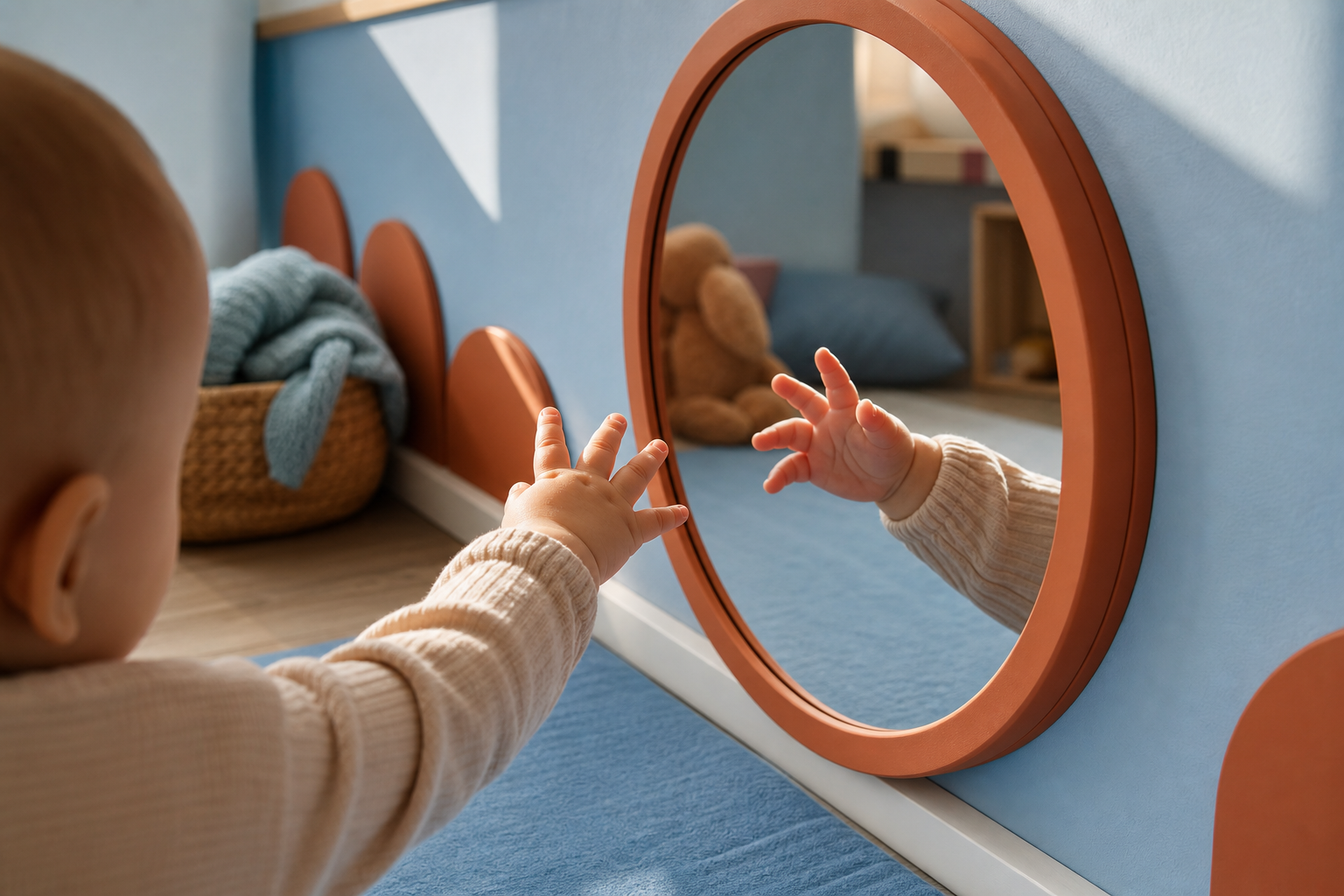
Mirror play involves using a mirror during playtime to enhance a child’s self-awareness, emotional understanding, and cognitive development. This can include making faces, playing peek-a-boo, or just watching their reflection.
What Are the Benefits of Mirror Play?
Mirror play can enhance motor skills, promote self-recognition, and stimulate emotional understanding. Moreover, it provides a fascinating sensory experience that can keep your baby engaged and entertained.
How Does Mirror Play Align with Montessori Principles?
Mirror play aligns well with Montessori principles, which emphasize learning through sensory experiences and self-directed play. A mirror gives babies the opportunity to explore and learn about themselves and their surroundings in a natural, unstructured way.
Leveraging Mirror Play for Better Sleep with SleepBaby.org
At SleepBaby.org, we recognize the importance of mirror play in a baby’s routine, including its impact on better sleep. By incorporating mirror play into your baby’s daytime activities, you can help tire them out and establish a predictable routine, which promotes longer, more restful sleep.
Furthermore, SleepBaby.org can provide you with strategies on how to use your baby’s fascination with mirrors as part of a calming bedtime routine. For instance, a fun mirror game can be followed by a bath and bedtime story, signaling to your baby that it’s time to wind down for sleep.
Conclusion
So, there you have it! Your baby’s obsession with mirrors is not only perfectly normal but also beneficial for their cognitive, physical, and emotional development. Just like any other fascination in the early years, it’s an exploration stage that can be a powerful tool for learning and even for promoting better sleep habits. Don’t hesitate to consult professionals like the team at SleepBaby.org for tips on leveraging mirror play for your baby’s sleep.