
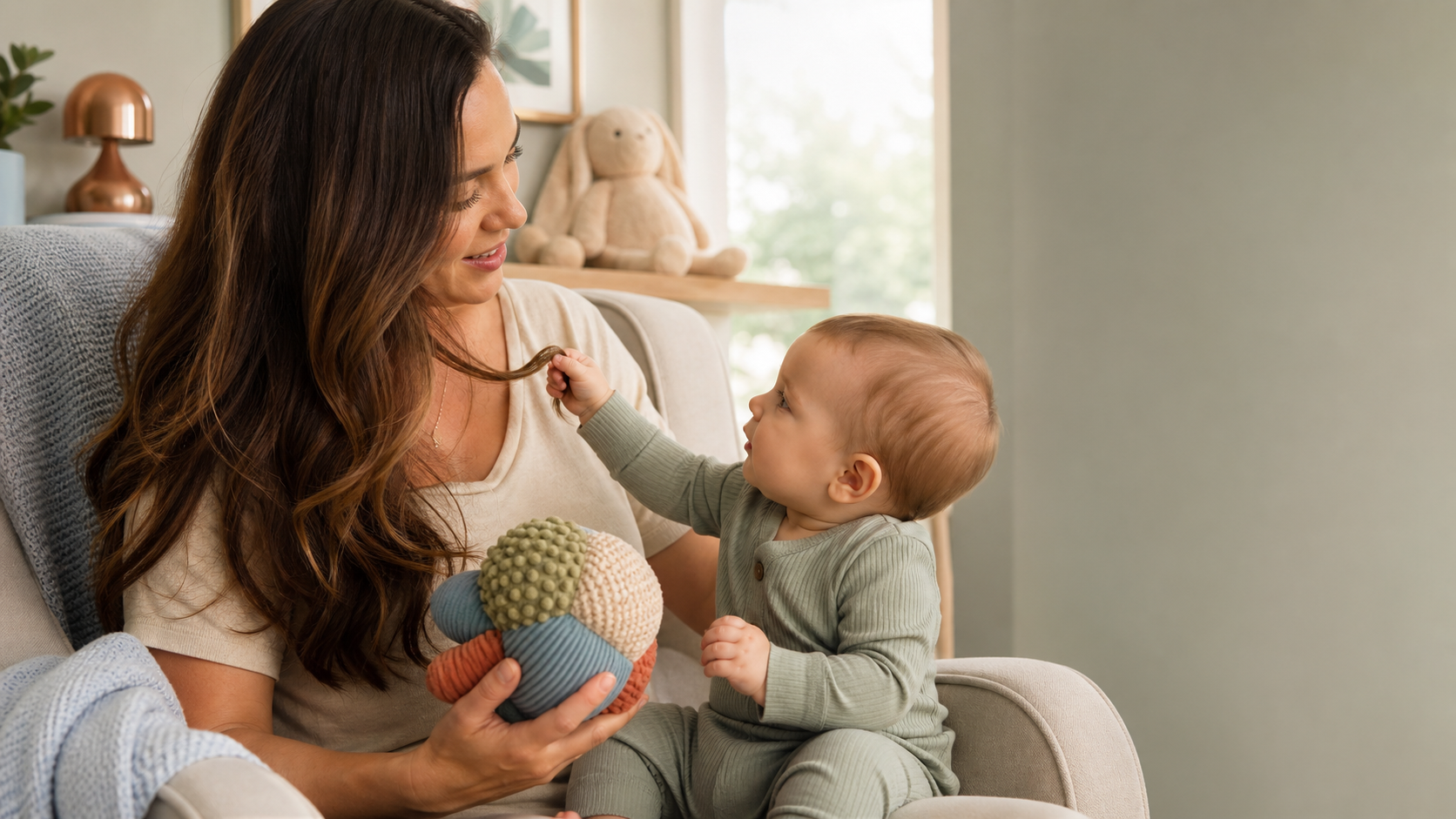
As infants explore the world around them, they can develop an intriguing fascination with hair, especially their mother’s. This newfound curiosity stems from the fact that most babies don’t have much hair themselves. So what happens if this fascination evolves into an obsession? Let’s delve into understanding your baby’s obsession with hair, how it starts, how to manage it, and its possible implications on your baby’s development.
The Origins of Your Baby’s Hair Pulling Obsession
When a baby discovers hair, it’s an entirely new sensory experience for them. If the mother’s hair is long, they find the texture and smell fascinating, leading to pulling and petting. This exploration is typically a healthy part of their development. Your baby might even take comfort from rubbing strands of your hair against their skin. However, if this hair fascination crosses over to an obsession, it might signal an underlying issue.
Addressing Your Hair-Loving Baby
To initially manage the hair-pulling, it might be best to allow this exploration. The intrigue usually subsides quickly. However, if your reaction to the hair-pulling is dramatic, it might encourage them to repeat it. The most effective strategy is to redirect your child’s attention towards a new toy or a different form of stimulation. If your baby seeks comfort from hair-pulling, try giving them a soft blanket or a plush toy instead.
Preventing Hair Consumption
Babies often explore by tasting, but hair should remain an exception. Hair can contain harmful bacteria and is difficult for the digestive system to process. Ingesting large amounts can lead to the formation of hairballs. So, for the sake of your baby’s health, always keep your hair away from their mouth.
Comfort and Hair Obsession
Babies often associate certain items like a blanket or a toy with comfort. Similarly, they might find comfort in the feel of hair, especially during nursing when it’s within easy reach. It’s normal for babies to play with their hair or their mother’s hair while nursing for relaxation.
Baby Obsessed with Eating Hair
If your baby is obsessed with eating hair, it could be a sign of pica, a disorder characterized by the desire to eat non-food items. It’s essential to dissuade this behavior as hair can’t be digested properly and can lead to potential health issues.
Baby Obsessed with Pulling Hair
Infants may pull hair out of curiosity, sensory exploration, or for self-soothing. However, if this habit becomes persistent and causes distress, it might be indicative of a condition called trichotillomania, where individuals feel compelled to pull out hair.
Baby Obsessed with Mom’s Hair
Mom’s hair can be fascinating for babies as it provides a unique texture to explore and offers a familiar scent. This behavior can also serve as a form of comfort, particularly during nursing or while falling asleep.
Autistic Child Obsessed with Hair
Children with autism may become obsessed with hair as a form of stimming, a self-stimulating behavior that helps them regulate their emotions or sensory input. It can also be a means of exploring the world around them.
Why Is My Toddler Obsessed with My Hair?
Your toddler may be obsessed with your hair for comfort, as a sensory stimulus, or simply due to the fascination of its texture and smell. This is generally harmless unless it becomes a compulsive behavior.
Why Does My Baby Keep Playing with His Hair?
Babies often play with their hair as a means of self-soothing or self-stimulation. It’s a sensory experience that can also help them explore their bodies.
Why Does My Baby Hold My Hair While Sleeping?
Holding your hair while sleeping can be a comforting habit for your baby. The smell and touch of your hair can provide a sense of security and help your baby fall asleep more easily.
Why Is My 2-Year-Old Obsessed with Playing with Hair?
Two-year-olds may play with hair for sensory exploration or as a comfort mechanism. However, if it persists or causes distress, it could be a sign of a sensory processing issue or an early sign of a compulsive behavior, and it might be best to consult a pediatrician.
Why Do Babies Play with Their Hair When Tired?
Babies often play with their hair when they’re tired as a self-soothing behavior. It can help them relax and prepare for sleep.
Why Do Babies Rub Off Their Hair?
Babies may rub off their hair due to various reasons, including comfort, self-soothing, or merely exploring their bodies. However, excessive rubbing could also be due to skin irritation or other discomforts.
Why Do Autistic Kids Play with Their Hair?
Autistic children may play with their hair as a form of stimming. It can provide sensory comfort, help manage overwhelming emotions, or assist them in dealing with overstimulating environments.
Why Do Babies Hold Their Mother’s Hair?
Babies hold their mother’s hair as it can provide comfort, security, and sensory stimulation. It’s a familiar object that’s often associated with the comforting presence of their mother.
How Do I Stop My Baby from Grabbing My Hair?
- Redirect their attention with toys or other objects.
- Tie your hair back to make it less accessible.
- Teach your baby the meaning of “no” and gently remove their hand when they grab your hair.
What Is Baby Trich?
Baby Trich, or trichotillomania, is a condition where a person feels an irresistible urge to pull out their own hair. In babies, it can be a response to stress, anxiety, or even boredom. It’s crucial to consult with a pediatrician if you suspect your baby has trichotillomania.
Does Your Baby Pull Their Own Hair?
Not only do babies discover their mothers’ hair, but they also discover their own. Like finding their toes and ears, they are intrigued by their own hair. After a few days of exploration, this interest usually subsides.
Other Concerning Symptoms
Hair pulling, in itself, is a normal developmental behavior. However, when combined with other symptoms such as developmental delays, social interaction difficulties, or eye contact avoidance, it may be a warning sign of autism or other mental health disorders. Additionally, if your child shows sensitivity to touch but exhibits a strong obsession with hair, they may be seeking sensory stimuli. If you observe any of these signs, it’s best to consult with a pediatrician.
Tips to Curb Hair Pulling
- Always tie your hair back when holding your baby or while nursing.
- Keep your baby engaged throughout the day to divert their attention.
- If your baby pulls their hair excessively, maintain their hair short or tie it back.
- Provide alternative stimuli throughout the day, like sensory toys or comforting blankets.
Linking Baby’s Hair Obsession to Sleep
There’s a common belief that babies often replicate elements from their dreams in the real world. Thus, your baby’s obsession with your hair could be a reflection of their dreams. To get a more profound insight into how your baby’s sleep patterns relate to hair obsession, we invite you to visit our SleepBaby.org resources.
How SleepBaby.org Can Help You Navigate Your Baby’s Hair Obsession
SleepBaby.org provides a comprehensive resource to understand and manage peculiar behaviors, like your baby’s hair obsession. These habits often interconnect with sleep patterns and behaviors. We help you decipher your baby’s actions and ensure they achieve a healthy, peaceful sleep. At SleepBaby.org, we guide you through every aspect of your child’s sleep journey, assisting you in understanding how hair obsession may link to your baby’s sleep.
Conclusion
Some behaviors, such as hair pulling, can initially appear concerning but are often just a normal part of developmental exploration. If your baby’s hair pulling continues into toddlerhood or causes pain or distress, it’s essential to involve a pediatrician. In such instances, they can provide a referral to a specialist. An excessive degree of hair pulling can sometimes signify stress, so professional advice can provide you with necessary guidance and reassurance.



What viewers said10 comments · 4 replies+
Archived comments from the original Baby Sleep Miracle presentation. Not independently verified by SleepBaby.org; individual experiences vary.
Thank you so much for this video! I had no idea about the dangers of baby swings :O
Hi Mary-Ann. I have a question: Is method in any way similar to the ones recommended by Dr Bucknam, Dr. Weissbluth or Dr. Karp? We tried those but none of them help.
Hi Regina, thank you for your question. The short answer is no. The techniques I share in my guide are based on newest scientific research and this is why I have never seen any approach similar to the one I recommend.
This method really works! I tried it on my son Jesus and after just one week he went from waking up more than 5 times a night to waking up just once or twice. You are a lifesaver, Mary-Ann!
I'm truly impressed with how much information you share in your video. And all for free! I can feel that you truly care about mothers like myself, and that's hard to find these days. I have recommended your site to several of my friends already.
Mary-Ann, our child suffers from autism. Is your approach still suited?
Chloe, I made sure my method can be used with any child, even babies who are special like yours. Please note that I'm not a doctor and that I always advice to consult with your physician because nothing is more important than the safety and well-being of your love.
Hallo Mary-Ann, I'm from Germany. Do you have your guide in German?
Hello Heide, we do! Normally you should already see our video in German. If not, please contact our support so they can guide you
Thenk you for your answer, Mary-Ann!
I just completed your approach and I have to say, it worked almost too well. Yes, it took a bit of getting used to with your bedtime routine but the difference is huge. My son George used to take 1 hours to go down and now he's firmly asleep in no more than 10 minutes! You're the best!
It seems I'm the only man watching this video, lol! What you shared about the 'emotional backpack' made immediate sense to me and I can't wait to help my little girl Mila to unpack it!
Hey there, just discovered your site and this really sounds different. Just wanted to say thanks for sharing :)
For everyone who's still thinking about getting Mary-Ann's guide I want to advise you to go ahead. I wasn't sure myself but now I'm so thankful I invested in this program. It made a huge difference in our life as a family and yes, my baby girl does sleep through the night now.