
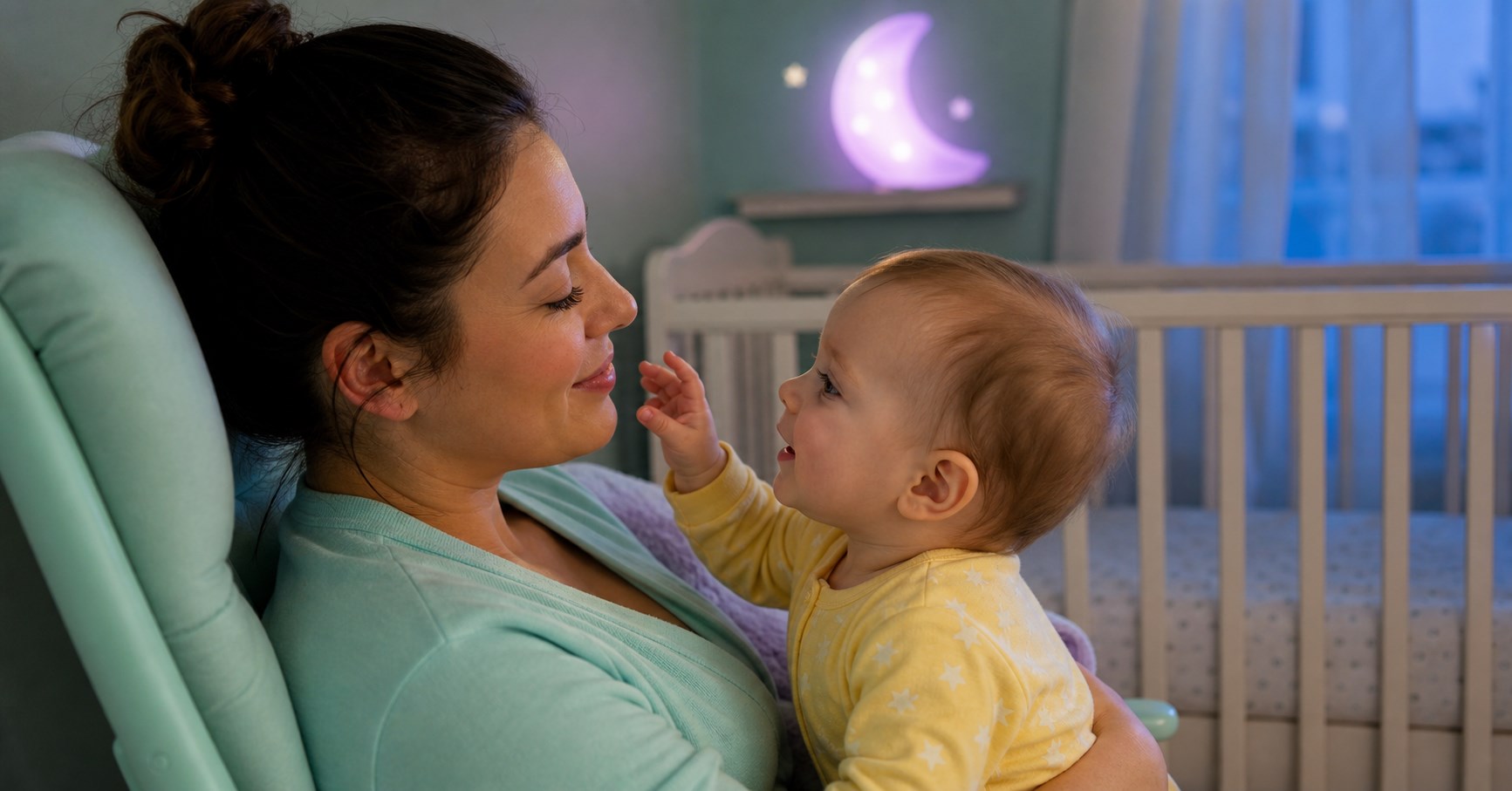
A baby’s fascination with the world around them is a significant part of their developmental journey. One peculiar obsession that some parents notice is a baby’s fascination with eyelashes. This post aims to shed light on this intriguing behavior, why it happens, and how it impacts both you and your baby.
Why is My Baby Obsessed with Eyelashes?
Exploring Through Touch
During the initial months of their lives, babies explore the world through their senses. Touching different textures, including the soft, fine hair of your eyelashes, provides them with a sensory experience that fascinates them and aids their learning process.
Bonding and Interaction
When your baby touches your eyelashes, they’re likely to get a reaction from you, which can be entertaining and interesting for them. This interaction encourages bonding and enhances their communication skills.
Is My Baby’s Obsession with Eyelashes a Concern?
Generally, a baby’s interest in eyelashes is not a cause for concern. It’s part of their normal development and exploration of the world. However, constant pulling or tugging at eyelashes can potentially hurt, especially if they’re pulling their own. In such cases, gentle redirection and distraction with other toys or activities can be useful.
Why Your Baby Is Fascinated With Eyelashes
Why does my baby play with her eyelashes?
Babies learn about the world through sensory exploration. The unique texture of eyelashes can intrigue them. Playing with eyelashes can be a form of self-soothing or even a simple fascination with something new and interesting.
Are eyelashes sensory?
Yes, eyelashes are part of the body’s sensory system. They help protect the eyes from foreign objects, and their touch can trigger a protective blink reflex.
Why does my baby play with my eyes?
Again, this relates to sensory exploration and curiosity. Babies are drawn to facial features because they are sources of interaction and communication.
Health Concerns Related to Eyelash Pulling
What is obsessive pulling of eyelashes?
Obsessive eyelash pulling, also known as trichotillomania, is a mental disorder that involves recurrent, irresistible urges to pull out hair from the eyelash area or other parts of the body.
Why does my 1 year old keep pulling her eyelashes?
If your baby is persistently pulling at their eyelashes, it could be a sign of discomfort or irritation. However, if they are pulling out eyelashes obsessively, it could indicate a disorder like trichotillomania.
Do eyelashes grow back after trichotillomania?
Yes, eyelashes can regrow after trichotillomania. However, repeated pulling can damage hair follicles, potentially leading to permanent loss.
Is trichotillomania an anxiety disorder?
Trichotillomania is classified as a body-focused repetitive behavior (BFRB), often linked to anxiety or stress. It’s not classified as an anxiety disorder but can coexist with anxiety disorders.
Understanding Eyelashes: From Genetics to Growth
Are good eyelashes genetic?
Yes, the length, color, and curliness of your eyelashes are largely determined by genetics.
At what age do eyelashes stop growing?
Eyelashes, like other hair on the body, continuously go through growth cycles throughout one’s life. However, the length and fullness may decrease with age.
What ethnicity has straight eyelashes?
Straight eyelashes are often seen in individuals of Asian descent due to genetic factors.
Which gender typically has fuller eyelashes?
In general, there’s no significant difference in eyelash length or thickness between genders. However, hormones can influence the growth and fullness of eyelashes.
Autism, Anxiety and Eyelash Pulling
What are the early signs of autism in babies?
Early signs of autism in babies can include limited eye contact, lack of social smile, delayed speech, lack of response to name, and repetitive behaviors.
Is pulling eyelashes a form of autistic stimming?
In some cases, eyelash pulling can be a form of stimming – repetitive behaviors often seen in individuals with autism. However, it can also be a sign of trichotillomania.
SleepBaby.org: Your Ally in Understanding Your Baby’s Behavior
Understanding and managing your baby’s behaviors, including their fascination with eyelashes, can be a challenging part of parenthood. That’s where SleepBaby.org steps in. Our aim is to support you in navigating through your child’s development, including their sleep patterns, which can often be influenced by their behaviors and habits during waking hours.
If your baby’s obsession with eyelashes is affecting their sleep, or yours, we can provide guidance and solutions. For instance, if your child is repeatedly waking up at night to touch or pull their eyelashes, it could be disrupting their sleep cycle. We at SleepBaby.org can provide techniques and tips to help divert their attention and promote better sleep.
SleepBaby.org offers scientifically-backed strategies to tackle a wide range of baby sleep-related topics, ensuring that the advice you receive is tailored to suit your baby’s unique needs. Remember, your baby’s obsession with eyelashes is a normal part of their development and sensory exploration. With patience and the right guidance, you can navigate this phase effectively.
Conclusion
Your baby’s fascination with eyelashes, although peculiar, is part of their normal developmental process. They’re exploring the world and learning new things every day. If you need any guidance or support in understanding or managing your baby’s behaviors, SleepBaby.org is here for you. Your journey through parenthood is not one you have to walk alone; we’re here to help.



What viewers said10 comments · 4 replies+
Archived comments from the original Baby Sleep Miracle presentation. Not independently verified by SleepBaby.org; individual experiences vary.
Thank you so much for this video! I had no idea about the dangers of baby swings :O
Hi Mary-Ann. I have a question: Is method in any way similar to the ones recommended by Dr Bucknam, Dr. Weissbluth or Dr. Karp? We tried those but none of them help.
Hi Regina, thank you for your question. The short answer is no. The techniques I share in my guide are based on newest scientific research and this is why I have never seen any approach similar to the one I recommend.
This method really works! I tried it on my son Jesus and after just one week he went from waking up more than 5 times a night to waking up just once or twice. You are a lifesaver, Mary-Ann!
I'm truly impressed with how much information you share in your video. And all for free! I can feel that you truly care about mothers like myself, and that's hard to find these days. I have recommended your site to several of my friends already.
Mary-Ann, our child suffers from autism. Is your approach still suited?
Chloe, I made sure my method can be used with any child, even babies who are special like yours. Please note that I'm not a doctor and that I always advice to consult with your physician because nothing is more important than the safety and well-being of your love.
Hallo Mary-Ann, I'm from Germany. Do you have your guide in German?
Hello Heide, we do! Normally you should already see our video in German. If not, please contact our support so they can guide you
Thenk you for your answer, Mary-Ann!
I just completed your approach and I have to say, it worked almost too well. Yes, it took a bit of getting used to with your bedtime routine but the difference is huge. My son George used to take 1 hours to go down and now he's firmly asleep in no more than 10 minutes! You're the best!
It seems I'm the only man watching this video, lol! What you shared about the 'emotional backpack' made immediate sense to me and I can't wait to help my little girl Mila to unpack it!
Hey there, just discovered your site and this really sounds different. Just wanted to say thanks for sharing :)
For everyone who's still thinking about getting Mary-Ann's guide I want to advise you to go ahead. I wasn't sure myself but now I'm so thankful I invested in this program. It made a huge difference in our life as a family and yes, my baby girl does sleep through the night now.