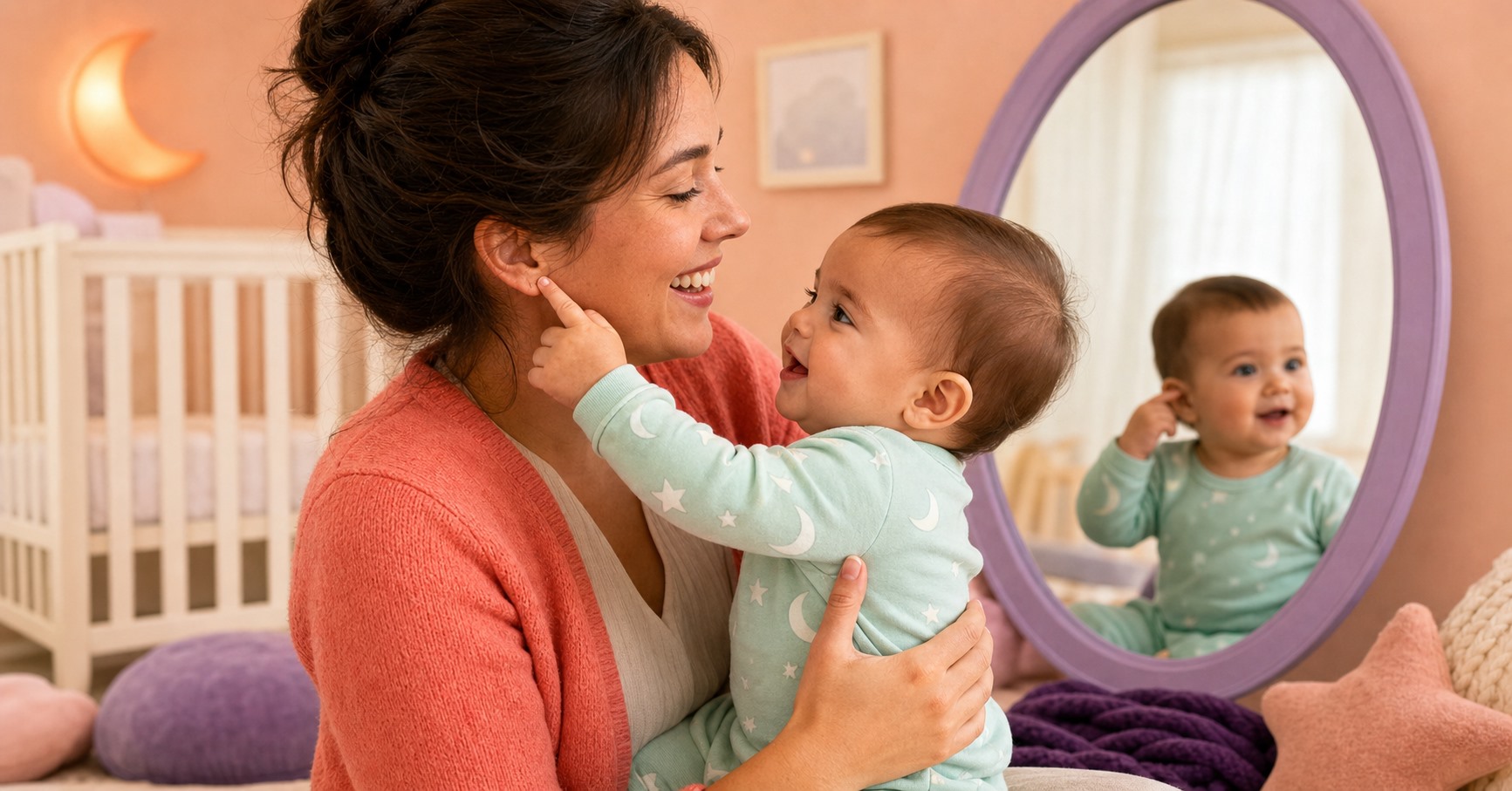
A baby’s fascination with ears is common and is often part of their exploration of the world. In this post, we’ll dive into the reasons why your baby might be obsessed with ears, how to manage this obsession, and how SleepBaby.org can help you navigate these and other similar issues.
Why is My Baby Obsessed with Ears?
Babies are naturally curious and love to explore their environment. By around six months, they start to become more aware of their own bodies and the bodies of others. One of these discoveries is the unique feel and texture of ears. Whether it’s their ears or yours, they might find the soft, flexible nature of ears interesting and comforting.
Health and everyday sleep
Health first.
Rest, when you’re ready.
Take care of the health or safety question first. If you’re also looking for everyday baby-sleep help, you can watch our video below when you’re ready.
Prefer to read?Press play for a little help with your baby’s next bedtime.
Kind words about the original video
“Thank you so much for this video!”
“I'm truly impressed with how much information you share in your video.”
The SleepBaby Workshop
An everyday sleep resource.
For a separate look at ordinary nights: 15 guides and five audio tracks in a simple browser hub. Read, listen, and return to the part you need.
Current price shown in the cart.
Digital Workshop. Nothing ships.
A conversation, if you want one.Night Owls is the SleepBaby chat room. Read what is there or join in.
The Comfort Factor
Touch is one of the first senses that babies develop. They love textures and often find comfort in soft and flexible things. Ears, in particular, can be quite appealing due to their unique texture and accessibility. They are soft, squishy, and easy to grab, making them a perfect object for a baby’s curious hands.
Sensory Exploration
Ears also provide an interesting sensory experience. They might enjoy the sensation of touching, tugging, or even nibbling on them. It’s a part of their learning process, and they might simply be fascinated by how the ears feel.
Bonding and Affection
If your baby is obsessed with your ears specifically, it can also be a way of bonding. When they touch your ears, they get your attention. It’s a way of interacting with you and showing affection.
How to Manage Your Baby’s Obsession with Ears
Safety First
Ensure that your baby’s exploration doesn’t hurt them or you. Gently guide their hands away if they pull too hard. Also, ensure that they don’t put small objects in their ears.
Provide Alternatives
Offer alternative objects with similar textures, like soft toys, that can satisfy their sensory curiosity.
Distract and Redirect
If they get too fixated on ears, try to distract and redirect their attention towards other activities.
Understanding Your Baby’s Fascination with Ears
Why is my baby obsessed with ears?
Babies are naturally inquisitive and love exploring different textures. The soft, flexible nature of ears, coupled with their easy accessibility, often attracts a baby’s attention.
Is it normal for babies to always grab their ears?
Yes, it’s normal. Babies often grab their ears as part of their sensory exploration. It could also be a self-soothing gesture, especially when they are tired or teething.
What does it mean when my baby continually touches their ear?
Babies may frequently touch their ears as part of sensory exploration or self-soothing. However, persistent ear touching could be a sign of discomfort due to teething, an ear infection, or even an itchy ear.
Possible Health Concerns: Teething, Ear Infections and More
Does ear pulling signify teething?
Yes, ear pulling can be a sign of teething. The pain from the emerging teeth can radiate to the ears, leading the baby to pull or tug at them.
Can teething cause ear irritation?
While teething doesn’t directly cause ear irritation, the discomfort of teething can cause babies to tug or pull at their ears, potentially leading to irritation.
How can I determine if my baby has an ear infection?
Signs of an ear infection in babies may include tugging at the ear, fussiness, trouble sleeping, fever, fluid draining from the ear, or balance difficulties. If you suspect an ear infection, consult your pediatrician.
Why does my baby keep scratching his ear until it bleeds?
If your baby is persistently scratching their ear to the point of bleeding, it could be due to severe itchiness or discomfort. This could be a sign of an ear infection, skin condition, or even an allergic reaction. Consult a pediatrician if you notice this behavior.
Cleaning and Caring for Your Baby’s Ears
How do you clean a baby’s ears?
Cleaning a baby’s ears should be done gently with a damp washcloth. Never insert anything, like a cotton swab, into your baby’s ear canal as it can cause damage. If you suspect earwax buildup, consult your pediatrician.
Can I put breast milk in my baby’s ear?
While some suggest using breast milk for minor ailments due to its antibacterial properties, there is no scientific evidence supporting its use for ear issues. Always consult your pediatrician before trying any home remedies.
Interpreting Your Baby’s Behavior: From Self-Soothing to Sensory Triggers
How does a baby self soothe?
Babies may self-soothe by sucking their thumb, holding a blanket or soft toy, or touching certain textures, like ears. It’s a normal part of development and helps them manage their emotions.
Why does my baby rub the side of his head and his ear?
If your baby is rubbing the side of their head and ear, they could be self-soothing, itchy, or experiencing discomfort. This behavior can also be seen when babies are tired.
What does it mean when a baby covers their ears with their hands?
Babies may cover their ears when they’re tired, overwhelmed by noise, self-soothing, or even playing. If it’s combined with other concerning behaviors, you may want to consult your pediatrician.
Autistic Traits and Ear Touching
Do autistic children often touch their ears?
Ear touching can be a characteristic of sensory processing issues, which are common in autistic children. However, ear touching alone is not a definitive sign of autism.
What are the sensory triggers of autism?
Sensory triggers can vary widely among individuals with autism. They may be oversensitive to sounds, lights, touch, tastes, smells, pain, or other stimuli. Again, this is a broad symptom and should be discussed with a medical professional if you have concerns.
How can I rule out autism in my baby?
Autism diagnosis usually involves observation of behavior and development. If you suspect your baby may have autism, consult your pediatrician, who can provide a proper evaluation or refer you to a specialist.
Managing Your Baby’s Ear Touching Habit
Why does my baby pull his hair and ears?
Babies may pull at their hair and ears as part of their sensory exploration, self-soothing, or due to discomfort like teething or an ear infection. Distracting them or providing alternative textures to explore may help.
Why does my baby like touching my ears?
Your baby may enjoy the texture of your ears, or they may view it as a form of bonding. When they touch your ears, they get your attention, fostering interaction and communication.
How SleepBaby.org Can Help
SleepBaby.org is your go-to resource for understanding and managing your baby’s behaviors and sleep patterns. Our aim is to help you navigate through your baby’s developmental milestones with ease and confidence.
If your baby’s obsession with ears is disrupting their (or your) sleep, we’re here to help. The fixation might be a source of comfort to them, especially when they’re trying to self-soothe and fall asleep. At SleepBaby.org, we can provide guidance on how to manage this and introduce sleep-friendly alternatives.
In addition to offering solutions on managing your baby’s obsessions, SleepBaby.org offers a wealth of information on a variety of topics related to baby sleep. Our strategies are based on scientifically-backed research and tailored to suit your baby’s unique needs.
Remember, a baby obsessed with ears is a common phase, and it’s part of their natural curiosity and development. With patience and understanding, you can manage this phase effectively. Turn to SleepBaby.org for all your baby-related concerns, we’re here to support you in your parenting journey.
The SleepBaby.org Workshop
Make a plan for
the next bedtime.
Practical help for wake-ups, short naps, and sharing the night shift. Watch the original video, then get 15 guides and five audio tracks for $75.
$75 USD, paid once. No subscription. Digital access.
Watch the original Baby Sleep Miracle presentation
Press play for a little help with your baby’s next bedtime.
Original presentation. Watch before you decide.
15practical guides
5audio tracks
1one-time payment
Kind words about the original video
“Thank you so much for this video!”
“I'm truly impressed with how much information you share in your video.”
Inside the Workshop
Start with the night
you're having.
You don't need to read all 15 guides before bedtime. Choose the one that answers the question in front of you, then come back for the next part.
Before you buy
A few things
made clear.
A straightforward purchase, with space to decide what fits your family.
What am I buying?
The SleepBaby.org Workshop includes 15 digital guides, five audio tracks, and the original Baby Sleep Workshop PDF as an additional download. It costs $75 USD, paid once, with no subscription. Nothing is shipped.
Where should I start?
Try Tonight Rescue when you need a starting point. If your question is more specific, go straight to the guide on naps, a caregiver handoff, the sleep space, or another topic. You can read at your own pace.
Is this personal sleep coaching?
No. This is an educational collection for parents of babies and young children. Use the age-specific guidance, and bring feeding, breathing, growth, illness, or other health concerns to your child's clinician. It does not diagnose a problem or promise a sleep result.
Is the video the paid Workshop?
You can watch the original Baby Sleep Miracle presentation on this page. Your purchase is the SleepBaby.org Workshop collection of guides, audio tracks, and the original PDF described here.
How do I find it after checkout?
Choose Open my Workshop on your thank-you or order-status page to open the full Workshop portal. Download the guides and book as PDFs for reading offline. Keep your order confirmation so you can return to the portal and audio player. If you need help finding your access, use our Workshop download help.
The SleepBaby.org Workshop
Have somewhere to start
at the next bedtime.
15 practical guides. Five audio tracks. One $75 purchase.


Leave a comment