Skip to content
SleepBaby .org
Development & Behavior

Understanding Your Baby’s Obsession with Closing Doors

Read the answer first. The Workshop is here only when you want the next step.

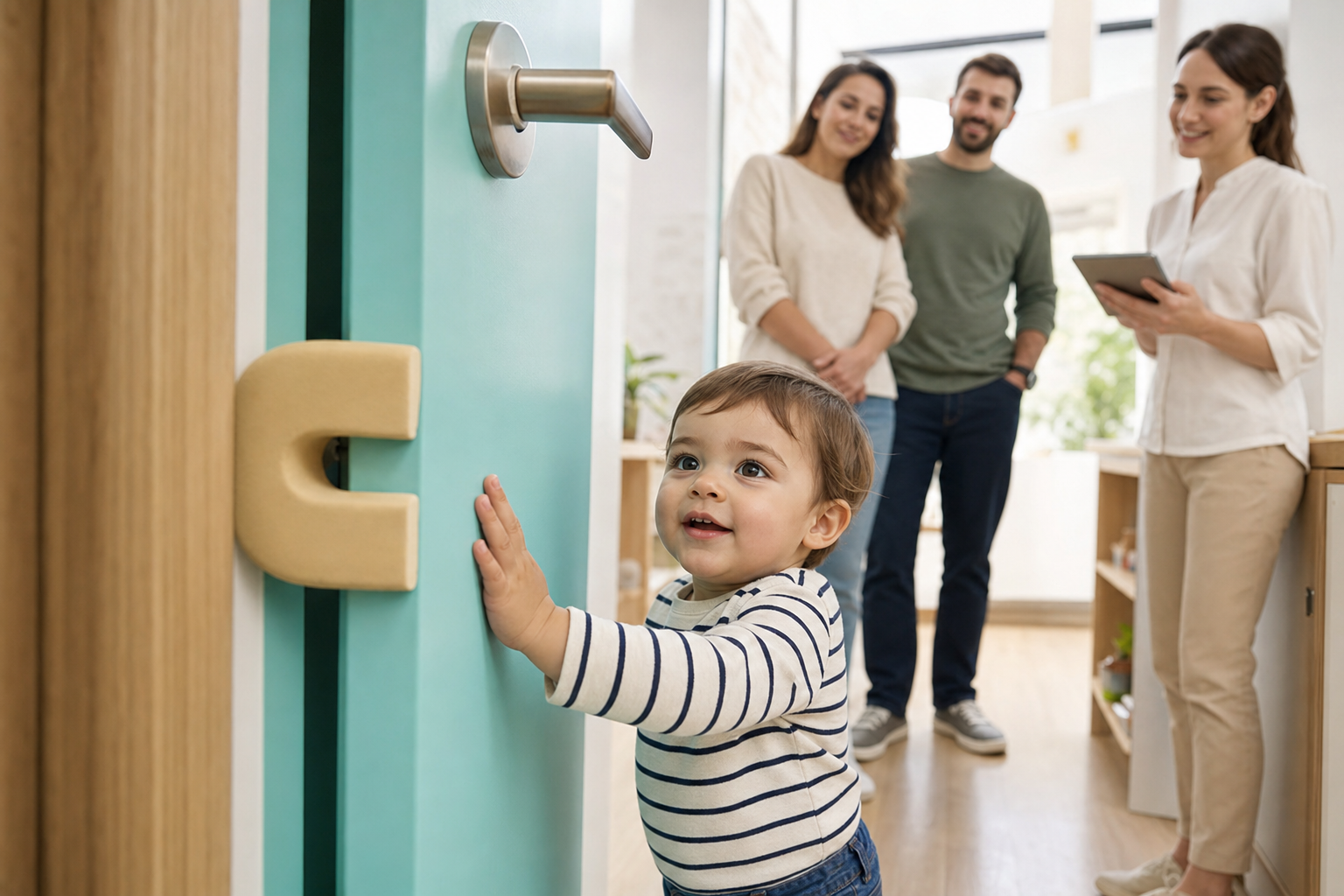
Toddler presses a turquoise door as two caregivers and a clinician watch

Has your little one developed an obsession with closing doors? This post will explain why babies often display such behavior, how to safely manage it, and when you might need to be concerned.

Understanding the Door-Closing Obsession

Babies and toddlers are naturally curious, and doors offer a simple yet captivating way for them to manipulate their environment. Here’s why your baby might be so interested in closing doors.

The Cause and Effect Principle

Closing doors allows babies to experience the concept of cause and effect. They push or pull the door, and it moves — a fascinating discovery for young minds!

SleepBaby.org · The original video

A little help
for the night ahead.

Take a moment to watch the original Baby Sleep Miracle presentation. Your article will be right here when you’re ready to keep reading.

Baby Sleep MiracleWatch here
Original Baby Sleep Miracle

Press play when you’re ready.

Ready to get started?Take the next step with SleepBaby.

Help my baby sleep
Sensory Feedback

The visual change when a door closes, the sound it makes, and the physical action required all provide sensory feedback that babies find interesting.

Imitation

Babies love to mimic adults. If they frequently see you opening or closing doors, they’ll want to try it too.

Ensuring Safety and Setting Boundaries

While it’s great to allow exploration, it’s essential to ensure your baby’s safety and teach them that some doors must remain closed or open.

Baby Proofing

To prevent finger pinching, install door slam stoppers and make sure heavy doors have slow-closing mechanisms.

Setting Boundaries

Teach your baby that some doors, like closet doors or exterior doors, should not be played with.

Supervision

Always supervise your baby when they’re playing with doors to prevent any accidents.

Decoding the Door-Closing Obsession

Why Does My Baby Like Closing Doors?

This fascination often stems from your baby’s discovery of cause and effect, their desire to mimic adults, and the sensory feedback provided by the action of closing a door.

What Is the Psychology of Closing Doors?

Closing doors can symbolize control over their environment for a child. The door’s movement and sound when closing provide sensory stimulation that can be enjoyable to a baby.

Do Babies Get Fixated on Things?

Yes, babies often fixate on certain activities or objects as they explore the world around them. This fixation aids their learning and development.

Why Do Babies Want to Be So Close to You?

Babies, especially in their early years, seek proximity for comfort, security, and as part of their attachment development.

Navigating Safety and Sensory Concerns

How Do I Stop My Baby from Closing the Door?

It’s crucial to balance your baby’s curiosity with safety. Installing door safety equipment like pinch guards and providing other intriguing play options can help.

What Do Sensory Issues Look Like in Babies?

Sensory issues can manifest as a strong aversion or fixation on certain textures, lights, sounds, or activities.

How Do I Know If My Baby Is Sensory Seeking?

Sensory seeking can present as an intense interest in certain sensory experiences, such as the tactile and auditory feedback from closing doors.

Understanding Door-Closing in Relation to Autism

Is Opening and Closing Doors a Sign of Autism?

While repetitive behaviors can be a sign of autism, remember that all babies exhibit repetitive behaviors to some degree. Consult a healthcare professional if you have any concerns.

What Do Autistic Babies Act Like?

Autistic babies may show varied signs, such as less eye contact, delayed milestones, or unusual fixations. However, many of these signs are also present in typical development, so it’s important not to jump to conclusions.

How Can SleepBaby.org Help?

When a baby develops a new obsession, such as closing doors, it can sometimes affect their sleep patterns. They may wake up during the night wanting to play with doors, or have difficulty settling down for a nap without their favorite activity.

At SleepBaby.org, we understand these challenges. Our team of experts can provide advice on how to manage your baby’s fascination while maintaining healthy sleep habits. We can provide strategies to ensure your baby’s interest in doors doesn’t interfere with the restful sleep they need for their growth and development.

Whether you’re dealing with a baby obsessed with closing doors, or any other bedtime challenge, remember that you are not alone. At SleepBaby.org, we’re here to help you navigate these developmental phases. Contact us today for expert guidance on promoting your baby’s safety, health, and sound sleep.

SleepBaby.org · The original video

A next step for
the next bedtime.

Still thinking about sleep? Watch the presentation here, then explore the SleepBaby program whenever you’re ready.

Baby Sleep MiracleWatch here
Original Baby Sleep Miracle

Press play when you’re ready.

Ready to get started?Take the next step with SleepBaby.

Help my baby sleep
From the guide to your next step

Explore SleepBaby.org

Step-by-step sleep help · newborn through toddler

A starting point for your nights.

SleepBaby is a browser-based Workshop for parents of newborns through toddlers. Choose your baby’s age, usual full wakes, and the change you want most. The free preview gives you one thing to try, what to watch over the next few nights, and a look at the help inside the Workshop.

Use the free library

3 questions · no card · visible preview stays in this browser · analytics follows your privacy settings

Example: 8–12 months · 3–4 wakes · fewer wakes

Let’s choose one response you can repeat.

Here’s one example. Your three answers will shape your own starting point.

Try this next
At the first wake, check what your baby needs and use a quiet reassuring phrase while you feed or comfort them.
What to watch
Notice the timing of the first repeated wake and what helped across nights 2–5, without withholding needed feeds or comfort.
Your effort
Keep a familiar response and compare a few first-wake notes.
Before you begin
Care first, then a familiar response
A small note for each night

Across seven nights, keep a note of the first wake and your response; add nap timing when you know it, then review one small change rather than rewriting the whole night.

The Workshop pairs short steps you can revisit with a seven-night tracker, so the response you’re trying and the notes about it stay together.

Example only. Answer the three questions to see a starting step for your family.

Fictional illustrative tracking example

Fictional illustrative full-wake tracking example over seven nights. The invented baseline ends at 4.0 wakes and the invented illustrative path ends at 1.6 wakes. These are not measured or predicted results. TonightNight 2Night 3Night 4Night 5Night 6Night 7
Fictional starting patternFictional illustrative path

This graph is a separate fictional example. Your answers do not change it.

Don’t take a sales claim on faith. Inspect the decision paths.

Illustrative planning scenarios—not measured customers or verified outcomes. Use the views below to inspect upside, downside, no-change, and no-purchase paths.

Choose an illustrative decision view
Closest waking pattern8–18 mo

What progress could look like

Illustrative family pattern

2.0 fewer night-wakings(example range: 1.2–2.9)

↓ 44%example
Night-wakings per night over seven illustrative nights. Current example: 4.5 wakes to 4.5 wakes. Illustrative path: 4.5 wakes to 2.5 wakes. Example change: 2.0 fewer night-wakings.

Planning example · not an observed cohort

Closest bedtime pattern4–7 mo

What progress could look like

Illustrative family pattern

18 min faster settling(example range: 9–31 min)

↓ 38%example
Settling time in minutes over seven illustrative nights. Current example: 47 min to 47 min. Illustrative path: 47 min to 29 min. Example change: 18 min faster settling.

Planning example · not an observed cohort

Closest morning patternToddler

What progress could look like

Illustrative family pattern

42 min later morning wake time(example range: 21–64 min)

↑ 42 minexample
Morning wake time over seven illustrative nights. Current example: 5:30 am to 5:30 am. Illustrative path: 5:30 am to 6:12 am. Example change: 42 min later morning wake time.

Planning example · not an observed cohort

Planning examples, not testimonials or cohort evidence. Real outcome claims should appear here only when they are independently auditable. Decision safeguards

What the complete Workshop adds after the preview.

Tonight’s Starting Step

A clear first move based on the three answers you choose.

Seven-Night Tracker

A simple way to log changes without treating one night as proof.

Tired-Parent Format

Short steps built for exhausted adults to revisit together.

See the starting point before checkout.

The preview shows the first action, time involved, tracking focus, and reasons the paid Workshop may not be the right next step. It is a planning screen, not a promised outcome. Current purchase and refund terms appear on the secure purchase page.

3-question planning preview Free library stays available Secure SleepBaby purchase page

Take a look, then decide.

Use the preview, inspect the limitations, and decide whether the complete Workshop is worth it for your family.

A few choices. A place to begin.

Your private sleep preview.

Tell me what nights look like, and I’ll help you choose one thing to try.

No sign-up. No card.

Private Workshop preview · 3 questions · no card

A starting point for your family.

Choose your baby’s age, usual full wakes, and what you’d like to explore.

How this preview uses your answers

This is a planning preview, not a medical or safety clearance or a promised result. Your choices stay in this browser tab for this visit, including when you move between our articles and homepage. Growth OS may record categorical choices and actions unless analytics is turned off in the site’s privacy settings or your browser sends GPC/DNT. Google Analytics receives them only after analytics permission. The preview never sends typed sign-in values, your name, email, password, or free text. Deleting the visible preview does not erase analytics already recorded. Privacy policy.

1 of 3
How old is your baby?