Skip to content
SleepBaby.orgParent Library
Sleep help
Join the parent chat

Why is My Baby Obsessed with Buttons? Understanding Their Fascination

The Fascination with Buttons Why Do Babies Love Buttons? Buttons, with their different shapes, colors, and textures, present an exciting world for little ones. They provide a source of fascination and a means to…

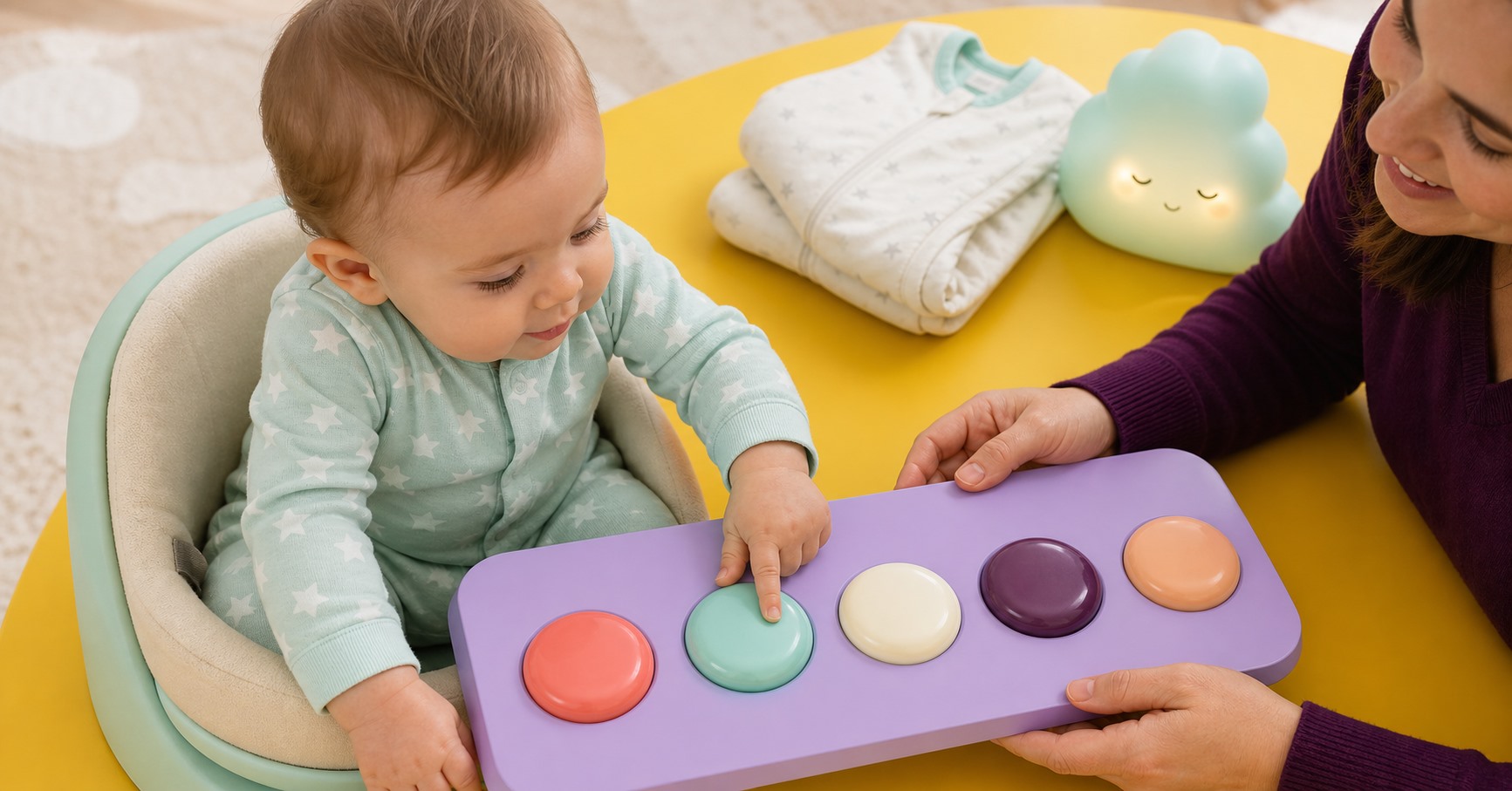
A baby in mint star pajamas presses one of five oversized fixed pastel buttons on a lavender sensory panel.
In this guide
  1. The Fascination with Buttons
  2. Why Do Babies Love Buttons?
  3. What is the Role of Buttons in a Baby’s Development?
  4. Turning Button Fascination into a Learning Opportunity
  5. How to Use Buttons in Learning and Play?
  6. What Precautions Should I Take When My Baby Plays with Buttons?
  7. Understanding the Obsession with Buttons
  8. Is it Normal for My Baby to be Obsessed with Buttons?
  9. How Can I Redirect My Baby’s Obsession with Buttons?
  10. Why is My Baby Obsessed with Buttons?
  11. Why Does My Toddler Love Buttons?
  12. Is it Normal for Babies to Fixate on Things?
  13. Why are Babies Obsessed with Remote Controls?
  14. Sensory Issues and Their Connection with Button Fascination
  15. What do Sensory Issues Look Like in Babies?
  16. Can a Baby Have Sensory Issues Without Autism?
  17. What are the 3 Patterns of Sensory Processing Disorders?
  18. Are Buttons Safe for Babies?
  19. Spotting Signs of Autism and ADHD in Babies
  20. What are Signs of Autism in Babies?
  21. What are the Red Flags for Autism in a 2-Year-Old?
  22. What does High Functioning Autism Look Like in Babies?
  23. What are Signs of ADHD in Babies?
  24. Addressing Screen Addiction and Stimulating Behavior
  25. Why is My Baby Obsessed with Screens?
  26. How do I Get Rid of My Baby’s Screen Addiction?
  27. What is Stimming in Babies?
  28. What is an ADHD Meltdown?
  29. How SleepBaby.org Can Help with Your Baby’s Button Obsession
  30.  Conclusion

The Fascination with Buttons

Why Do Babies Love Buttons?

Buttons, with their different shapes, colors, and textures, present an exciting world for little ones. They provide a source of fascination and a means to explore their environment.

What is the Role of Buttons in a Baby’s Development?

Playing with buttons can enhance fine motor skills, color recognition, and counting abilities. It is crucial to always supervise these activities due to the choking hazard buttons can present.

Turning Button Fascination into a Learning Opportunity

How to Use Buttons in Learning and Play?

There are many safe ways to incorporate buttons into learning and play. Create a button sorting activity or a button art project to foster creativity and cognitive development.

What Precautions Should I Take When My Baby Plays with Buttons?

Always supervise your child when they’re playing with buttons or any small objects. Never leave a baby alone with buttons due to the choking risk they pose.

Understanding the Obsession with Buttons

Is it Normal for My Baby to be Obsessed with Buttons?

Babies often become fascinated by certain objects. Their obsession with buttons, or other small objects, is a part of their exploration and understanding of the world around them.

How Can I Redirect My Baby’s Obsession with Buttons?

Redirecting your baby’s obsession with buttons can be as simple as offering other interesting and safe items to explore. Try items with different textures, shapes, and colors.

Why is My Baby Obsessed with Buttons?

The obsession with buttons in babies and toddlers is a common phenomenon, often linked to their curiosity, and the novelty and interactivity buttons offer.

Why Does My Toddler Love Buttons?

As toddlers learn about cause and effect, buttons present a great opportunity for exploration. The response they receive upon pressing buttons (like sounds or lights) can be intriguing and entertaining.

Is it Normal for Babies to Fixate on Things?

Yes, it’s normal for babies to show fixation on certain objects, including buttons. It’s part of their learning and exploration process.

Why are Babies Obsessed with Remote Controls?

Similar to buttons, remote controls are fascinating to babies due to their multiple keys, interesting shapes, and the response they produce.

Sensory Issues and Their Connection with Button Fascination

What do Sensory Issues Look Like in Babies?

Sensory issues may include extreme reactions to sounds, textures, or lights. A baby with sensory issues might either avoid or seek certain sensory experiences.

Can a Baby Have Sensory Issues Without Autism?

Yes, babies can have sensory processing issues without having autism. Sensory Processing Disorder (SPD) can occur independently of other conditions.

What are the 3 Patterns of Sensory Processing Disorders?

The three main patterns of SPD are sensory modulation disorder, sensory-based motor disorder, and sensory discrimination disorder.

Are Buttons Safe for Babies?

While buttons can be intriguing, they pose a choking hazard. Always ensure your baby is playing with safe, age-appropriate toys.

Spotting Signs of Autism and ADHD in Babies

What are Signs of Autism in Babies?

Signs of autism in babies may include lack of eye contact, minimal social responsiveness, or delayed language skills.

What are the Red Flags for Autism in a 2-Year-Old?

Red flags for autism in a 2-year-old include limited eye contact, few social interactions, lack of response to their name, and repetitive behaviors.

What does High Functioning Autism Look Like in Babies?

High-functioning autism may present as advanced language skills, difficulty with social interaction, and intense interest in certain objects or topics.

What are Signs of ADHD in Babies?

ADHD in babies can be hard to diagnose but may include excessive movement, difficulty settling, and problems with sleep.

Addressing Screen Addiction and Stimulating Behavior

Why is My Baby Obsessed with Screens?

The colorful, dynamic nature of screens can be attractive to babies. However, excessive screen time isn’t beneficial for their development.

How do I Get Rid of My Baby’s Screen Addiction?

Limiting screen time, providing engaging physical toys like those with buttons, and interactive play are effective ways to manage screen addiction in babies.

What is Stimming in Babies?

Stimming refers to self-stimulating behaviors like flapping hands, rocking, or fixation on certain objects. In babies, it can be part of normal development or associated with conditions like autism.

What is an ADHD Meltdown?

An ADHD meltdown is an intense response or outburst that occurs when a child with ADHD becomes overwhelmed.

How SleepBaby.org Can Help with Your Baby’s Button Obsession

At SleepBaby.org, we provide a wealth of information on various topics, including your baby’s fascination with objects like buttons. We also provide helpful tips on how to leverage this interest for cognitive development. Moreover, our resources include sleep-related advice and techniques that can help your baby establish healthy sleep patterns, creating a better night’s sleep for everyone.

 Conclusion

Babies love to explore and often become obsessed with the most mundane objects, like buttons. This fascination is a normal part of their development. While it’s essential to always supervise your child during play, especially with small items like buttons, these moments of obsession can also be excellent opportunities for learning and growth.

The night-shift conversation

What are nights looking like at your house?

Compare notes, ask a follow-up, or leave the detail another tired parent may need tonight. No perfect parenting answer required.

  • No email needed
  • Kindness moderated
  • Easy threaded replies
0 messages

You can start this thread.A question, a rough night, or one tiny win is enough to help another parent feel less alone.

Your turn

Join the night-shift chat

Just your message + an optional nickname. No email, account, or website field.

Say what happened, ask the follow-up, or share the tiny thing that helped. A sentence is enough.

Not sure where to begin?Tap a starter, then finish the thought.

Honest and specific beats polished.0 / 5000

Keep it kind and public-safe: leave out full names, contact details, and sensitive medical information. New messages may be briefly moderated.

A nickname is enough—please do not use your full name.

Usually under a minute. Your message may appear after moderation.

The article ends. The night shift does not. Need more than one answer tonight?

Step into the complete SleepBaby Method: the story, the plan, three extra tools, and our temporary family-first pricing test.

Full method + 3 bonusesNothing held back $40 method, flexible todaySame full method. Family-first test. 365-day guaranteeYour purchase is protected

For the parent with 14 tabs open at 2:13 a.m.

Your baby won't sleep. You're exhausted. Let's make the next step clear.

A responsive plan for bedtime, naps, and repeated waking—without adding twenty more things to remember.

Hi, I'm Kacey.I know the special kind of tired where every new tip sounds promising and impossible at the same time. I'll walk you through a clear, responsive approach—structure without a rigid one-size-fits-all routine.

Show me where to start

Practical ideas for bedtime, naps, and repeated night waking.

zzz?
2:13 a.m.
Cartoon illustration of a crying baby

You are not failing.You are tired and looking for a plan that makes sense.

The original SleepBaby story

Our approach helps your baby fall asleep & stay asleep.

If your baby won't sleep, take a deep breath. It can get better.

Like so many parents, I tried books, schedules, tricks, and conflicting advice. What I needed was not another isolated hack. I needed to understand the whole pattern and choose steps my family could repeat.

No sleep method works perfectly for every baby. The goal here is to help you notice timing, routine, environment, and connection so you can make calmer decisions instead of starting over every night.

NoticeConnectionHow your baby settles with you.
AdjustTimingWake windows, naps, and bedtime.
RepeatEnvironmentCues your baby can recognize.
Cartoon illustration of a tired crying baby
Benjamin's storyThe night Kacey stopped collecting random tips

When Benjamin was five months old

My baby wouldn't even nap anymore.

When Benjamin was born, my husband and I felt incredibly lucky. He slept beautifully at first. Then, seemingly overnight, everything changed.

He began waking hourly—or every three hours if we were lucky. We were constantly tired, and the effects started showing up in work, daily life, and our marriage.

“I bought the books, tried the routines, and even hired a $400 sleep consultant. I was overwhelmed. I did not need more noise. I needed a plan.”

Three low-drama things to try first

Start with one small experiment tonight.

These are simple starting points, not promises or medical treatment. Pick one—not all three at once. Persistent sleep, feeding, breathing, or safety concerns belong with your child's healthcare professional.

Cheerful cartoon baby in a green outfit
Try 01

Unleash the Giggle Monster

A little playful connection before the bedtime routine can help the transition feel less abrupt. Keep it gentle and brief so play does not become a second wind.

Think warm eye contact, a familiar silly sound, or one tiny game—then move into the same calm sequence you want your baby to recognize each night.

Cartoon clock falling asleep at bedtime
Try 02

Adjust the Bedtime

A later bedtime does not always create an easier bedtime. Some babies become harder to settle when they have been awake too long.

Look at the whole day—wake time, naps, feeding, stimulation, and your baby's sleepy cues—rather than moving bedtime later by itself.

Cartoon baby listening to gentle music
Try 03

Noise Can Help

A steady, low background sound can make sudden household noises less noticeable. Keep any sound machine at a safe volume and place it away from the crib.

The goal is not a loud room. It is a predictable sound environment that becomes one more consistent bedtime cue.

A faster way to find your next step

What you'll discover

The complete SleepBaby.org Method organizes the scattered pieces into one place so you can stop changing direction every night.

See how the pieces fit
  • Alternatives to nursing or rocking all the way to sleepChoose gradual, repeatable transitions that fit your family.

  • A calmer bedtime sequenceConnect timing, routine, environment, and response.

  • Age-aware sleep planningKnow what to reconsider as your baby grows and changes.

  • Support for naps and night wakingUse a decision framework instead of guessing at 2 a.m.

  • Baby sleep soundsCreate a steady sound environment without turning bedtime into a production.

Three extras for the nights that need backup

All 3 bonuses are included.

Not an upsell. Not a smaller edition. They come with the complete method at every allowed price.

Baby Sleep Music bonus cover
Bonus 01

Baby Sleep Music

A collection of gentle sleep sounds to help make the bedtime environment feel familiar and consistent.

Deep Into Dreams bonus cover
Bonus 02

Deep Into Dreams

A parent-friendly explanation of normal sleep movement, sounds, and transitions so every little noise does not become a crisis.

Sleepy Siblings bonus cover
Bonus 03

Sleepy Siblings

Ideas for coordinating bedtime when siblings or twins share a room—or simply share the same exhausted parents.

Real words from the original SleepBaby page

What parents said

Individual experiences vary. These archived parent stories are not a guarantee of results—they are here so you can hear more than our voice.

Family portrait accompanying Anna Olson's archived story
“I was insanely sleep deprived when I heard about you from my son's daycare. I was concerned the method might be more of the same, but the information felt intelligent, easy to follow, and unique.”
Anna OlsonTampa, Florida
Father and baby accompanying Paul Deleon's archived story
“As a single dad, I was already tired and my baby's sleep problems made it worse. I used to dread bedtime. The structure gave me a much clearer way to respond.”
Paul DeleonSydney, Australia
Mother and baby accompanying Diana Erickson's archived story
“We felt stuck. Having a plan made bedtime feel less chaotic, and I finally felt like I knew what to try next instead of starting over.”
Diana EricksonBristol, England
The full method—not a mini version
Cartoon illustration of a tired crying baby

Normally $40.For now, we’re testing flexible family-first pricing while everyday costs feel especially heavy.

Regular price$40

Choose what works during this trial

Why we’re testing flexible pricing

The full $40 method. A little breathing room for real-life budgets.

SleepBaby.org normally charges $40. For a temporary test, we’re letting families choose today’s price because diapers, groceries, and just about everything else cost more. The method does not change: you still receive every chapter and all three bonuses.

01Choose today's price 02Pay securely 03Open the full method
Get the full method — choose today's price

Regular price: $40 · Same complete method at every allowed amount.

Full method 3 bonuses One-time payment 365-day guarantee
This is a temporary pricing experiment—not a clearance sale, subscription, or stripped-down version.

Your purchase is protected

Satisfaction Guaranteed!

You are fully protected by a 365-Day Money-Back Guarantee.

If the SleepBaby.org Method is not right for your family, email refund@sleepbaby.org for refund help. We want you to feel happy and confident with your purchase.

Complete method · temporary flexible pricing

The complete $40 method—with temporary family-first pricing.

The regular price is $40. During this temporary test, choose the amount that fits your household today. Every chapter and all three bonuses stay included.

Regular price$40
During this trialYour choice

Same full method. Same three bonuses. No stripped-down version.

Why flexible right now?Because diapers, groceries, and family life are expensive. This temporary test changes the price choice—not the value or contents of the method.

  • Complete SleepBaby.org MethodThe full digital guide at every price.

  • Three original bonusesBaby Sleep Music, Deep Into Dreams, and Sleepy Siblings.

  • One-time paymentNo subscription or recurring charge.

  • Delivered after verified paymentYour delivery page opens only after PayPal confirms the completed capture.

This is a SleepBaby.org purchase.PayPal securely processes the payment. SleepBaby.org never receives or stores your complete card number.

Final step

Choose Today's Price

The complete method is normally $40. During this temporary family-first test, enter what works today, then continue securely.

Regular price: $40. Choose any amount from 1.00 to 250.00 USD during this trial. The complete method is included.
One-time total Enter your price
Pay securely through PayPal: PayPal may also offer guest card payment on the next screen.

Secure one-time PayPal payment · No subscription

01

Choose today's price

Enter any amount within the displayed range—or use the regular $40 price.

02

Choose how to pay

Use an eligible PayPal option or the secure card fields.

03

Open the full method

After PayPal verifies the payment, your delivery page opens.