Are you finding that your little one just can’t get enough of those bright, colorful balls? If your baby is obsessed with balls, you might be wondering what’s driving this fascination and how it can be linked to their development. Let’s explore the fascinating world of babies and balls, providing some tips on how to best utilize this obsession for developmental milestones.
The Fascination with Balls: Why Babies Love Them So Much
Babies are naturally attracted to balls due to their spherical shape, vibrant colors, and unpredictable movement. Balls stimulate their curiosity, providing a sense of excitement and joy. The love for balls also has its roots in child development psychology. As it turns out, these round toys play a significant role in enhancing your baby’s motor skills, hand-eye coordination, and spatial awareness.
Understanding the Developmental Benefits
- Motor Skills: Grasping, throwing, and kicking balls help babies build their fine and gross motor skills.
- Hand-Eye Coordination: Tracking a rolling ball improves hand-eye coordination.
- Spatial Awareness: Observing how a ball moves in space enhances their understanding of distance and speed.
How to Encourage Your Baby’s Obsession with Balls
Harnessing your baby’s interest in balls can be both fun and educational. Here are some ways to engage your baby with their favorite toy:
- Ball Pit Fun: Create a safe ball pit for your baby to play in. This helps them to understand the concept of depth and quantity.
- Ball Games: Simple games like rolling the ball towards your baby can stimulate their reflexes and encourage interaction.
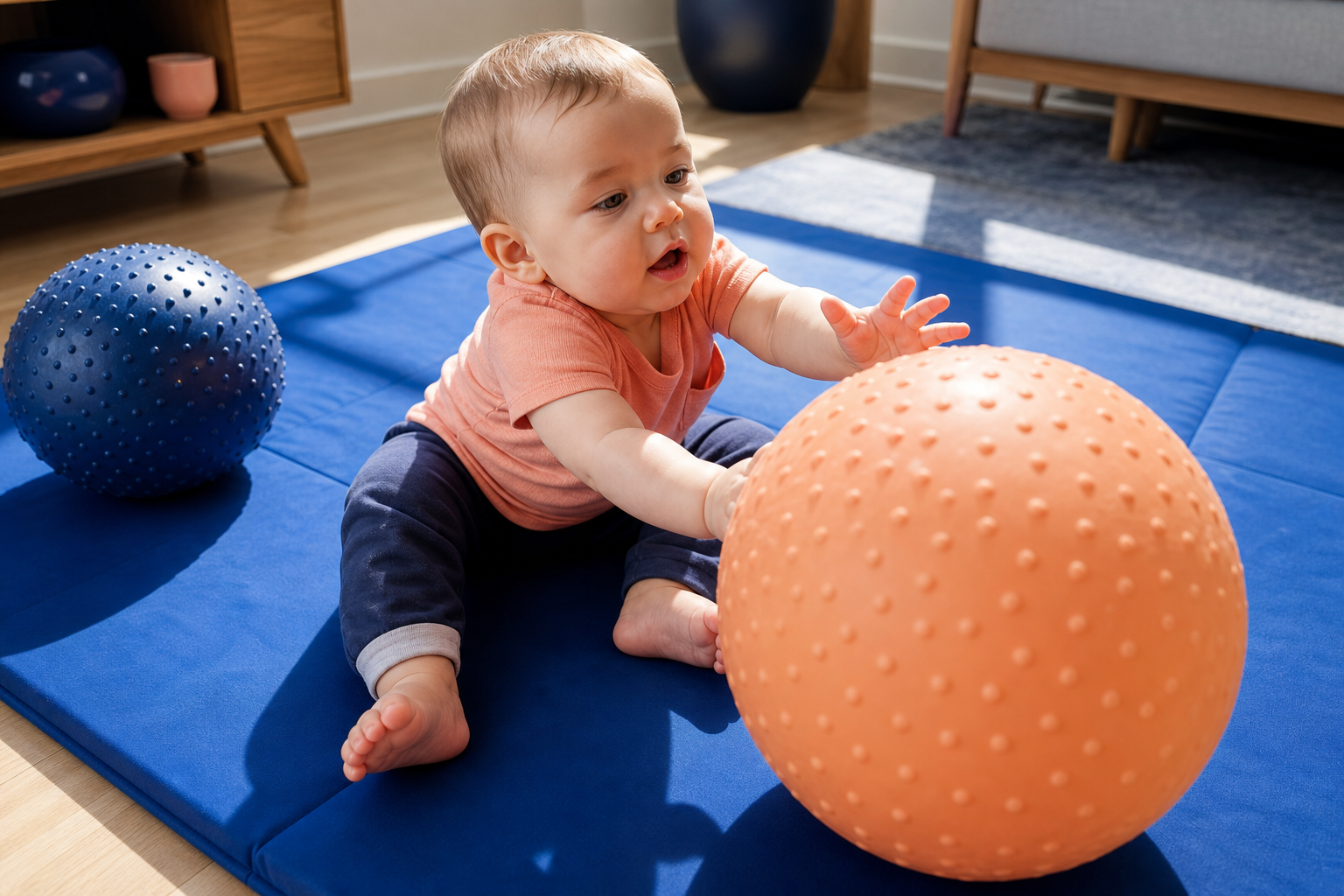
- Sensory Balls: Use balls with different textures and sizes to enhance your baby’s sensory experiences.
Is it Normal for a Baby to be Obsessed with One Toy?
Yes, it is perfectly normal for babies to fixate on one particular toy. This phase is part of their development as they start to understand object permanence and build their motor skills. The constant interaction with a familiar object, such as a ball, helps them gain confidence in their abilities.
Understanding the Benefits of Infants Playing with Balls
Playing with balls offers numerous benefits to infants. Not only does it help to improve their gross and fine motor skills but it also enhances hand-eye coordination and spatial awareness. Further, it fosters problem-solving skills as babies try to figure out the cause-effect relationship of their actions on the ball.
Sensory Play and Its Importance for a One-Year-Old
Sensory play, such as exploring textures or sounds of a ball, is crucial for a one-year-old. It stimulates their developing nervous system, promoting cognitive growth, problem-solving skills, and motor development. Balls, especially those designed with varying textures, make excellent tools for sensory play.
Can a One-Year-Old Throw a Ball?
Yes, a one-year-old can throw a ball, albeit not very far or accurately. This ability demonstrates the development of their gross motor skills. Encouraging them to throw and chase balls can further enhance these skills.
Delving into Montessori Balls and Sensory Balls
What is a Montessori Ball?
A Montessori ball is a soft, lightweight ball, typically made with different colors and textures. It’s designed to stimulate a baby’s senses, encourage motor skill development, and aid in understanding object permanence.
At What Age is a Montessori Ball Suitable?
Montessori balls are typically suitable for babies around three months old and can continue to be useful through toddlerhood. However, always consider the individual development and interests of your child.
The Role of Sensory Balls in a Baby’s Development
Sensory balls are excellent for stimulating a baby’s tactile senses. With their different textures, sizes, and colors, they help in developing touch perception and exploration.
What Age are Sensory Balls Good for?
Sensory balls are typically suitable for babies around six months old when they start to explore their environment more actively. Like with Montessori balls, sensory balls remain useful as the child grows older.
Safety Considerations While Playing with Balls
Are Balls Safe for Babies?
Yes, balls can be safe for babies provided they are age-appropriate and made from non-toxic materials. Always ensure the balls are larger than a baby’s mouth to prevent choking hazards.
What Kind of Balls are Safe for One-Year-Olds?
Soft, lightweight balls that are too large to be a choking hazard are ideal for one-year-olds. Sensory balls, Montessori balls, and rubber balls that are phthalate and BPA-free are typically safe choices.
Ball Pits and Babies: A Good Idea?
Ball pits can be excellent for a baby’s development. They offer a fun and engaging environment that enhances motor skills, sensory stimulation, and social interaction. However, hygiene is a crucial factor to consider, as ball pits can harbor germs.
Autistic Toddlers and Ball Play
While every child is unique, many autistic toddlers find playing with balls enjoyable. The predictable movement of a ball can provide a sense of control and security. It’s important to note that obsessive play could be a sign of autism, but it’s also a common part of typical development. Always consult with a healthcare provider if you have any concerns.
Is My Toddler’s Obsession with Balls Normal?
As toddlers continue to explore and understand their environment, it’s common for them to develop obsessions with certain objects, such as balls. This obsession typically indicates a curiosity to learn and should not be a cause for concern. However, if the obsession seems to limit their interaction with other toys or activities, it might be wise to consult with a healthcare provider.
Turning Obsession into Bedtime Routine
Incorporating your baby’s love for balls into their bedtime routine can help create a calm and soothing environment conducive to sleep. Reading a ball-themed story or having a soft, plush ball as a bedtime toy can signal to your baby that it’s time to wind down and prepare for sleep.
The Role of SleepBaby.org in Your Baby’s Journey
When it comes to the connection between your baby’s love for balls and their sleep pattern, SleepBaby.org can be a valuable resource. SleepBaby.org is an expert platform providing practical advice on creating healthy sleep habits for your child.
We understand that a well-rested baby is a happy and healthy one. If your baby’s obsession with balls is interfering with their sleep or if you’re looking to establish a sleep routine that accommodates your baby’s interests, SleepBaby.org can help. We provide tips on how to incorporate your baby’s love for balls into their bedtime routine, encouraging a smooth transition to sleep.
In addition to this, SleepBaby.org offers comprehensive resources on baby sleep patterns, soothing techniques, and practical solutions for common sleep disruptions. Visit SleepBaby.org to support your child’s sleep and overall development journey.
Conclusion
Embrace your baby’s obsession with balls—it’s not just a phase, but a crucial development milestone. And remember, this fascination can be turned into a learning opportunity that enhances their growth while promoting better sleep patterns. Visit SleepBaby.org for more insights on how to navigate your baby’s journey with balls and sleep.