A calm four-check sort for the nap that suddenly runs long
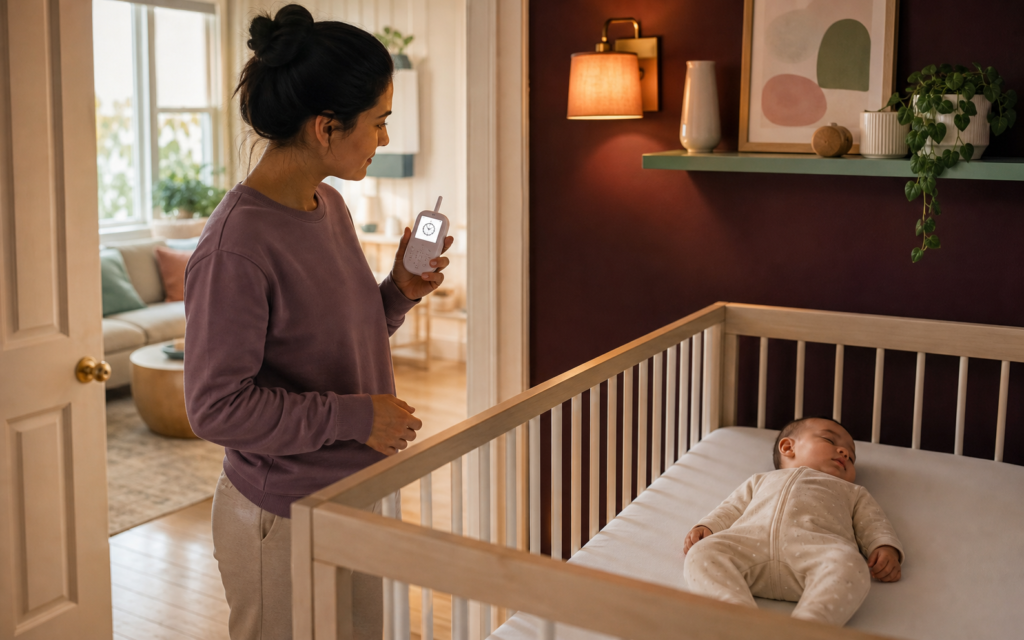
I know the exact moment this question arrives. The house has been quiet longer than expected, the monitor clock keeps adding minutes, and a nap that felt like a gift twenty minutes ago now feels suspicious. Most one-off long naps are not an emergency when your baby is breathing comfortably, has normal color, wakes in their usual way, feeds normally, makes expected wet diapers, and acts like themselves once awake. But nap length alone cannot tell you that everything is fine.
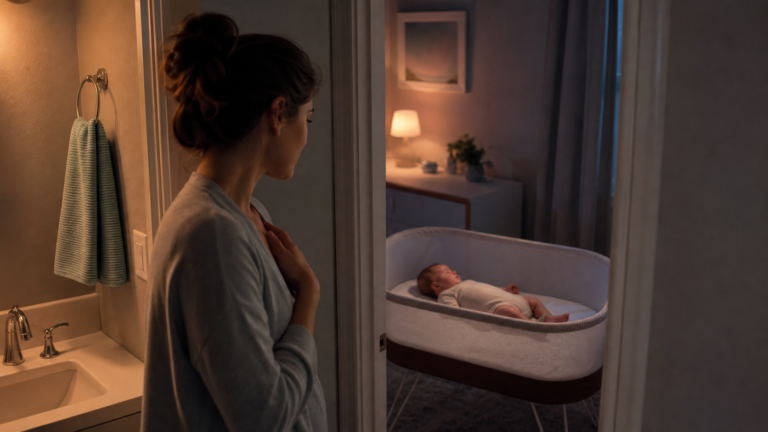
I would stop negotiating with the clock and make four checks: breathing and color, normal waking, feeding and diapers, and ordinary awake behavior. If your baby is difficult or impossible to wake, is limp or unresponsive, has blue, purple, or gray color, has severe trouble breathing, or has a seizure, call emergency services now. If your baby is younger than 3 months and has a rectal temperature of 100.4°F (38°C) or higher, seek prompt medical evaluation. Those signs outrank every reassuring sleep chart.
The four checks that matter more than nap length
A timer can tell you that today is different. It cannot tell you why. I use the timer as a prompt to look at the baby in front of me, not as a verdict.
1. Breathing and color
From close enough to see clearly, look for comfortable breathing and your baby’s usual skin and lip color. A stuffy nose can sound dramatic, but struggling for each breath, repeated pauses with color change, pulling in around the ribs, grunting, or blue, purple, or gray color is not a “let’s see how the nap goes” situation.
2. Normal waking
Try the ordinary gentle things you already use at wake-up: speak, open the shade, touch a shoulder or foot, pick your baby up if needed, or begin the familiar feeding routine. The useful question is not “Did the baby pop awake instantly?” It is “Can I rouse this baby in a way that resembles their normal waking?” Deep sleep can produce grogginess. Inability to awaken normally is different.
3. Feeding and wet diapers
Notice whether your baby can latch or take a bottle with their usual interest and coordination. Then widen the lens: have feeds and wet diapers been broadly normal across the day? One sleepy feed may happen. A baby who repeatedly cannot stay awake to feed, refuses feeds, or has clearly fewer wet diapers deserves a call to the pediatrician.
4. Their ordinary awake self
Once awake, does your baby look at you, move both sides of the body as usual, cry with familiar strength, settle in a familiar way, and have some alert time? You know the texture of your baby’s normal day. A sudden, persistent change in responsiveness or behavior matters even when no single number looks alarming.
When a longer nap is often an ordinary variation
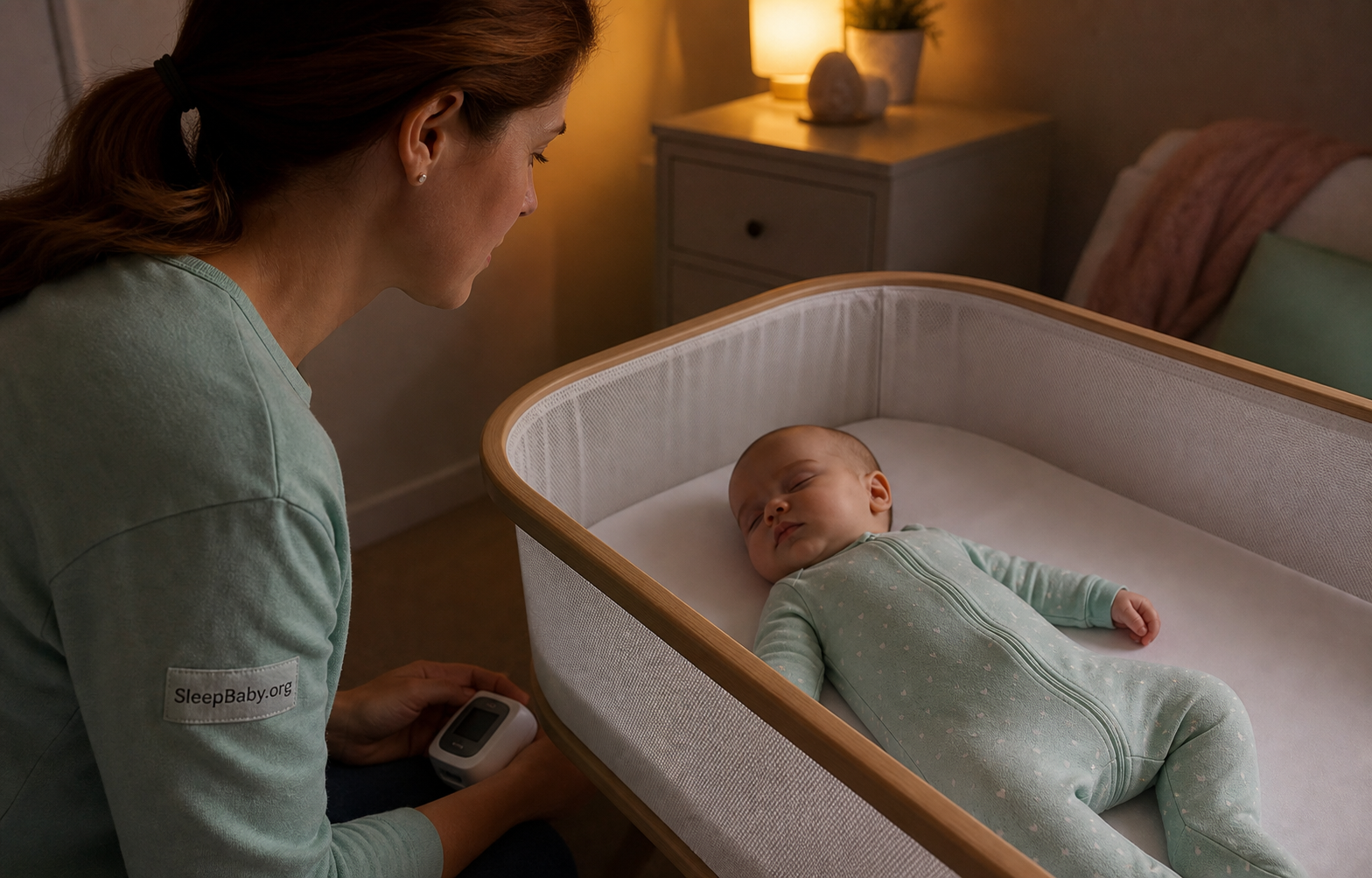
Babies do not distribute sleep with mathematical neatness. A longer nap can follow a short night, an overstimulating morning, travel, a busy family day, a growth-heavy stretch, or several poor naps. Sometimes it is simply the nap that connected two sleep cycles when yesterday’s did not.
I feel more comfortable watching rather than intervening when all of these are true:
- breathing looks easy and color is usual;
- the baby can be awakened normally when there is a reason to wake;
- feeds and wet diapers remain broadly on pattern;
- there is no fever or emerging illness concern;
- awake periods still look recognizably like this baby’s usual self; and
- the baby is sleeping safely on their back in a firm, flat, level, separate infant sleep space.
Broad age-based sleep totals can provide context, but I would not use them to diagnose one nap. Population guidance commonly places newborn sleep around 14 to 17 hours across 24 hours and infant sleep from 4 to 12 months around 12 to 16 hours including naps. Real babies can land outside those ranges on a particular day. The pattern around the sleep is more informative than a single total.
Age and context change whether I would wake the baby
The same two-hour nap means something different in a five-day-old newborn with a feeding plan than in a thriving eight-month-old who ate normally all morning. I would not give one universal “never wake a sleeping baby” rule because newborn feeding protection and individual medical guidance matter.
Newborn or young infant
In the early weeks, feeding frequency supports hydration, glucose stability, jaundice management, and weight gain. If your clinician told you to wake for feeds, keep following that plan until the clinician changes it. Prematurity, jaundice, feeding difficulty, low birth weight, slow gain, or a recent hospital discharge can make that instruction especially important.
A newborn who wakes every few hours, eats well, has alert periods, and seems content may simply be sleepy. A sudden change toward unusual lethargy, failure to wake for feeds, or being too tired or uninterested to eat calls for pediatric guidance.
Older baby with established growth
An occasional long nap is often easier to let run when growth is on track, daytime feeds are going well, wet diapers are normal, and the baby wakes and behaves normally. I would still consider whether the nap is pushing bedtime dramatically later or repeatedly replacing needed daytime feeds, but that is usually a schedule question rather than an emergency.
Any age during illness or recovery
Extra sleep can accompany a minor illness or recovery from a disrupted day. The safe response is not to assume that all sleep is healing. Recheck temperature, breathing, color, feeding, hydration, and responsiveness. If those are deteriorating, the context has moved beyond nap troubleshooting.
A hypothetical Kacey-and-Benjamin monitor moment
This is a clearly labeled hypothetical scene, not a memory and not medical evidence.

Imagine Benjamin and me noticing that an afternoon nap has crossed the point where we would normally hear a rustle. I refresh the monitor, then refresh it again, as if the clock might explain itself. Benjamin asks the better question: “What do we actually know about the baby?”
That question changes the room. We can see easy breathing and normal color. When we decide there is a feeding reason to wake, the baby stirs with a familiar complaint, takes the feed normally, and later gives us the usual bright-eyed look. The long nap becomes one fact inside a reassuring pattern.
Now change only one detail: the baby cannot be roused in the usual way. The clock has not changed, but the decision has. That is why I do not want you trapped into proving whether a nap is “too long.” I want you equipped to recognize whether the baby is behaving safely and normally around it.
Should I wake my baby or let the nap continue?
I would wake for a concrete reason, not because an internet schedule says the nap has become invalid.
Wake and assess now when:
- you need to confirm that your baby can be roused normally;
- a newborn or young infant is due for a clinician-directed feed;
- your baby has prematurity, jaundice, feeding, hydration, or growth concerns covered by an individual plan;
- the nap follows concerning symptoms, a fever, poor feeding, or fewer wet diapers;
- the baby is sleeping in a car seat, swing, stroller, carrier, adult bed, couch, or another place that is not the intended safe sleep space; or
- your instincts are telling you this is not ordinary sleepiness.
It may be reasonable to let the nap continue when:
- your baby is in a safe sleep space;
- breathing and color look normal;
- there is no missed medically important feed;
- the wider feeding and diaper pattern is reassuring;
- your baby has been normally arousable and normally alert when awake; and
- this is an isolated longer nap rather than part of a worsening change.
If schedule protection is the only issue, use a gentle cap based on your own baby’s bedtime and feeding needs rather than treating one exact duration as universal. A repeated late nap that makes bedtime chaotic can be adjusted gradually. That is different from waking to check a baby who may be unwell.
Use a 24-hour pattern instead of diagnosing one nap
When I feel the urge to keep checking the same number, I write down four or five concrete observations. This turns anxious looping into information a clinician can actually use.
Sleep
When did the long nap begin and end? Was the prior night or morning unusually short or broken?
Feeds
How many feeds occurred, and did sucking, swallowing, interest, and endurance look usual?
Diapers
Are wet diapers occurring in the baby’s familiar pattern? Is there a meaningful drop?
Awake behavior
Was there normal eye contact, movement, crying strength, interaction, and settling?
Symptoms
Temperature, congestion, vomiting, diarrhea, rash, breathing change, or unusual color?

This is not a home diagnostic score. A baby can need help without “failing” several boxes. Its purpose is to reveal direction: one restorative nap inside a normal day looks different from increasing sleepiness plus weaker feeds and fewer wet diapers.
If you call the pediatrician, lead with the change and the function: “My two-month-old has slept much more than usual today, is harder to wake for feeds, and has had fewer wet diapers.” That is more useful than “The nap was 2 hours and 47 minutes.”
When to call the pediatrician now
Call your pediatrician promptly or use the clinician’s after-hours line when unusual sleepiness comes with any of the following:
- a baby younger than 3 months with a rectal temperature of 100.4°F (38°C) or higher;
- a sudden, persistent change in alertness or responsiveness;
- repeated difficulty waking for feeds or being too tired or uninterested to eat;
- clearly fewer wet diapers or other dehydration concerns;
- vomiting, diarrhea, fever, or another illness pattern with increasing sleepiness;
- new weakness, unusual movement, or a cry that is markedly different; or
- parental concern that the baby is simply not acting right.
You do not need to wait until a baby is impossible to wake. “Harder to wake than normal” plus worsening feeding or hydration is enough reason to seek professional guidance.
A longer nap still needs a safe sleep space
Extra tiredness never makes a sitting device, couch, adult bed, lounger, inclined sleeper, or carrier safer for unattended sleep. For every nap, place your baby on their back on a firm, flat, level sleep surface designed for infant sleep, with only a fitted sheet. Keep pillows, blankets, toys, bumpers, positioners, and other soft items out of the sleep space.
If your baby falls asleep in a car seat, swing, stroller, carrier, or sling outside its travel purpose, move them to the safe sleep space as soon as practical. The transfer may shorten the nap. Safety wins that trade.
Watch the sleep space, then use the four checks
Safe to Sleep: creating a safe place for every nap
This authoritative safe-sleep demonstration supports the environment part of the decision. It does not replace the article’s guidance about waking, feeding, fever, hydration, or responsiveness.
Watch on YouTube from NICHD Safe to Sleep
Takeaway: A reassuring long nap is still a back-sleep nap on a firm, flat, empty infant sleep surface.
Common contexts that can make today’s nap longer
A useful explanation should fit the rest of the day. I would treat each of these as context to investigate, not a permission slip to ignore the four checks.
A rough night or several short naps
Sleep pressure can build after frequent waking, travel, noise, a missed nap, or a morning full of stimulation. A baby may then connect sleep cycles and take a longer recovery nap. If the baby wakes normally, feeds well, has expected diapers, and returns to familiar alert behavior, that whole pattern is reassuring. I would watch whether nighttime sleep returns toward normal rather than immediately redesigning the schedule around one catch-up nap.
A developmental burst
Parents often notice changes in sleep around periods of rapid motor, social, or feeding development. The observation may be real, but “growth spurt” is too vague to function as a safety check. It should never explain away a baby who is difficult to rouse, feeding poorly, feverish, dehydrated, or behaving abnormally. Developmental change is the story I consider after the basic health picture is reassuring.
After routine vaccines
Some babies are sleepier after vaccination. Follow the after-care instructions from the clinician who vaccinated your baby, and pay attention to temperature, breathing, color, feeding, wet diapers, and normal waking. Call for advice if sleepiness is pronounced, worsening, paired with poor feeding or dehydration, or simply does not fit what the clinician told you to expect. A post-vaccine explanation does not cancel emergency signs.
During a cold or other mild illness
Rest can increase during illness, but congestion and fever can also make feeding harder. Because babies have less reserve than older children, I look at function: can the baby wake, breathe comfortably, feed effectively, and keep producing wet diapers? I would call earlier for a very young infant, a premature baby, a baby with a medical condition, or a pattern that is moving in the wrong direction.
A schedule transition
When babies begin dropping a nap or stretching wake periods, sleep may temporarily redistribute. One nap can lengthen while another disappears. That can be ordinary when the baby is thriving and the 24-hour pattern remains workable. If a long late nap repeatedly delays bedtime, shorten it gently or shift it earlier over several days. Do not use aggressive sleep restriction to solve a health concern or to keep a visibly exhausted baby awake.
How to wake a sleeping baby gently when you need to assess or feed
There is no need to frighten a baby awake. Start with ordinary cues and give the response a moment to unfold:
- Move close enough to see breathing and color clearly.
- Say your baby’s name or speak in your usual wake-up voice.
- Open the shade or turn on a soft room light.
- Touch a shoulder, arm, leg, or foot and look for purposeful movement.
- If a feed is due, pick the baby up, change the diaper, and begin the normal feeding routine.
A sleepy baby may stretch, grimace, protest, open and close their eyes, and take a little time to become organized. I am looking for a familiar progression toward wakefulness, not a theatrical instant response. If your baby remains unusually floppy, cannot sustain enough wakefulness to feed, or does not respond in a recognizable way, stop troubleshooting the nap and seek medical help.
Do not shake a baby. Do not splash water, use painful stimulation, or repeatedly jolt the sleep surface. If normal gentle attempts do not produce normal waking, that lack of response is the information you needed.
How feeding and diapers help complete the picture
A single feed never tells the whole story. Babies sometimes take a smaller feed after a large one, become briefly distracted, or need a few minutes to organize after deep sleep. I look for direction across several hours.
Reassuring signs include a familiar latch or bottle pattern, coordinated sucking and swallowing, enough stamina to take a useful feed, and wet diapers arriving in the baby’s usual rhythm. Concerning signs include repeated refusal, a weak or disorganized feed, falling asleep almost immediately at every attempt, vomiting that prevents intake, a dry mouth, no tears when tears are normally present, or clearly fewer wet diapers.
Newborn diaper expectations change rapidly during the first days of life, so generic online counts can mislead. Use the discharge or feeding plan you were given, and call the newborn clinician or lactation team when intake or output is uncertain. For an older baby, compare with that baby’s established baseline and describe the change precisely.
Questions parents ask about a baby suddenly napping longer
Can a baby nap too long?
Yes, in the practical sense that a nap can interfere with a required feed, signal unusual difficulty waking, occur in an unsafe place, or repeatedly disrupt the rest of the schedule. But there is no single duration that is “too long” for every age and situation. The reason to wake matters more than a universal cutoff.
Will one long nap ruin nighttime sleep?
Usually not. A late or very long nap may reduce sleep pressure at bedtime, but one day rarely creates a permanent pattern. Keep the evening calm, use the familiar bedtime routine, and watch what happens. If the pattern repeats for several days and the baby is otherwise well, adjust timing gradually rather than trying to compensate with an extremely late bedtime or forced wakefulness.
Does a longer nap mean a growth spurt?
It might coincide with growth or development, but nap length cannot confirm that explanation. “Growth spurt” should remain a low-stakes possibility after breathing, waking, feeding, hydration, temperature, and awake behavior are reassuring.
My baby woke normally but went back to sleep. Is that concerning?
Not necessarily. Consider how fully the baby woke, whether they fed effectively, and what the rest of the day looks like. A baby who briefly rouses but repeatedly cannot stay awake to feed, has fewer wet diapers, or seems unlike themselves needs a clinical call. A baby who feeds normally and settles for more sleep after a poor night may simply still be tired.
Should I check temperature every time a nap runs long?
No. Check when the baby feels unusually warm or cool, has illness symptoms, is behaving differently, or you otherwise suspect fever. For babies younger than 3 months, a rectal temperature of 100.4°F (38°C) or higher needs prompt medical evaluation.
What I would not do after one unusually long nap
- I would not force a diagnosis from an age chart. Daily ranges describe groups, not the cause of today’s nap.
- I would not ignore an individual feeding plan. A general article cannot cancel instructions based on prematurity, jaundice, growth, or feeding history.
- I would not repeatedly startle-test a sleeping baby. If you need to assess waking, use a normal gentle wake-up and judge the whole response.
- I would not wait on serious signs. Breathing trouble, color change, seizure, limpness, or unresponsiveness is emergency territory.
- I would not move the nap to an unsafe place to supervise more closely. Bring yourself closer to the safe sleep space instead.
- I would not let one odd day become a rigid new schedule. Watch the next day or two if the baby is otherwise well.
Your plan for the next nap
- Set up the same firm, flat, empty safe sleep space.
- Note the nap start time once; do not make the timer your only source of information.
- If the nap runs long, look first at breathing and color.
- Decide whether there is a concrete reason to wake: feeding plan, health check, unsafe location, or schedule protection.
- When the baby wakes, notice feeding, wet diapers, and ordinary awake behavior.
- Call promptly if the pattern is worsening or the baby is harder to wake, feeding poorly, dehydrated, feverish, or not acting right.
The monitor clock may still make your stomach tighten. Mine would too. But now the clock has a smaller job: it tells you to look. The real answer comes from the baby—comfortable breathing, normal color, normal waking, useful feeding, expected diapers, and a recognizable awake self.
WHEN THE MONITOR CLOCK STARTS SHOUTING
Build a calmer next-sleep plan
A long nap can turn quiet into worry in a hurry. Bring the four checks into the next sleep window so the clock becomes a prompt to look, not a verdict on your baby.
Sources
- American Academy of Pediatrics, HealthyChildren.org. 11 Common Conditions in Newborns.
- American Academy of Pediatrics, HealthyChildren.org. Urgent Care, ER or Pediatrician? A Parent Guide.
- Centers for Disease Control and Prevention. About Sleep.
- NICHD Safe to Sleep. Ways to Reduce Baby’s Risk.
- Centers for Disease Control and Prevention. Helping Babies Sleep Safely.






Comments are closed.