Skip to content
SleepBaby .org
Newborn & Infant Care

Understanding Why Some Babies Have Shoulder Dimples

Read the answer first. The Workshop is here only when you want the next step.

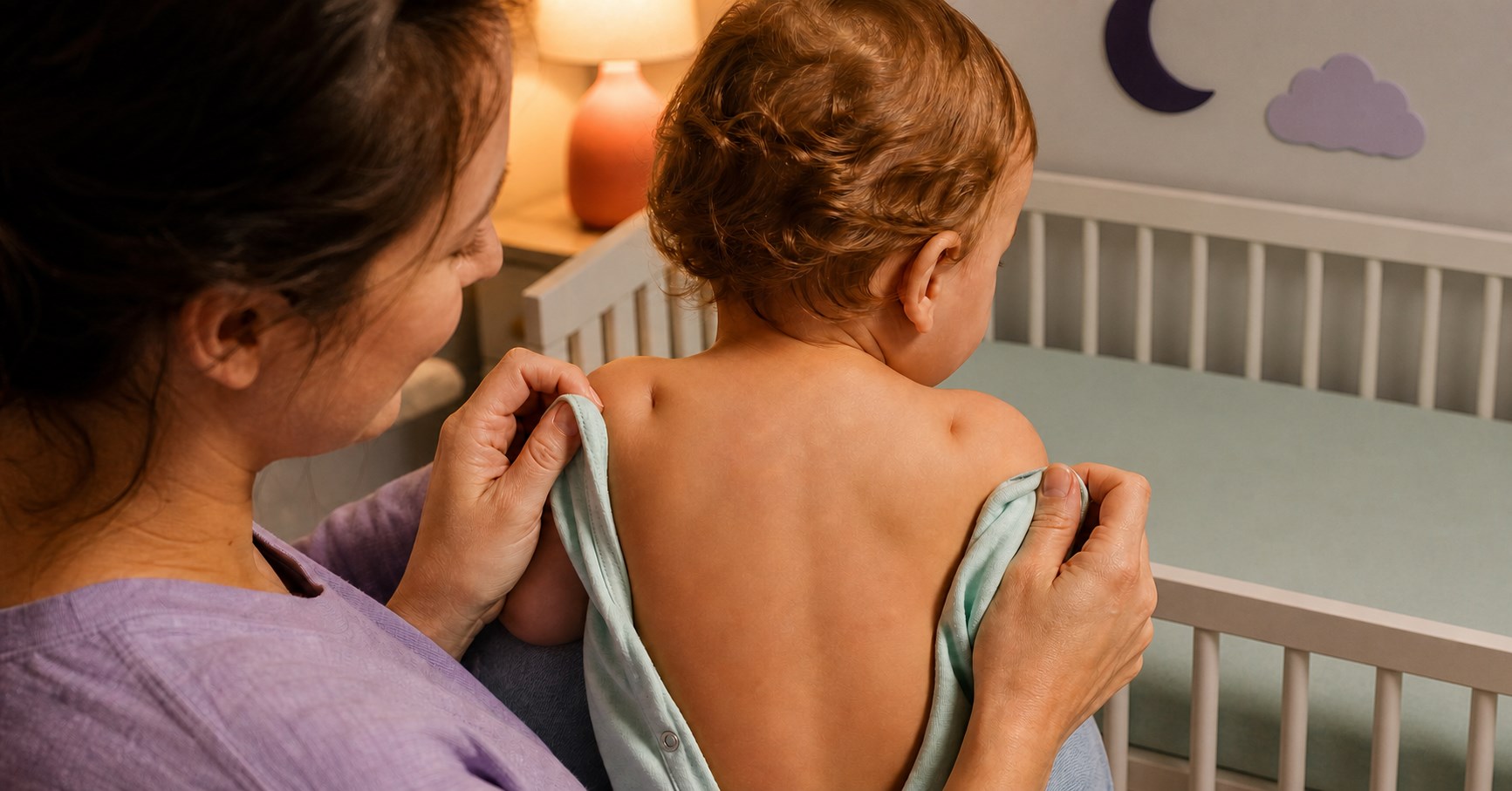
A parent gently dresses a calm baby whose upper back shows two small symmetrical shoulder dimples.

Have you noticed that your baby has shoulder dimples? If so, you might have several questions about what this means and why it occurs. This comprehensive guide aims to demystify shoulder dimples in babies.

What are Shoulder Dimples?

Identifying Shoulder Dimples in Babies

Shoulder dimples, also known as infraclavicular dimples, are small indentations located below the clavicle or collarbone. They can be present from birth, and while often benign, they may sometimes be associated with certain health conditions.

Reasons Why Babies Have Shoulder Dimples

Genetic Factors and Shoulder Dimples

In many cases, shoulder dimples are a genetic trait and can be passed down from parents to their offspring. If a family member has shoulder dimples, your baby might inherit them.

SleepBaby.org · The original video

A little help
for the night ahead.

Take a moment to watch the original Baby Sleep Miracle presentation. Your article will be right here when you’re ready to keep reading.

Baby Sleep MiracleWatch here
Original Baby Sleep Miracle

Press play when you’re ready.

Ready to get started?Take the next step with SleepBaby.

Help my baby sleep


Are Shoulder Dimples Indicative of a Health Condition?

In most cases, shoulder dimples in babies are harmless and don’t signal any underlying health issues. However, if you notice any associated symptoms or if the dimples change in appearance, it is worth discussing with your baby’s healthcare provider.

Shoulder Dimples: Aesthetics and Perception

Are Shoulder Dimples Considered Attractive?

Beauty is very subjective and varies among different cultures and individuals. While some might find shoulder dimples adorable and unique, others may not attribute any particular aesthetic value to them. It’s important to remember that each baby is unique, and these differences should be celebrated.

Shoulder Dimples and Baby Sleep

Do Shoulder Dimples Impact a Baby’s Sleep?

There is no direct correlation between shoulder dimples and a baby’s sleep. However, if you notice your baby is uncomfortable or in pain around their shoulder area, it could affect their sleep patterns. Always consult a healthcare professional if you have concerns about your baby’s comfort or sleep.

What Does a Shoulder Dimple Mean?

Typically, shoulder dimples are harmless and simply a part of your baby’s individual physical characteristics. They do not usually signify any health issues.

Are Shoulder Dimples Normal?

Yes, shoulder dimples are generally normal and not a cause for concern unless accompanied by other symptoms or abnormalities.

How Are Shoulder Dimples Formed?

Shoulder dimples form during fetal development. They occur when there is a small amount of underlying connective tissue, causing the overlying skin to indent.

Dimples in Babies: An Overview

Can You Tell If a Baby Will Have Dimples?

Predicting whether a baby will have dimples can be challenging, as dimples are a genetic trait and do not always appear immediately after birth.

Do Dimples in Babies Go Away?

In some cases, dimples may become less noticeable as the baby grows and their facial structure changes. However, shoulder dimples usually persist into adulthood.

Understanding the Genetics of Dimples

Which Parent Do Dimples Come From?

Dimples are a genetic trait and can be inherited from either parent. However, it’s not guaranteed that a baby will have dimples even if one or both parents have them.

Can a Baby Have Dimples But Neither Parent Does?

Yes, it’s possible. Dimples are a dominant trait, but the way they are inherited isn’t straightforward. Sometimes, a baby may have dimples even if neither parent does, due to complex interactions of genes and possibly environmental factors during development.

Shoulder Dimples: Spiritual and Practical Considerations

Shoulder Dimples Spiritual Meaning

Different cultures and beliefs might attach varied spiritual or symbolic meanings to physical traits like shoulder dimples. However, from a medical standpoint, they’re typically considered a benign physical characteristic.

Are Shoulder Dimples Bad?

No, shoulder dimples are not generally bad or harmful. They are usually a harmless physical trait unless accompanied by other unusual symptoms or health concerns.

How SleepBaby.org Can Help

At SleepBaby.org, we understand that any unique characteristic in your baby can raise questions and concerns, potentially disrupting your peace of mind and your baby’s sleep patterns. We provide a plethora of resources to guide you through these early years of parenting, whether it’s understanding your baby’s physical characteristics or helping establish healthy sleep habits. If you’re worried about shoulder dimples or any other aspects of your baby’s wellbeing, reach out to us today. Let SleepBaby.org be your companion in managing your baby’s sleep and overall health.

Conclusion

Shoulder dimples in babies are usually a harmless genetic trait and part of what makes your little one unique. While they generally do not cause any health concerns, if you notice any unusual changes or associated symptoms, it’s always best to consult with a healthcare provider. With SleepBaby.org by your side, you have a trusted resource to support you in understanding your baby’s unique characteristics and helping them achieve restful sleep.

SleepBaby.org · The original video

A next step for
the next bedtime.

Still thinking about sleep? Watch the presentation here, then explore the SleepBaby program whenever you’re ready.

Baby Sleep MiracleWatch here
Original Baby Sleep Miracle

Press play when you’re ready.

Ready to get started?Take the next step with SleepBaby.

Help my baby sleep
From the guide to your next step

Explore SleepBaby.org

Step-by-step sleep help · newborn through toddler

A starting point for your nights.

SleepBaby is a browser-based Workshop for parents of newborns through toddlers. Choose your baby’s age, usual full wakes, and the change you want most. The free preview gives you one thing to try, what to watch over the next few nights, and a look at the help inside the Workshop.

Use the free library

3 questions · no card · visible preview stays in this browser · analytics follows your privacy settings

Example: 8–12 months · 3–4 wakes · fewer wakes

Let’s choose one response you can repeat.

Here’s one example. Your three answers will shape your own starting point.

Try this next
At the first wake, check what your baby needs and use a quiet reassuring phrase while you feed or comfort them.
What to watch
Notice the timing of the first repeated wake and what helped across nights 2–5, without withholding needed feeds or comfort.
Your effort
Keep a familiar response and compare a few first-wake notes.
Before you begin
Care first, then a familiar response
A small note for each night

Across seven nights, keep a note of the first wake and your response; add nap timing when you know it, then review one small change rather than rewriting the whole night.

The Workshop pairs short steps you can revisit with a seven-night tracker, so the response you’re trying and the notes about it stay together.

Example only. Answer the three questions to see a starting step for your family.

Fictional illustrative tracking example

Fictional illustrative full-wake tracking example over seven nights. The invented baseline ends at 4.0 wakes and the invented illustrative path ends at 1.6 wakes. These are not measured or predicted results. TonightNight 2Night 3Night 4Night 5Night 6Night 7
Fictional starting patternFictional illustrative path

This graph is a separate fictional example. Your answers do not change it.

Don’t take a sales claim on faith. Inspect the decision paths.

Illustrative planning scenarios—not measured customers or verified outcomes. Use the views below to inspect upside, downside, no-change, and no-purchase paths.

Choose an illustrative decision view
Closest waking pattern8–18 mo

What progress could look like

Illustrative family pattern

2.0 fewer night-wakings(example range: 1.2–2.9)

↓ 44%example
Night-wakings per night over seven illustrative nights. Current example: 4.5 wakes to 4.5 wakes. Illustrative path: 4.5 wakes to 2.5 wakes. Example change: 2.0 fewer night-wakings.

Planning example · not an observed cohort

Closest bedtime pattern4–7 mo

What progress could look like

Illustrative family pattern

18 min faster settling(example range: 9–31 min)

↓ 38%example
Settling time in minutes over seven illustrative nights. Current example: 47 min to 47 min. Illustrative path: 47 min to 29 min. Example change: 18 min faster settling.

Planning example · not an observed cohort

Closest morning patternToddler

What progress could look like

Illustrative family pattern

42 min later morning wake time(example range: 21–64 min)

↑ 42 minexample
Morning wake time over seven illustrative nights. Current example: 5:30 am to 5:30 am. Illustrative path: 5:30 am to 6:12 am. Example change: 42 min later morning wake time.

Planning example · not an observed cohort

Planning examples, not testimonials or cohort evidence. Real outcome claims should appear here only when they are independently auditable. Decision safeguards

What the complete Workshop adds after the preview.

Tonight’s Starting Step

A clear first move based on the three answers you choose.

Seven-Night Tracker

A simple way to log changes without treating one night as proof.

Tired-Parent Format

Short steps built for exhausted adults to revisit together.

See the starting point before checkout.

The preview shows the first action, time involved, tracking focus, and reasons the paid Workshop may not be the right next step. It is a planning screen, not a promised outcome. Current purchase and refund terms appear on the secure purchase page.

3-question planning preview Free library stays available Secure SleepBaby purchase page

Take a look, then decide.

Use the preview, inspect the limitations, and decide whether the complete Workshop is worth it for your family.

A few choices. A place to begin.

Your private sleep preview.

Tell me what nights look like, and I’ll help you choose one thing to try.

No sign-up. No card.

Private Workshop preview · 3 questions · no card

A starting point for your family.

Choose your baby’s age, usual full wakes, and what you’d like to explore.

How this preview uses your answers

This is a planning preview, not a medical or safety clearance or a promised result. Your choices stay in this browser tab for this visit, including when you move between our articles and homepage. Growth OS may record categorical choices and actions unless analytics is turned off in the site’s privacy settings or your browser sends GPC/DNT. Google Analytics receives them only after analytics permission. The preview never sends typed sign-in values, your name, email, password, or free text. Deleting the visible preview does not erase analytics already recorded. Privacy policy.

1 of 3
How old is your baby?