
THE SAFE ANSWER, BEFORE THE NAP MATH
A bicycle seat carries your child. It is not the place to preserve a nap.
If your baby is falling asleep in a bike seat, keep control of the bicycle and pull over somewhere safe before you turn around, touch the harness, or try to fix their head position. A child who is breathing normally, has normal color, responds as expected, and is correctly secured may simply be motion-drowsy. Still, the ride should end or shorten so you can remove them at the destination and use their regular sleep space.
Babies younger than 12 months should not ride in a rear bicycle seat or bicycle trailer. An older child also needs to sit well without support, have enough neck strength for a lightweight bicycle helmet, and fit the exact seat and helmet instructions. Do not add a neck pillow, forehead strap, rolled towel, blanket, or aftermarket padding to keep a sleeping head upright.
The moment that sends a parent searching is usually tiny: the helmet tips, the shoulders soften, and the child behind you goes very quiet. Then two thoughts arrive together. Please let that be an ordinary nap and I cannot actually see their face from here. I would not ask a moving bicycle to answer either question. The safest first move is wonderfully unglamorous: signal, stop, stabilize the bike, and check.
That does not mean every bike-seat doze is an emergency. It means sleep changes what the rider can observe, and a bicycle changes how safely the adult can observe it. The distinction that matters is not “asleep or awake.” It is eligible child, correctly fitted transport, normal response—or a signal that the ride must end and help may be needed.
Before the sleepy head: is your child ready to ride?
I would settle this question before comparing seats, recline angles, headrests, or nap accessories. The American Academy of Pediatrics says children younger than 12 months are too young to ride in a rear bicycle seat or trailer. Their necks are not ready to support a lightweight bicycle helmet, and their bodies are not ready for the vibration and movement of bicycle transport.
Twelve months is a floor, not an automatic birthday permission slip. Your child should be able to sit well without support, hold their head steadily while wearing the helmet, and remain within the child-seat and helmet manufacturers’ current height, weight, age, and fit limits. Local bicycle laws may add requirements. If any of those pieces are uncertain, pause the ride plan and ask your child’s clinician and a qualified bicycle professional rather than trying to solve the uncertainty with extra padding.
READER TOOL · THE STARTING GATE
Can this child ride today?
- Age gate
- Under 12 months: no rear bicycle seat or trailer. Choose another transport plan.
- Body-readiness gate
- At least 12 months, sitting well without support, and able to hold the head steady under a lightweight helmet.
- Equipment gate
- The child fits the exact seat, harness, bicycle, rack or mount, and helmet instructions—with no improvised additions.
- Day-of-ride gate
- The route, weather, visibility, traffic, bicycle condition, rider capacity, and child’s health all support going today.
Tonight connection: deciding eligibility before departure prevents a motion nap from becoming the moment when you discover the setup was never a good fit.
SleepBaby.org original decision tool. It is practical guidance, not a diagnostic test.

What a proper bicycle passenger seat must do
A child seat should be installed and used exactly as its manufacturer specifies on a compatible bicycle or rack. The AAP describes a secure rear seat with a high back, spoke guards, and a sturdy shoulder harness and lap belt. The high back and harness should support an eligible child who happens to fall asleep; feet and hands must remain protected from moving wheels and parts.
Read that last sentence carefully, because it is where internet advice often drifts sideways. A seat must support a child who dozes; that does not turn the seat into a recommended nap surface. The first statement is about safe transportation design. The second is about where sleep should continue after transportation ends. One does not cancel the other.
The helmet also needs its own exact fit check before every ride. It should sit level and follow the helmet maker’s instructions; the straps and buckle should be adjusted for that child, not borrowed from yesterday’s hurried fit. Never loosen the helmet or harness to make sleep look more comfortable. If the helmet pushes forward, the harness shifts, or the child’s posture is not supported, stop using the setup until the equipment and fit can be evaluated.
I am skeptical of any product that promises to make this question disappear with one soft-looking accessory. A bicycle setup is a chain of fit decisions: child, seat, mount, bicycle, harness, helmet, route, and rider. A pillow cannot repair a weak link in that chain, and a forehead band should not be recruited to hold a sleeping child’s head in place.
You noticed the nodding. What do you do first?
Do not twist around while pedaling. Do not reach behind you. Do not try to adjust the helmet at a light while the bicycle is still balancing under you. Keep your eyes and hands on controlling the bicycle, choose a safe place off the travel path, signal, stop, and stabilize the bike before you inspect the child.
THE PARKED-BIKE SEQUENCE
Stop → Stabilize → Check
-
1 · Stop
Signal and pull completely away from moving traffic or trail users. Keep control until both wheels are still. -
2 · Stabilize
Dismount and hold or park the bicycle exactly as the equipment permits. Do not rely on a loaded kickstand unless the manufacturer explicitly allows it. -
3 · Check
Look at breathing, color, responsiveness, temperature, helmet position, harness position, and whether the body is supported.
Then decide: emergency help, immediate shade/cooling and medical advice, a corrected manufacturer-approved fit before any future ride, or a shortened ride ending in the regular sleep space.
SleepBaby.org original rider sequence. Keep these steps in written form even when the teaching image is hidden.
A CLEARLY LABELED HYPOTHETICAL KACEY + BENJAMIN MOMENT
The nap is never worth an over-the-shoulder gamble
Imagine I catch a small change in the mirror: Benjamin’s helmet is no longer centered in the reflection, and his shoulders have gone loose. My first impulse is the deeply parental one—to look back immediately and somehow preserve both the child and the nap without losing momentum. That is exactly the impulse I would refuse.
I would keep steering, signal, roll to a safe stopping place, and put both feet on the ground before I touched a buckle. Only then would I check his breathing, color, skin temperature, response, helmet, harness, and posture. If he woke furious that I had interrupted a perfectly good motion nap, I would accept the review. A bad review from an awake toddler is useful information; silence I have not safely checked is not.
This scene is hypothetical, not a claim about Benjamin’s history and not medical evidence. It is here because the private question is real: Am I being dramatic if I stop? No. Stopping is how you replace a guess with an observation.


Is this ordinary sleepiness, a posture problem, heat, or an emergency?
A checklist cannot diagnose a child from the side of a trail, but it can keep you from treating every quiet face as identical. Begin with the emergency signs above. If none are present, compare what you see now with how your child normally looks and responds when gently roused.
Sleeping normally—or a signal to act?
| Ordinary drowsiness may look like | End the ride and assess | Call 911 |
|---|---|---|
| Regular breathing; usual skin and lip color; normal warmth; wakes or responds in the child’s familiar way; helmet and harness remain correctly positioned; body is supported by the seat. | New or unusual limpness; harder to wake than usual; repeated vomiting; very hot or cold skin; a shifted helmet or harness; unsupported slump; illness, injury, or heat concern; anything that makes this sleep look unlike the child’s normal sleep. | Severe breathing difficulty; stopped breathing; blue or gray lips or face; seizure; loss of consciousness; or failure to respond normally. |
Sleep connection: normal drowsiness still ends in a real sleep destination. Concerning drowsiness ends the ride and moves the problem out of “nap timing” entirely.
SleepBaby.org comparison; educational and non-diagnostic.
Heat changes the picture
A helmet, sun, humidity, exertion, still air at stops, and a child who cannot tell you clearly how they feel can make heat harder to judge. Sleepiness by itself does not prove heat illness. Look at the whole child and the whole ride: skin temperature and appearance, sweating, vomiting, behavior, responsiveness, route exposure, and whether the drowsiness is ordinary for them.
Stop in shade or a cooler place when heat is a concern. Remove the child from the bicycle seat once the bike is stable, follow current public-health first-aid guidance, and seek medical advice for concerning symptoms. Confusion, seizure, or unconsciousness in heat can indicate heat stroke; call 911. This is not the section for finishing the route because home is “only ten minutes away.” Ten minutes is a long distance when the question has stopped being about sleep.
Posture matters even when breathing looks normal
A young infant’s head can tip forward in a seated or semi-reclined device and interfere with the airway. That is part of why babies under 12 months should not be bicycle passengers and why sitting devices are not regular infant sleep spaces. For an eligible older child, the high-back seat and harness should support the body as designed. If you see the chin pressed down, a sideways collapse the seat does not support, a helmet displaced over the face, or a harness that has shifted, end the ride. Do not invent a cushion around the problem.
Why I would skip the head strap, neck pillow, and rolled towel
The old version of this article recommended a bicycle-seat head-support product. I would remove that advice completely. An aftermarket strap across the forehead, a travel pillow, a folded cloth, extra seat padding, or a blanket tucked around the child can change the way the helmet, harness, and seat fit. It may introduce an entanglement, pressure, overheating, or obstruction hazard that the seat maker never tested.
It also solves the wrong problem. The real questions are whether the child is eligible to ride, whether the approved equipment fits, whether the child is responding normally, and how soon the ride can end. Holding the head in a prettier position does not answer any of them.
Use only the accessories and configurations explicitly approved for the exact bicycle seat, bicycle, mount, and helmet. If the manufacturer’s instructions do not support the child’s posture when they doze, contact the manufacturer or a qualified bike professional and stop using that setup in the meantime. “It seemed soft” is not a fit standard. Neither is “someone in a parent forum swears by it.” Parent forums are excellent at showing what worries families; they are not crash-test laboratories.

The Ride-to-Real-Sleep Handoff
Once the urgent questions are settled, the practical problem is usually not “How do I prevent all motion sleep forever?” It is “How do I stop an accidental doze from taking over the ride and the rest of the day?” I use four handoff points because each one answers a different decision. This is not a measured scale. It is a route from transport back to sleep.
SIGNATURE TEACHING COMPONENT
Four places where the answer changes
-
1 · Ride eligibility
Confirm age, unsupported sitting, neck strength, helmet fit, seat fit, weather, route, and rider capacity before departure. -
2 · Safe stop
Notice the doze, keep control, get completely off the travel line, and stabilize the bicycle before checking. -
3 · Sleep-or-signal check
Assess breathing, color, response, temperature, posture, helmet, harness, illness, injury, and heat—not just closed eyes. -
4 · Real sleep destination
End or shorten the ride, unbuckle after the bicycle is secure, and use the child’s regular age-appropriate sleep space at the destination.
The memorable line: the bicycle completes the trip; the sleep space receives the nap.
Created by SleepBaby.org. The four stages are practical prompts, not a guarantee of safe riding or a medical assessment.

Plan the route so stopping is a real option
A safer ride is not created by one perfect purchase. It is built from small decisions made before the wheels turn: a route with places to pull off, a realistic distance, weather and daylight checks, a maintained bicycle, a properly mounted seat, and enough adult capacity to stop when the child needs you.
If possible, ride with another adult who can observe the child without asking the rider to look backward. This does not eliminate risk, and the second adult should not adjust the child while moving either. It simply gives the group another observer and makes an early exit easier.
Time the ride when the child is usually alert rather than aiming for the nap window. Keep the outing short enough that ending early is not a logistical crisis. Choose quiet routes and moderate speeds that fit local law and conditions. If drowsiness arrives anyway, use the same stop-and-check sequence rather than trying to pedal faster toward home.
I would rather disappoint a picnic plan than turn the return ride into an endurance experiment. Parents sometimes keep moving because waking the child feels like wasting the nap. But a nap is not a ticket you have to redeem before it expires. If the ride no longer works for the child, the plan changes. That is not a failed outing; it is responsive transportation.
At the destination: unbuckle, observe, then move sleep somewhere sleep belongs
Stabilize the bicycle before unbuckling. A loaded bicycle can tip unexpectedly, so keep a hand on the child and follow the seat instructions about loading and unloading order. Remove the helmet after the child is off the bicycle and supported. Check them again in normal light and decide whether they are ready to wake, need a feed or drink appropriate to their age, need cooling, or can continue sleeping in their regular space.
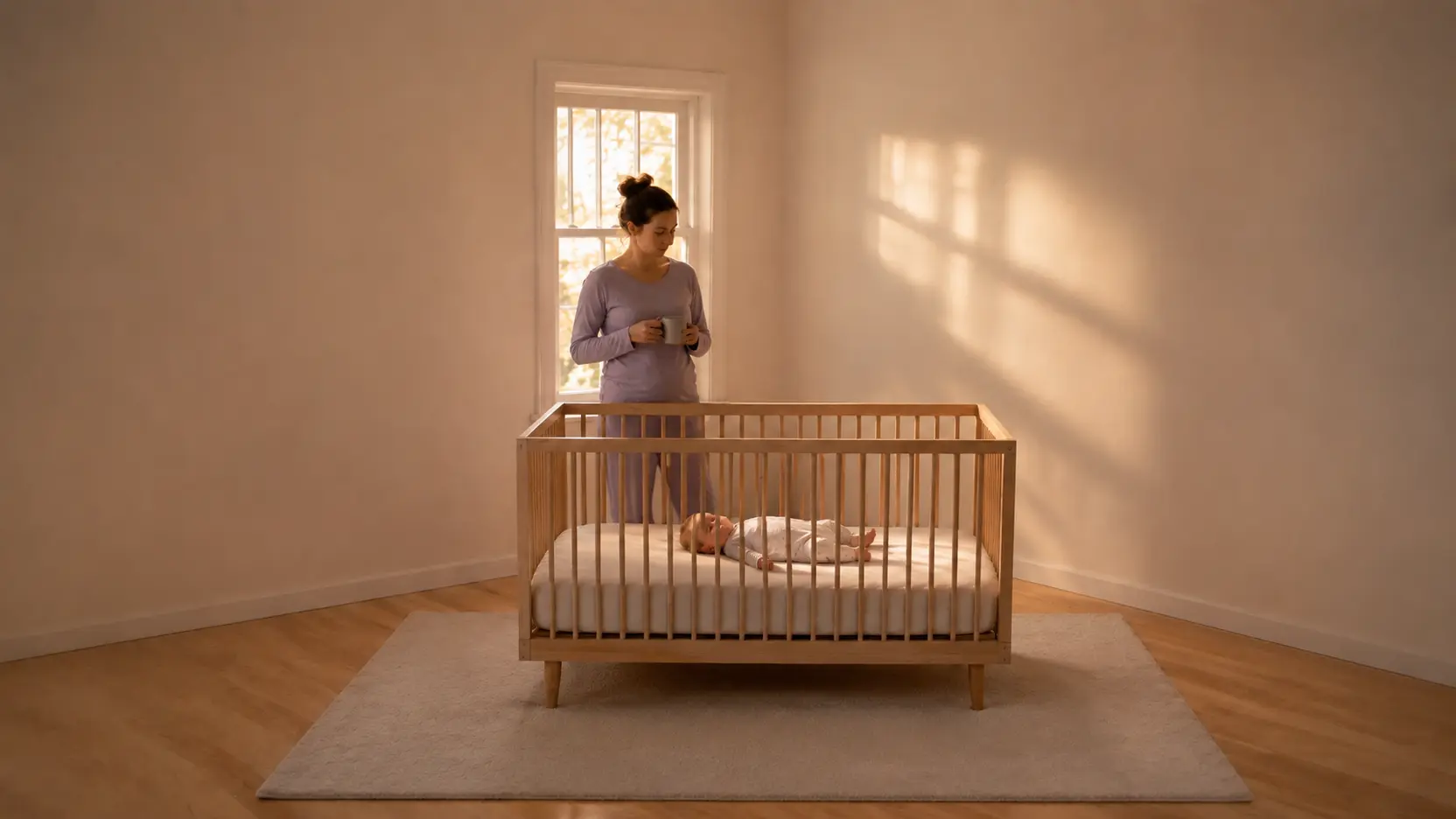
For infants, the regular sleep destination is a crib, bassinet, play yard, or bedside sleeper that meets current safety standards, with a firm, flat, level surface and no pillows, loose blankets, toys, positioners, or added padding. Place an infant on their back for every sleep. A bicycle seat, car seat, stroller seat, sofa, adult bed, or improvised cushion is not the planned substitute.
If the transfer wakes your child, you have not ruined anything important. Keep the handoff boring: lower the lights, remove the helmet and outdoor layers, use the familiar sleep cue, and avoid turning the arrival into a bright, chatty second morning. If you want a practical transfer sequence, this guide to waking and transferring a sleeping baby gently at the destination is the next useful read.

WATCH · WHAT “REAL SLEEP DESTINATION” MEANS
Let the CPSC show the setup the bicycle seat cannot replace
This short U.S. Consumer Product Safety Commission video demonstrates the bare, firm sleep space an infant should reach after the ride. It does not certify a bicycle seat or teach bicycle transport; I include it because the destination half of this question is easy to describe vaguely and much easier to understand when you can see it.
Bike-seat takeaway: the high-back passenger seat supports transportation; a bare crib, bassinet, or compliant play yard receives an infant’s sleep once the ride is over.
Creator: U.S. Consumer Product Safety Commission · Watch directly on YouTube
ARTICLE-SPECIFIC AMAZON RECOMMENDATION
Solve the destination, not the head slump
If your rides often end at the same sitter’s or grandparent’s home, I would solve the missing sleep destination instead of trying to strap the nap to the bicycle seat. A Graco Pack ’n Play On The Go Playard, Kaden can stay at that repeat destination and provide a separate sleep space when used exactly as directed.
That is a stronger fit here than a neck pillow, head band, rolled towel, or generic sleep gadget: the playard changes where the nap happens instead of modifying the seat carrying your child. The specific reason to buy is simple—arrival becomes an unbuckle-and-transfer plan rather than a debate about whether to keep riding because no crib is available.
Confirm that your child is within the product’s current limits, assemble and use it exactly as the manufacturer directs, and use only the supplied pad with a properly fitted sheet. Do not add an aftermarket mattress, pillow, blanket, or positioner. This product does not make bicycle-seat sleep safe, prevent head slump, or guarantee better sleep.
See the Graco destination playard on Amazon
Disclosure: As an Amazon Associate, SleepBaby may earn from qualifying purchases.
What if the bike-seat doze wrecked the nap schedule?
It may bend the schedule. It does not require a rescue operation involving six new wake-window calculations and a bedtime chosen by committee. Note roughly when the child fell asleep, how long the doze lasted, and how they act after waking. A five-minute nod may barely change the day for one child and take the edge off sleep pressure for another.
I would watch the child more than the spreadsheet. If they are cheerful and alert, keep the next sleep opportunity near its usual neighborhood and adjust gently. If they are glassy, fussy, clumsy, or clearly tired earlier, offer the next sleep sooner. Avoid keeping an exhausted child awake for an artificially long stretch just to force the old schedule back into place.
The goal is not to erase the motion nap. The goal is to prevent one short doze from turning the rest of the day into clock surveillance. If nap calculations are starting to feel louder than your child’s actual cues, this guide can help you reset the day after an accidental motion nap without chasing the clock.
Bedtime may land a little earlier, a little later, or exactly where it usually does. Use the child’s behavior, the length and timing of the doze, and the household’s normal rhythm. Make one sensible adjustment. Then let the day be imperfect.
The questions I would answer before the next ride
Should I wake my toddler as soon as they fall asleep?
First stop and check them safely. If breathing, color, response, temperature, posture, helmet, and harness look normal, the immediate problem may be ordinary sleepiness rather than an emergency. Even so, I would end or shorten the ride and remove the child at the destination rather than extending the route to protect the nap. Whether you gently wake during unloading or transfer to the regular sleep space depends on age, destination, and what you can do safely.
Is a reclining bicycle seat safer for naps?
A recline feature does not erase the age, fit, helmet, harness, installation, route, or supervision requirements, and this article cannot tell you that one seat fits your child and bicycle. Follow the exact manufacturer instructions and local law, and get qualified help with compatibility and installation. Do not buy a seat primarily to create naps. Choose transportation equipment for an eligible child and a specific bicycle; plan sleep at the destination.
Can I loosen the helmet strap after my child falls asleep?
No. Stop the ride and follow the helmet manufacturer’s fit instructions. A loose or shifted helmet may not protect as designed. If the child cannot remain properly positioned with a correctly fitted helmet and seat harness, the setup is not working for that ride.
What if my child always falls asleep within ten minutes?
That pattern is planning information. Try riding when the child is usually alert, shorten the route, choose another mode of transportation near nap time, arrange a destination sleep space, or leave the bicycle outing for a different part of the day. If the drowsiness is new, unusually intense, difficult to interrupt, or occurs with illness, breathing changes, weakness, heat symptoms, or altered behavior, stop guessing and contact the child’s clinician.
Are bicycle trailers different?
They are different products with different instructions, but the AAP still says infants younger than 12 months are too young to be bicycle passengers, including in trailers. The child needs the required developmental readiness and helmet fit, and the trailer must be used exactly as designed. A trailer remains transportation, not the planned nap surface.
Sources
- American Academy of Pediatrics / HealthyChildren.org: How to Protect Child Passengers on Adult Bikes
- NIH / NICHD Safe to Sleep: Safe Sleep Environment for Baby
- U.S. Consumer Product Safety Commission: Safe Sleep—Cribs and Infant Products
- American Academy of Pediatrics / HealthyChildren.org: Breathing Trouble
- U.S. Centers for Disease Control and Prevention: Heat-Related Illnesses
- American Academy of Pediatrics: Sleep-Related Infant Deaths—Updated 2022 Recommendations
- Graco: Pack ’n Play On The Go Playard, model 2164119
- Graco: Pack ’n Play On The Go Playard instruction manual
WHEN THE WHEELS STOP BUT THE NAP QUESTION DOESN’T
Bring the next sleep decision back inside
The bicycle is parked. The helmet is off. Your child may be awake, half asleep, or deeply offended by the transfer. You do not need to make the whole day obey the nap that happened on the way. SleepBaby can help you build the calmer part that comes next: a realistic rhythm, a clear sleep destination, and one decision at a time.