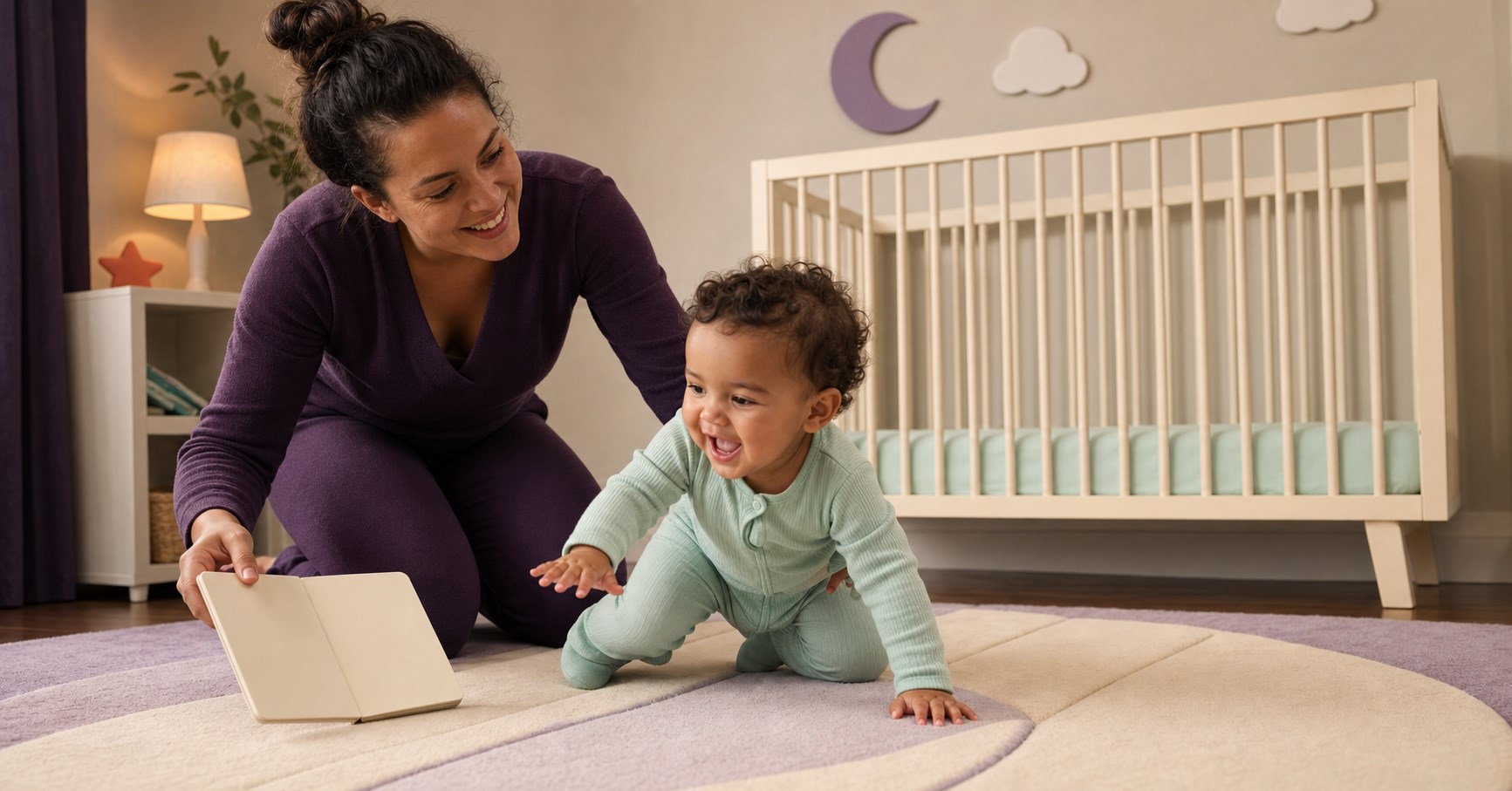
Why Does My Baby Seem Restless?
If you’ve ever asked yourself, “why can’t my baby stay still?”, you’re not alone. It’s completely normal for babies to be active and fidgety, as they are constantly exploring their environment and developing new physical skills. But sometimes, this restlessness can make nap time or bedtime a real challenge.
Causes for a Restless Baby
Developmental Milestones
When your baby is learning a new skill, like crawling or walking, they might become more restless as they practice this new skill – even during their sleep!
Teething
Teething can also cause your baby to be more active and restless due to the discomfort they’re experiencing.
Overstimulation
Too much activity, noise, or stimulation before bedtime can make it difficult for your baby to settle down and sleep.
How to Help a Restless Baby
Create a Calm Environment
Creating a quiet, dimly lit environment can signal to your baby that it’s time to sleep and help them settle down.
Establish a Routine
Having a consistent bedtime routine can also help your baby understand when it’s time to sleep.
Offer Comfort Items
A favorite blanket or stuffed animal can provide comfort to a restless baby and help them feel more secure.
Understanding Baby Restlessness
If your baby can’t stay still, various factors could be contributing. Let’s explore some possible reasons and provide solutions for calming an active baby.
Common Reasons Why Your Baby Might Be Restless
Developmental Milestones
Babies tend to be more active when they’re hitting new milestones, like sitting up or crawling. If your 1-year-old isn’t sitting or crawling yet, it might be due to physical developmental delays. However, each child develops at their own pace, and slight delays are usually no cause for concern. If you are worried, consult with your pediatrician.
Hyperactivity in Babies
Hyperactivity isn’t limited to older children. Even infants, such as a 3-month-old, can show signs of excessive movement. A ‘hyperactive’ baby might seem to be continuously moving, unable to settle or rest. If your child seems exceptionally energetic, speak with your healthcare provider to rule out conditions like ADHD.
Overstimulation
Babies can also become restless if they are overstimulated. This might manifest as being squirmy during the day or at night, especially if they’re exposed to a lot of noise, activity, or playtime before sleep.
Signs of Discomfort
Sometimes, restlessness in babies can be a sign of physical discomfort. If your baby is squirmy at night, for instance, it might be because they are experiencing teething pain or a diaper rash.
How to Calm a Restless Baby
Establish a Routine
Regular sleep and feeding times can help your baby understand when it’s time to be active and when it’s time to rest.
Limit Stimulation Before Sleep
Creating a calm and quiet environment before bedtime can help soothe a restless baby.
Provide Comforting Touch
Physical contact, like cuddling or swaddling, can help a baby feel secure and promote relaxation.
Consult a Healthcare Provider
If your baby seems unusually restless or hyperactive, consult with your pediatrician or a child development specialist. They can help identify any underlying issues and provide appropriate support or intervention.
Special Considerations: Autism and Developmental Delays
If your child shows signs like fidgeting, not sitting up, or difficulty settling, it might also be a sign of a neurological or developmental condition like autism. Autism symptoms can be detected as early as a few months old, with signs including limited social interaction, lack of eye contact, or not responding to their name. Remember, though, every child is unique and develops at their own pace, and these symptoms do not confirm a diagnosis. Always consult with a healthcare provider if you have concerns.
When Your Baby’s Constant Movement Becomes a Challenge
Having a baby that can’t stay still can sometimes be overwhelming, especially when it’s mealtime or bedtime. Offering a distraction like a small toy or engaging their interest in the food can help. For sleep, creating a calm, comforting bedtime routine can be beneficial.
How SleepBaby.org Can Help
If you’re struggling to help your baby settle down and get the sleep they need, SleepBaby.org can provide valuable resources and guidance. Whether your baby can’t stay still due to developmental changes, teething, or overstimulation, SleepBaby.org has a range of articles and guides to help you navigate these challenges.
From understanding the causes of restlessness to providing practical strategies for establishing healthy sleep routines, SleepBaby.org is committed to supporting you in your parenting journey. With our evidence-based advice, you’ll have the tools you need to help your baby settle, sleep better, and wake up happier.
Remember, Every Baby is Unique
It’s important to remember that every baby is unique. What works for one might not work for another. Don’t be discouraged if it takes some time and trial and error to find the right methods to help your restless baby. With patience and support from resources like SleepBaby.org, you’ll find strategies that work for you and your baby.






What viewers said10 comments · 4 replies+
Archived comments from the original Baby Sleep Miracle presentation. Not independently verified by SleepBaby.org; individual experiences vary.
Thank you so much for this video! I had no idea about the dangers of baby swings :O
Hi Mary-Ann. I have a question: Is method in any way similar to the ones recommended by Dr Bucknam, Dr. Weissbluth or Dr. Karp? We tried those but none of them help.
Hi Regina, thank you for your question. The short answer is no. The techniques I share in my guide are based on newest scientific research and this is why I have never seen any approach similar to the one I recommend.
This method really works! I tried it on my son Jesus and after just one week he went from waking up more than 5 times a night to waking up just once or twice. You are a lifesaver, Mary-Ann!
I'm truly impressed with how much information you share in your video. And all for free! I can feel that you truly care about mothers like myself, and that's hard to find these days. I have recommended your site to several of my friends already.
Mary-Ann, our child suffers from autism. Is your approach still suited?
Chloe, I made sure my method can be used with any child, even babies who are special like yours. Please note that I'm not a doctor and that I always advice to consult with your physician because nothing is more important than the safety and well-being of your love.
Hallo Mary-Ann, I'm from Germany. Do you have your guide in German?
Hello Heide, we do! Normally you should already see our video in German. If not, please contact our support so they can guide you
Thenk you for your answer, Mary-Ann!
I just completed your approach and I have to say, it worked almost too well. Yes, it took a bit of getting used to with your bedtime routine but the difference is huge. My son George used to take 1 hours to go down and now he's firmly asleep in no more than 10 minutes! You're the best!
It seems I'm the only man watching this video, lol! What you shared about the 'emotional backpack' made immediate sense to me and I can't wait to help my little girl Mila to unpack it!
Hey there, just discovered your site and this really sounds different. Just wanted to say thanks for sharing :)
For everyone who's still thinking about getting Mary-Ann's guide I want to advise you to go ahead. I wasn't sure myself but now I'm so thankful I invested in this program. It made a huge difference in our life as a family and yes, my baby girl does sleep through the night now.