
If your baby ate Triple Paste, a small taste of ordinary zinc-oxide diaper cream is usually low risk, but the exact product, amount and symptoms matter. Take the cream away, gently wipe visible residue from the mouth, and call U.S. Poison Control at 1-800-222-1222 for advice. Do not make your child vomit. Call 911 for choking, trouble breathing, a seizure, collapse or a child who cannot be awakened. Persistent coughing after swallowing cream needs an immediate poison-center call.
I would put the actual container beside the phone before trying to work out how much is missing. A white smear tells you where the cream went; it does not reliably tell you how much your baby swallowed.
Start with breathing, then the package
Emergency: call 911 for choking or serious symptoms. Follow the dispatcher’s instructions. A thick mouthful can be a choking problem even when the cream itself has low toxicity.
Breathing normally: move the tub or tube out of reach, keep your child with you, and contact Poison Control. Tell them right away if coughing continues, if a prescription product was involved, or if another substance was accessible.
Outside the U.S., use your local poison service and emergency number. The Missouri Poison Center explains the choking concern; Poison Control lists the emergency symptoms above. The Washington Poison Center specifically flags persistent coughing after ingestion.
Clean up what you can see without delaying the call
Gently wipe cream from the lips and mouth where it is visible and easy to reach. Wash cream from the hands and face so your child cannot keep transferring it back to their mouth. You do not need to finish cleaning the room before asking for help.
Missouri’s diaper-cream guidance recommends wiping or rinsing the mouth, cleaning exposed skin, and offering water. For a baby, ask the specialist what, if anything, to give to drink. Do not force fluids, feed a child who is choking or having trouble swallowing, or use milk or food as a home antidote.
The American Academy of Pediatrics advises against making a child vomit after swallowing a potentially poisonous substance. Skip home remedies and other medicines unless the poison specialist or clinician directs you to use them.
Is Triple Paste poisonous if swallowed?
The Illinois Poison Center includes Triple Paste in its guidance on diaper creams, which it describes as usually nontoxic. A small accidental taste of a standard zinc-oxide cream often causes no symptoms or only mild stomach effects. That is useful reassurance, not a reason to ignore a coughing child or an uncertain product.
Poison Control’s diaper-product guide says larger amounts of zinc-oxide or lanolin creams may cause nausea, vomiting or diarrhea. It also explains that some diaper-area products contain different medicines. “For diaper rash” does not make every tube the same.
There is no universal teaspoon amount I would use to clear an infant from an article. An already-used tub is especially hard to measure by looking at the space inside. Tell the specialist what you saw, what could have been swallowed and what you cannot determine.
A smear, a swallow, or a breathing change?
A smear: describe where the cream was: on fingers, lips, clothing or the floor. A mess alone does not establish the swallowed amount.
A witnessed swallow: say exactly what you saw, including whether your child had a finger, tube opening or larger mouthful in their mouth.
A breathing change: mention coughing immediately. Choking or trouble breathing takes priority over estimating the amount and requires emergency help.
These are details to report, not three risk categories for deciding at home that everything is fine.
Check which Triple Paste formula it was
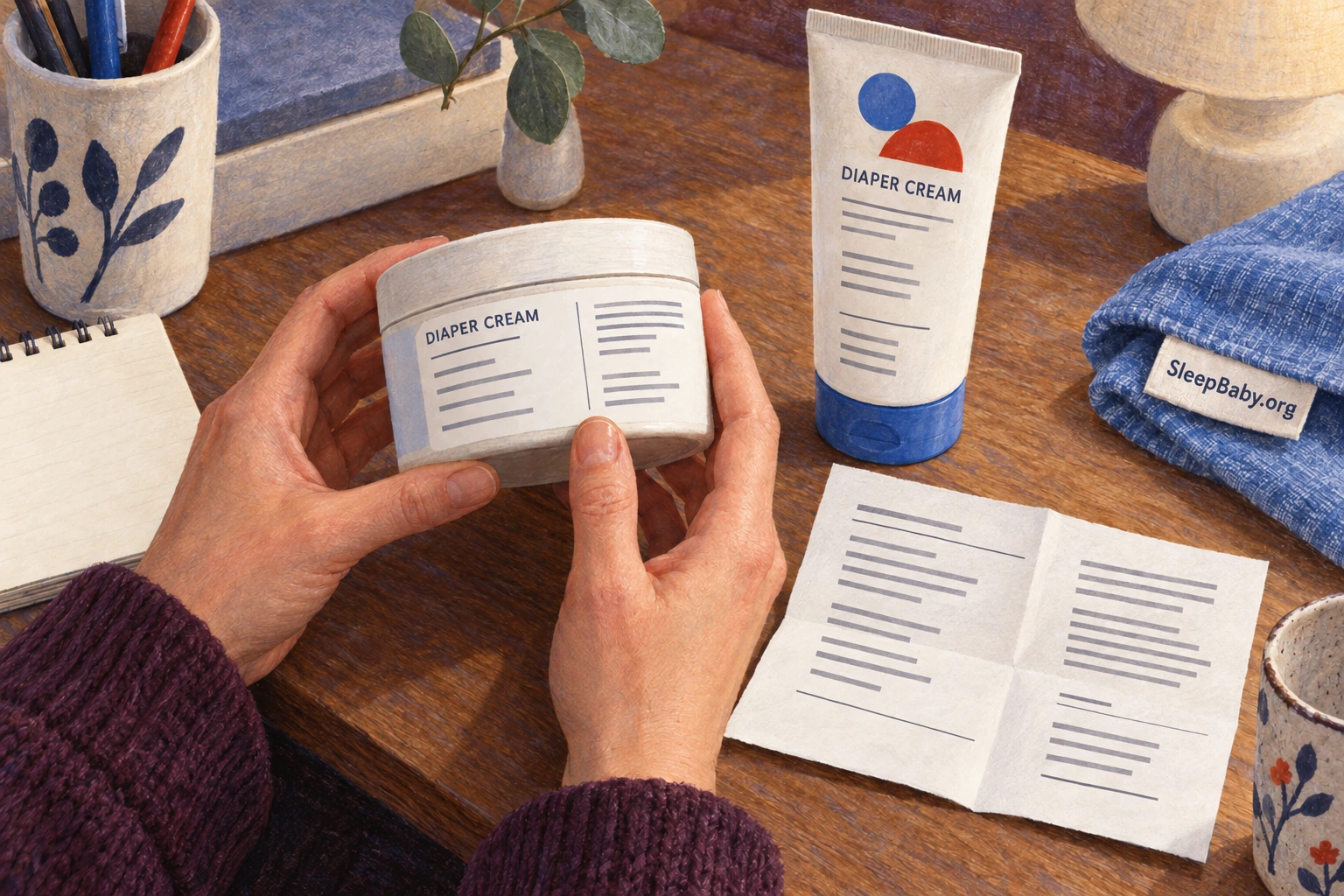
Read the complete product name and active ingredient on your own container. Packaging can change, and the brand sells more than one formula. The manufacturer currently lists these examples:
Same brand, different labels
- All-in-One Triple Protection Diaper Cream
- The manufacturer lists 12.8% zinc oxide.
- 3X Max Diaper Rash Ointment
- The manufacturer lists 40% zinc oxide.
- Multi-Purpose Rash Ointment with Sheer Zinc
- The manufacturer lists 12.8% zinc oxide.
These percentages identify formulas. They are not safe-swallowing limits, and “3X” does not tell you how severe an exposure will be.
You can compare the manufacturer’s All-in-One, 3X Max and Sheer Zinc pages, but the package your child reached is the one to discuss. Read any additional ingredient or prescription label aloud. Keep an unlabeled or transferred cream for identification; do not guess from its color or smell.

FOR ORDINARY BEDTIME, AFTER THE EXPOSURE QUESTION
Give the medical instructions their own page. Keep the evening plan simple.

When a diaper change turns into a poison-control call, ordinary bedtime planning can wait. Follow the exposure instructions first. When you want a starting point for everyday sleep, you can open the free SleepBaby.org planning preview. It offers three choices and one suggested starting step, with no sign-up or card.
The SleepBaby.org Workshop is a separate, optional paid guide for ordinary sleep planning. Its short lessons can be revisited, and its seven-night tracker gives you a place to keep everyday notes. You can decide whether that structure would be useful without treating tonight’s exposure as a reason to buy.
The preview and Workshop do not assess an ingestion, treat symptoms or clear a baby for sleep. Keep the poison specialist’s instructions separate and follow them.
What to have ready for Poison Control
Start the call even if you do not have every detail. Poison Control’s help page explains that the specialist uses information about the person and the exposure to make a recommendation. Calls in the U.S. are free, confidential and available 24 hours a day.
- Your child: age, weight if known, relevant health conditions and what they are doing now.
- The product: full name, active ingredients and any prescription or pharmacy label.
- What happened: the amount you actually saw, whether the amount is uncertain, and any other accessible products.
- When: the time you noticed it, or the period during which it could have happened.
- Changes: coughing, gagging, vomiting, diarrhea, discomfort or anything else unusual.
I would say, “I found cream on their mouth and hands; I did not see them swallow it,” if that is what happened. It gives the specialist more useful information than a confident-sounding estimate you cannot support.
Which symptoms need another call?
Report symptoms when you first call, then follow the instructions you receive about calling back. The Illinois Poison Center says ongoing vomiting or diarrhea warrants an immediate call. Washington’s guidance says persistent coughing after ingestion needs immediate poison-center advice. If coughing becomes trouble breathing or choking, call emergency services.
Do not assume an unusual change is simply tiredness because it is close to a nap. A child who cannot be awakened, collapses or has a seizure needs 911. You do not need to decide whether the cream caused a symptom before asking for help.


If the specialist recommends watching at home
Ask for a clear plan before the call ends. Write it somewhere the next caregiver can find, rather than leaving them to reconstruct it from the open tub and an internet search. The advice should be specific to your child and this product.
Leave the next adult the plan, not just the story
Product and call time: which exact cream you discussed and when you called.
What to do: the instructions about food, drinks, activity or any other care.
What to watch: the changes that mean another call, urgent care or emergency help.
How long: the observation or follow-up timing the specialist gave you. Ask if it was not clear.
Keep the package available for a follow-up conversation, while keeping it out of your child’s reach. If another caregiver takes over, tell them what remains uncertain as well as what the specialist said.
Can my baby take a nap afterward?
Ask during the exposure call, especially if nap or bedtime is approaching. There is no single waiting period here that can clear every baby and formula for sleep. Tell the specialist about your child’s usual schedule and ask how the observation instructions apply to it.
Difficulty waking is an emergency sign, not a routine sleep-planning problem. A sleep guide cannot replace advice about an ingestion.
What if cream got in my baby’s eyes too?
Tell Poison Control about the eye exposure. The Illinois Poison Center’s diaper-cream guidance recommends rinsing the affected eye with clean, lukewarm water for 15 minutes. Start rinsing and get instructions about technique and any continuing irritation; do not put more cream or a home remedy in the eye.
What if it was prescription rash cream or powder?
Do not apply the small-taste reassurance for ordinary zinc-oxide cream to a different product. Illinois advises an immediate call for prescription diaper cream or talcum powder exposures. Keep the pharmacy label or powder package with you. If breathing is affected, use emergency services.
Reset the changing spot before the next diaper change
Once the immediate question has a plan, look at the exact place your child reached the cream. Was it an open tub on the floor, a low drawer, or the pocket of a diaper bag? Fix that particular access point. A general reminder to “be careful” is easy for a rushed adult to interpret differently.
Use the original labeled container, close it after use, and return it to storage children cannot access. The AAP recommends keeping medicines and hazardous products out of sight and reach in locked storage. A closed diaper bag on a low hook is still reachable; choose the storage location as carefully as the container.
I would make the handoff concrete: “The cream goes in this cupboard, and this is where the adult keeps the key.” Include grandparents, babysitters and anyone restocking the changing supplies. Keep prescription creams in their labeled packages too, rather than mixing them into an ordinary diaper-cream jar.

An optional tool for the next ordinary diaper change
As an Amazon Associate I earn from qualifying purchases.
Bumco Original Baby Bum Brush in Grey
If you prefer a separate applicator for diaper cream, this is one simple option to consider. The manufacturer describes soft, flexible BPA-free silicone and a suction-cup base. Its purpose is applying ointment with less mess on the adult’s hands.
This is an adult application tool, not a treatment for swallowed cream, a teether or a device that prevents ingestion. A suction base does not make an applicator safe to leave within a child’s reach. Follow the cream label and the applicator’s cleaning directions; it does not replace handwashing, supervision or putting the closed cream away.
View the Bumco Original Brush on Amazon
No-purchase alternative: apply the cream with clean adult fingers as directed on its label, wash your hands, and close and store the container. I would skip the applicator if it adds another item you do not want to clean or keep out of reach.
A short reminder about putting medicines away
The CDC’s Put your medicines up and away and out of sight video reinforces an everyday storage habit. It discusses medicines; it does not assess diaper-cream ingestion or replace the advice for your child.
Written takeaway: keep medicines, vitamins and supplements out of children’s sight and reach and put them away after use. The CDC’s written guidance also emphasizes child-resistant containers. Use the same consistent put-away habit for the labeled creams in your changing area.

Sources
- Missouri Poison Center: diaper rash products
- Illinois Poison Center: diaper cream, including Triple Paste
- Poison Control: are diaper rash products dangerous?
- Washington Poison Center: diaper rash cream
- Poison Control: emergency first aid
- Poison Control: getting help and what to have ready
- Triple Paste: All-in-One Triple Protection label
- Triple Paste: 3X Max formula
- Triple Paste: Multi-Purpose Rash Ointment with Sheer Zinc
- American Academy of Pediatrics: poison prevention
- Bumco: Original Baby Bum Brush in Grey
- CDC: safe storage and child-resistant medicine containers
WHEN YOU ARE BACK TO EVERYDAY QUESTIONS
A smaller first step for ordinary bedtime
Put the cream away, keep the exposure instructions available to the next caregiver, and use the medical team for follow-up questions. When ordinary sleep planning is what you need, the free SleepBaby.org preview offers three choices and one suggested starting step. No sign-up or card is needed.