
If your baby put a toilet brush in their mouth, take it away and check their breathing first. Call Poison Control at 1-800-222-1222 in the U.S. if cleaner could be involved or you are unsure what they swallowed. Do not make them vomit or put soap in their mouth. A brush can carry cleaner residue, loose pieces, or contamination. Those need different decisions. I would identify the exposure before assuming this is only a germ problem.
The phrase “ate a toilet brush” can mean a lick of the handle, chewing the bristles, drinking liquid from the holder, or actually swallowing a broken piece. Say exactly what you saw. “I found the brush in her mouth; I don’t know whether anything came off” is useful information. You do not need a more certain story before calling.
What to do in the first few minutes
Move your baby away from the brush, holder, and cleaning products. Put those items where they cannot reach them again. If another adult is there, one person can stay with your baby while the other brings the cleaner label and notes the time.
- Remove visible surface residue gently. For visible fecal material around or just inside the mouth, use a clean damp cloth. Do not scrub the mouth, push a cloth deep inside, or try to disinfect it.
- Get substance-specific advice. Have the original cleaner container ready. Tell Poison Control whether the brush was recently used, whether liquid was in the holder, and whether the cleaner is unknown.
- Handle a cleaner exposure promptly. Poison Control advises a small amount of water or milk immediately for a swallowed burning or irritating product only if the person is conscious, not convulsing, and able to swallow. For a baby, get exact age-appropriate directions on the call; do not force a drink or give anything by mouth if swallowing is difficult.
- Save the evidence. Set the brush and packaging aside safely. A photo can help you describe them without holding a contaminated object near your baby.
Do not induce vomiting. Do not add vinegar, baking soda, mouthwash, sanitizer, or another cleaning product to “cancel out” what happened. Ask the poison specialist before giving a remedy. Washing a bathroom object and treating a baby are different jobs.
If cleaner splashed into an eye, begin rinsing with room-temperature water for 15–20 minutes and get poison advice. Rinse contaminated skin with running water for at least 15 minutes after removing affected clothing. Severe symptoms need emergency care. Poison Control’s first-aid guidance explains these immediate measures.
Three questions that sort out the risk
I would keep these questions separate. A clean-looking brush can have product residue. An unused brush can still have a broken part. A dirty brush does not automatically mean your baby will become ill. What changes the plan is the actual exposure.
On it. Off it. Baby now.
- ON IT: What might have coated the brush?
- Name the cleaner, toilet water, visible waste, or unknown liquid. Include water sitting in the holder. Keep “unknown” on the list if that is the honest answer.
- OFF IT: Is a piece missing?
- Look at the bristles, head, handle, and any disposable pad. Report something broken or missing. Do not decide from size alone that it must be harmless.
- BABY NOW: What are you seeing?
- Describe breathing, coughing, alertness, swallowing, discomfort, or vomiting. Tell the professional what changed and when.
This is a way to organize the call, not a home test that clears an exposure.
If cleaner or toilet-brush-holder liquid was involved
Regular toilet bowl cleaners can contain corrosive ingredients and may burn the mouth or digestive tract. Automatic in-bowl cleaners are often more dilute, but their ingredients and concentration still matter. Poison Control distinguishes the two; it does not make every brush exposure equivalent to a sip of diluted toilet water.
Read the actual product name, not just “bathroom cleaner.” Mention a tank tablet, hanging gel, disposable cleaning pad, or more than one product if those were used. Do not taste or deliberately sniff liquid to identify it. If you are in someone else’s home, ask them to photograph the original container while you make the call.
Never mix bleach with toilet bowl cleaner; toxic gas can result. If fumes are present, move to fresh air and get advice. Breathing trouble needs emergency help. Poison Control explains cleaner differences and mixing hazards.
If bristles or a plastic piece may be missing
Call your baby’s clinician promptly for a possible swallowed piece, especially a sharp or stiff one. Seattle Children’s recommends prompt medical assessment for swallowed objects in children younger than two. Drooling, trouble swallowing, gagging, refusal to drink, or throat/chest pain can signal a lodged object; breathing trouble is an emergency.
Bring the matching brush or a photograph if advised. An apparently normal moment does not tell you where a missing piece went. I would not feed bread, push food, or wait to find the piece in a diaper without a clinician’s plan. A guide for a known smooth harmless object is not enough to classify an unknown brush fragment. See Seattle Children’s swallowed-object guidance.

If it seems to be contamination only
Small accidental fecal exposures often cause no symptoms, but feces can carry organisms that cause illness. Illinois Poison Center notes that nausea, vomiting, diarrhea, or a low-grade fever may appear hours to days later. Call for advice if symptoms occur. A brush that might also hold cleaner or loose parts is not a contamination-only case just because you cannot see those hazards.
I would tell the specialist whether this was your household brush, a public-restroom brush, or an unknown one. Then follow the observation instructions they give for your baby. There is no single “safe after four hours” rule that covers cleaner, fragments, and contamination together. The Illinois Poison Center guidance applies to feces, not to every possible toilet-brush exposure.
AFTER YOU HAVE AN EXPOSURE PLAN
Close the bathroom chapter before you plan bedtime
Once Poison Control or your clinician has explained what to do, the SleepBaby.org homepage planning preview can help you choose one ordinary sleep starting point. The preview is free, runs in your browser, and needs no sign-up or card.
A bathroom scare can leave a parent replaying the moment long after the brush is put away. I would keep two separate notes: the exposure instructions you were given, and the familiar bedtime steps you can use when those instructions allow.
The optional paid SleepBaby.org Workshop offers short lessons you can revisit and a seven-night tracker. It is for ordinary sleep planning. It does not assess poisoning, treat an injury, tell you when monitoring can stop, or promise that tonight will go a particular way.
What to have ready for the call
A short note is enough. You can start calling before every blank is filled in. Keep the phone on speaker if that makes it easier to stay beside your baby, and let the specialist lead the questions.
A one-minute exposure note
- Baby: age, approximate weight, current symptoms.
- Time: when it happened, or the last time you know they did not have the brush.
- Contact: mouth, swallowed liquid or piece, eyes, skin, or fumes.
- Product: exact name and label; say if it is unknown.
- Brush: reused or disposable; intact or possibly missing a part.
- Already done: wiping, washing, rinsing, drinks, or any remedy.
Before ending the call: “What should I watch for, for how long, and what would mean calling back or going in? What should we do about feeding and the next nap?”
Do not guess an amount to make the note look complete. “The holder was wet, but I didn’t see a swallow” gives the specialist a different picture from “He drank the liquid.” If two adults saw different parts of the incident, report both observations rather than blending them into one assumed sequence.
Write down the instructions and any case number you are given. If another caregiver takes over, pass on the actual plan, including when to call back. “They said it was okay” can lose the conditions that made home observation appropriate. Poison Control describes its free, confidential help options.
Clean hands gently; do not disinfect the mouth
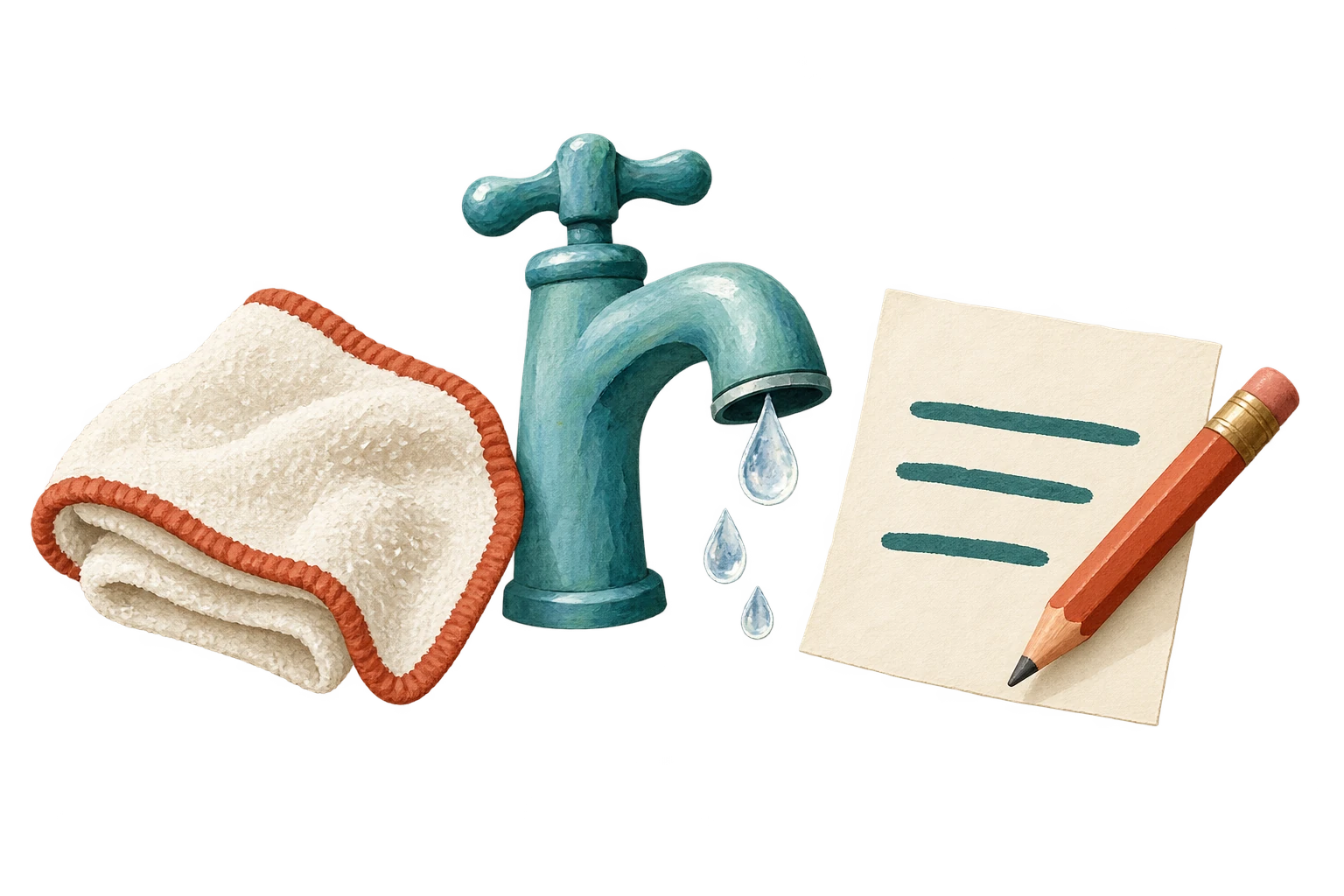
Once urgent exposure steps are underway, wash your baby’s hands and your own with soap and clean running water. Help with finger creases and underneath the nails, then rinse and dry. Keep your baby securely supported. CDC’s handwashing method uses a 20-second scrub; this is hand hygiene, not a treatment for something already swallowed.
For the mouth, the useful distinction is a gentle wipe of visible material versus adding another substance. No antibacterial spray, household disinfectant, or hand sanitizer belongs there. A caregiver may reach for a wipe almost automatically because it is already on the changing table. Pause and use a clean cloth dampened with water instead.
Do not turn cleanup into a long inspection that delays the call. I would put the dirty brush safely aside first, leave the bottle label available, and handle the room after I know what the baby needs. If cleaner is on the skin or in the eye, follow the longer rinsing steps above rather than treating it as ordinary dirty hands.

What to watch for after getting advice
Use the observation period and instructions given for this exposure. Report new symptoms or a change from the story you first gave. Discovering a missing bristle or realizing a cleaner had just been used is new information, even if your baby still looks comfortable.
- Breathing or responsiveness changes: use emergency services for breathing difficulty or inability to awaken normally.
- Mouth or swallowing problems: drooling, pain, persistent gagging, or refusal to drink deserve prompt medical advice.
- Illness after contamination: call about vomiting, diarrhea, or fever. If your baby is drinking poorly or seems unwell, contact their clinician rather than waiting for the observation period to end.
- Possible swallowed-object symptoms: new coughing, abdominal pain, vomiting, or blood in the stool need medical advice.
A notes app can be more useful than repeatedly searching for another family’s outcome. Record the time, what you observed, and the advice you received. You are looking for meaningful changes in your baby, not trying to recreate someone else’s experience minute by minute.
Can my baby nap afterward?
Ask the poison specialist or clinician about the next nap before ending the call. The answer depends on what happened and what monitoring they recommend. I cannot give a blanket “let them sleep it off” answer for an unknown cleaner or missing brush piece.
If they say ordinary sleep can continue, keep the usual safe sleep setup: place your baby on their back on a firm, flat infant sleep surface with a fitted sheet and no pillows, loose blankets, or toys. Do not prop the mattress or put a baby on their stomach because you are worried about vomiting. Follow the NIH safe sleep guidance alongside the exposure plan.
Keep tonight’s medical instructions separate from a sleep schedule. If the instructions include a particular check, write down exactly what to check and when. A Workshop, monitor, or bedtime routine cannot decide when those checks are no longer needed.
Change the bathroom setup before the next visit
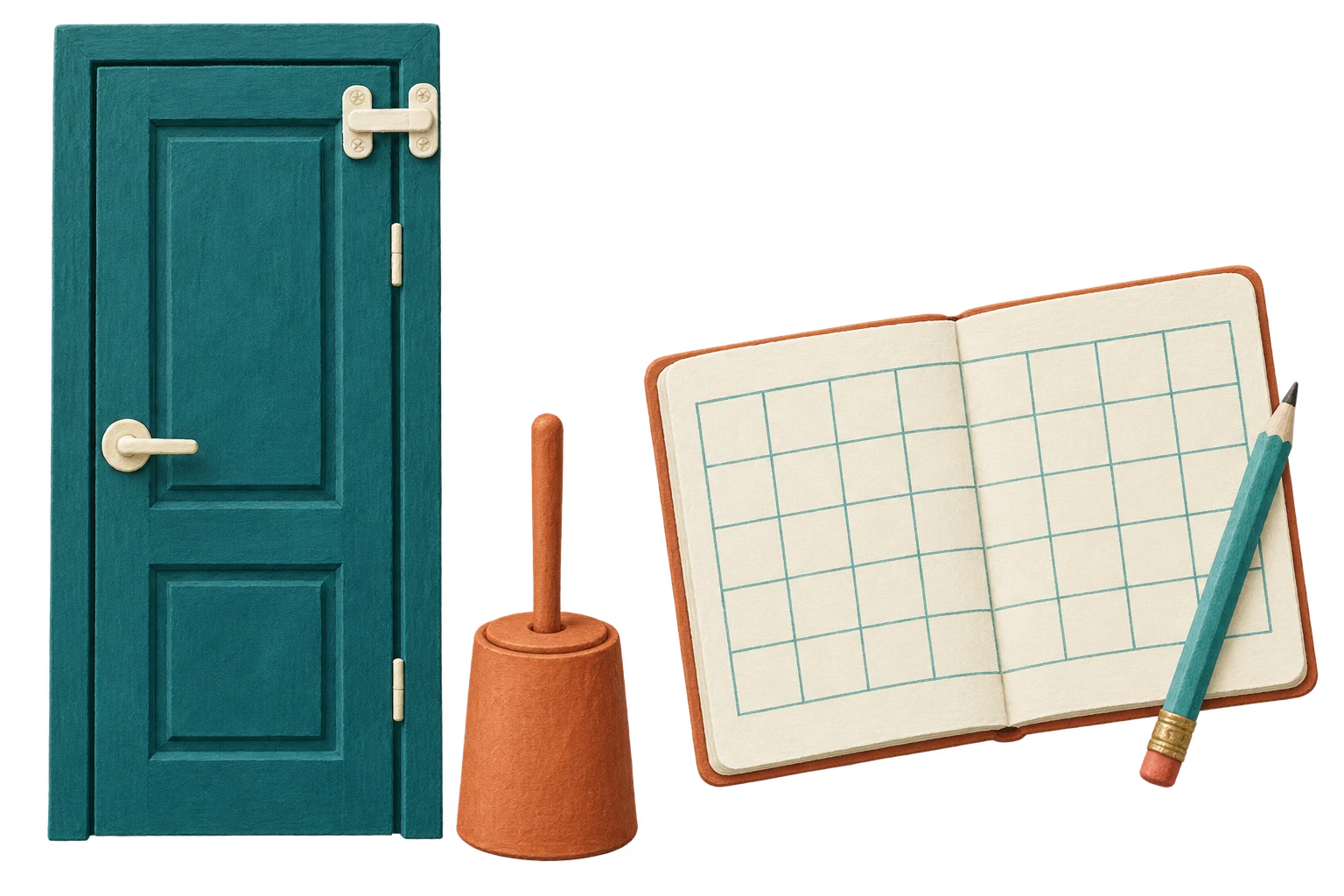
The prevention question is not only “Where does the brush live?” It is also “Where is it while it dries, while the toilet is being cleaned, and when a visitor puts it back?” That temporary spot can be the one your baby reaches.
The American Academy of Pediatrics recommends making bathrooms inaccessible to young children without an adult and keeping hazardous products out of reach in secured storage. Keep the toilet lid closed and consider an appropriate lid lock. A lid lock helps with access to toilet water; it does not secure the brush standing beside the bowl.
- Choose inaccessible storage. Keep the brush and holder behind a secure barrier, separate from items your baby uses. A decorative covered holder is not a child-resistant lock.
- Keep cleaner in its original labeled container. Put it away after use. An unmarked bottle makes a future exposure harder to identify.
- Make cleanup a closed-door task. Keep your baby out while products and tools are in use, then return everything to secure storage.
- Check the whole access route. Include stools, reachable handles, open cabinets, visitors, and older siblings. Make the rule simple enough for every caregiver to follow.
I would fix the storage route before buying a replacement brush. A new brush on the same reachable patch of floor leaves the same access problem. If another caregiver does the bathroom cleaning, agree on the new location together rather than hoping they notice the change.
Optional shopping idea: secure the brush cupboard
As an Amazon Associate I earn from qualifying purchases.
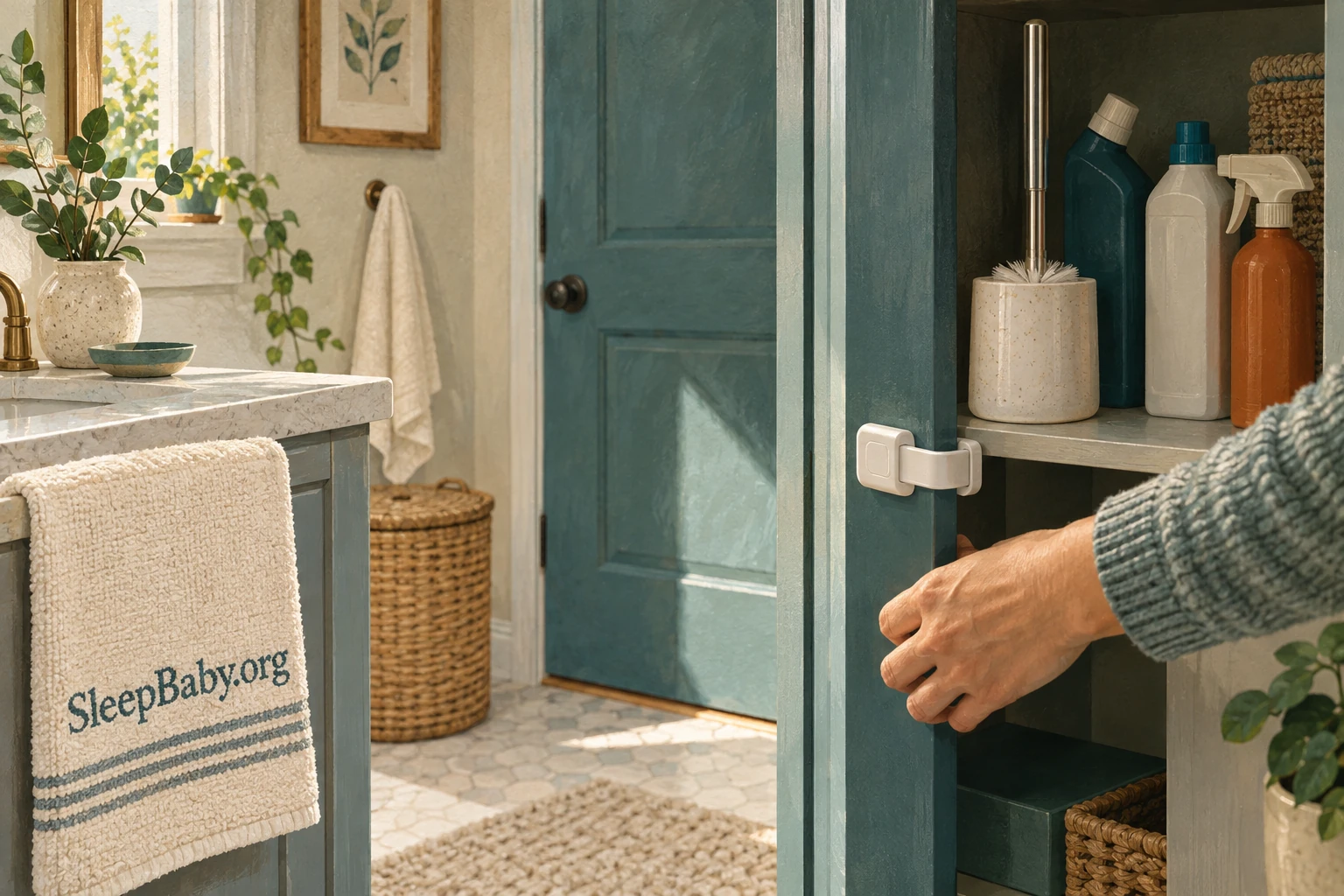
Safety 1st OutSmart Flex Lock, white, 2-pack
If your brush and cleaner can be stored in a cupboard with compatible paired knobs or handles, this is one lock to consider. Check the exact fit and installation instructions before choosing it. It is not a bathroom-door lock, a guarantee against access, or a substitute for keeping hazardous supplies out of reach.
Use the manufacturer’s installation guide for your model, check the closure, and stop relying on it if your child can defeat it. Do not use a product outside its stated purpose. I am recommending a possible storage aid, not claiming to have tested it in your home.
View the Safety 1st OutSmart Flex Lock on Amazon
Free or already-owned alternative: move the brush and cleaner to existing secure, inaccessible storage and keep the bathroom closed to unsupervised access. If that already solves the problem, another gadget may add nothing. No purchase is needed for the response steps in this article.
A useful handwashing demonstration
CDC’s Fight Germs. Wash Your Hands! shows the mechanics of washing hands. It is relevant to cleanup after the exposure has been assessed, not to deciding whether cleaner or a swallowed piece is dangerous.
If the video will not play: wet, lather, scrub all hand surfaces for at least 20 seconds, rinse, and dry. The CDC transcript provides the written demonstration.
Quick answers to the details parents ask about
It was a brand-new, unused brush. Does that change things?
Yes, tell the professional it was unused. It changes the information about possible contamination and cleaner contact. Still check whether the brush was intact and whether your baby has symptoms. “New” does not answer the separate question of a loose or broken piece.
My baby licked only the handle. Should I mention that?
Absolutely. Tell Poison Control which part touched the mouth and whether cleaner could have splashed onto it. Do not turn a brief lick into an assumed swallowed amount, but do not treat the handle as guaranteed residue-free either.
Can I wait to see whether my baby gets sick?
For possible cleaner exposure or an unknown substance, call for advice now. For a possible swallowed brush piece, get prompt medical advice. Waiting for illness cannot identify what was on the brush or whether a piece is missing.
Should I buy a toy brush as a replacement?
I would start by removing access to the real cleaning tool. For ordinary play, choose an age-appropriate toy that is already intended for your baby’s stage and inspect its condition. A miniature broom, brush, or older child’s pretend-cleaning set is not automatically suitable for a baby who mouths objects.
What if I have already washed the brush?
Tell the specialist what you did and keep the brush available. Look for the original cleaner container and write down what you remember before more details get fuzzy. You can still ask for help with incomplete information.
Sources
- Poison Control: automatic and regular toilet bowl cleaners
- Poison Control: first aid for poisonings
- Poison Control: the scoop on poop
- Illinois Poison Center: my child ate poop
- Seattle Children’s: swallowed foreign object
- American Academy of Pediatrics: bathroom safety
- American Academy of Pediatrics: childproofing your home for poisons
- Poison Control: how to get help
- NIH Safe to Sleep: reduce the risk
- American Red Cross: infant choking
- CDC: Fight Germs. Wash Your Hands! transcript
- Safety 1st: installation help and product manuals
ONE PRACTICAL STEP AT A TIME
A safer bathroom. A simpler next bedtime.
Put the exposure instructions where every caregiver can find them. Secure the brush and cleaner before they are used again. When medical questions have been handled, you can return to one familiar sleep step instead of redesigning the whole night.
The SleepBaby.org homepage includes a free planning preview and information about the optional Workshop. Choose what is useful to your family.






What viewers said10 comments · 4 replies+
Archived comments from the original Baby Sleep Miracle presentation. Not independently verified by SleepBaby.org; individual experiences vary.
Thank you so much for this video! I had no idea about the dangers of baby swings :O
Hi Mary-Ann. I have a question: Is method in any way similar to the ones recommended by Dr Bucknam, Dr. Weissbluth or Dr. Karp? We tried those but none of them help.
Hi Regina, thank you for your question. The short answer is no. The techniques I share in my guide are based on newest scientific research and this is why I have never seen any approach similar to the one I recommend.
This method really works! I tried it on my son Jesus and after just one week he went from waking up more than 5 times a night to waking up just once or twice. You are a lifesaver, Mary-Ann!
I'm truly impressed with how much information you share in your video. And all for free! I can feel that you truly care about mothers like myself, and that's hard to find these days. I have recommended your site to several of my friends already.
Mary-Ann, our child suffers from autism. Is your approach still suited?
Chloe, I made sure my method can be used with any child, even babies who are special like yours. Please note that I'm not a doctor and that I always advice to consult with your physician because nothing is more important than the safety and well-being of your love.
Hallo Mary-Ann, I'm from Germany. Do you have your guide in German?
Hello Heide, we do! Normally you should already see our video in German. If not, please contact our support so they can guide you
Thenk you for your answer, Mary-Ann!
I just completed your approach and I have to say, it worked almost too well. Yes, it took a bit of getting used to with your bedtime routine but the difference is huge. My son George used to take 1 hours to go down and now he's firmly asleep in no more than 10 minutes! You're the best!
It seems I'm the only man watching this video, lol! What you shared about the 'emotional backpack' made immediate sense to me and I can't wait to help my little girl Mila to unpack it!
Hey there, just discovered your site and this really sounds different. Just wanted to say thanks for sharing :)
For everyone who's still thinking about getting Mary-Ann's guide I want to advise you to go ahead. I wasn't sure myself but now I'm so thankful I invested in this program. It made a huge difference in our life as a family and yes, my baby girl does sleep through the night now.