
If your baby ate the inside of a diaper, take the diaper away, gently wipe visible material from their mouth with a soft damp cloth, and call U.S. Poison Control at 1-800-222-1222. A small amount of diaper gel is generally considered nontoxic, but diaper pieces can cause choking. If your baby cannot breathe, cannot cough or cry, collapses, has a seizure, or cannot be awakened, call 911 now. Outside the U.S., use your local emergency and poison-service numbers.
I would check the baby before trying to identify every white speck on the changing mat. Then I would keep the damaged diaper or its packaging nearby, out of reach, so the poison specialist can work from what actually happened.
What to do in the first few minutes
- Check breathing and responsiveness. Trouble breathing or severe choking is an emergency. Call for help immediately and follow the dispatcher’s instructions. Do not wait to watch a video.
- Stop further access. Move the diaper and loose material away. Gently wipe material you can see and easily reach. Do not blindly sweep a finger into the mouth or reach down the throat.
- Call Poison Control. Give your baby’s age, the time, what part of the diaper was involved, whether it was used, and any symptoms. It is okay to say the amount is unknown.
- Do not induce vomiting. Do not force food, water, or another home remedy. Ask for feeding and fluid instructions appropriate to your baby’s age and the exposure.
If your baby can cough or cry, stay with them and watch closely. The American Red Cross distinguishes this from severe choking, when an infant cannot cough or cry effectively. Be ready to act if their condition changes.
“Inside the diaper” can mean several different things
A diaper that has split open can leave fluff, a slippery gel, and pieces of the outer covering in the same little pile. Those are not interchangeable descriptions. A trace of gel on a lip is different from a missing strip of backing or a mouthful of torn material.
The Missouri Poison Center’s diaper guidance describes disposable diapers as layers of fluff, absorbent polymer, and a waterproof shell. It lists minor stomach upset and choking among the possible concerns. Its reassurance about swallowing a small amount of gel does not tell us how much your baby swallowed or rule out a piece getting stuck.
Describe what you found
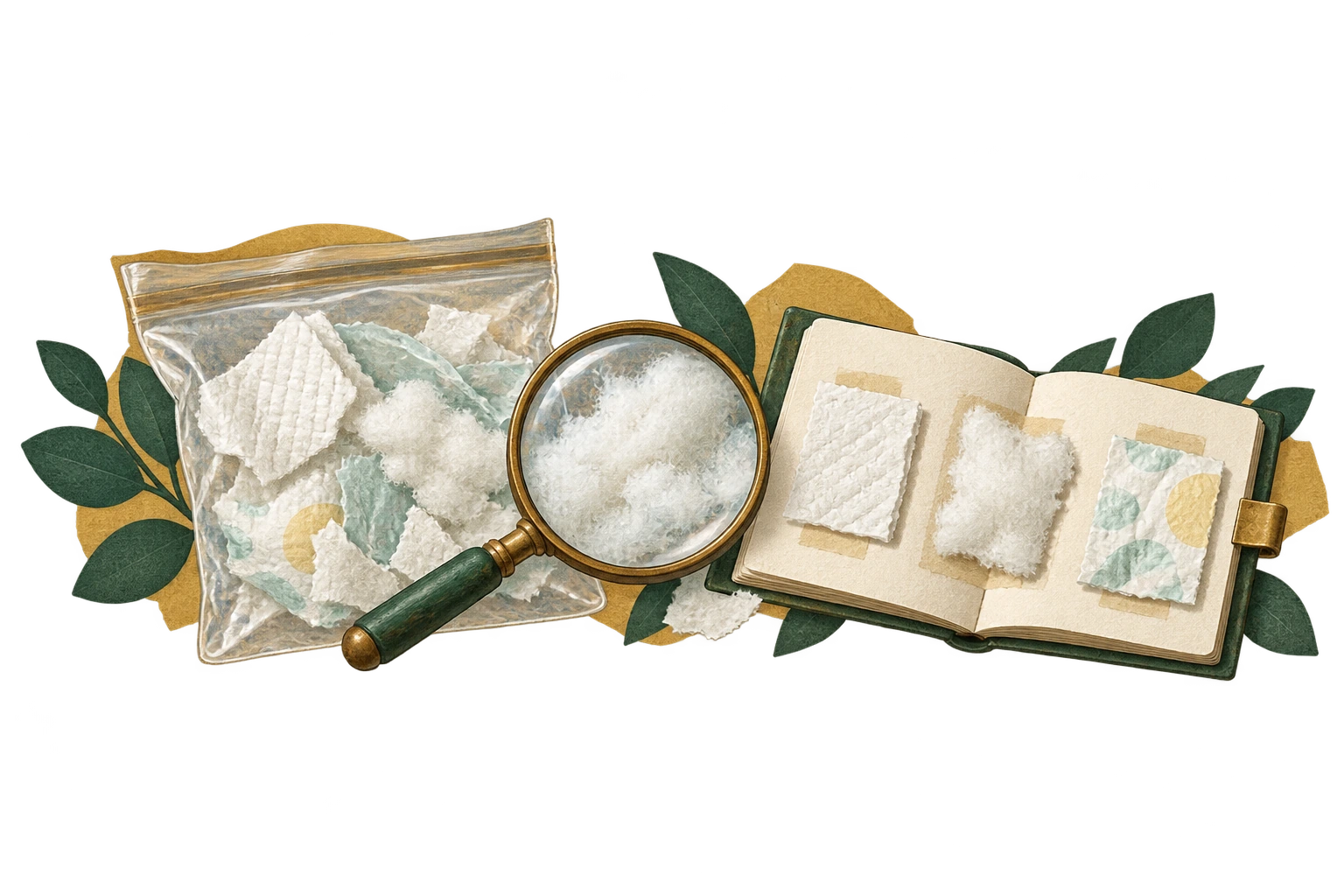
- Gel or tiny gel-like particles
- The absorbent material may be called superabsorbent polymer, SAP, absorbent gel material, or sodium polyacrylate. Tell the specialist whether it came from a dry or wet diaper.
- Soft white fluff
- Describe the cotton-like filling and whether there was just residue or a visible clump. Appearance alone cannot measure the amount swallowed.
- Backing, liner, elastic, or tabs
- Say which piece seems missing. A torn section needs a swallowed-object assessment, not reassurance borrowed from a tiny gel taste.
- Material from a used diaper
- Mention urine or stool and anything else on it, such as diaper cream. The contents matter separately from the diaper’s construction.
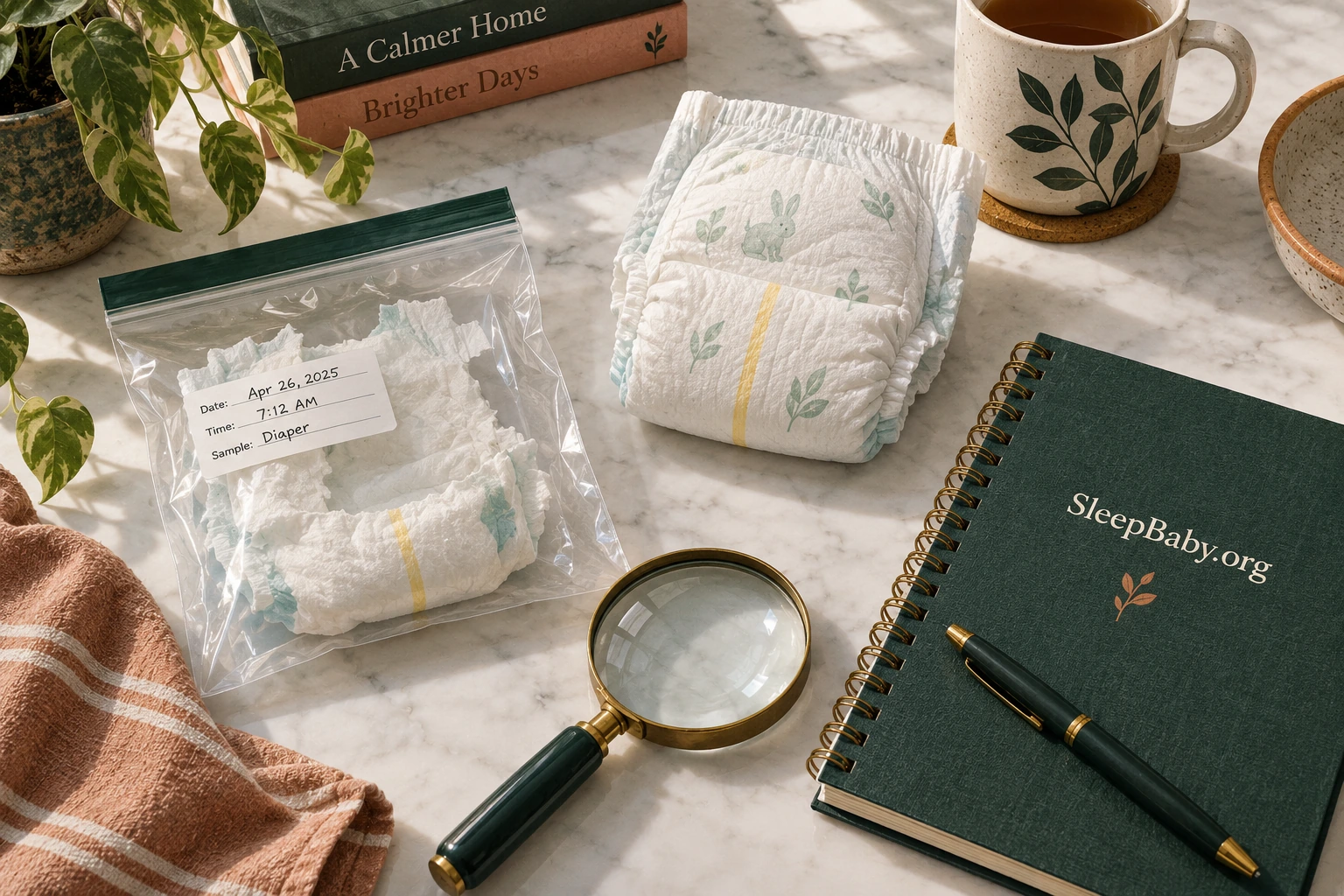
You do not have to pull another diaper apart to make the call. The brand, package, and a photo of the damaged area are more useful than an experiment. If another adult is present, let them gather those while you stay with your baby.
Is diaper gel poisonous?
For a small accidental taste, the poison-center guidance is reassuring: the gel is generally considered nontoxic. That is a statement about toxicity in that situation. It is not a promise that every diaper exposure can be handled at home.
I would avoid two opposite conclusions: assuming every gel speck means poisoning, or assuming “nontoxic” makes an unknown mouthful harmless. The amount, the material’s shape, the baby’s age, and what the baby is doing now all belong in the conversation with Poison Control.
Diaper gel is not a silica-gel packet. It also should not be assessed by copying advice about expanding water-bead toys. If you are unsure what the material actually came from, say that clearly and get prompt professional help. Do not use a diaper article to identify an unknown substance.
Should I give water to wash it down?
Ask Poison Control what, if anything, to give your particular baby. General poison-center diaper advice mentions water, but a serving intended for an older child is not an infant dosing instruction.
The American Academy of Pediatrics says babies in their first six months do not ordinarily need extra water beyond breast milk or formula unless a pediatrician advises it. Do not dilute formula or try to “flush out” diaper gel. If your baby is drooling, distressed, or having trouble swallowing, do not offer food or drink while arranging urgent care.
Can I make my baby throw up?
No. Poison Control advises against inducing vomiting. A finger, salt water, syrup, or another home method is not a shortcut to getting the material out. Call instead, and follow the instructions you receive.
THE THREE-DETAIL DIAPER CALL CARD
Layer. Used or clean. Missing amount.
Those three details help turn “my baby ate the diaper” into a useful description. Add your baby’s age, approximate weight if known, the time, and current symptoms.
- Layer: gel, fluff, liner, backing, tab, or not sure.
- Used or clean: unused, wet, soiled, or unknown; mention cream or other products.
- Missing amount: a witnessed taste, a piece you can describe, or an amount you cannot establish.
A plain way to begin: “My baby is ___ months old. At about ___, I found ___. The diaper was ___. I saw ___ in the mouth, and I cannot tell whether ___. Right now my baby is ___.”
Leave uncertain parts uncertain. A photograph can document a tear; it cannot prove that everything missing was swallowed. Keep the diaper and any bag you use for it away from your child.
When the diaper was dirty
A used diaper adds a hygiene question. Tell the poison specialist if stool was involved, even if you think your baby mainly touched the filling. Gently clean visible residue, wash the baby’s hands, and ask what symptoms to watch for.
Missouri Poison Center’s feces guidance says small accidental amounts often cause no symptoms, while illness can occasionally develop later. Fever or persistent nausea, vomiting, or diarrhea warrants a pediatrician’s evaluation. Do not assume that a symptom-free first few minutes settles a stool exposure.
I would write down the advice before starting a deep clean. It is easy to remember “probably okay” and lose the part about when to call back. Ask which changes matter for your baby and whether a follow-up is needed.
AFTER THE EXPOSURE PLAN IS CLEAR
Put the care instructions on one page. Leave ordinary bedtime for the next.

When you have the medical instructions you need, the SleepBaby.org homepage offers a free browser-based planning preview to help choose a starting step for ordinary sleep questions.
The diaper incident may have interrupted a nap or left you checking the same clock. I would keep any exposure instructions separate from sleep planning so a bedtime goal never crowds out care.
The optional paid SleepBaby.org Workshop describes short lessons you can revisit and a seven-night tracker. It is a place to organize an everyday routine after the immediate issue has been addressed; it cannot assess swallowed material, decide whether a baby needs monitoring, or provide medical clearance.
Start with the homepage preview when you are ready. The preview needs no sign-up or card.
Symptoms that need urgent medical attention
Do not wait for a poison-information callback if your baby is having trouble breathing, has collapsed, is having a seizure, or cannot be awakened. Call emergency services. New nonstop coughing after a possible swallowed or inhaled piece also needs emergency assessment.
For possible swallowed diaper pieces, the Royal Children’s Hospital’s swallowed-object guidance identifies these reasons to seek hospital care:
- Drooling or difficulty swallowing.
- Pain in the neck, chest, or abdomen.
- Ongoing vomiting.
- Blood in vomit or stool.
An infant cannot tell you where something hurts. Describe what you actually see, including distress, changed feeding, or unusual behavior, rather than trying to diagnose the cause yourself. When you are unsure what was swallowed, get urgent professional assessment rather than treating it as a confirmed small gel taste.
There is no universal “safe amount” I can give you from a torn diaper, and no reliable home calculation based on how much gel expands in a glass. The practical question is what care this baby needs after this exposure.
If you are told to watch your baby at home
Home observation should come with instructions you understand. Before ending the call, ask what you can offer to eat or drink, what changes need another call, whether sleep is okay, and how long any particular checks should continue.
Make one note the next caregiver can use
Time and exposure: what happened and what remains uncertain.
Advice received: who you spoke with and the instructions they gave.
Call back if: the exact symptoms or changes they named.
Next step: any requested check, follow-up, or medical visit.
Keep the note factual. “Gel found on lips; swallowing not witnessed” is more useful than turning a guess into “ate half a diaper.” If your baby develops a new symptom, describe the change and when it began.
Do not set yourself a stool-search task unless the clinician specifically asks you to. A diaper-contents exposure is not something you can clear simply by spotting a particle later. Likewise, do not give laxatives or change feeds to hurry anything through without medical instructions.
Can my baby go to sleep?
Get exposure-specific advice first. A normal bedtime does not replace assessment, and a sleepy baby who is unusually difficult to wake is not a routine settling problem.
If you are advised that ordinary sleep at home is appropriate, keep the usual safe sleep setup: start your baby on their back on a firm, flat, level sleep surface with only a fitted sheet. Keep pillows, loose blankets, and toys out. These are the NICHD Safe to Sleep recommendations.
Do not tilt the mattress or put your baby on their side because you are worried about what they swallowed. Follow the clinician’s monitoring instructions. A camera or breathing monitor does not give medical clearance to skip them.
Clean the area without losing track of your baby
Once the immediate care is handled, work through the mess in a manageable order. A half-open diaper on the edge of the changing surface is easy to forget while reaching for a clean outfit.
- Keep your baby secure. Keep a hand on them on a changing surface. Do not leave them there while fetching supplies or taking rubbish away.
- Contain the used diaper and wipes. Put them in a lined, lidded bin and keep it out of your child’s access.
- Wash your baby’s hands. Then move them to a safe, supervised place while the changing area is cleaned.
- Clean the surface and your hands. Remove visible soil, follow the appropriate surface-cleaning directions, replace a soiled fabric cover, and wash your own hands with soap and water.
Those steps follow the CDC’s home diaper-changing guidance. Keep cleaning products away from your baby and use them according to their labels.
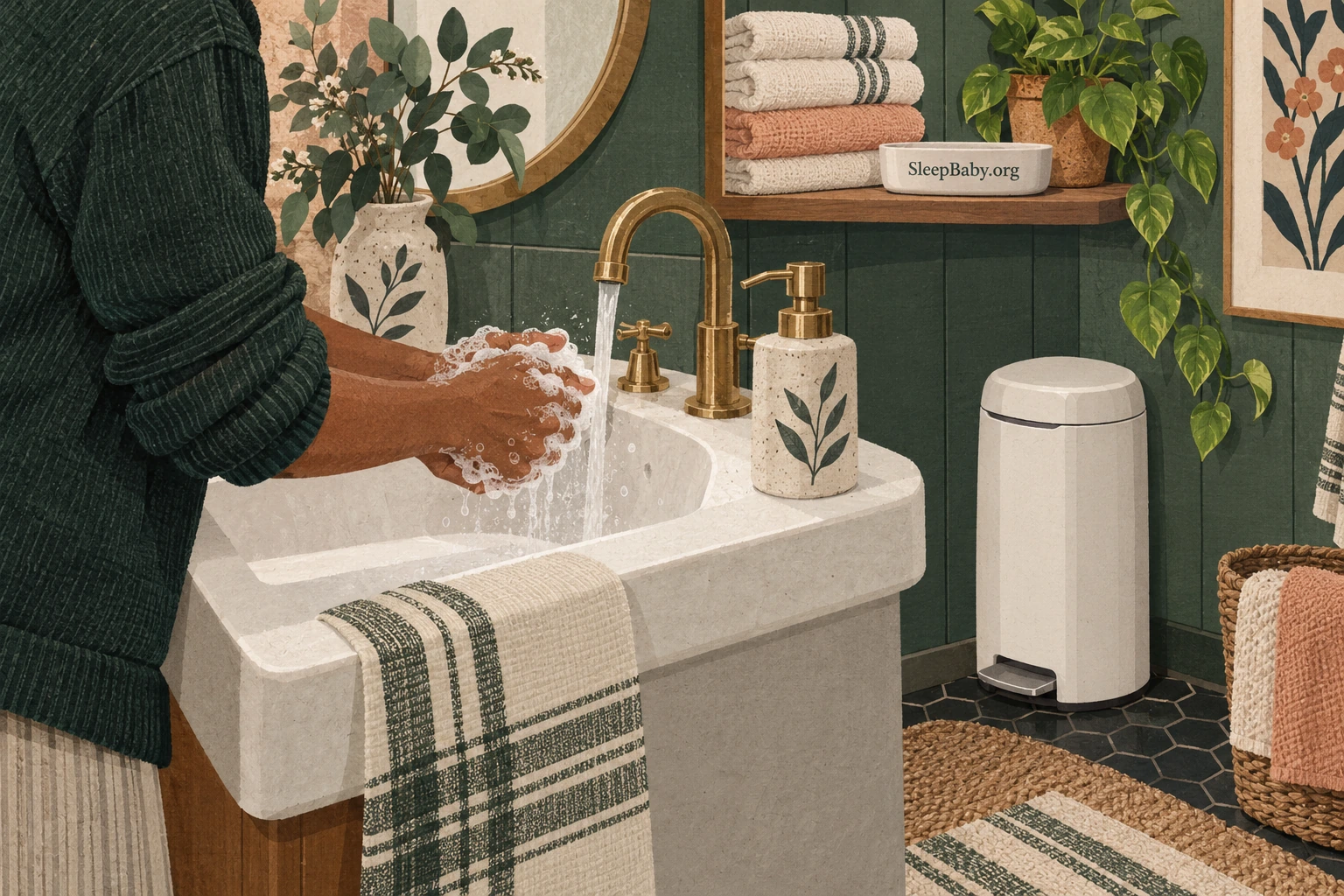
An optional cleanup supply: a soft washcloth
As an Amazon Associate, I earn from qualifying purchases.
If you need to replenish the changing-area cloths, the Gerber 6-Pack White Terry Washcloths are a specific option for ordinary gentle cleanup. I would use a clean cloth dampened with water for visible residue and keep a separate cloth for cleaning the surface. A cloth is not a tool for reaching into the throat.
See the Gerber white terry washcloths on Amazon
Already have a clean, soft cloth? Use that. No special purchase is needed to call Poison Control, follow their instructions, or gently clean visible material. This recommendation is a convenience for future changes, not a treatment.
Make the next diaper change harder to interrupt
I would change the setup before buying a collection of new babyproofing products. Put a fresh diaper, wipes, a clean cloth, and spare clothes within your reach before the change begins. Keep the used diaper on the adult side of the process, never beside your baby as a distraction.
Check where clean spares live, too. A low open basket may have worked before your baby became mobile. Move supplies and disposal bags somewhere your child cannot access, and keep torn diapers out of the play area. Reassess the arrangement as reaching and climbing change.
A lid is useful for containing rubbish, but “lidded” does not automatically mean child-resistant. If your child can open or tip the bin, change its location or access. The goal is to remove the opportunity, not to test whether the baby will leave it alone next time.
When more than one adult changes diapers, agree on where the used diaper goes immediately. One shared habit is easier to maintain than each person assuming someone else already cleared the changing mat.
Questions that often come up after the call
What if I only found gel on the skin?
Finding material on the skin does not prove it was swallowed. Tell the specialist where you found it and whether your baby had access to their mouth. Clean the skin gently and avoid turning an uncertain exposure into a definite one in your notes.
What if my baby seems completely normal?
That is useful information to give Poison Control. It does not identify the missing material or amount. Make the call, explain the current behavior, and use the plan you are given.
Does a sensitive or fragrance-free diaper change the advice?
Do not use a skin-care label to decide whether swallowing a piece is safe. Brand and ingredient information can help the specialist, but the diaper’s physical parts and the details of the exposure still matter. Have the package available if you can.
Should I replace every diaper in the house?
First deal with the damaged diaper and how your baby reached it. If a product appears defective, save its package details and contact the manufacturer. Switching brands alone does not solve access to used diapers, torn material, or disposal bags.
Learn infant choking first aid before you need it
This American Red Cross demonstration is useful preparation for caregivers. In an actual emergency, call emergency services and follow the dispatcher; do not delay care to play the video.
Written takeaway: Severe choking in a responsive infant requires prompt help and the infant-specific sequence of five back blows and five chest thrusts. If the infant becomes unresponsive, begin CPR according to your training and the dispatcher’s instructions. If your baby can cough or cry, keep observing closely. Read the official illustrated steps and consider practical training. The video does not assess the diaper exposure.
Sources
- Missouri Poison Center: disposable diapers
- Poison Control: first aid for poisonings
- Poison Control: how to get help
- American Red Cross: infant choking
- Royal Children’s Hospital: swallowed objects
- Missouri Poison Center: feces
- American Academy of Pediatrics: formula, water and infant hydration
- CDC: diaper changing at home
- NICHD Safe to Sleep: reduce the risk
- Gerber Childrenswear: white terry washcloths
ONE CLEAR NEXT STEP
Care first. Then a plan for the ordinary night.
For the diaper exposure, use the instructions from Poison Control or your clinician. Keep the note where the next caregiver can find it.
When ordinary sleep planning is the question again, visit the SleepBaby.org homepage for the free preview and information about the optional Workshop. You can begin with one practical step.






What viewers said10 comments · 4 replies+
Archived comments from the original Baby Sleep Miracle presentation. Not independently verified by SleepBaby.org; individual experiences vary.
Thank you so much for this video! I had no idea about the dangers of baby swings :O
Hi Mary-Ann. I have a question: Is method in any way similar to the ones recommended by Dr Bucknam, Dr. Weissbluth or Dr. Karp? We tried those but none of them help.
Hi Regina, thank you for your question. The short answer is no. The techniques I share in my guide are based on newest scientific research and this is why I have never seen any approach similar to the one I recommend.
This method really works! I tried it on my son Jesus and after just one week he went from waking up more than 5 times a night to waking up just once or twice. You are a lifesaver, Mary-Ann!
I'm truly impressed with how much information you share in your video. And all for free! I can feel that you truly care about mothers like myself, and that's hard to find these days. I have recommended your site to several of my friends already.
Mary-Ann, our child suffers from autism. Is your approach still suited?
Chloe, I made sure my method can be used with any child, even babies who are special like yours. Please note that I'm not a doctor and that I always advice to consult with your physician because nothing is more important than the safety and well-being of your love.
Hallo Mary-Ann, I'm from Germany. Do you have your guide in German?
Hello Heide, we do! Normally you should already see our video in German. If not, please contact our support so they can guide you
Thenk you for your answer, Mary-Ann!
I just completed your approach and I have to say, it worked almost too well. Yes, it took a bit of getting used to with your bedtime routine but the difference is huge. My son George used to take 1 hours to go down and now he's firmly asleep in no more than 10 minutes! You're the best!
It seems I'm the only man watching this video, lol! What you shared about the 'emotional backpack' made immediate sense to me and I can't wait to help my little girl Mila to unpack it!
Hey there, just discovered your site and this really sounds different. Just wanted to say thanks for sharing :)
For everyone who's still thinking about getting Mary-Ann's guide I want to advise you to go ahead. I wasn't sure myself but now I'm so thankful I invested in this program. It made a huge difference in our life as a family and yes, my baby girl does sleep through the night now.