
A small taste of plain potting soil usually causes little or no trouble, but the mix and anything added to the pot matter. Move your baby away from it and gently wipe visible soil from the mouth with a damp cloth. In the U.S., call Poison Control at 1-800-222-1222 with the bag or label nearby. Call 911 immediately if your baby cannot breathe, has a seizure, collapses or cannot be awakened.
I would start with the baby, then the bag. You do not need to identify every speck before calling, and you do not need to wait for symptoms when the ingredients are uncertain. Outside the U.S., use your local poison service and emergency number.
What to do right now
- Stop access. Move your baby and the pot apart. Stay with your baby while another adult collects the packaging if someone is available.
- Check breathing and responsiveness. A baby who cannot cough, cry or breathe effectively needs immediate choking first aid and an emergency call. Do not spend that time searching a brand name.
- Clean what you can see. Gently wipe accessible soil from the lips and mouth with a soft, damp cloth. Do not dig into the throat or sweep blindly with a finger. Wash soil from the hands and skin.
- Get instructions for this exposure. Tell Poison Control your baby’s age, symptoms, when it happened, the possible amount and what was in the pot.
Do not make your baby vomit or give a home antidote. Do not force a drink or food into a coughing, drowsy or struggling baby. Ask the poison specialist what, if anything, to offer by mouth for your baby’s age and the actual product.
The Poison Control first-aid guide explains emergency signs and why home vomiting treatments are not recommended.

Is potting soil poisonous to babies?
The Missouri Poison Center classifies potting soil as low risk. Small amounts usually cause no symptoms, though stomach irritation can happen. Pieces left in the mouth can also present a choking hazard. That is useful reassurance for an ordinary small taste, not a guarantee about every planter.
A pot is a little history of everything put into it. The original mix may be only part of that history: someone might have added plant food, treated insects, covered the surface with stones or tucked decorative beads around the plant. Those details deserve their own assessment.
“Organic,” “natural” and “for vegetables” are gardening descriptions. They do not tell a poison specialist how much a baby swallowed or whether the product contains an ingredient that needs attention. Read the actual product name and label instead of treating a reassuring word on the front as medical advice.
What if the soil was old, damp or moldy?
Describe that too, including visible animal waste or an outdoor pot that may have been treated with chemicals. Soil is not food, and a bagged mix should not be treated as germ-free. Poison Control’s dirt guidance distinguishes a one-time exposure from repeated ingestion, which can create additional problems involving contaminants, infection or digestive symptoms.
I would not jump from a dirty mouth to a prediction of parasites, lead poisoning or a serious infection. Nor would I give deworming medicine, antibiotics or supplements “just in case.” Tell the clinician what was actually present and let that guide any testing or treatment.
Read the bag. Check the pot. Describe your baby.
Read the bag
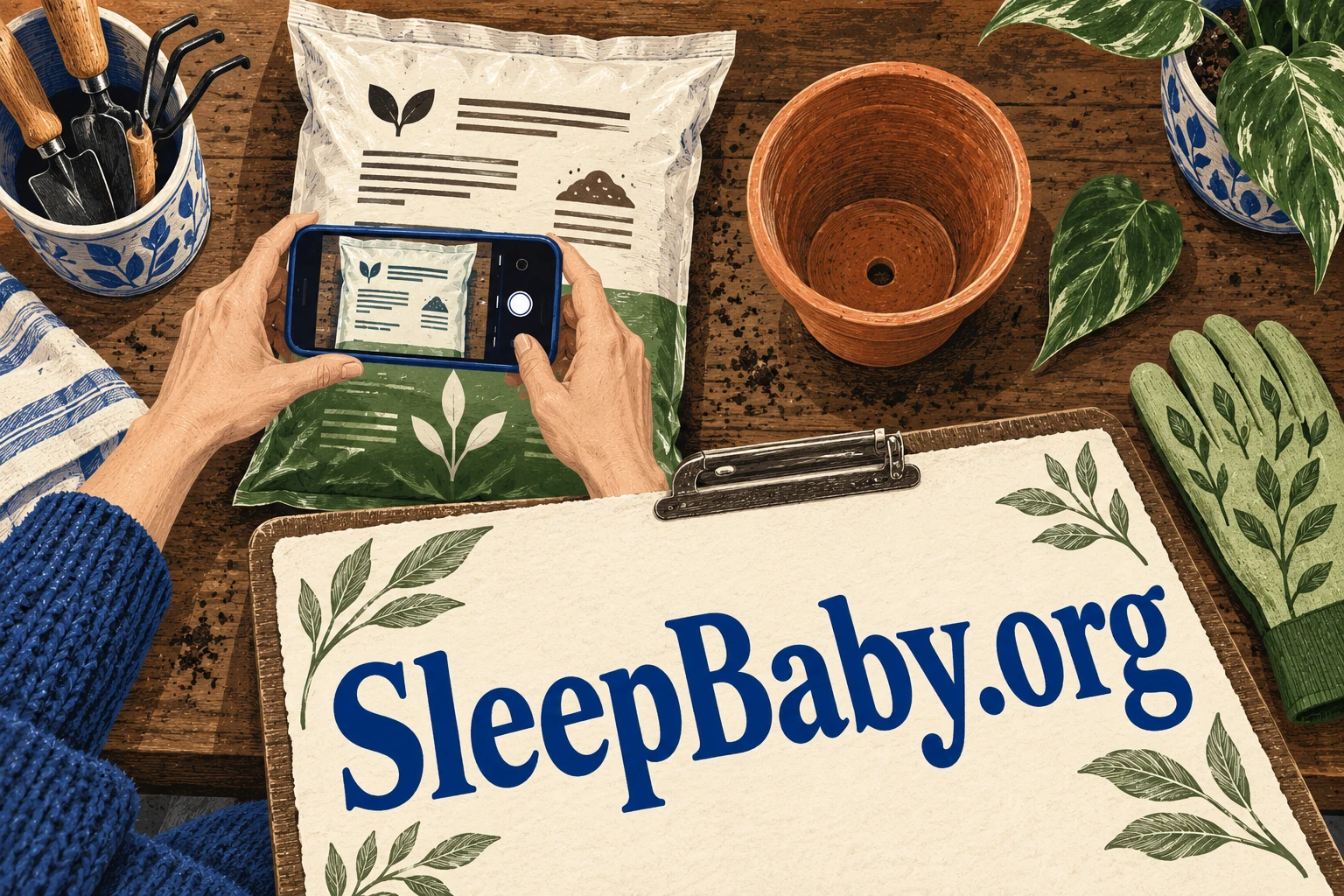
Find the exact name, ingredient information and any fertilizer or pesticide wording. Photograph the front and back if that helps you keep the information together. Keep the original bag available; do not throw it away while cleaning up.
Check the pot
Look for what is separate from the mix: loose stones, plant-food pellets, decorative beads, damaged leaves or an insect treatment. Ask the person who last cared for the plant what they added. If you do not know, say so.
Describe your baby
Report what you saw: soil on the tongue, a mouthful you removed, coughing, vomiting, unusual behavior, or no symptoms. Include the time and your best estimate of the amount. “I found soil in the mouth but did not see a swallow” is useful information.
This is a way to organize a call, not a home test that rules out poisoning.

Details that can change the advice
Fertilizer or pesticide was added
Tell Poison Control whether your baby reached the mixed soil, a concentrated product, a loose pellet or liquid collected in a saucer. These are different exposures. Poison Control notes that fertilizers can irritate the mouth and stomach, and some products also contain weed killers or insecticides. Do not assume a plant-food label covers a combination product.
The bag for the potting mix will not list a treatment someone added later. Keep both labels if there are two products. The National Pesticide Information Center’s label guide explains where to find ingredients, precautions and first-aid information. A clear label photo is more useful than a guess based on the color of a pellet.
You noticed white pieces or colored granules
Potting mixes can contain different materials for drainage, moisture and plant nutrition. University of Maryland Extension describes these variable growing-media ingredients. Appearance alone is not enough to decide what your baby found. Keep a sample away from the baby if it can be collected without delaying the call.
Do not taste an unknown granule yourself or crush it to “check.” I would describe its appearance, show the packaging and let the specialist interpret those details. A phone photograph can support that conversation without turning the kitchen counter into a home chemistry experiment.
Expanding water beads may be involved
Suspected swallowing of a water bead needs medical treatment right away. The U.S. Consumer Product Safety Commission warns that these beads can expand inside the body and cause serious harm. Do not wait for symptoms or test an unknown bead in a cup of water before getting help. Tell the medical team exactly what product might be involved.
Leaves, stems, berries or roots are missing
Include the plant in the call. Soil and the plant growing in it are separate questions, and plant effects vary. The Missouri Poison Center’s plant guidance can help explain why accurate identification matters. Take a photo of the whole plant and its label if you can, rather than relying on a plant-identification app as a safety clearance.
HEALTH ADVICE FIRST, ORDINARY ROUTINES SEPARATELY
Keep the care instructions clear. Give bedtime its own plan.

The SleepBaby.org homepage describes the SleepBaby.org Method and its information about bedtime routines and baby sleep schedules.
After a surprise mouthful, I would keep the poison specialist's instructions where every caregiver can find them. Questions about monitoring, feeding or the next nap belong in that conversation.
For separate questions about your family's ordinary evenings, you can explore the Method on the homepage. It does not assess a soil exposure, treat symptoms or tell you when observation can stop.
What to watch for after the call
Follow the plan you are given for the actual exposure. Ask what changes should prompt another call, which symptoms require emergency care and how long any observation should continue. Write the answers down. A general article cannot supply one observation deadline that fits every mix, amount and baby.
Contact Poison Control or your baby’s clinician promptly about new vomiting, persistent coughing, trouble swallowing, unusual drooling, worsening discomfort or a baby who seems unwell. Tell them if a symptom has changed since the first call. Do not use the absence of a rash or fever as proof that everything is fine.
Breathing difficulty, a seizure, collapse or inability to wake your baby needs emergency help. Do not route those signs through a routine appointment or wait for a callback. The MedlinePlus dirt-swallowing guide also emphasizes that what is mixed with the dirt affects the risk and the response.
Can my baby have milk or water?
Poison-center advice for ordinary soil includes cleaning the mouth and may include a drink. For a young baby, an unknown additive or any swallowing concern, get age- and product-specific directions instead of choosing a quantity from a toddler example. Ask whether to offer the usual feed, something else or nothing by mouth while help is arranged.
Do not force a bottle to wash the soil down. A drink is not a way to neutralize fertilizer, and a large feed is not a test of whether your baby is safe. If the specialist has already given clear feeding instructions, follow those rather than mixing several websites’ advice.
What if soil got in the eyes or on the skin?
Wash ordinary soil from exposed skin with soap and water. For an eye exposure, begin gentle irrigation with room-temperature running water and get Poison Control advice. Its first-aid guidance recommends rinsing an exposed eye for 15 to 20 minutes. Avoid rubbing the eye or trying to pick out tiny particles with your fingers.
Tell the specialist if a fertilizer or pesticide may also be involved. Continue the directed rinse while another adult calls if possible. Persistent pain, redness or vision concerns need professional advice; the fact that the swallowed amount was small does not answer an eye-exposure question.


If your baby is choking
A baby who is coughing forcefully and breathing needs close observation and room to cough. A baby who cannot cough, cry or breathe effectively needs immediate action. Call emergency services and use the dispatcher’s instructions.
For a responsive infant under one year with severe choking, the American Red Cross teaches five back blows followed by five chest thrusts. Do not use abdominal thrusts on an infant. Do not sweep blindly inside the mouth.
If the baby becomes unresponsive, begin CPR according to your training and the emergency dispatcher’s directions. Do not pause to photograph the spill, look up the plant or play a video.
Learn infant choking first aid before you need it
This American Red Cross video is supplementary first-aid learning. It does not assess potting soil or replace emergency instructions.
Written takeaway: ineffective coughing, crying or breathing requires immediate action. Infant back blows and chest thrusts differ from abdominal thrusts used for older children. Read the linked Red Cross instructions and consider a recognized first-aid course.
Make the next reach harder
Once your baby has the care or advice they need, change access to the plant. Wiping the floor while leaving the pot beside the play mat solves only half the problem. Move plants and gardening supplies to a place your baby cannot reach, with a secure barrier or closed, inaccessible storage where appropriate.
Check from the level your baby can actually reach. A low plant stand may become something to pull up on. A trailing stem may bring a pot closer. A chair near a shelf may change what an older child can access. Choose a stable location and revisit it as movement changes.
I would skip covering the soil with loose pebbles, marbles or decorative beads as a babyproofing fix. Those introduce separate objects a baby can pick up. The goal is to keep the whole planter inaccessible, not make its top look less like dirt.
Keep fertilizer and pesticides in their original labeled packaging and securely out of sight and reach. The EPA’s prevention guidance stresses safe storage and keeping children away during product use. Do not decant gardening products into a drink bottle, snack container or unmarked jar.
Clean spilled mix from the floor, plant saucer and nearby toys. Wash hands after handling the materials. During repotting, arrange a separate supervised space for your baby before opening the bag. Put supplies away when you pause, even if you intend to come back in a minute.
An optional aid for a suitable storage cabinet
If you already have an appropriate cabinet for gardening supplies, Safety 1st Secure-to-Explore Adhesive Magnetic Locks are one option to investigate. The manufacturer describes locks fitted inside most cabinets and drawers with adhesive, opened with a magnetic key. Check the installation instructions and your cabinet’s fit before choosing them.
I have not personally tested these locks. They do not replace supervision, secure chemical storage or checking that the door actually latches. Keep the key out of your child’s reach. A lock designed for a cabinet does not make an exposed plant pot inaccessible.
The free alternative is to use suitable secure storage you already have and move the plant to an inaccessible room. Product details come from Safety 1st’s description. No Amazon buying link is included.

Leave the next caregiver a usable note
“Ate some dirt, seems fine” leaves out the information another adult may need. Use one short note with the actual details:
- Time of the possible exposure and what you saw.
- Exact mix, plant and any added product, with label photos.
- Symptoms reported during the call and any changes afterward.
- The advice you were given, including feeding and observation instructions.
- Who to call, what should trigger that call and where the packaging is kept.
Read the plan together if care is changing hands. If one instruction is unclear, clarify it with the poison specialist rather than filling the gap with a guess.

Questions that often come up afterward
My baby seems fine. Do I still need to call?
A small taste of known plain mix is often low risk, but a call is worthwhile when you are unsure what was swallowed, an additive may be involved or you need instructions for a young baby. Poison Control is available around the clock. You can ask before symptoms appear. Having an incomplete label is a reason to explain the uncertainty, not a reason to delay.
Can I let my baby take the usual nap?
Ask the specialist how their advice applies to the next feed and nap, including whether any observation is needed. Do not treat ordinary bedtime information as medical clearance. If your baby is unusually difficult to wake or responds abnormally, act on that change instead of assuming it is tiredness. This guide does not prescribe a wake-up schedule after an exposure.
Does eating soil mean my baby has pica or low iron?
One exploratory mouthful does not establish a diagnosis. If eating nonfood material keeps happening, discuss the pattern with your pediatrician. MedlinePlus describes pica as a pattern of eating nonfood substances, with assessment guided by age and the situation. Record what is being eaten and how often; do not start iron or other supplements based on this incident alone.
What if I cannot find the bag?
Call with what you have. A plant tag, photo, receipt, product listing or the recollection of the person who repotted it may help. Tell the specialist which details are confirmed and which are guesses. Do not leave your baby unattended to search the garage, and do not delay urgent care for better paperwork.
Should I get rid of every houseplant?
You can make a practical decision about access, plant identity and your household. An inaccessible, stable plant location differs from a floor pot beside a crawling route. If you cannot keep a particular planter or its contents out of reach, moving it out of the baby’s space is a sensible next step. Recheck the arrangement when your baby learns a new way to move.
Sources
- Missouri Poison Center: potting soil
- Poison Control: dirt and soil
- Poison Control: lawn chemicals
- CPSC: water beads
- Missouri Poison Center: plants
- MedlinePlus: dirt swallowing
- MedlinePlus: pica
- University of Maryland Extension: potting media
- Safety 1st: Secure-to-Explore Adhesive Magnetic Locks
- Poison Control: first aid
- Poison Control: how to get help
- National Pesticide Information Center: labels
- EPA: protecting children
- American Red Cross: infant choking
ONE CLEAR NEXT STEP
Keep the label, follow the advice, change access.
Pass the actual care instructions to the next caregiver and keep the planter out of reach. For separate questions about ordinary bedtime routines and baby sleep schedules, visit SleepBaby.org to read about the current Method.






What viewers said10 comments · 4 replies+
Archived comments from the original Baby Sleep Miracle presentation. Not independently verified by SleepBaby.org; individual experiences vary.
Thank you so much for this video! I had no idea about the dangers of baby swings :O
Hi Mary-Ann. I have a question: Is method in any way similar to the ones recommended by Dr Bucknam, Dr. Weissbluth or Dr. Karp? We tried those but none of them help.
Hi Regina, thank you for your question. The short answer is no. The techniques I share in my guide are based on newest scientific research and this is why I have never seen any approach similar to the one I recommend.
This method really works! I tried it on my son Jesus and after just one week he went from waking up more than 5 times a night to waking up just once or twice. You are a lifesaver, Mary-Ann!
I'm truly impressed with how much information you share in your video. And all for free! I can feel that you truly care about mothers like myself, and that's hard to find these days. I have recommended your site to several of my friends already.
Mary-Ann, our child suffers from autism. Is your approach still suited?
Chloe, I made sure my method can be used with any child, even babies who are special like yours. Please note that I'm not a doctor and that I always advice to consult with your physician because nothing is more important than the safety and well-being of your love.
Hallo Mary-Ann, I'm from Germany. Do you have your guide in German?
Hello Heide, we do! Normally you should already see our video in German. If not, please contact our support so they can guide you
Thenk you for your answer, Mary-Ann!
I just completed your approach and I have to say, it worked almost too well. Yes, it took a bit of getting used to with your bedtime routine but the difference is huge. My son George used to take 1 hours to go down and now he's firmly asleep in no more than 10 minutes! You're the best!
It seems I'm the only man watching this video, lol! What you shared about the 'emotional backpack' made immediate sense to me and I can't wait to help my little girl Mila to unpack it!
Hey there, just discovered your site and this really sounds different. Just wanted to say thanks for sharing :)
For everyone who's still thinking about getting Mary-Ann's guide I want to advise you to go ahead. I wasn't sure myself but now I'm so thankful I invested in this program. It made a huge difference in our life as a family and yes, my baby girl does sleep through the night now.