
If your baby ate insulation, or you found it in their mouth, move them away from the material and call Poison Control now at 1-800-222-1222 in the U.S. You do not need to know the insulation type or wait for symptoms. Do not make your baby vomit. If they are struggling to breathe, having a seizure, collapsing, or cannot be awakened, call 911 instead.
Insulation is a category, not one substance. Pink fibers, a piece of foam board, and fresh spray foam can raise different concerns. I’d start with your baby’s breathing and the call, then gather whatever information is safely available. Outside the U.S., contact your local poison service or emergency number.
What to do in the first few minutes
Pick your baby up and leave the affected area. If another adult is there, one person can stay with the baby while the other keeps siblings and pets out of the room. If you are alone, keep the job small: get to a clean place, keep your baby with you, and call. You do not have to clean the floor, identify the insulation, and work out how much is missing before anyone can help.
Do not reach blindly into your baby’s mouth or throat. If a piece is plainly visible and can be removed easily without pushing it farther in, remove it carefully. A baby who cannot breathe or make an effective sound needs emergency choking help, not a search for the product label. The American Red Cross infant-choking guidance explains why a blind finger sweep is unsafe.
Do not give a home remedy to make the material pass. That includes inducing vomiting, using oil, or feeding a bulky snack to push a piece down. Ask Poison Control whether anything by mouth is appropriate for your baby and this material. Their general first-aid guidance allows a small drink for certain irritating substances when a person can swallow safely; that is not a reason to force water or milk into a coughing or drowsy baby. Follow the advice for your actual situation. Poison Control first aid
If your baby has already had a feed, tell the specialist. If you wiped their mouth, changed their clothes, or rinsed their skin, mention that too. Those details help explain what has happened so far; they are not a test you have to pass before receiving help.

Three things to tell Poison Control
The phrase “my baby ate insulation” is enough to begin. Then separate what you saw from what you suspect. A little fluff on the lips does not tell you exactly how much was swallowed. Finding a baby beside an opening does not prove that they ate anything. Both are useful things to report honestly.
One call. Three useful details.
Use these as prompts. “I don’t know” belongs in the answer when that is the truth.
1 · What was there?
Wall or attic material, a foam board, newly applied spray foam, or something from a mattress? Describe the source. Read an existing package if you have it.
2 · How did contact happen?
In the mouth, swallowed, breathed as dust, on skin, or in the eyes? Give the time or time range. Say whether anyone saw a piece go into the mouth.
3 · How is your baby now?
Age, weight if known, breathing, coughing, drooling, vomiting, skin or eye irritation, and alertness. Report relevant health conditions and first aid already given.
A useful distinction: “I saw fibers on their tongue” is an observation. “They swallowed a handful” is a guess unless you actually saw that happen.
Keep the phone on speaker if that helps you hold your baby safely. Write down the advice, or ask the other adult to do it. Before ending the call, check that you understand the next step and what should make you call back. Poison Control explains what information helps its specialists; help is available around the clock, and you can call before symptoms appear.
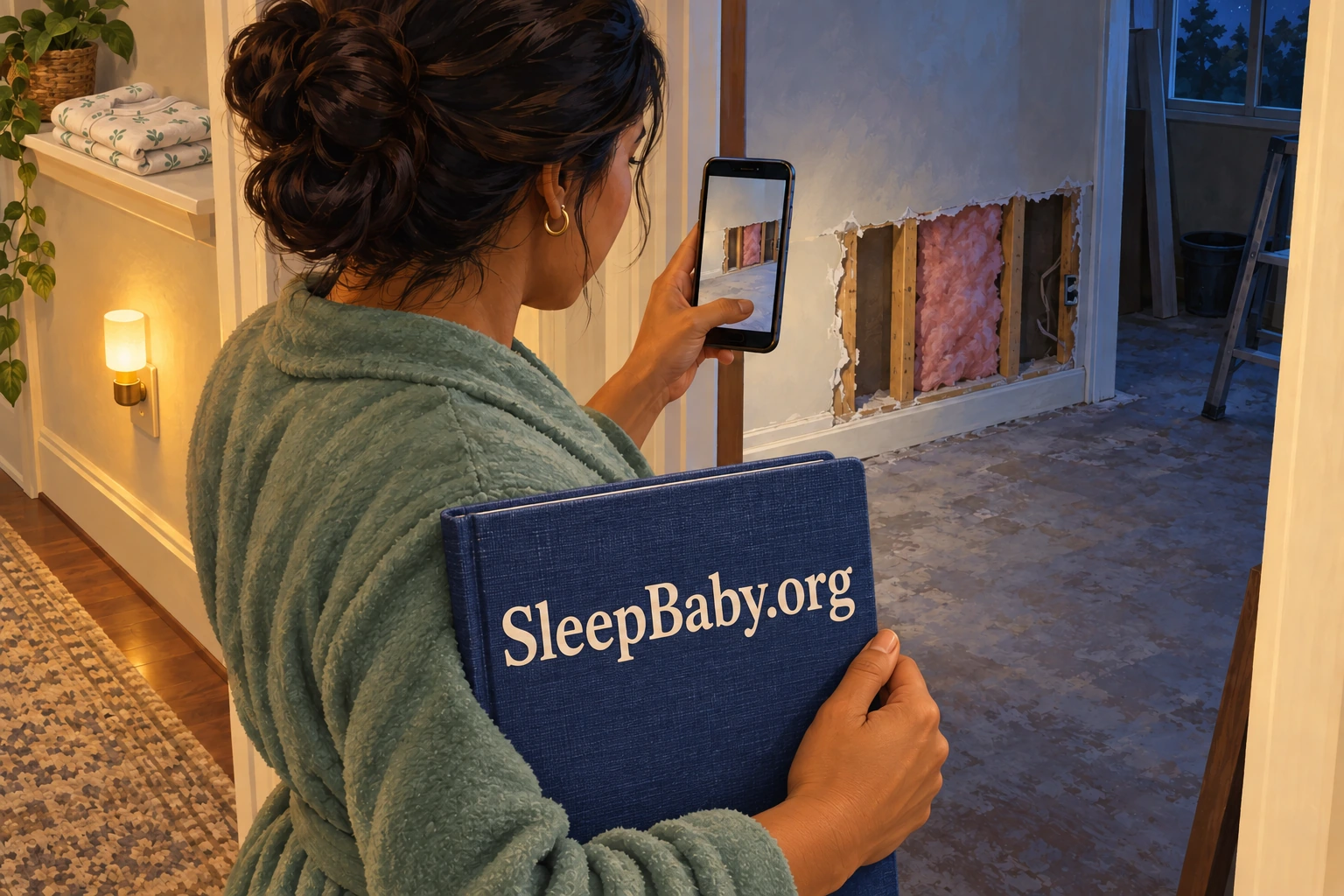
Why the type of insulation matters
You may be searching “is insulation poisonous?” and finding completely different answers. Often, the pages are discussing different materials or different kinds of contact. Swallowing a small piece, getting fibers in an eye, and breathing dust during demolition are not interchangeable situations. I would not use a reassuring statement about one of them to clear the others.
The name “insulation” leaves important questions open
- Fibrous batts or rolls
- Fiberglass can irritate skin, eyes, and breathing passages. Appearance alone cannot confirm the product or everything mixed with it.
- Rigid foam or foam fragments
- A chunk can be a choking or swallowing problem. A statement about polystyrene does not identify every foam used in a building.
- Recently applied spray foam
- Tell the specialist when it was applied and whether it was still wet or tacky. The actual product and curing instructions matter.
- Older loose-fill material
- Some vermiculite insulation may contain asbestos. Leave it undisturbed and get advice about the room as well as your baby.
Fiberglass: irritation is different from a large piece of broken glass
Fiberglass consists of very fine glass fibers. The Washington State Department of Health describes irritation from skin, eye, and breathing exposure and notes that swallowed fibers are eliminated in feces. That helps explain why the word “glass” can sound more alarming than the specific material warrants. It does not establish what your baby swallowed, rule out choking, or account for other debris from a damaged wall. Washington State fiberglass guidance
A visible sharp shard is a different concern. If you found broken glass near the material, report it rather than assuming every piece came from the insulation. Our guide to a baby who may have swallowed glass covers that separate situation. Do not delay urgent care while trying to decide which guide fits best.
Foam: the product name matters more than the color
Poison Control describes polystyrene foam as nontoxic, while emphasizing that pieces can cause choking or lodge in the esophagus. Building foam may be a different product and can have coatings, adhesives, or other materials attached. “It looks like Styrofoam” is useful as a description, but it is not a confirmed identification. Poison Control on polystyrene foam
If you have a leftover board wrapper, receipt, or contractor’s product information, use that. Do not scrape coatings off to reveal what is underneath. The specialist can work with an incomplete description, and the repair professional can help identify the building product later.
Spray foam: do not guess when it finished curing
Tell Poison Control if insulation was sprayed recently, especially if your baby touched sticky material or was near the application area. EPA’s background guidance distinguishes uncured spray polyurethane foam exposures from the cured material. Re-entry instructions depend on the product and installation conditions; a general number of hours from an internet comment is not a reliable clearance for your home. EPA archived spray-foam exposure guidance
Ask the installer for the exact product name, safety data sheet, application time, and written re-entry instructions. If the room still cannot be used, move the baby’s care routine elsewhere. Opening a window or finding that the smell has faded does not, by itself, answer whether the space is ready for a baby.

What if the material could contain asbestos?
Finding old insulation can send your mind straight to long-term harm. The immediate jobs are still to get advice about your baby and prevent more contact. You cannot determine an individual child’s future health from the color of a handful of material or a photograph online.
EPA advises treating vermiculite insulation as potentially asbestos-contaminated and leaving it undisturbed. Keep children out of the area. Do not dig through it, open more of the wall, or take your own sample. A qualified asbestos professional can advise about assessment and work on the building. This does not mean that all insulation contains asbestos. EPA guidance on vermiculite insulation
Do not dry-sweep or use an ordinary household vacuum on suspected asbestos debris. Keep the room off limits and seek appropriate professional advice. If you rent, tell the landlord or property manager where the damage is and that a child may have had contact. A maintenance report is useful, but it does not replace the call about the exposure. EPA household asbestos precautions
Dust, skin, and eyes need their own instructions
When you say your baby “ate” insulation, mention other contact even if swallowing is the part worrying you most. Dust on sleeves, repeated eye rubbing, or a cough that began in the work area can change what the specialist asks you to do. If more than one person was exposed, describe that too.
If there may have been dust or fumes
Move to fresh air without going back into a dusty or fume-filled area yourself. Report coughing, wheezing, noisy breathing, or any increased effort to breathe. Trouble breathing is an emergency. I would not keep a baby in the room while trying different fans or filters to see whether the cough settles. The first task is getting them away from the source and getting help.
A mask is not a way to make the room suitable for your baby. Neither is moving the crib a few feet from an open wall. Ask the appropriate building professional how the affected space should be isolated and when it can be used again. Medical advice for the baby and environmental advice for the room answer different questions.
If fibers or residue touched skin or clothing
Remove contaminated clothing carefully without shaking it through the room. For skin exposure, Poison Control advises prompt rinsing with running water, with mild soap for material that sticks, and case-specific follow-up. Keep your baby warm and supported while following those instructions. Do not scrub fibers into irritated skin or use a solvent because it removes the same product from a tool.
Set affected clothing aside away from clean laundry and children, then ask how to handle it for the material involved. Guidance for ordinary fiberglass includes washing exposed clothing separately. That should not be stretched into a do-it-yourself plan for clothing potentially contaminated with asbestos or an unidentified chemical product. Illinois Department of Public Health fiberglass fact sheet
If material got into an eye
Begin gentle irrigation with room-temperature water and contact Poison Control for guidance. Its first-aid instructions recommend rinsing eyes for 15 to 20 minutes; for a young child, water can be directed over the bridge of the nose so it flows into the eyes. Do not rub the eye or try to pick fibers out. Severe pain or visual symptoms require urgent assessment; do not wait for an arbitrary observation period. Eye-exposure first aid

Symptoms that should change the plan
New drooling, difficulty swallowing, repeated gagging or vomiting, or signs that something is stuck need prompt medical assessment. A piece can cause a physical problem even when its ingredients are not highly toxic. Persistent coughing or wheezing after a choking episode also deserves urgent attention. The American Academy of Pediatrics symptom guidance on swallowed objects describes these concerns.
Do not try a food or water “test” at home to prove that an unidentified piece has gone down. Tell the clinician what feeding or swallowing has looked like naturally, and follow their instructions. If breathing becomes difficult, your baby collapses, has a seizure, or cannot be awakened, use emergency services rather than waiting for a routine callback.
It helps to describe a change concretely: when the cough started, whether it continued after leaving the room, or whether your baby is refusing a feed they would usually take. Avoid repeatedly provoking a response by offering more material, pushing food, or inspecting deep inside the mouth. Your observations are enough to report.
If your baby looks comfortable and is acting normally, say so. That is useful information, but it cannot identify the material or establish a safe amount. A quiet interval is not a substitute for the advice you called to get.

If you are told to watch your baby at home
Home observation should come with a plan you understand. I’d ask for clarification before hanging up rather than spend the next hour searching for a generic number of symptom-free minutes. Different materials and exposure routes do not share one reliable internet timetable.
Keep a short record with the discovery time, the advice, and any change you notice. You do not need a detailed diary of every normal movement. A simple note keeps the next caregiver from relying on a hurried “they seem fine” at the doorway.
If you later find a spray can, a different insulation label, or a piece of sharp debris, call back with that information. The earlier recommendation was based on what was known at the time. Updating the facts is useful even if your baby still seems well.
If assessment at a clinic or emergency department is recommended, ask what information to bring. An existing package, product photograph, or the contractor’s details may be more useful than a loose sample that spreads dust. Do not delay leaving to assemble a perfect record.
Meet the people who answer Poison Control calls
In this Missouri Poison Center video, nurses and pharmacists explain their work helping callers. Watch later if it helps you feel prepared; do not postpone a call to watch it.
If the video does not load: call 1-800-222-1222 in the U.S. Describe your baby, the material, the contact, and any symptoms. The specialist will help determine the next step.
Can my baby sleep after the incident?
Ask the specialist who assessed the exposure. Bedtime being close does not settle the question, and keeping your baby awake does not treat an ingestion. The useful answer is whether sleep is appropriate in this case, where your baby should sleep, and what follow-up is needed.
Once sleep is appropriate, use the usual safe setup: baby on their back on a firm, flat infant sleep surface, with only a fitted sheet. Keep pillows, loose bedding, and toys out. Do not incline the mattress for a cough or put your baby to sleep in a lounger so you can watch more closely. NICHD Safe to Sleep recommendations
The room also needs to be suitable. If the nursery has exposed insulation or ongoing work, ask about another clean room and an appropriate crib, bassinet, or play yard. Follow the sleep product’s age, size, assembly, and mattress instructions. Do not improvise a mattress or add padding because a temporary setup looks sparse.
Keep feeds and drinks within the care plan. Leaving a bottle or cup in the sleep space is not a way to rinse fibers through the body. If that has become part of bedtime, our guide to cups and infant sleep explains the separate sleep-space question.
And if your baby becomes unusually difficult to wake, do not write that off as a long day. Inability to awaken is an emergency sign. An earlier plan for normal sleep does not cover a new concerning change.
Keep the next curious reach away from the damage
Once the immediate care is handled, trace the access point. Was there a hole behind furniture, a loose panel near the floor, a renovation doorway left open, or material carried in on clothing? The fix should address that route. Moving one visible piece out of reach leaves the same opening available for the next visit.
Before baby uses the room again
- Close access: keep children out while the material is being assessed and repaired.
- Identify the work: ask who will repair the damage and what precautions the material requires.
- Plan the handoff: tell every caregiver which room or area remains off limits.
- Confirm the return: get the relevant cleanup and re-entry instructions instead of deciding by smell or appearance alone.
I’d also look at how adults move between the work area and the baby’s space. Where do work clothes go? Where are bags and packaging left? Who checks the door after a contractor leaves? Those are practical questions to agree on, especially when several people are helping and each assumes someone else has checked.
For a repair request, include the room, the height and location of the opening, when you first noticed it, and whether work is still in progress. Save the response so another caregiver can see what has and has not been addressed. A promise to repair the wall next week does not answer where your baby can safely play or sleep tonight; arrange that part of the plan separately.
For an exposed mattress layer, stop using the damaged item and follow the manufacturer’s instructions. Do not unzip a cover that is marked as nonremovable or start pulling at fibers to identify them. Mattress construction varies, so give Poison Control the brand and label information you can obtain safely. Poison Control on fiberglass in mattresses

One optional tool for access control
A few questions that often remain
What if I only suspect my baby ate some?
Call with that uncertainty. Explain where your baby was, what was within reach, and what you found on their hands or mouth. Do not turn an uncertain amount into a precise estimate just to fill in a blank. You can ask for help without proof that anything was swallowed.
Should I look for fibers in the diaper?
Ask whether the specialist wants you to monitor anything specific. Finding or not finding visible material cannot tell you what was inhaled, what touched an eye, or exactly what the product contained. A diaper check should not replace the follow-up instructions or a call about new symptoms.
Does “nontoxic” mean I do not need to worry?
It describes one aspect of a material. Size, shape, choking, irritation, coatings, and the route of contact can still matter. The same distinction comes up with a baby who swallowed gum: the material question and the airway question need separate attention. Use the advice for this exposure, not a general label.
What should I tell the next caregiver?
Give them the actual care instructions and the time of the call, not just your conclusion that things are okay. Show them where the baby can safely spend time and which area is closed. Make sure they know who to call if anything changes. That short handoff is more useful than asking them to reread every page you searched.
You do not have to solve every question about the building while holding a worried baby. Get advice about the exposure, follow the plan, and keep the affected area off limits until the appropriate work is done. Then give the next caregiver the same concrete information.






What viewers said10 comments · 4 replies+
Archived comments from the original Baby Sleep Miracle presentation. Not independently verified by SleepBaby.org; individual experiences vary.
Thank you so much for this video! I had no idea about the dangers of baby swings :O
Hi Mary-Ann. I have a question: Is method in any way similar to the ones recommended by Dr Bucknam, Dr. Weissbluth or Dr. Karp? We tried those but none of them help.
Hi Regina, thank you for your question. The short answer is no. The techniques I share in my guide are based on newest scientific research and this is why I have never seen any approach similar to the one I recommend.
This method really works! I tried it on my son Jesus and after just one week he went from waking up more than 5 times a night to waking up just once or twice. You are a lifesaver, Mary-Ann!
I'm truly impressed with how much information you share in your video. And all for free! I can feel that you truly care about mothers like myself, and that's hard to find these days. I have recommended your site to several of my friends already.
Mary-Ann, our child suffers from autism. Is your approach still suited?
Chloe, I made sure my method can be used with any child, even babies who are special like yours. Please note that I'm not a doctor and that I always advice to consult with your physician because nothing is more important than the safety and well-being of your love.
Hallo Mary-Ann, I'm from Germany. Do you have your guide in German?
Hello Heide, we do! Normally you should already see our video in German. If not, please contact our support so they can guide you
Thenk you for your answer, Mary-Ann!
I just completed your approach and I have to say, it worked almost too well. Yes, it took a bit of getting used to with your bedtime routine but the difference is huge. My son George used to take 1 hours to go down and now he's firmly asleep in no more than 10 minutes! You're the best!
It seems I'm the only man watching this video, lol! What you shared about the 'emotional backpack' made immediate sense to me and I can't wait to help my little girl Mila to unpack it!
Hey there, just discovered your site and this really sounds different. Just wanted to say thanks for sharing :)
For everyone who's still thinking about getting Mary-Ann's guide I want to advise you to go ahead. I wasn't sure myself but now I'm so thankful I invested in this program. It made a huge difference in our life as a family and yes, my baby girl does sleep through the night now.