
If your baby ate face cream, take the container away, gently wipe visible cream from their lips and the front of their mouth, and call U.S. Poison Control at 1-800-222-1222 with the label nearby. A small taste of ordinary moisturizer is usually low risk, but acne treatments, prescription creams, and unknown products need their own assessment. Don’t make your baby vomit. If they have trouble breathing, collapse, have a seizure, or can’t be awakened, call 911 immediately.
I would check the exact product before relying on the word “cream.” The reassuring information about a plain moisturizer doesn’t tell you what to do about a medicated tube that happened to be beside it.
What to do right now
- Check your baby first. Emergency breathing or responsiveness problems come before finding the ingredient list.
- Stop further exposure. Move the container away. Use a soft damp cloth for visible residue; don’t push it deep into your baby’s mouth. Clean cream from their hands so it doesn’t go back into their mouth or eyes.
- Call with the actual container. Tell the specialist this is a baby, give the exact age, and say whether the cream was swallowed, got into an eye, or both.
- Skip improvised treatment. Don’t induce vomiting or force food, water, or milk. Ask what, if anything, to give by mouth for this product and your baby’s age.
Poison Control is free and available around the clock in the United States. You can call even when you aren’t sure anything was swallowed. Outside the U.S., contact your local poison service; use your local emergency number for emergency symptoms.
These first steps follow Missouri Poison Center’s swallowed-poison guidance and Poison Control’s emergency advice. Don’t wait for this article, a product search, or a symptom to finish the decision for you.

Which face cream was it?
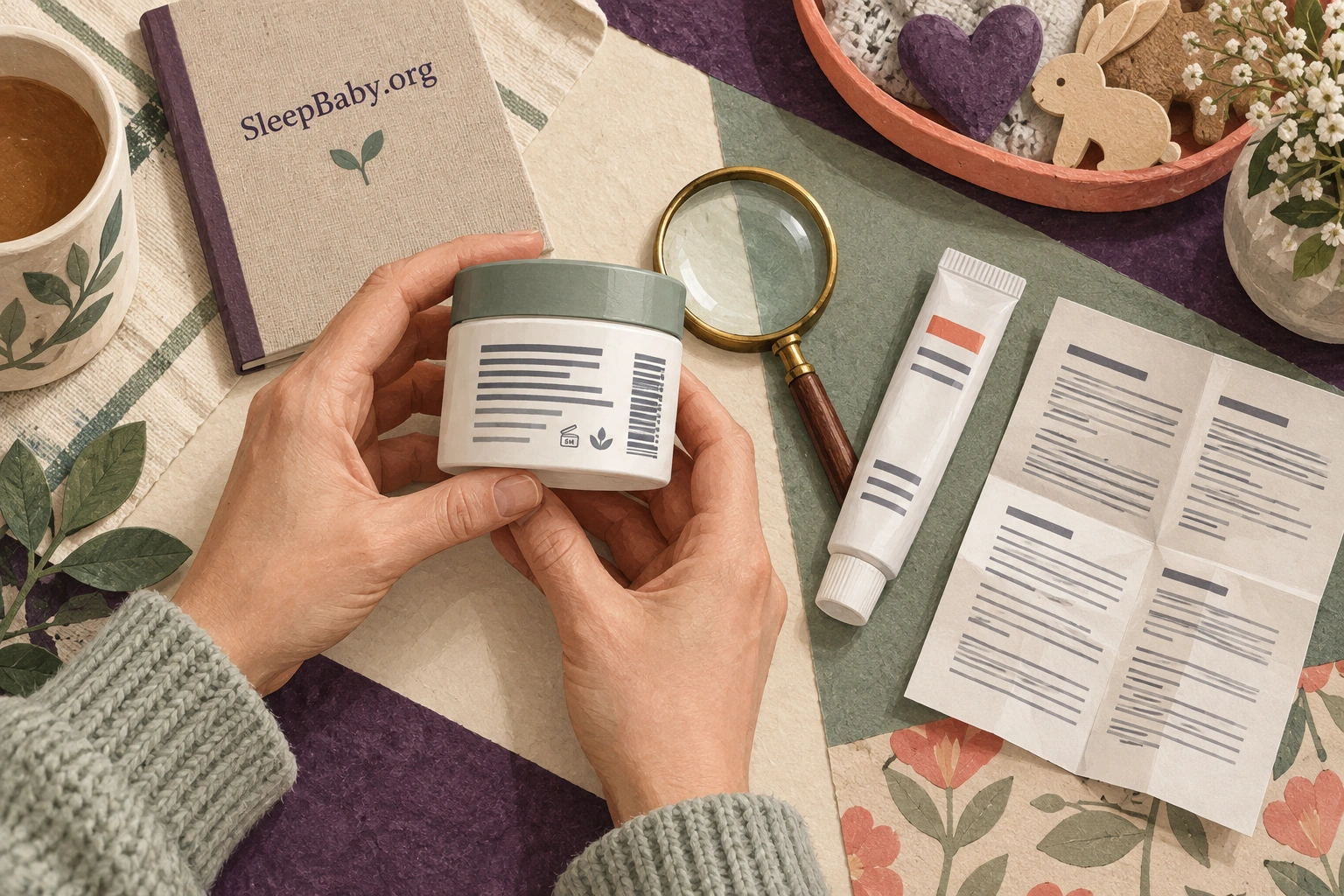
Turn the jar or tube around. Read its full name, any “Drug Facts” panel or prescription label, the active ingredients, and their strengths. “Night cream,” “sensitive,” “natural,” and “for babies” are descriptions, not an ingestion assessment.
Keep the outer carton if you have it. A nearly identical jar in a search result can be a different formula. I’d use a photo of the container in your hand to help a second caregiver find the details, rather than ask them to guess which cream you usually use.
A product guide, not a safe-dose chart
- Plain moisturizer or nonmedicated lotion
- Small accidental tastes usually cause little or no trouble. Mild stomach upset or a loose stool can occur. Missouri Poison Center distinguishes ordinary lotion from medicated lotion; its reassuring guidance isn’t a rule for every cream or every amount.
- Moisturizer with sunscreen
- Poison Control describes small swallowed amounts of sunscreen as generally low in toxicity, with possible nausea, vomiting, or diarrhea. Give the specialist the full product name. An SPF number alone doesn’t identify the rest of a combination formula.
- Acne cream or gel
- Read names such as benzoyl peroxide or salicylic acid and the percentage from the label. Poison Control advises getting help right away when an acne preparation is swallowed. Don’t apply a moisturizer’s low-risk description to a treatment.
- Hydrocortisone or another steroid cream
- This is medicated, but “medicated” doesn’t automatically mean severe poisoning. Missouri Poison Center says swallowed topical steroids usually cause no harm or mild stomach upset. The exact product and amount still determine its advice, so call.
- Prescription face treatment
- Bring the prescription tube and label to the call immediately. For example, a tube labeled fluorouracil 5% contains a drug used for specific skin conditions, not ordinary moisturizer. Don’t use an article about lotion to decide whether an unfamiliar prescription is safe.
- Skin-lightening, unlabelled, or decanted cream
- Tell Poison Control exactly what you know and what you don’t. Some illegally marketed skin-lightening products contain mercury or hydroquinone, and the ingredients may not be fully declared. The FDA warns about these products. That does not mean every face cream contains mercury.
I wouldn’t try to memorize a list of frightening ingredient names during the call. Your useful job is to identify the product and describe your baby. The specialist’s job is to interpret that combination.
What if the cream is labeled natural or organic?
Give that full label to Poison Control too. Those words don’t tell you the concentration, the amount swallowed, or whether another active ingredient is present. A product intended for skin is still not something to deliberately feed a baby. Choosing a gentler skincare product is a separate question from assessing today’s exposure.

THE JAR-TO-CALL CARD
Read it. Describe it. Leave the blanks honest.
Use this as a prompt while the call connects, not a worksheet you must finish first.
- The label: full product name, active ingredient and strength, container size.
- The baby: age, known weight, current symptoms, relevant health conditions or medicines.
- The moment: when you found the cream, what you directly saw, and whether skin or eyes were exposed.
- The uncertainty: whether the amount swallowed, the time, or the product identity is unknown.
Useful wording: “There was cream on the lips and on the floor. I didn’t see a swallow, and I don’t know how full the jar was before.” That is more useful than converting a mess into a made-up spoonful.
Poison Control explains why it asks for these details. If another adult is available, one person can gather the package while the other stays with the baby. If you’re alone, begin the call with what you have. You don’t need a perfect reconstruction.
AFTER THE EXPOSURE ADVICE
Keep the safety plan. Give bedtime its own page.

A cream-tasting scare can leave the ordinary evening in pieces. Once Poison Control or your clinician has addressed the exposure and given any monitoring instructions, you can use the free SleepBaby.org planning preview to choose one ordinary sleep-planning starting step. It offers three choices in your browser, with no sign-up or card.
The separate, optional paid SleepBaby.org Workshop offers short lessons you can revisit and a seven-night tracker. You can decide whether that structure fits your family without adding five new bedtime changes at once.
Neither the preview nor the Workshop treats an ingestion, clears your baby to sleep, or replaces the observation plan. Keep the medical instructions in charge of tonight.
How much cream did my baby actually swallow?
You may not be able to tell. Cream on a sleeve, the lid, your baby’s chin, and the floor is not a measured swallowed dose. A finger mark in a jar also doesn’t show how much reached the stomach.
I would keep three descriptions separate: what you saw in the mouth, what you found spilled, and what is unknown. If you watched your baby lick a fingertip, say that. If you found an open jar after stepping away, say that instead. There is no need to make the second situation sound as certain as the first.
Keep the container available until the specialist tells you what to do with it. Report its original size even if it was already partly used. Don’t delay the call to weigh the jar or search for a matching new one.
Does a tiny lick need a call?
A clearly identified plain moisturizer may lead to reassuring advice. But your baby’s age, the actual product, and what happened still matter. Poison Control welcomes questions even when an exposure seems small. I would rather make one specific call than keep comparing an unknown cream with unrelated internet stories.

What if the cream is also in an eye or on the skin?
For an eye exposure, start rinsing immediately with plenty of room-temperature water for 15–20 minutes. Poison Control describes gently letting water run over the bridge of a young child’s nose into the affected eye, rather than directing a forceful stream into it. Have another adult call for advice while you rinse if possible. Severe symptoms need urgent medical care after rinsing; don’t wait for them to settle.
For cream on the hands or surrounding skin, remove the product and wash it away with lukewarm water and soap. Tell the specialist if irritation continues, if the product is medicated, or if you suspect an unusual ingredient. Ordinary lotion on skin and a suspected mercury-containing cream deserve different conversations.
The eye-rinsing instructions and lotion skin-exposure guidance are separate from the swallowing assessment. Mention every route of exposure during the same call.
Which symptoms change the next step?
Call 911 for trouble breathing, collapse, seizure, or inability to awaken your baby. Severe swelling of the face, lips, or tongue also needs emergency help. Poison Control notes that some acne treatments can cause serious allergic reactions; you don’t need to identify the responsible ingredient before seeking emergency care.
If there is vomiting, diarrhea, coughing, unusual sleepiness, a rash, or another new change, describe it promptly to Poison Control or the clinician guiding you. These are observations to report, not a checklist that proves which ingredient was swallowed. Follow their instructions about where your baby should be assessed.
“They seem fine” is useful information for the specialist. It isn’t a reason to postpone the initial call about an unknown or medicated cream.

Before you end the call
If home observation is recommended, write down the instructions in the specialist’s own terms. I would ask:
- What should I watch for with this exact product?
- How long does the observation plan last?
- Can the next feed and nap follow the usual routine?
- What change means calling back, seeking care, or calling emergency services?
- Does another caregiver need any specific instructions?
This article doesn’t supply a universal “safe after two hours” rule. Keep the actual advice and the container information together so the next adult doesn’t have to start from memory.
Can my baby sleep after eating face cream?
Ask that question during the exposure assessment, before using the nap schedule to make the decision. A usual naptime and unusual difficulty staying alert can look confusing when you’re worried. Explain what is normal for your baby and what is different today.
If the specialist gives you a home plan, follow its feeding, sleep, and monitoring instructions. Don’t substitute a baby monitor, a sleep guide, or an online comment for those instructions. If your baby cannot be awakened, treat that as an emergency, not as a successful nap.
Once the immediate question has been handled, you can think about the rest of the evening. I would make the caregiver handoff very plain: which cream, what advice was given, what to watch for, and whom to call. That matters more than getting bedtime back to the exact minute.
Fix the place the cream was reachable
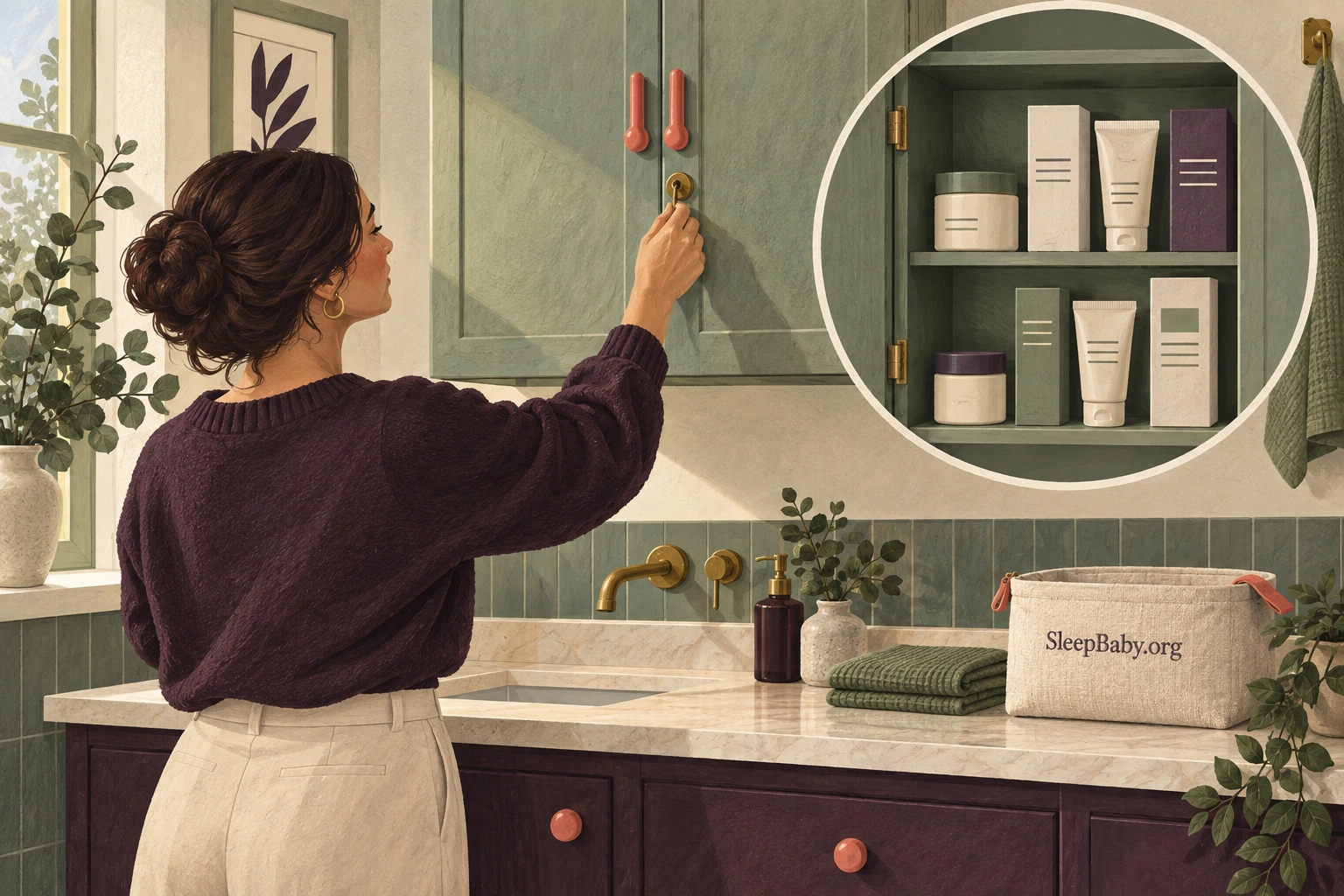
Look at the actual route to the product: an open toiletry bag, a jar left on the bed during dressing, a tube beside the sink, or a visitor’s bag. Moving only the jar from today’s incident may leave the same route open tomorrow.
The CDC’s medicine-storage advice is especially relevant to medicated skincare: keep it up, away, and out of sight, and put it away after every use. Keep its original label with it. Ask visitors to secure their medicines and bags too.
- Choose the storage spot before opening the cream. An adult-controlled locked cupboard can keep the jar and its box together.
- Close the routine. Apply, close, put away, secure. The jar shouldn’t wait on the edge of the sink while the next task starts.
- Include travel containers. If a cream must be transferred for travel, keep its identification available and keep the container inaccessible to your child. A familiar toiletry pouch by itself isn’t a lock.
I would choose the change that addresses the access point you actually found. A different place for the visitor’s bag may be more useful than buying another organizer for an already-secured cupboard.
An optional storage barrier for small skincare containers
As an Amazon Associate, SleepBaby may earn from qualifying purchases.
If a small tube keeps ending up in an accessible bag, the Master Lock 5900D portable personal safe is one option to consider. The manufacturer describes a set-your-own combination lock and a cable that can attach it to a fixed object.
Check the usable interior space against your actual jar or tube before choosing it. This compact safe won’t suit every large cream tub. Keep products closed in their labeled containers, follow their storage directions, and keep the locked safe out of reach. I am recommending a possible storage barrier, not claiming it is childproof or a treatment for an exposure.
See the Master Lock 5900D on Amazon
Free alternative: use an existing locked cupboard that your child cannot access, with the key controlled by an adult. If that solves the access problem, you don’t need a new box.
A short CDC reminder for medicated skincare storage
The CDC’s “Put your medicines up and away and out of sight” clip reinforces the storage habit after the immediate exposure has been addressed. It is prevention advice, not a face-cream treatment video.
Written takeaway: put medicines away after use, including medicated creams, and account for products in visitors’ bags. Contact Poison Control promptly if an exposure is suspected.
A few questions the jar doesn’t answer
What if my baby licked cream from my face?
Tell Poison Control whether the contact was with skin where the product had been applied or directly with the container. Give the same exact product name and label details. Don’t assume an applied prescription treatment and an ordinary moisturizer are interchangeable.
Should I replace my cream with one labeled for babies?
That may be a skincare choice to discuss with your baby’s clinician, but it doesn’t replace secure storage. The label “for babies” describes intended use on a baby; it is not permission to eat the product. For today’s question, assess the cream that was actually involved.
What if I already cleaned everything up?
You can still call. Find the container if you can and say that the residue has been wiped away. Describe what you remember without turning an uncertain detail into a precise quantity. A missing detail is something to tell the specialist, not a reason to go without advice.
Can I wait until the pediatrician opens?
For a possible poisoning, Poison Control is available now. Start there rather than waiting for office hours, especially for a medicated or unknown product. Use emergency services for emergency symptoms.
Sources
- Missouri Poison Center: Lotion
- Missouri Poison Center: Swallowed poison first aid
- Poison Control: First aid for poisonings
- Poison Control: How to get help
- Poison Control: Sunscreen
- Poison Control: Acne treatments
- Missouri Poison Center: Topical steroids
- FDA: Skin product safety
- DailyMed: Fluorouracil cream 5% labeling
- CDC: Medication safety toolkit
- Master Lock: 5900D product details
ONE HOUSEHOLD TASK AT A TIME
A clear next step is enough to start.
For the cream exposure, get specific advice and keep the instructions where the next caregiver can find them. For prevention, secure the place your baby reached.
When those questions are settled, SleepBaby.org has a free browser planning preview for the ordinary sleep questions still on your list. Start there if it would make the next step easier to choose.






What viewers said10 comments · 4 replies+
Archived comments from the original Baby Sleep Miracle presentation. Not independently verified by SleepBaby.org; individual experiences vary.
Thank you so much for this video! I had no idea about the dangers of baby swings :O
Hi Mary-Ann. I have a question: Is method in any way similar to the ones recommended by Dr Bucknam, Dr. Weissbluth or Dr. Karp? We tried those but none of them help.
Hi Regina, thank you for your question. The short answer is no. The techniques I share in my guide are based on newest scientific research and this is why I have never seen any approach similar to the one I recommend.
This method really works! I tried it on my son Jesus and after just one week he went from waking up more than 5 times a night to waking up just once or twice. You are a lifesaver, Mary-Ann!
I'm truly impressed with how much information you share in your video. And all for free! I can feel that you truly care about mothers like myself, and that's hard to find these days. I have recommended your site to several of my friends already.
Mary-Ann, our child suffers from autism. Is your approach still suited?
Chloe, I made sure my method can be used with any child, even babies who are special like yours. Please note that I'm not a doctor and that I always advice to consult with your physician because nothing is more important than the safety and well-being of your love.
Hallo Mary-Ann, I'm from Germany. Do you have your guide in German?
Hello Heide, we do! Normally you should already see our video in German. If not, please contact our support so they can guide you
Thenk you for your answer, Mary-Ann!
I just completed your approach and I have to say, it worked almost too well. Yes, it took a bit of getting used to with your bedtime routine but the difference is huge. My son George used to take 1 hours to go down and now he's firmly asleep in no more than 10 minutes! You're the best!
It seems I'm the only man watching this video, lol! What you shared about the 'emotional backpack' made immediate sense to me and I can't wait to help my little girl Mila to unpack it!
Hey there, just discovered your site and this really sounds different. Just wanted to say thanks for sharing :)
For everyone who's still thinking about getting Mary-Ann's guide I want to advise you to go ahead. I wasn't sure myself but now I'm so thankful I invested in this program. It made a huge difference in our life as a family and yes, my baby girl does sleep through the night now.