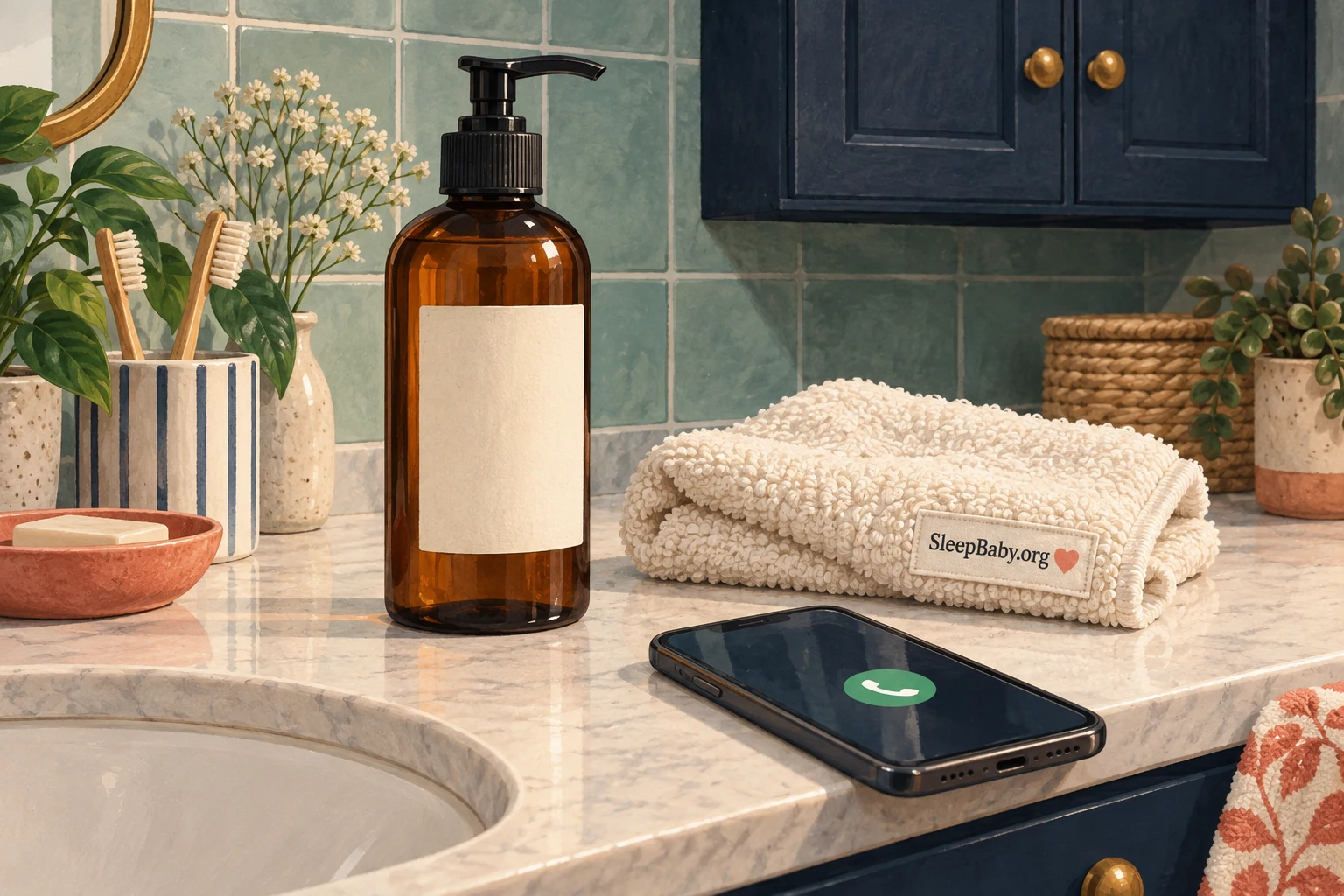
If your baby ate body wash, take away the bottle, gently wipe visible product from their mouth with a clean damp cloth, and call Poison Control at 1-800-222-1222 in the U.S. A small taste of ordinary body soap often causes little more than irritation or an upset stomach, but the exact product and amount matter. Do not make your baby vomit. If they have trouble breathing, collapse, have a seizure, or cannot be awakened, call 911 immediately.
I would keep the bottle in my hand while making that call. “Body wash” is a starting description, not enough information to decide what your baby needs.
Get help before watching for a reaction
U.S. Poison Control: 1-800-222-1222. Help is available around the clock. Outside the U.S., contact your local poison center or emergency service.
If your baby is still in the bath, keep hold of them and get them safely out. Take them with you if you need to move to reach the phone. Never leave a baby alone in bathwater to check a label or search online.
What to do right after body wash gets in your baby’s mouth
Start with the child in front of you. Are they awake and breathing normally? Are they swallowing normally? Those observations are more useful than trying to estimate the size of a splash on the floor.
- Stop further contact. Move the bottle away. Gently wipe away the product you can see on the lips and inside the front of the mouth with a damp cloth. Do not push the cloth deep into the mouth or pour water into it.
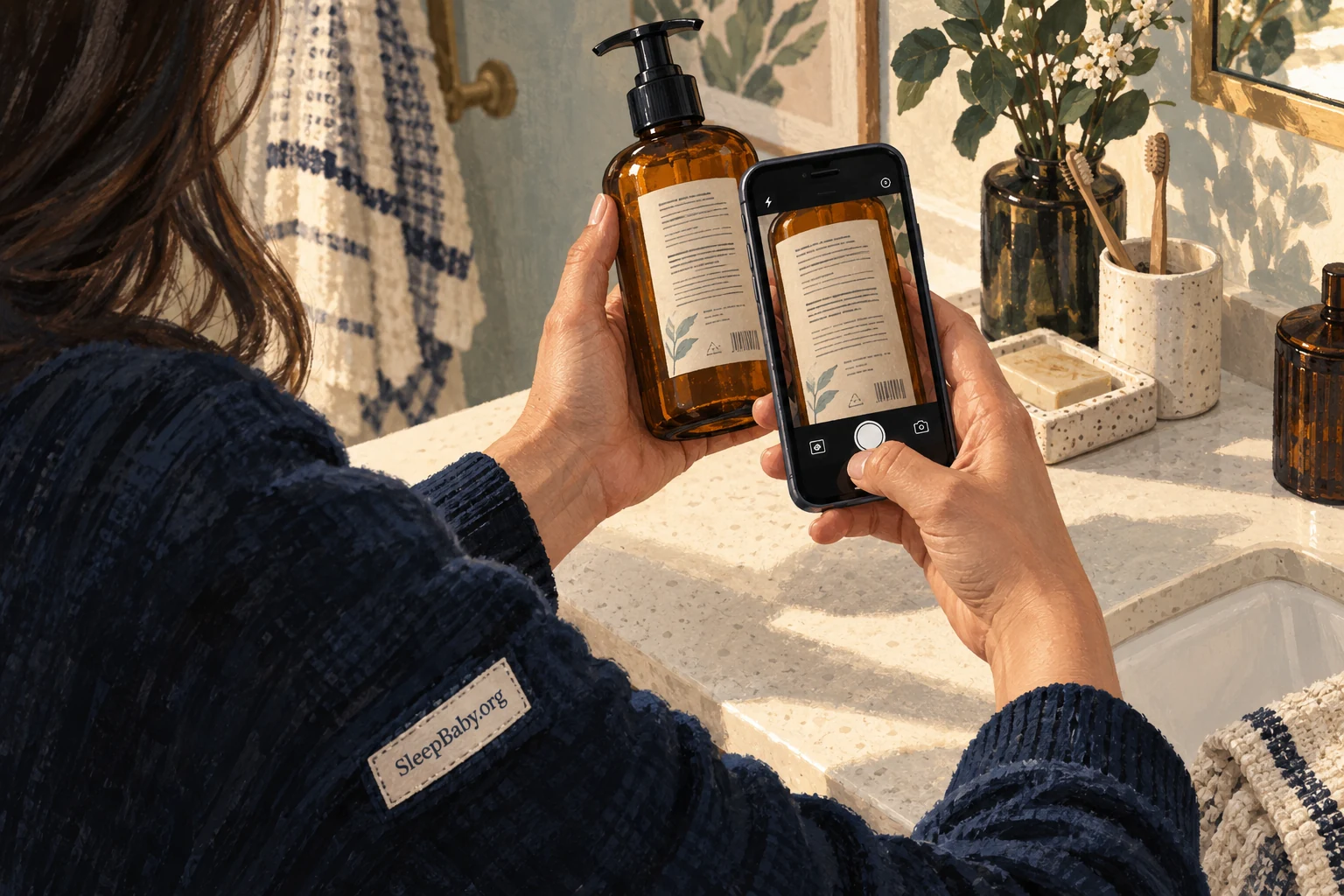
- Keep the original container. Keep the front label and ingredient panel available. A photograph can help if another adult needs to take the bottle elsewhere, but do not delay the call to get a perfect picture.
- Do not induce vomiting. Skip home remedies. HRSA advises against giving activated charcoal on your own; the poison center decides whether any treatment is appropriate.
- Call for an individual plan. Say whether this was a lick from the pump, a possible swallow from an open bottle, or bathwater containing wash. If you do not know, say so.
Should I give water or milk?
Poison-center guidance for ordinary hand or body soap may include a few sips of water. That advice assumes the child is alert and can swallow safely. Do not give anything by mouth to a child who is not fully alert, is having a seizure, or has symptoms that make swallowing difficult. Do not force a drink into a coughing or vomiting baby.
For a young infant, tell Poison Control the age and usual feeding method and ask what fluid, if any, and how much they want you to offer. A full bottle, a large cup of water, and repeated feeds are not interchangeable with “a few sips.” I would not turn a general first-aid sentence into a feeding experiment.
Check what “body wash” means on this bottle
The Illinois Poison Center describes ordinary hand and body soaps as minimally toxic. That is reassuring background for a small taste, not a guarantee about an unknown product or a baby who has symptoms. Soap can irritate the mouth and stomach and cause nausea, vomiting or diarrhea.
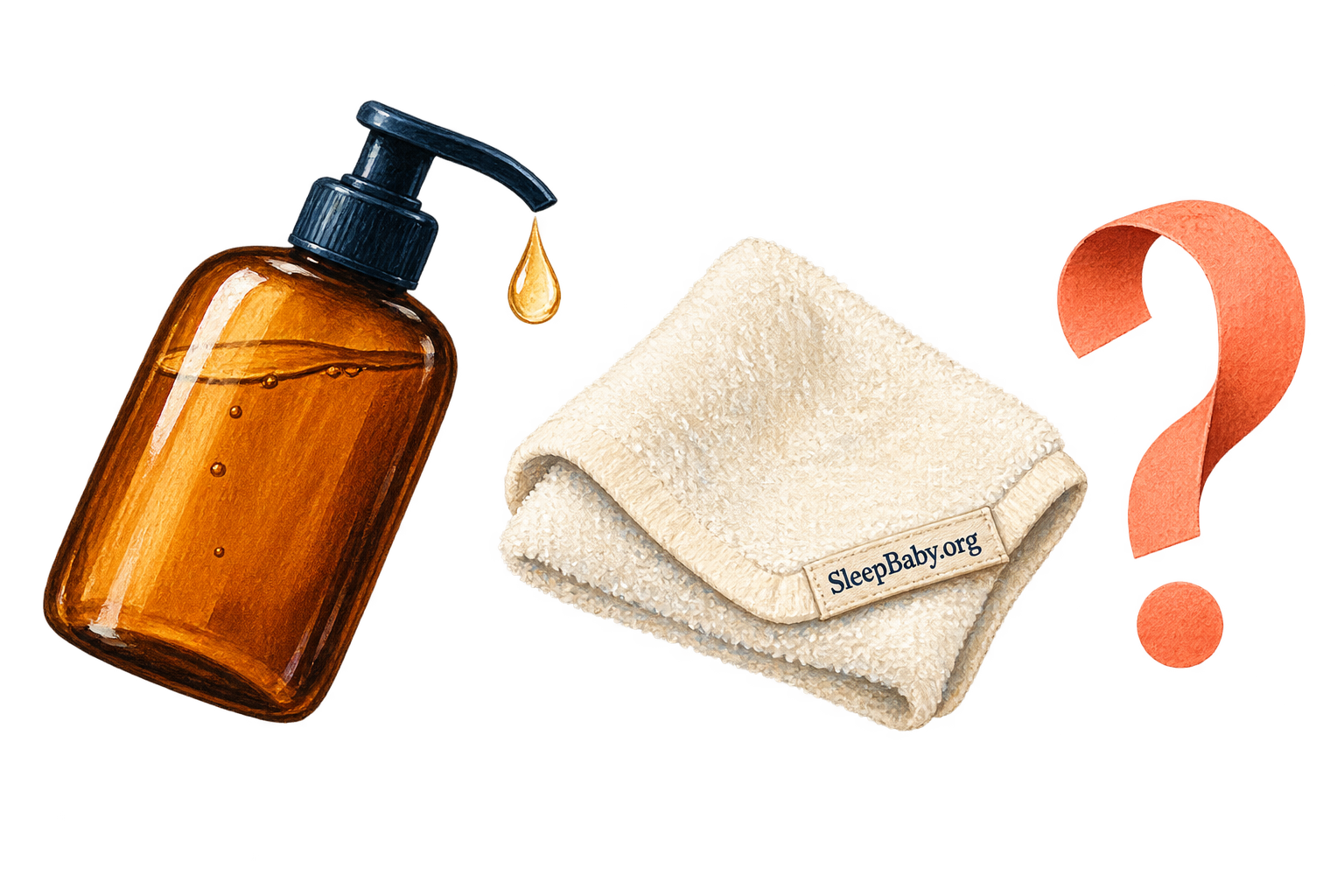
Look for the complete product name, not just the brand. An adult shower gel, a baby wash-and-shampoo combination and a medicated cleanser may sit beside each other in the same bathroom. If the bottle says medicated, lists an active ingredient, or was transferred into an unmarked dispenser, tell the specialist. You do not need to interpret the ingredient list yourself.
Do not apply ordinary body-soap advice to a laundry pod, dishwasher detergent, disinfectant, hand sanitizer or bathroom cleaner. Their formulations differ. Mention any possibility that the wrong bottle was involved.
A lick of wash and a mouthful of bathwater are different details
Describe what you actually saw. A baby sucking a washcloth, licking a pump nozzle or lifting a rinse cup has had a different opportunity for exposure. MedlinePlus notes that swallowing bubble-bath soap can cause vomiting or diarrhea and recommends contacting poison experts for guidance.
A missing amount is not automatically a swallowed amount. Some may be on the towel, your baby’s clothes or the tub. I would report the uncertainty rather than subtracting puddles and calling the result a dose.
Which symptoms change the plan?
Breathing trouble, collapse, a seizure or being unable to wake your baby calls for 911. Do not wait for an online answer or finish reading this page.
Tell Poison Control about symptoms already present, including vomiting, diarrhea, coughing, mouth irritation or unusual behavior. The Illinois Poison Center specifically advises calling for more than one vomiting episode or diarrhea that persists after soap ingestion. Severe symptoms, including vomiting blood, need prompt medical attention. Follow the specialist’s instructions about where to go.
If you are told to observe at home, ask which changes should trigger another call and which need emergency care. There is no single observation timer on this page because the product, amount, age and symptoms determine the advice. A cheerful moment does not identify what was swallowed.

THE FOUR-FACT CALL CARD
Bottle. Baby. Best estimate. Clock.
- Bottle
- Read the exact product name. Keep the label and any active ingredients available.
- Baby
- Give their age, weight if known, and how they are acting now. Mention relevant medical conditions.
- Best estimate
- Explain what you saw and what is uncertain. “The cap was open; I did not see a swallow” is useful information.
- Clock
- Give the time it happened, or the earliest and latest possible time if you did not see it.
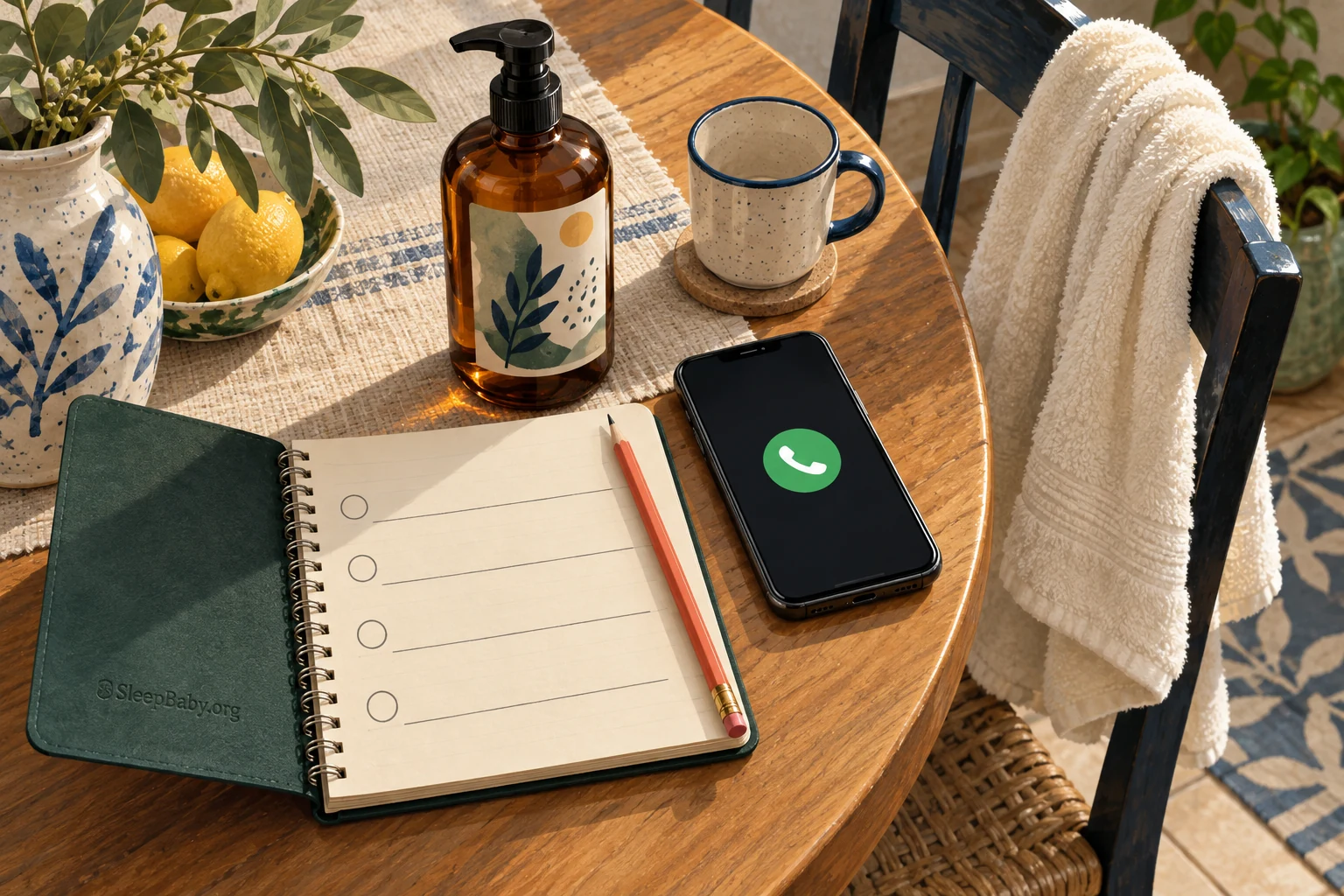
Keep a place to write the instructions and the callback plan. Do not wait to collect every answer before calling.
AFTER THE EXPOSURE PLAN
Let the next ordinary bedtime be a small plan

A disrupted bath can leave you second-guessing the whole evening. Once Poison Control or your clinician has given you the exposure instructions, the SleepBaby.org planning preview can help you choose a starting step for an ordinary sleep concern. Its three choices work in your browser, with no sign-up or card.
Keep the medical instructions beside you and make the bedtime plan separately. The preview cannot decide whether your baby is safe to sleep, how long to watch for symptoms, or whether they need care.
For more structure, the optional paid SleepBaby.org Workshop includes short lessons you can revisit and a seven-night tracker. Use it for everyday sleep planning after the immediate concern is addressed, without expecting a promised result.
If the body wash also got in their eyes
Start rinsing right away with plenty of room-temperature water for 15 to 20 minutes. Poison Control advises gently pouring water over the bridge of a young child’s nose so it runs into the eyes. A towel around the child can help you hold them securely. Do not aim a forceful stream directly into the eye.
Then contact Poison Control for the next step. Severe eye symptoms need emergency evaluation after rinsing. If pain, redness, tearing, swelling or vision problems persist an hour after rinsing began, Poison Control recommends an urgent eye examination. Do not wait that hour when symptoms are severe.
Tell the specialist about both the eye exposure and the possible swallow. A soothing label such as “tear-free” is not a reason to ignore symptoms; even baby shampoo can irritate eyes.
Can my baby nap after swallowing body wash?
Ask this during the call, before you put your baby down. You need advice for this exposure, including whether normal sleep is appropriate and what monitoring is required. The usual nap time does not settle that question.
I would write down three things: whether to offer the next normal feed, whether the baby may sleep, and what to do if symptoms appear or change. If the answer is unclear, ask the specialist to say it again in practical terms. There is no need to translate medical instructions from memory while holding a tired baby.
Once you have been advised that ordinary sleep is appropriate, use the usual safe sleep setup: on the back, on a firm, flat, level infant sleep surface with only a fitted sheet. Keep pillows, loose blankets and positioning wedges out. Do not improvise an inclined or side-sleeping arrangement because you are worried about the soap.
If your baby is hard to wake or not responding normally, do not assume it is simply a late nap. Get help; inability to awaken is an emergency.
Make the next bath easier to supervise
The change I would make is the bottle’s resting place. A product can be out of reach before the bath and end up beside a curious hand halfway through it.
- Set up first. Have the towel, clean cloth and other needed supplies ready so you can keep a hand on your baby.
- Use the wash, then put it away. Keep it in its original labeled container, in secure storage out of sight and reach. Do not leave a pump bottle or open refill pouch on the tub edge.
- Keep products distinct. A toiletry bottle is not a bath toy. Keep household cleaners separate from bath supplies and never put them in food or drink containers.
- Share one routine. Tell every caregiver where products belong. Check the guest toiletry bag and the refill bottle as well as the everyday wash.
A cabinet latch is an extra barrier, not permission to leave a child alone. The American Academy of Pediatrics recommends constant bath supervision and taking the baby with you if you must step away. Keep Poison Control saved as a phone contact before you need it again.

Optional bath setup: a spare pack of plain washcloths
As an Amazon Associate I earn from qualifying purchases.
If your current washcloths are always in the laundry, Gerber’s 6-Pack White Terry Washcloths is a simple option for stocking your normal bath supplies. The manufacturer lists six cloths made from an 80% cotton, 20% polyester blend. This is an ordinary cloth recommendation, not a poisoning treatment or a reason to delay a call.
I would keep a clean cloth ready before the bath and put the used one in the laundry afterward. There is no benefit to buying a special “detox” product for this situation. The free alternative is a clean, soft washcloth you already own. Use the cloth according to the first-aid advice you receive, and never leave it loose in your baby’s sleep space.
Check the exact white six-count variant and current listing details before buying. I have not personally tested this product.
A short reminder about personal-care products
HRSA Poison Help’s Personal Care Products and Kids is a brief prevention reminder about everyday toiletries and keeping poison expertise close at hand. It is not a body-wash treatment guide. Call for advice about an exposure instead of waiting to watch.
Written takeaway: Personal-care products deserve deliberate storage. Save 1-800-222-1222 in your phone and use it when you have a poisoning question.

Questions that often come up after a body-wash taste
Does “natural,” “gentle” or “baby” mean it is safe to swallow?
No front-label word tells you how to manage a swallow. Those descriptions do not replace the exact product name, ingredients, amount and your baby’s condition. I would read the actual bottle to Poison Control instead of looking for a reassuring adjective.
Do I need to buy a different brand?
A new brand does not fix an accessible bottle. First make the storage and bath routine work. For routine skin care, the AAP advises using soap sparingly and a mild cleanser when needed. Ask your pediatrician about a product if your baby has a particular skin condition; this exposure guide cannot choose a treatment wash for them.
What if I do not know how much went in?
That is a reason to call, not a reason to wait for symptoms. Keep what remains in the bottle, describe the spill and say exactly what you witnessed. Do not taste the product yourself or test another pump to recreate the event.
Can I use online Poison Control for a newborn?
Call instead. The webPOISONCONTROL tool is intended for people aged 6 months through 79 years and has other exclusions. Babies younger than 6 months need telephone guidance. Emergency symptoms always require emergency services, regardless of age.
They seem fine now. Is the call still useful?
Yes. A poison specialist can use the product and exposure details to decide what comes next. Calling does not automatically mean an emergency-room visit. My priority would be leaving the conversation with clear instructions, rather than spending the evening guessing what “seems fine” proves.
Sources
- Illinois Poison Center: My Child Ate Soap
- National Capital Poison Center: Swallowing soap
- National Capital Poison Center: First aid for poisonings
- National Capital Poison Center: Shampoo exposures
- National Capital Poison Center: Eye rinsing instructions
- MedlinePlus: Bubble bath soap poisoning
- Utah Poison Control Center: What to expect when calling
- HRSA Poison Help: First steps in a poisoning emergency
- Upstate New York Poison Center: New parents guide and first aid
- National Capital Poison Center: Who can use webPOISONCONTROL
- American Academy of Pediatrics: Bathing your baby
- NICHD Safe to Sleep: Ways to reduce risk
- HRSA Poison Help: Personal Care Products and Kids video
- Gerber Childrenswear: 6-Pack White Terry Washcloths
ONE NEXT STEP AT A TIME
The safety call comes first. The bedtime plan can come later.
Keep the product, get an individual plan, and make the next bath easier to supervise. You do not need to solve storage, sleep and every future mishap in one evening.
When you are ready to work on an ordinary sleep question, start with SleepBaby.org’s free planning preview. You can look at the suggested first step before deciding whether you want the optional Workshop.






What viewers said10 comments · 4 replies+
Archived comments from the original Baby Sleep Miracle presentation. Not independently verified by SleepBaby.org; individual experiences vary.
Thank you so much for this video! I had no idea about the dangers of baby swings :O
Hi Mary-Ann. I have a question: Is method in any way similar to the ones recommended by Dr Bucknam, Dr. Weissbluth or Dr. Karp? We tried those but none of them help.
Hi Regina, thank you for your question. The short answer is no. The techniques I share in my guide are based on newest scientific research and this is why I have never seen any approach similar to the one I recommend.
This method really works! I tried it on my son Jesus and after just one week he went from waking up more than 5 times a night to waking up just once or twice. You are a lifesaver, Mary-Ann!
I'm truly impressed with how much information you share in your video. And all for free! I can feel that you truly care about mothers like myself, and that's hard to find these days. I have recommended your site to several of my friends already.
Mary-Ann, our child suffers from autism. Is your approach still suited?
Chloe, I made sure my method can be used with any child, even babies who are special like yours. Please note that I'm not a doctor and that I always advice to consult with your physician because nothing is more important than the safety and well-being of your love.
Hallo Mary-Ann, I'm from Germany. Do you have your guide in German?
Hello Heide, we do! Normally you should already see our video in German. If not, please contact our support so they can guide you
Thenk you for your answer, Mary-Ann!
I just completed your approach and I have to say, it worked almost too well. Yes, it took a bit of getting used to with your bedtime routine but the difference is huge. My son George used to take 1 hours to go down and now he's firmly asleep in no more than 10 minutes! You're the best!
It seems I'm the only man watching this video, lol! What you shared about the 'emotional backpack' made immediate sense to me and I can't wait to help my little girl Mila to unpack it!
Hey there, just discovered your site and this really sounds different. Just wanted to say thanks for sharing :)
For everyone who's still thinking about getting Mary-Ann's guide I want to advise you to go ahead. I wasn't sure myself but now I'm so thankful I invested in this program. It made a huge difference in our life as a family and yes, my baby girl does sleep through the night now.