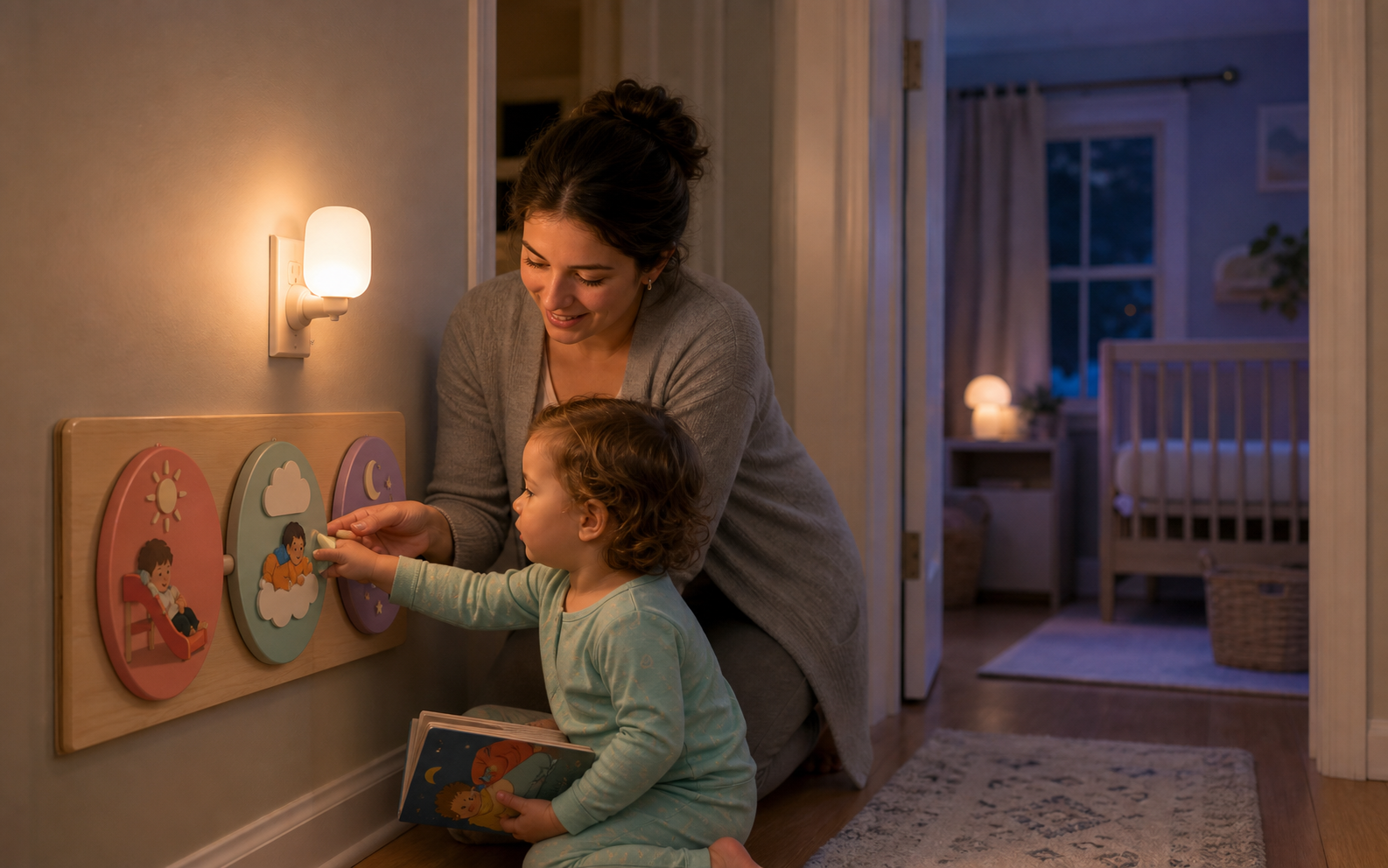
The pajama zipper is halfway up, one book has somehow become four, and your 23-month-old is delivering a closing argument against bedtime with the confidence of someone who cannot yet pronounce “bedtime.” This is the nearly-two version of a sleep schedule: the body may still need a familiar one-nap day while language, memory, choices, and very strong opinions make the day look newly complicated.
A practical 23-month-old sleep schedule usually starts with 11 to 14 total hours of sleep in 24 hours, including naps, a reasonably steady morning, one midday sleep opportunity, and a short predictable bedtime routine. That range is a neighborhood, not a command. Count the sleep that actually happened, let the real nap shape bedtime, and separate a timing problem from a boundary or health problem before changing the clock. Most nearly-two-year-olds still benefit from the nap; a refusal or difficult bedtime does not, by itself, mean the nap is over.
Start with three dials, not one perfect clock
I call this the Almost-Two Switchboard. It is a qualitative decision tool, not a measured or diagnostic score. Read these three dials together:
- Whole-day sleep budget: How much sleep actually occurred across the night and nap after subtracting meaningful awake time?
- Nap-to-bed handoff: Did the nap end short, late, missed, or roughly as expected—and what bedtime response does that nap earn?
- Timing or boundary: Is your toddler peacefully awake, upset at separation, repeatedly reopening the routine, or showing discomfort or another physical concern?
A schedule is doing its job when it supports enough total sleep, reasonable daytime function, and a bedtime the family can repeat. It does not need to win a beauty contest in a spreadsheet.

Dial one: count sleep, not time offered
The American Academy of Sleep Medicine recommends 11 to 14 hours of sleep in 24 hours for children ages one to two, including naps. The CDC uses the same range in its guidance around age two. Neither source assigns your child one exact nap length, bedtime, or wake window. A child can fall within the range on several different family clocks.
The useful first move is boring but powerful: count actual sleep. If your toddler went into the crib at 7:15 p.m., chatted until 7:55, woke for twenty-five minutes overnight, and started the day at 6:25 a.m., the night was not eleven hours and ten minutes. It was closer to ten hours. If the nap opportunity lasted two hours but sleep lasted forty-two minutes, count forty-two minutes. Time in a safe sleep space can still be restorative quiet time, but it is not secretly sleep because the schedule wanted it to be.
A two-minute whole-day check
- Night sleep
- Bedtime to morning, minus meaningful awake stretches you know occurred.
- Nap sleep
- Probable sleep onset to wake time—not simply the childcare or crib window.
- Daytime function
- Notice whether your child is broadly engaged and manageable or repeatedly falling apart, dozing unintentionally, or looking unusually sleepy.
- Pattern, not verdict
- Use several comparable days. Travel, illness, a car nap, or one spectacularly strange Tuesday can distort the picture.
SleepBaby.org note: A number is a clue. The child in front of you—and what happens alongside the number—decides what the clue means.
I would not chase the top of the range simply because fourteen is larger than eleven. Nor would I dismiss a repeated shortfall because a toddler can remain impressively energetic while tired. Look for a pattern: harder late afternoons, unplanned dozing, increasingly frantic bedtime behavior, more night disruption, or a morning that keeps arriving before the family can sustain it. Then change the smallest plausible lever.
Three 23-month schedule shapes that can all work
These examples are translations, not prescriptions. Start from the morning your household can realistically hold. Meals, childcare, commute, the actual nap, and your child’s settling pattern all matter more than matching one internet clock.
Earlier family clock
- About 6:00 a.m.—morning begins
- 11:00–11:30 a.m.—lunch
- 11:45 a.m.–12:15 p.m.—nap opportunity begins
- Bedtime responds to the nap that occurred
A missed or short nap may earn an earlier routine. A restorative nap may support the usual bedtime neighborhood.
Middle family clock
- About 7:00 a.m.—morning begins
- Around noon—lunch
- About 12:30 p.m.—nap opportunity begins
- Often 7:00–7:30 p.m.—routine neighborhood
The exact bedtime still depends on sleep onset, nap wake time, total sleep, and how settling has looked across several days.
Fixed child-care nap
- Use the household’s sustainable morning
- Keep the center’s lunch and rest sequence
- Record offered time, probable sleep, and wake time separately
- Translate the real nap into home bedtime
Home does not need to imitate every classroom minute. It needs to understand what sleep the classroom day produced.
A schedule may also shift by fifteen or thirty minutes without becoming a different schedule. The stable parts are the sequence and the family’s response: morning begins, food and active time happen, lunch leads toward rest, afternoon follows the actual nap, and bedtime closes the day. This is predictability a toddler can feel even before they can read a clock.
If the nap itself is the problem—repeatedly late, short, or refused—the more detailed guide to working through a nearly-two-year-old nap pattern is the useful next path. This page keeps the whole day in view so the nap does not become the only suspect in the lineup.
Dial two: let the nap you got choose the bedtime lane
A nearly-two-year-old may look wonderfully consistent on paper and still produce four very different nap outcomes in one week. The schedule becomes more useful when it has a response for each outcome instead of pretending every day ended at 2:00 p.m.
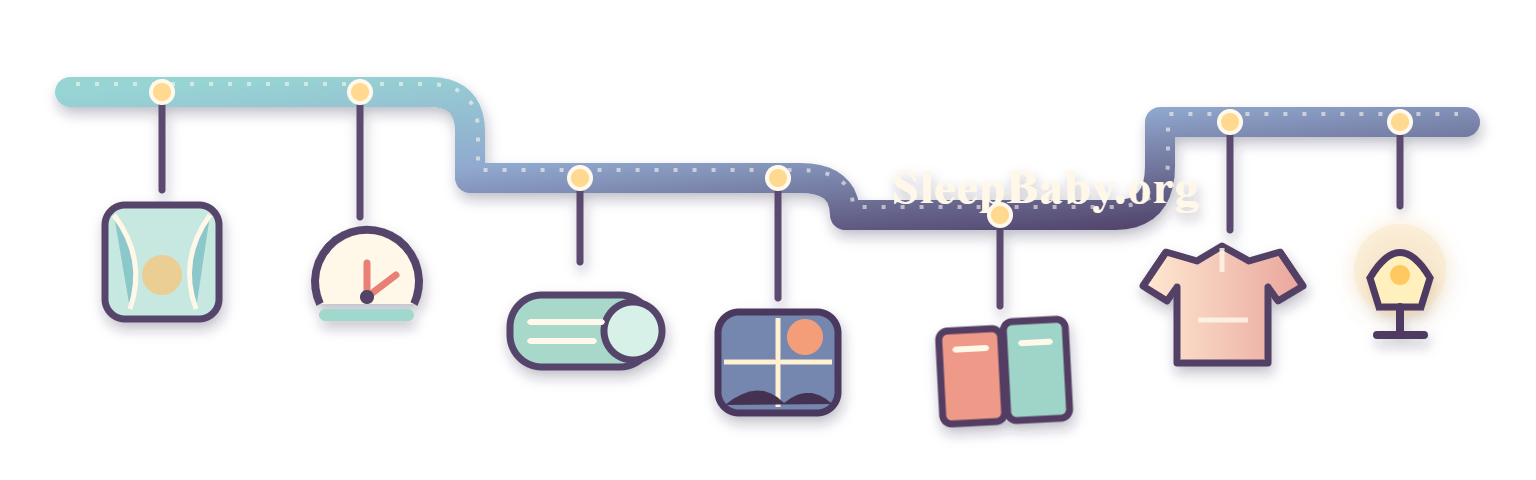
The nap-to-bed handoff
Restorative and on time
Use the familiar bedtime neighborhood. Do not move bedtime merely because a chart says the final wake window should be exact.
Clearly short
Soften late afternoon and begin the routine earlier if your child is fading. Do not force the usual late clock to prove consistency.
Late ending
Expect bedtime to move later. If that pattern repeatedly shortens the night, test a slightly earlier nap rather than capping everything at once.
Missed
Offer quiet rest, reduce demands, and use an earlier bedtime. One refusal is an event; repeated refusals with a stable mood and night are a pattern to study.
I would resist the late-afternoon rescue nap unless the day genuinely cannot reach bedtime safely and calmly. Twelve minutes in the car can be useful, but it can also arrive with the administrative authority of a full nap and delay sleep much longer than anyone expected. Count it. Then respond to it. The clock does not care that the nap was accidental.
After a short nap, food, water, daylight, connection, and low-demand play often help the family reach an earlier bedtime. After a late nap, accept that sleep pressure may need more time. After a missed nap, avoid turning the evening into a marathon of stimulating errands. None of these responses guarantees an easy night. They simply make the next decision proportionate to the day that actually happened.
Dial three: is this timing, a boundary, or something else?
At 23 months, bedtime resistance becomes more articulate. A toddler may remember that water exists, request a different book, point toward the hallway, and discover an urgent interest in the precise location of every stuffed animal. That does not automatically mean bedtime is too early. It means the child can now participate in delaying it.
Read the behavior, then choose the lane
- Calmly awake for a long time
- Timing deserves a look. A late or long nap may have left too little sleep pressure, or bedtime may have drifted earlier than this child can use.
- Exhausted, frantic, or falling apart through the routine
- The last stretch may be too long, especially after a short nap. Move bedtime earlier before removing the nap.
- Repeated requests after a sensible routine
- The schedule may be fine. Use a short sequence, two safe choices inside it, and one calm response rather than reopening the entire evening.
- Distress focused on separation
- Connection and response consistency matter. Timing can coexist with separation, but a later bedtime alone does not teach what happens after goodnight.
- Snoring, breathing change, pain, illness, unusual sleepiness, or lost skills
- Leave the schedule lane. Seek appropriate medical guidance rather than continuing a timing experiment.
Clearly labeled hypothetical Kacey-and-Benjamin scene: Imagine Kacey looking at a made-up day in which Benjamin slept from 1:05 to 1:47 p.m., then protested a 7:00 p.m. bedtime. The lamp is low, the final book is closed, and a small hand is pointing toward the shelf as if the household has overlooked a binding literary obligation.
My first impulse might be to move the nap, move bedtime, add a longer routine, and change the response—all before breakfast. I would stop myself. The short nap makes an earlier bedtime plausible; the repeated book request makes a boundary plausible. I would keep the short routine, offer two books before the final one is chosen, use one calm goodnight sentence, and watch several comparable days. This hypothetical is not family history or evidence. It shows why one day can involve both a tired body and a toddler testing whether the last switch really stays off.

If bedtime friction remains after timing is broadly sensible, separate timing, separation, and repeated-request bedtime friction before choosing a response method. I would rather identify the real lane than keep moving bedtime in fifteen-minute circles around a boundary problem.

Translate the child-care nap instead of fighting it
Child care often has a fixed rest window, while home has different light, noise, meals, and expectations. Ask for four separate details when possible: when rest was offered, when sleep probably began, when your child woke, and how the afternoon looked. “Nap was fine” is kind but cannot explain why bedtime lasted until the adults had emotionally aged several years.
What to ask
- When did the room become quiet?
- When did sleep likely begin?
- When did your child wake?
- Was the afternoon steady, fragile, or unusually sleepy?
What to do at home
- Keep dinner and the routine recognizable.
- Move bedtime earlier after a clearly short nap.
- Allow more settling time after a late nap.
- Judge the week, not one classroom day.
Weekends do not need to recreate the classroom clock exactly. A child who has accumulated short naps may take a longer home nap. Watch what that does to bedtime and the next morning. If the weekend nap repeatedly runs late and bedtime becomes a cheerful two-hour monologue, a slightly earlier start may be more useful than a strict cap.
Try to keep the language portable. The same short phrase can lead toward nap at child care, quiet rest at home, and bedtime at night. The routine objects do not need to match. Predictability lives in the sequence and the adult follow-through more than in owning identical curtains in two buildings.
A later bedtime is not a receipt for a later morning
An early wake can make the family want to push bedtime later in hopes of buying a later start. Sometimes bedtime genuinely is too early. But a later bedtime can also reduce total sleep while morning remains stubbornly early. The sun has not signed a performance contract.
When morning repeatedly arrives before the household can sustain it, look at the whole switchboard. Was the nap early because the day began early? Did that early nap end early, making bedtime early too? Is morning light entering the room? Is hunger plausible? Is your toddler getting a long, late nap and still settling easily at night? Change one likely lever and watch several comparable days.
Keep the response dark, quiet, and boring before the family’s chosen morning when your child is safe and comfortable. If sleep does not return, begin calmly rather than turning the crib into a prolonged battle. Do not use a clock cue to ignore distress, hunger, illness, or another real need. The cue is a shared signal; the adult still pays attention.
Give two safe choices inside one firm sequence
The CDC’s routine guidance emphasizes consistency, predictability, and follow-through. HealthyChildren likewise recommends a quiet, consistent bedtime routine. At almost two, consistency is easier to feel when the sequence is short enough to remember: perhaps pajamas, teeth, two books, one song, then bed.
Offer choices where either answer works. Blue pajamas or green? This book or that one? Walk to the room or be carried? Do not offer a choice about something that is not actually optional. “Are you ready for bed?” is a lovely philosophical question and a terrible bedtime plan when no answer will change what happens next.
Choice belongs inside the routine
- Announce the next step: “Pajamas, books, song, bed.”
- Offer one real choice: two acceptable pajamas or two acceptable books.
- Close the choice: once chosen, continue instead of reopening the shelf.
- Repeat one calm ending: use the same brief goodnight words every caregiver can remember.
- Observe the lane: peaceful wakefulness suggests timing; repeated negotiation suggests boundary; distress deserves connection and a closer look.
I would rather make a five-step routine dependable than a twelve-step routine aspirational. Bath does not need to happen every night if it makes the evening harder. A song does not require ideal acoustics. The goal is not to produce a tiny wellness retreat. It is to make the path toward sleep recognizable enough that your toddler knows what the last page means.
Watch: make the next step visible
How can I help my child fall asleep?
This short American Academy of Pediatrics video gives the routine-and-expectations foundation. The Almost-Two Switchboard then helps you decide whether the remaining problem belongs to timing, the nap-to-bed handoff, or the response after goodnight.
Takeaway: Write down the final routine step and one calm sentence every caregiver will repeat. Consistency becomes useful when the child can see and hear it.
SleepBaby product pick
A visual cue for the almost-two routine
At almost two, the useful promise is not that a green light will make a toddler sleep. It is that the whole household can point to the same simple cue. The LittleHippo MELLA Ready to Rise Children’s Sleep Trainer uses scheduled colors and facial expressions for sleep and wake transitions, so it fits a family whose room is already comfortable but whose bedtime or early-morning boundary keeps changing between caregivers.
That is more specific to this problem than another blackout shade, sound machine, or sleep sack. The reason to buy it is the chance to pair one visible cue with the same short words at bedtime, morning, and midday rest. The adult still responds to real needs and owns the boundary. Keep the device and cord outside the sleep space and out of reach, follow the manufacturer’s instructions, and never use a clock cue to delay care or force a distressed child to remain in bed.
See the LittleHippo MELLA sleep trainer on Amazon
As an Amazon Associate, we earn from qualifying purchases.
What is not a schedule problem
Development near age two can change how bedtime looks. More language, mobility, memory, and independence can make routines noisier and resistance more creative. Development is context, not a diagnosis. It does not explain away pain, illness, breathing difficulty, unusual daytime sleepiness, or a loss of skills.
Leave the switchboard when health or safety changes the picture
Contact your child’s clinician about persistent loud snoring, breathing difficulty during sleep, significant pain, illness, unusual sleepiness, a notable change in daytime function, lost skills, or another developmental concern. Bring a simple record of sleep and symptoms rather than trying to diagnose the pattern from the clock.
Seek emergency help for a prolonged breathing stop, blue or gray color, abnormal limpness or stiffness, inability to wake normally, or another sign of immediate danger.
Sleep-space safety can also end a schedule experiment. If your child can climb out or the current sleep space no longer fits its manufacturer’s limits, follow the product instructions and make the room itself safe before debating bedtime. Do not improvise with a restraint, crib tent, piled bedding, or furniture positioned as a climbing step. A schedule cannot compensate for an unsafe space.
I would bring the clinician or care team a plain record: morning start, nap offer, probable sleep onset, wake time, bedtime, night waking that needed help, symptoms, and what changed before the pattern began. Unexciting notes are often more useful than a dramatic theory built from one terrible night.

What I would do tonight—and for the next three comparable days
First, write down today’s actual sleep. Do not repair it retroactively. Note morning start, probable nap sleep, nap wake time, and any meaningful night waking you remember. Then name the exact bedtime problem in one sentence: “calmly awake for forty minutes,” “crying when I leave,” “asking for four more things,” or “falling apart before pajamas.” Specific language chooses a better lane.
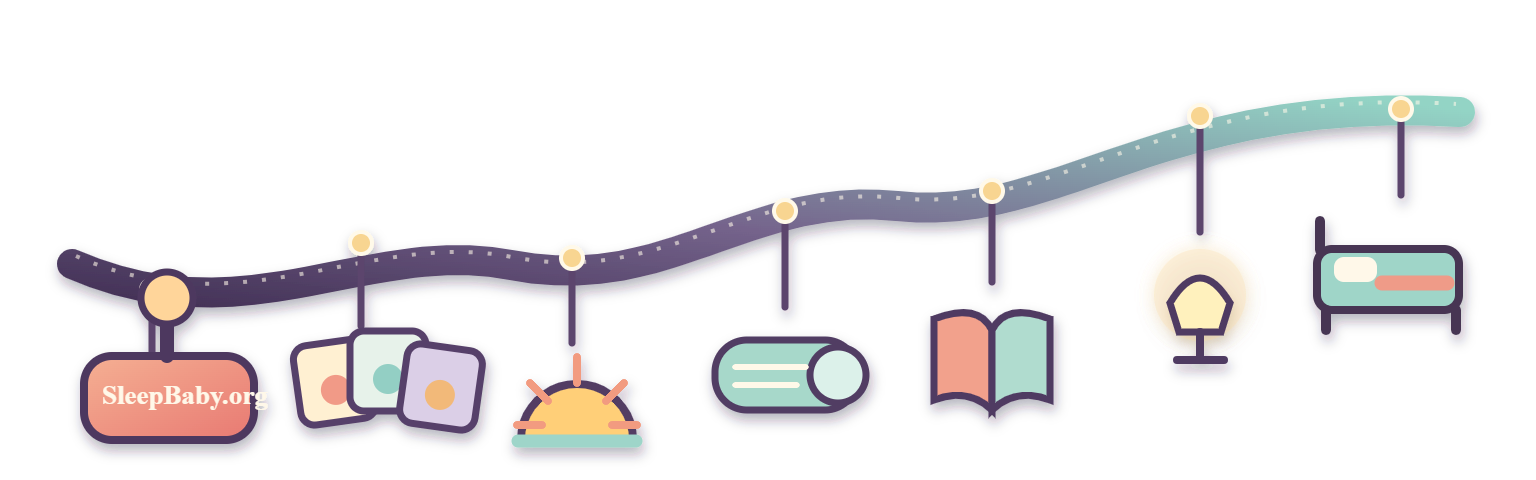
One-change plan
- Protect the morning anchor. Keep morning within a sustainable neighborhood instead of rebuilding the day after one early wake.
- Offer one midday rest. Use lunch and a brief wind-down as the approach, then record actual sleep separately from time offered.
- Let the nap hand off to bedtime. Earlier after a missed or clearly short nap; familiar after a restorative nap; somewhat later after a late nap.
- Hold the routine short. Offer two safe choices, close them, and use one calm ending every caregiver can repeat.
- Change one variable only. If the pattern points to timing, move nap or bedtime by about fifteen minutes—not both—and compare several ordinary days.
- Stop for health or safety. Symptoms, breathing changes, unusual sleepiness, lost skills, or an unsafe sleep space do not belong in a schedule trial.
On the third comparable day, ask four questions. Is total sleep closer to the child’s usual healthy neighborhood? Is daytime function steadier? Is settling shorter or calmer? Did the change create a new problem elsewhere? Keep the adjustment only if the whole day improves. If nothing changes, return the dial and test a different explanation rather than stacking another fix on top.
The private fear beneath this search is often, “Did I accidentally build the wrong day?” Usually, one imperfect nap or resistant bedtime does not prove that. At almost two, sleep needs and toddler agency occupy the same house. Your job is not to silence every opinion. It is to keep the sequence legible, respond to the sleep that happened, and know when the clock is no longer the right tool.
Back at the half-zipped pajamas, the fourth book is still unnecessary. But the protest now tells you something more precise. A calm child may need a timing adjustment. A tired child may need an earlier landing. A negotiating child may need the last choice to close. And a child who seems unwell needs care, not better nap math. That is the switchboard: not control over every night, but a clear next move.
Sources
- American Academy of Sleep Medicine: Child Sleep Duration Health Advisory
- Centers for Disease Control and Prevention: Milestones by 2 Years
- Centers for Disease Control and Prevention: Tips for Relying on Routines and Rules
- American Academy of Pediatrics / HealthyChildren.org: Toddler Bedtime Trouble—7 Tips for Parents
- American Academy of Pediatrics / HealthyChildren.org: Developmental Milestones—2 Year Olds
When the final switch still will not stay off
Build a bedtime your almost-two-year-old can recognize
If nap math is no longer the whole problem, SleepBaby can help you turn the day’s real sleep, the routine, and your response after goodnight into one calmer plan. Bring the day you actually have—not the schedule you think you were supposed to produce.






What viewers said10 comments · 4 replies+
Archived comments from the original Baby Sleep Miracle presentation. Not independently verified by SleepBaby.org; individual experiences vary.
Thank you so much for this video! I had no idea about the dangers of baby swings :O
Hi Mary-Ann. I have a question: Is method in any way similar to the ones recommended by Dr Bucknam, Dr. Weissbluth or Dr. Karp? We tried those but none of them help.
Hi Regina, thank you for your question. The short answer is no. The techniques I share in my guide are based on newest scientific research and this is why I have never seen any approach similar to the one I recommend.
This method really works! I tried it on my son Jesus and after just one week he went from waking up more than 5 times a night to waking up just once or twice. You are a lifesaver, Mary-Ann!
I'm truly impressed with how much information you share in your video. And all for free! I can feel that you truly care about mothers like myself, and that's hard to find these days. I have recommended your site to several of my friends already.
Mary-Ann, our child suffers from autism. Is your approach still suited?
Chloe, I made sure my method can be used with any child, even babies who are special like yours. Please note that I'm not a doctor and that I always advice to consult with your physician because nothing is more important than the safety and well-being of your love.
Hallo Mary-Ann, I'm from Germany. Do you have your guide in German?
Hello Heide, we do! Normally you should already see our video in German. If not, please contact our support so they can guide you
Thenk you for your answer, Mary-Ann!
I just completed your approach and I have to say, it worked almost too well. Yes, it took a bit of getting used to with your bedtime routine but the difference is huge. My son George used to take 1 hours to go down and now he's firmly asleep in no more than 10 minutes! You're the best!
It seems I'm the only man watching this video, lol! What you shared about the 'emotional backpack' made immediate sense to me and I can't wait to help my little girl Mila to unpack it!
Hey there, just discovered your site and this really sounds different. Just wanted to say thanks for sharing :)
For everyone who's still thinking about getting Mary-Ann's guide I want to advise you to go ahead. I wasn't sure myself but now I'm so thankful I invested in this program. It made a huge difference in our life as a family and yes, my baby girl does sleep through the night now.