The 10-month sleep regression
10-Month Sleep Regression: When Bedtime Suddenly Changes
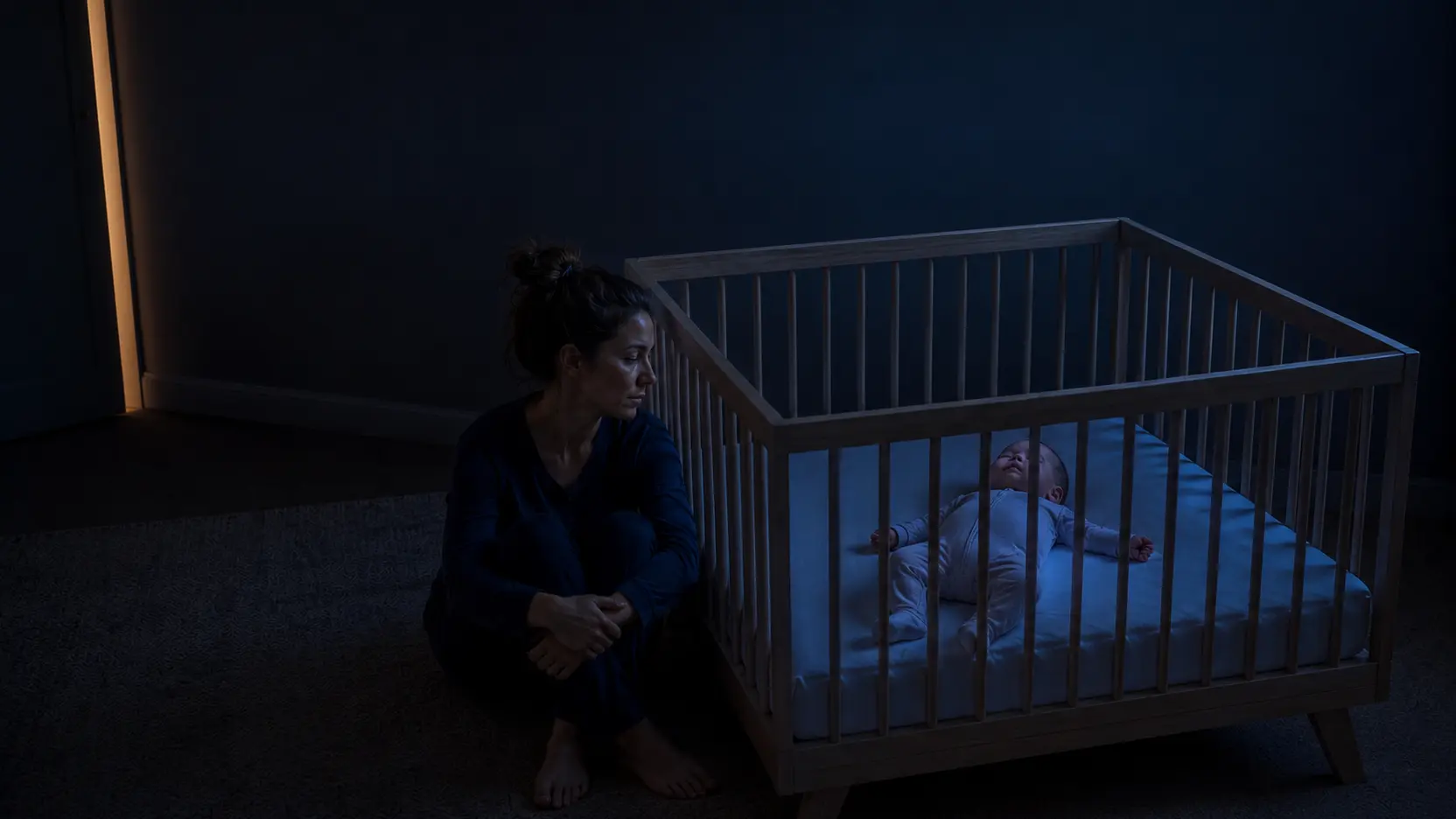
There is a particular kind of disbelief that arrives when a baby who was sleeping reasonably well stands up in the crib at 1:38 a.m. and looks genuinely offended that you are not already in the room. By the third wake-up, yesterday’s schedule starts to feel like evidence from an unrelated household.
What parents call the 10-month sleep regression is usually a temporary cluster of new night waking, bedtime protest, early waking, or nap disruption—not a diagnosis and not proof that you broke your baby’s sleep. Around this age, separation awareness, rapidly developing movement, ordinary sleep variation, schedule pressure, feeding needs, teething, illness, and discomfort can overlap. The useful move is not to guess which “regression week” you are in. It is to check the whole day, keep your response warm and predictable, and change one thing at a time.
I would begin with three clocks: the body clock, the sleep-pressure clock, and the attachment-and-development clock. They can all be telling the truth at once, which is inconvenient but much more useful than blaming a mysterious regression for everything.

What does a 10-month sleep regression actually look like?
It can look like a baby taking longer to fall asleep, waking more often, crying as soon as you step away, practicing standing in the crib, shortening one or both naps, or greeting the day before the rest of the household has agreed that a day exists. It may arrive after a stretch of easier sleep, which is why it feels so dramatic.
The term sleep regression is parent shorthand. There is no clinical test that confirms one, no universal tenth-month switch, and no reliable promise that it lasts a set number of days. A baby may have a developmental wobble at nine months, ten and a half months, or not at all. Another baby may wake for reasons that have nothing to do with development.
The American Academy of Pediatrics notes that separation anxiety can disrupt sleep in the second half of the first year. The CDC also lists reacting when a caregiver leaves—looking, reaching, or crying—as a common nine-month social-emotional milestone. That does not mean every wake-up is separation anxiety. It means the baby who suddenly checks whether you still exist is doing something developmentally plausible, not plotting a hostile takeover of bedtime.
The three clocks I would check before changing the routine
1. The body clock
Light exposure, a reasonably stable morning start, and repeated meal and sleep timing help the brain anticipate day and night. A few unusually late mornings or accidental evening naps can shift the pattern. That does not make the schedule “bad”; it means bedtime may no longer land where the body expects it.
2. The sleep-pressure clock
Sleep pressure builds while a baby is awake and eases during naps. Too little wakefulness before bed can produce a cheerful crib convention. Too much can produce a baby who is exhausted and somehow even less able to settle. Look at the last three days, not one heroic or disastrous afternoon.
3. The attachment-and-development clock
A baby who now understands that you can leave, pulls to stand, cruises, babbles, or searches for hidden objects has a very busy brain. New skills do not need to be “worn out” at night, but they do need generous daytime opportunities so the crib is not the only available practice studio.
The point of the clocks is not to identify one guilty clock. It is to notice whether your response should focus on timing, practice, connection, comfort, or a clinician question.
The standing-at-midnight problem
The following Kacey-and-Benjamin moment is a clearly labeled composite scene based on common parent concerns; it is not documentary family history or medical evidence.
Imagine me outside Benjamin’s room after the second bedtime return. He has discovered standing, and he is using this skill with the commitment of someone unveiling a major public works project. I lay him down. He stands. I say the same quiet phrase. He stands again, gripping the rail and looking pleased that his presentation has an audience.
My exhausted brain wants to interpret each stand as a new instruction: rock him, feed him, alter bedtime, add another book, remove the book, research mattresses, perhaps rebuild the moon. But the useful distinction is smaller. Is he asking for reassurance, or is the day’s sleep pattern making sleep genuinely hard to reach?
If he calms when I appear but objects when I leave, connection is probably part of the night. If he is happy and energetic for forty minutes, timing deserves a look. If he cannot get comfortable, has new symptoms, or is feeding differently, I stop calling it a regression long enough to consider what else his body might be saying.
Use a 24-hour map instead of chasing every wake-up
For three ordinary days, write down only the pieces that can change your decision: morning wake time, nap starts and ends, bedtime, night wakes, feeding differences, signs of discomfort, and anything unusually stimulating or sleepy. This is not a surveillance project. If your notes require color coding and a project manager, they are asking too much of you.
| What you notice | What I would ask | One low-risk experiment |
|---|---|---|
| Long, cheerful bedtime | Was the last nap later or longer than usual? | Keep morning stable and shift only the final timing slightly for three nights. |
| Frantic bedtime after short naps | Did the day create too much wakefulness to recover from? | Offer an earlier, simpler bedtime instead of adding stimulation. |
| Crying when you leave, calming when you return | Is separation the clearest pattern? | Use the same brief reassurance sequence each time. |
| Standing, crawling, or babbling instead of settling | Has the new skill had enough safe daytime practice? | Add floor practice before the wind-down, not inside it. |
| New discomfort, feeding change, fever, cough, vomiting, diarrhea, unusual sleepiness, or breathing concern | Could this be illness or pain rather than a sleep phase? | Pause sleep experiments and contact the appropriate clinician; urgent breathing or responsiveness concerns need urgent care. |
If timing appears to be the main issue, the verified SleepBaby guide to a 10-month-old sleep schedule can help you compare the whole day without treating one sample schedule as a law.
A warm, predictable response ladder for tonight
- Pause long enough to observe. A rustle, complaint, or brief cry is not always a request for a full intervention. Listen for escalation and use what you know about your baby.
- Check needs and safety. Confirm breathing looks normal, the sleep space is safe, clothing and room temperature are reasonable, and there is no obvious illness, pain, hunger, or diaper problem.
- Use one brief reassurance pattern. Keep the room dim, speak quietly, and repeat the same small sequence—perhaps a phrase, a hand on the back, and help lying down if needed.
- End the response the same way. If your baby is safe and calm enough, finish in the crib rather than inventing a larger performance at each wake.
- Review in daylight. Decide tomorrow whether the pattern points to timing, separation, practice, discomfort, feeding, or professional advice. Two in the morning is not a fair hour for redesigning the family constitution.
This is not a command to ignore crying. Some babies need more support, and families choose different approaches to sleep. Consistency means the response is understandable and repeatable—not that affection is rationed.

Should you change naps during a 10-month sleep regression?
Maybe—but not because the calendar says ten months. Many babies this age still take two naps. A sudden refusal of one nap can be temporary, especially during new-skill practice or separation-heavy days. Dropping a nap after two rough afternoons can create a much larger sleep debt than the original problem.
I would look for a repeated pattern across several days. Is one nap consistently impossible even when offered at a reasonable time? Is bedtime drifting late because daytime sleep ends too late? Or is the baby plainly exhausted after a rejected nap? The answers point in different directions.
Keep the morning start fairly steady, offer the usual nap opportunities, and avoid making multiple timing changes at once. If a nap fails, protect the rest of the day with a calmer afternoon and an earlier bedtime when needed. A single short nap is data. It is not a resignation letter from napping.
A three-day experiment that does not require rebuilding bedtime
When nights become noisy, I am tempted to treat every wake as a separate problem. I have learned that this creates a household full of moving parts and no clean information. Instead, I would choose one question for three ordinary days: Is the baby arriving at bedtime comfortably tired, overtired, or not quite ready?
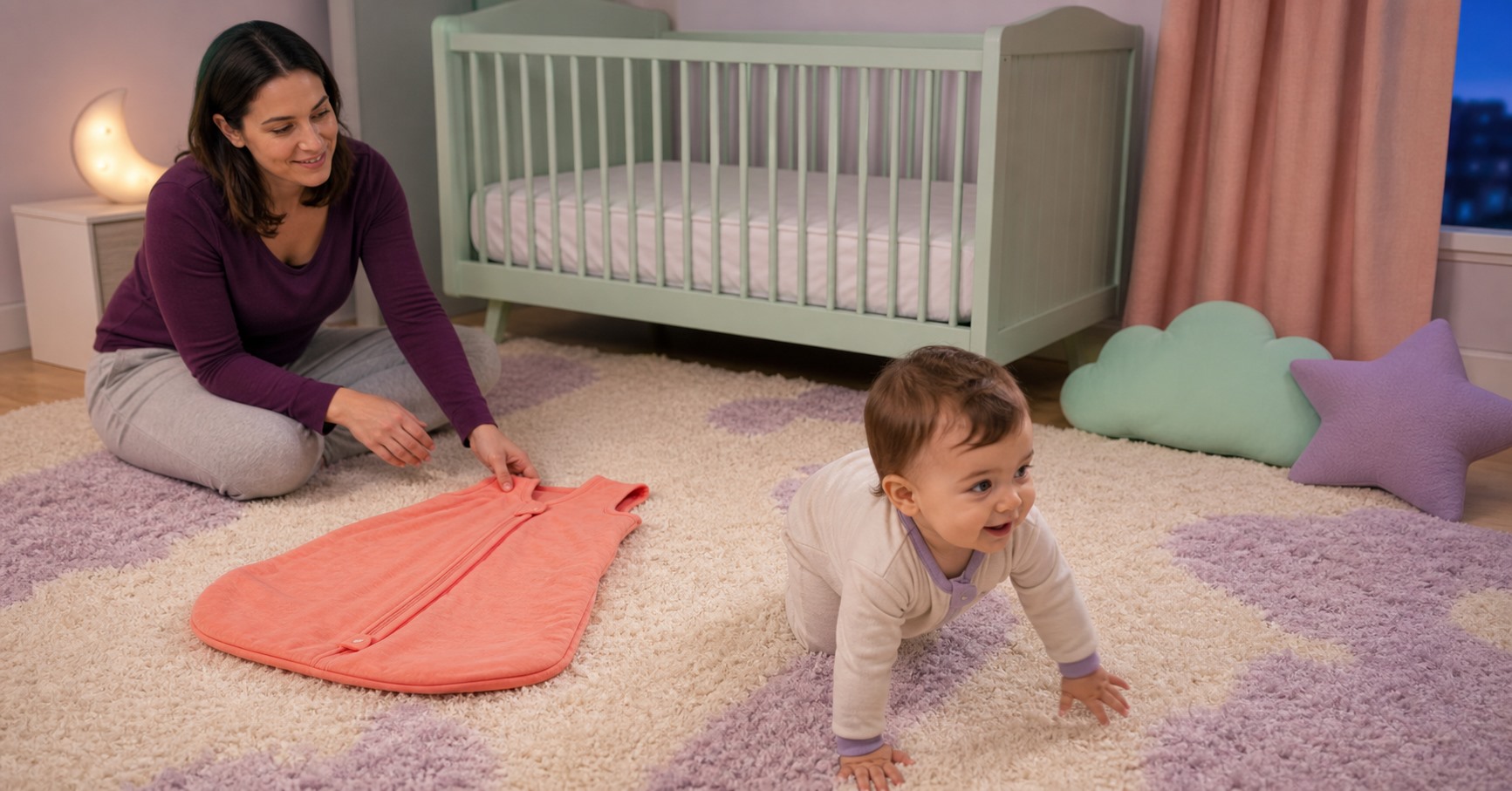
Keep the morning start within the same familiar range. Offer naps when your baby shows the pattern you normally recognize, and write down when sleep actually begins and ends. Give plenty of floor time for crawling, pulling up, cruising, and practicing how to lower from standing while everyone is awake. At bedtime, use the same short ending: dim room, familiar words, sleep sack, crib. If separation is loud, I would add connection before the crib rather than invent a longer performance after every wake.
On the second day, resist the urge to move three things because the first night remained rough. I look for a repeated clue. A baby who fights both naps and bedtime may need a modest timing adjustment. A baby who melts down before the routine ends may be carrying too much sleep pressure. A baby who settles with a brief check but protests the moment you leave may be asking for predictable reassurance more than a new schedule.
By day three, the experiment should make one decision easier. I keep the pattern if wakes are shortening or settling is becoming more familiar. I shift one nap or bedtime boundary by a small amount if the same timing clue repeats. I stop the experiment and investigate comfort, feeding, illness, or breathing when the evidence points away from routine. I do not need three perfect nights; I need three nights that answer a better question.
This is also where Benjamin belongs in my thinking. In the clearly labeled composite scene above, he does not become evidence for what every ten-month-old needs. He reminds me why I prefer a bounded experiment: tired parents deserve a plan small enough to remember in the dark, and babies deserve responses that do not change every time the clock glows.
Keep the sleep space steady while the pattern changes
American Academy of Pediatrics: Help Your Baby Sleep Safely
This brief AAP video is useful during a regression because exhaustion can make a familiar safety boundary feel negotiable. It is not a sleep-training prescription; it is a visual reset for the crib itself.
Takeaway: more wakes do not change the safe ending—back to sleep, firm and flat surface, fitted sheet only, and no loose objects in the crib.
How much sleep does a 10-month-old need?
The American Academy of Sleep Medicine recommends 12 to 16 hours of sleep per 24 hours, including naps, for infants ages 4 through 12 months. That is a broad population range, not a nightly grade. Your baby’s usual mood, alertness, feeding, growth, and ability to settle matter alongside the number.
Look at several days rather than one night. A rough night may be balanced by naps; a seemingly long night may contain many wakes. If your baby is regularly far outside the range, seems persistently exhausted, or has a dramatic change from their own baseline, bring the pattern to the pediatrician.
Could hunger, teething, or illness be causing the waking?
Yes, but waking alone cannot tell you which one. I would look for what changed alongside sleep. A feeding issue is more plausible when daytime intake has shifted, your baby is newly distracted during feeds, growth or wet diapers are a concern, or the pediatrician has already given you a feeding plan. Do not automatically remove a night feed because an age chart says your baby “should” be done, and do not automatically add feeds to every wake without looking at the daytime pattern. Feeding needs are individual and deserve growth-aware advice.
Teething can make a baby uncomfortable, but it is also an extremely convenient explanation for every difficult night between the first tooth and kindergarten. Look for drooling, gum tenderness, a desire to chew, or other signs that fit your baby. Ask the pediatrician about appropriate pain relief and dosing rather than borrowing a dose from an old chart or another child. Avoid amber teething necklaces, especially during sleep; they introduce strangulation and choking hazards and do not belong in the crib.
Illness can hide inside what first looks like a regression. Congestion, cough, fever, ear discomfort, vomiting, diarrhea, rash, painful swallowing, or a baby who is unusually sleepy or difficult to console changes the plan. This is where I stop adjusting nap math and start asking a medical question. A label should never be allowed to make a sick baby look like a schedule problem.
The questions parents usually ask on night three
How long does the 10-month sleep regression last?
There is no evidence-based countdown that fits every baby. If the disruption is developmental and the response pattern remains stable, it may ease as the baby adjusts to new skills and separation awareness. But duration depends on what is actually driving the wakes. A schedule mismatch continues until timing changes; illness continues until the illness resolves; a response pattern may persist because it has become the easiest way for everyone to get through the night. Instead of circling a date on the calendar, ask whether the pattern is getting easier, harder, or simply different after several consistent days.
Should I sleep train during a regression?
A regression label does not automatically require or forbid sleep training. First make sure your baby is healthy, feeding and growing appropriately, and sleeping in a safe space. Then decide what level of support fits your family and what you can repeat calmly. If you already use a sleep approach, you may not need to abandon it; you may need a temporary, slightly more supportive version while keeping the ending recognizable. If you want to begin a new approach, discuss concerns with the pediatrician and avoid starting on a night when illness, travel, or obvious pain is doing most of the talking.
What if my baby stands in the crib and cannot get down?
Practice the reverse movement abundantly during the day: help your baby bend the knees, lower the hips, and sit from a supported stand. At night, calmly help them down when needed, use the same phrase, and avoid turning it into an exciting game. Lower the crib mattress according to the manufacturer’s instructions once pulling to stand begins, keep the crib bare, and remove mobiles or anything reachable. Never restrain a standing baby or add bumpers and cushions to soften a possible fall.
Why are naps suddenly short too?
Naps are more vulnerable to timing, light, household noise, and new-skill excitement because sleep pressure is lower than it is at night. Keep the nap setup recognizable, offer the usual opportunity, and decide in advance how long you will attempt a rescue. If the nap does not return, shift the rest of the day rather than spending hours repeatedly recreating bedtime. The goal is not to force a specific nap length. It is to protect enough total sleep opportunity while you learn the new pattern.
Exhaustion does not make unsafe sleep safer
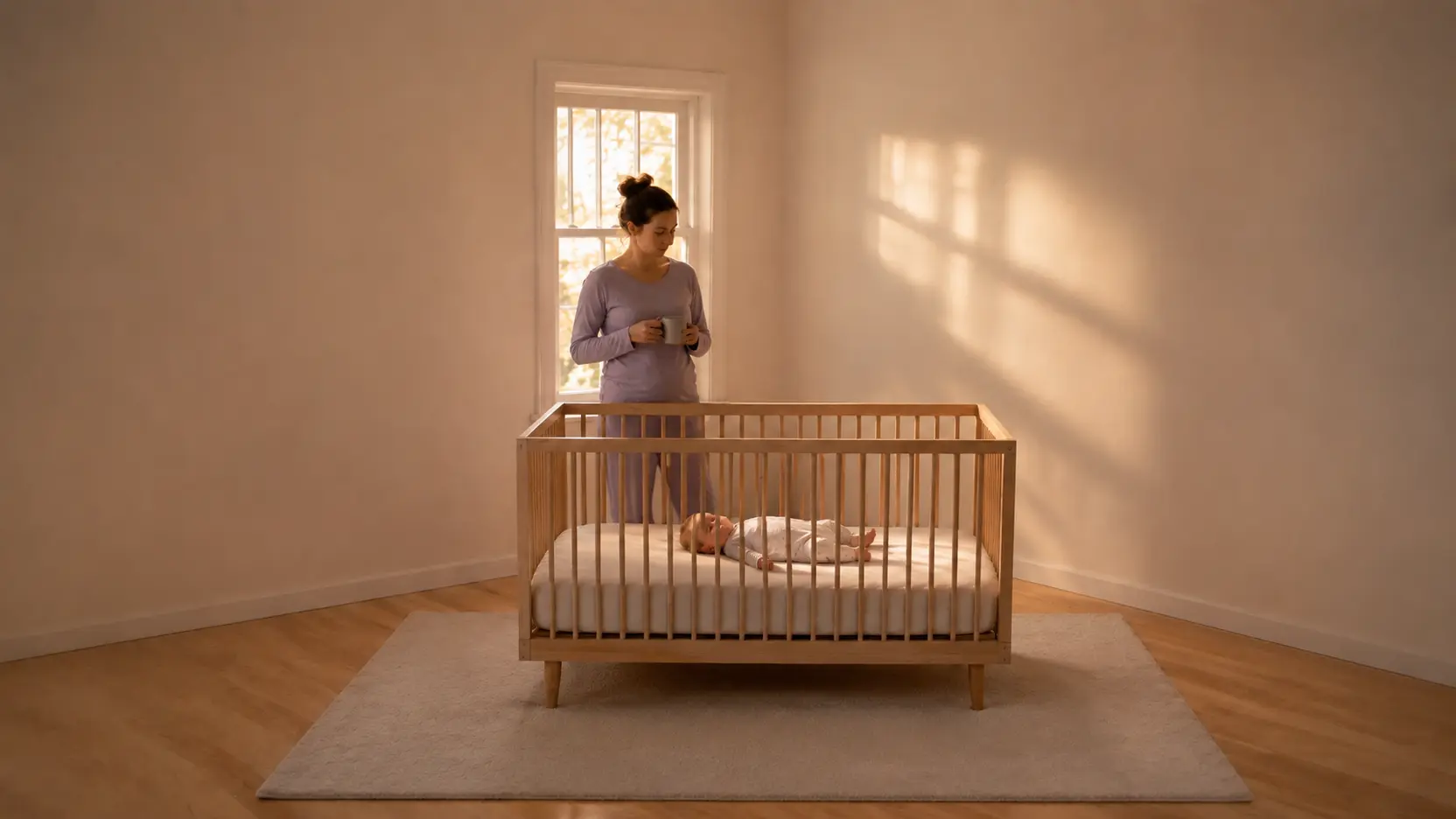
Place your baby on their back for every sleep on a firm, flat, noninclined surface that meets current safety standards. Keep pillows, blankets, toys, bumpers, positioners, and weighted sleep products out of the sleep space. If your baby can roll both ways independently, you do not need to keep turning them back, but the crib still needs to remain bare.
Do not use bed sharing as a regression shortcut. Avoid falling asleep with a baby on a couch or armchair. If your baby falls asleep in a car seat, stroller, swing, carrier, or sling, move them to a firm, flat sleep surface on their back as soon as practical. A difficult week never changes those boundaries.
When the “regression” label is not enough
Call your baby’s pediatrician when the sleep change comes with fever or illness concerns, persistent pain, unusual lethargy, feeding difficulty, fewer wet diapers or dehydration concern, vomiting or diarrhea, poor growth, loud persistent snoring, pauses in breathing, or a change that is severe, prolonged, or simply feels wrong to you. Breathing difficulty, blue or gray color, marked unresponsiveness, or another emergency sign needs immediate emergency help.
You also deserve help if sleep loss is making it unsafe for you to drive, function, or care for your baby. Ask another trusted adult to take a shift when possible, and tell your healthcare professional what is happening. The point is not to win a contest for enduring the most wake-ups.
A useful tool for consistent night checks
My practical pick: Hatch Rest 2nd Gen sound machine and night light
During a separation-heavy stretch, the job is not to buy a device that “fixes” sleep. It is to make the room and your response boringly repeatable. The Hatch Rest 2nd Gen combines a dimmable night light, steady sound, and scheduled routines in one stationary nursery device, so different caregivers can use the same low-light cue without switching on a bright overhead light or improvising a new setup at every wake. I prefer that exact fit here over a portable travel machine because this problem is about keeping the home bedtime ending consistent. Keep cords and the device well outside the crib and follow conservative volume guidance.
See the Hatch Rest 2nd Gen on Amazon
As an Amazon Associate, SleepBaby may earn from qualifying purchases.
Choose one pattern for the next three nights
Tonight, protect the safe sleep space and use one brief response sequence. Tomorrow, look at the three clocks and choose the smallest plausible adjustment. Then give that adjustment enough repetition to teach you something before changing another variable.
- Record bedtime, naps, wakes, and notable discomfort—nothing more.
- Keep the morning start and bedtime sequence recognizable.
- Offer abundant daytime movement and separation practice through ordinary play.
- Ask for medical help when symptoms or your instincts change the question.
The baby standing at the rail at 1:38 a.m. may still stand there tomorrow. The changed understanding is that you no longer have to answer that one image with ten simultaneous solutions. Check the clocks. Meet the need you can actually see. Keep the ending safe and recognizable.

For the parent meeting the crib rail again tonight
You do not need ten new answers before bedtime
The standing baby, the glowing clock, and the third trip down the hallway can make the whole night feel broken. Choose one pattern to watch, one response you can repeat, and one safe ending. SleepBaby.org is here to help you turn the next tired question into a manageable next step.
Sources
- American Academy of Pediatrics: Sleeping Like a Baby
- American Academy of Pediatrics: Emotional and Social Development, 8–12 Months
- American Academy of Pediatrics: Separation Anxiety and Sleeping Trouble
- CDC: Milestones in Action, 9 Months
- American Academy of Sleep Medicine: Pediatric Sleep Duration Consensus
- American Academy of Pediatrics: Safe Sleep Policy Explained